A little orientation
Put a cross-street beside Spring Garden
Name the cross-street
Write the full address or intersection before deciding which part of Spring Garden you are exploring.
Separate distant stops
Do not assume places along the same long street form one compact neighborhood outing.
Check the specific home
Use the property record and viewing for questions about access, work, and shared spaces.
A closer look
Which Spring Garden place do you mean?
Choose a precise address or journey before using the wider guide.
Anchor the name to an address
Enter the full Spring Garden address or intersection into the City's map tools and identify where it sits. Save that location before comparing places from the guide, especially when a destination is across the river or farther along the street than expected.
A useful questionWhich cross-street identifies the place I actually mean?
Source & next step ↗Check one journey at a time
Put your exact Spring Garden starting point and destination into SEPTA's planner. Compare the walking sections and return trip, then decide whether another named stop belongs in the same outing rather than grouping it in only because its address includes Spring Garden.
A useful questionDo these stops belong in the same realistic outing?
Source & next step ↗Ask about the actual surroundings
Look up the specific property and nearby work addresses in the City's tools before viewing. Note the room positions, shared entrance, and observable activity, then ask the property contact focused questions without applying a north-versus-south safety rule to the entire street.
A useful questionWhat should I ask about this building's immediate surroundings?
Source & next step ↗At Hometress, we spend our days inside the homes and on the sidewalks of Spring Garden, walking the same routes you do and hearing the same stories you tell your neighbors. This guide was built from that ground level perspective. It pulls together what residents actually experience on specific corners and blocks, from quiet tree lined side streets and diner mornings to bus chaos, concert nights, and those late hour moments when safety decisions matter more.
Our goal is simple. If you are moving into Spring Garden, already live here, or manage property in the corridor, this guide should feel like having a long honest conversation with people who know the neighborhood by heart.
The Neighborhood That Depends On Your Exact Angle
Spring Garden is one of those Philadelphia corridors where the experience changes the moment you cross the street. Locals navigate it using a mental map built from years of small observations. South of Spring Garden feels like the natural spillover of Center City. It is walkable, well lit, and patterns of foot traffic feel predictable. People heading to work, dog walkers doing their morning loop, and students cutting across town create a steady rhythm that makes the area feel lived in rather than chaotic.
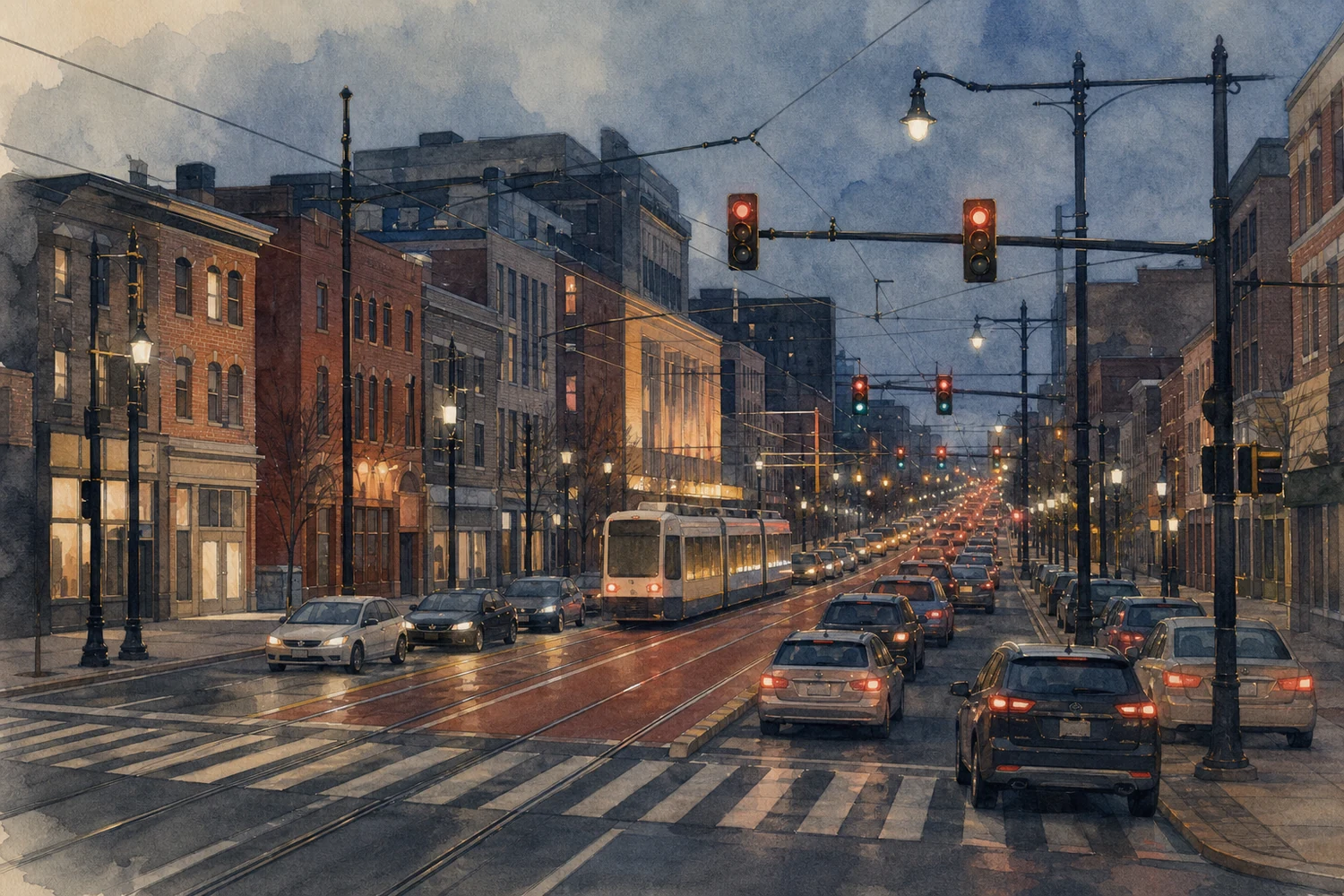
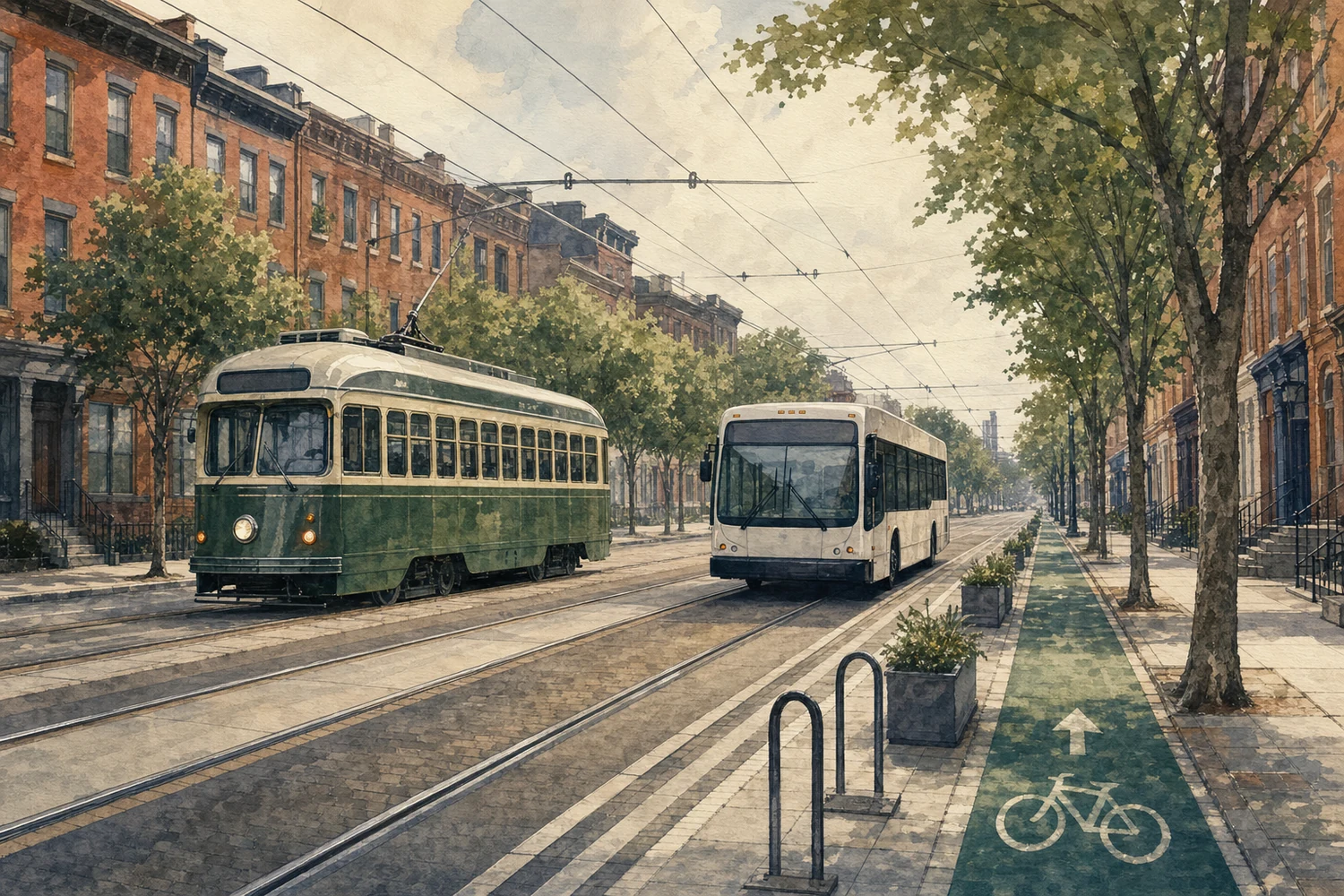
The moment you step onto Spring Garden Street itself, the mood shifts. This is not a typical commercial avenue. It is a long urban highway with bike lanes that never feel as safe as they look on a map, a string of venues and takeout spots, and intersections that can feel calm one hour and tense the next. This center strip is the unpredictable heart of the neighborhood, a place that can swing from sleepy to overcrowded depending on whether a concert just ended or a bus just unloaded.
North of Spring Garden is where opinions get more intense. Some locals treat this area as fine during the day but avoid it entirely at night. It is not a place defined by a single narrative. It is a place where people rely heavily on lived experience and personal thresholds for comfort.
Where Spring Garden sits
- Spring Garden Street
- Broad Street
- Union Transfer
- The Spring Gardens community garden
Schematic · not to scale
The Street That Divides Two Different Philadelphias
Many newcomers are surprised by how sharply the tone changes between the south side and the north side of Spring Garden. The southern micro-zone often gets described as a safe, popular extension of Center City. People who work downtown treat these blocks as convenient and stable. Nighttime dog walking is common, and it is not unusual to find someone strolling home with groceries without much concern.
North of Spring Garden is more conditional. The mix of long-term residents, subsidized housing, and clusters of loitering teens during certain hours creates a different environment entirely. After dark, the practical advice from locals shifts toward rideshares, planned routes, and sticking to better lit corners. This is not irrational fear. It is pattern recognition built from years of watching who hangs around after midnight and which intersections feel unpredictable.
This contrast becomes even sharper near Drexel and Powelton Village. One block can feel like a tight-knit residential community while the next feels transitory and uneasy. Understanding these shifts is essential for anyone moving here. You cannot judge Spring Garden from a map. You have to walk it, corner by corner.
The street that divides two Philadelphias
Locals navigate Spring Garden with a mental map built from years of small observations — the experience changes the moment you cross the street.
South of Spring Garden
Toward Center CityThe natural spillover of Center City: walkable, well lit, with predictable patterns of foot traffic. Commuters, dog walkers on their morning loop and students cutting across town make it feel lived in rather than chaotic.
Spring Garden Street itself
The center stripNot a typical commercial avenue — a long urban highway with bike lanes, a string of venues and takeout spots. It can swing from sleepy to overcrowded depending on whether a concert just ended or a bus just unloaded.
North of Spring Garden
Toward Powelton and DrexelWhere opinions get more intense, and where the contrast is sharpest. It is not a place defined by a single narrative — people rely heavily on lived experience and personal thresholds for comfort.
The side streets
Branching off the corridorThe most charming part of the neighborhood. Tree-lined blocks where residents sweep their steps, chat with neighbors and take slow dog walks, with a diner, a corner store, a bar and two bus lines within minutes.
The People Behind The Sidewalk Shuffle
Spring Garden’s population is a blend of rooted families, students, healthcare professionals, and a growing number of young renters who want walkability without Center City pricing. Some households have been here since the 1950s and carry deep pride in the neighborhood’s older identity. Others are students who will stay nine months and disappear at the end of the semester.
This mix shows up vividly in the daily rhythm of the sidewalks. At 8am you see nurse scrubs, dogs tugging leashes, residents heading toward trolley stops, and students carrying iced coffees to morning classes. At 11pm the cast changes. You see concertgoers pouring out of Union Transfer, groups of teens drifting toward Broad Street, and shift workers heading home long after the neighborhood’s quieter blocks have settled in.
The result is a neighborhood that feels different depending on the hour. Stability lives next to transience, and the combination is what gives Spring Garden its strange, familiar, and sometimes uneasy character.
A Neighborhood That Lives On Its Side Streets
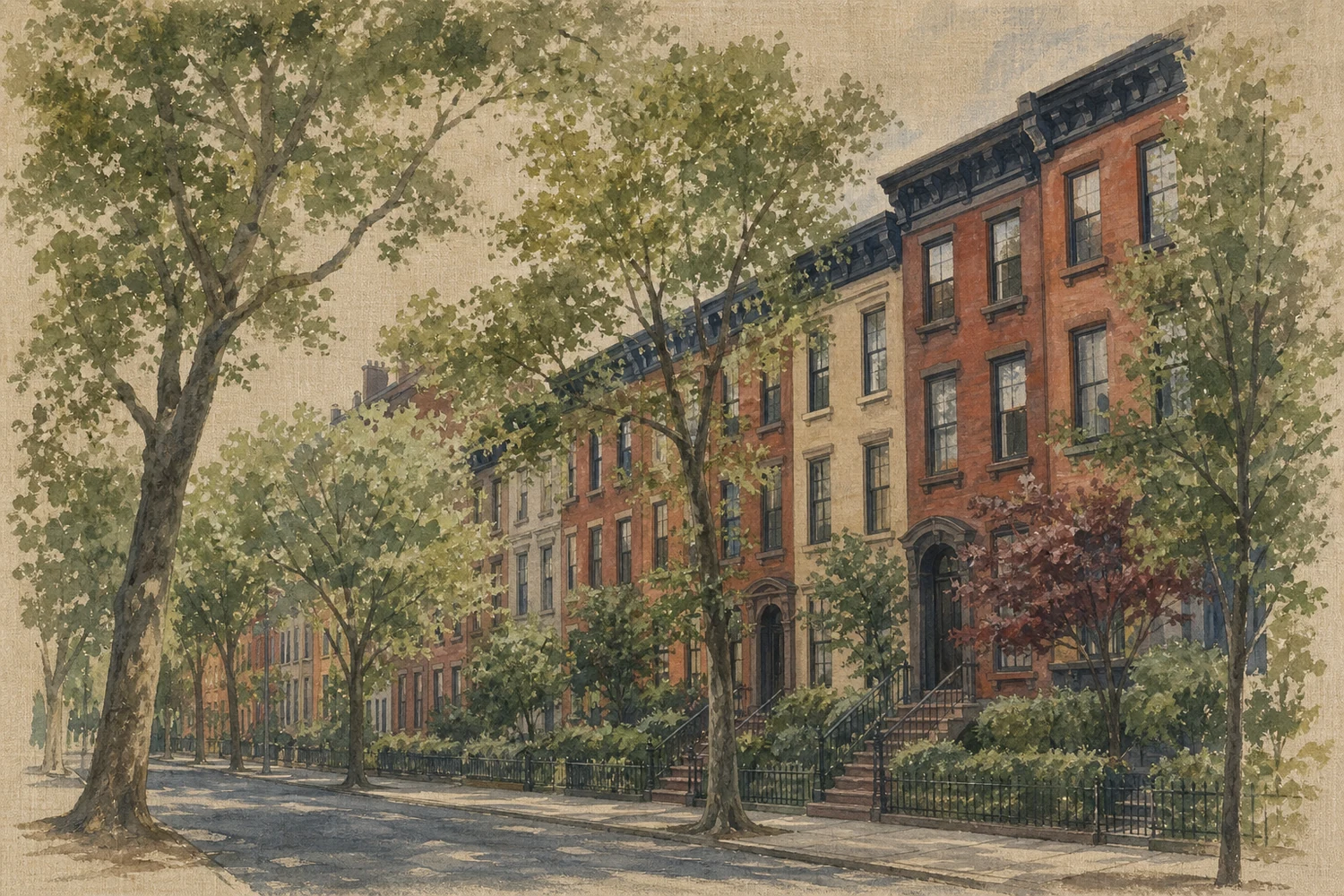
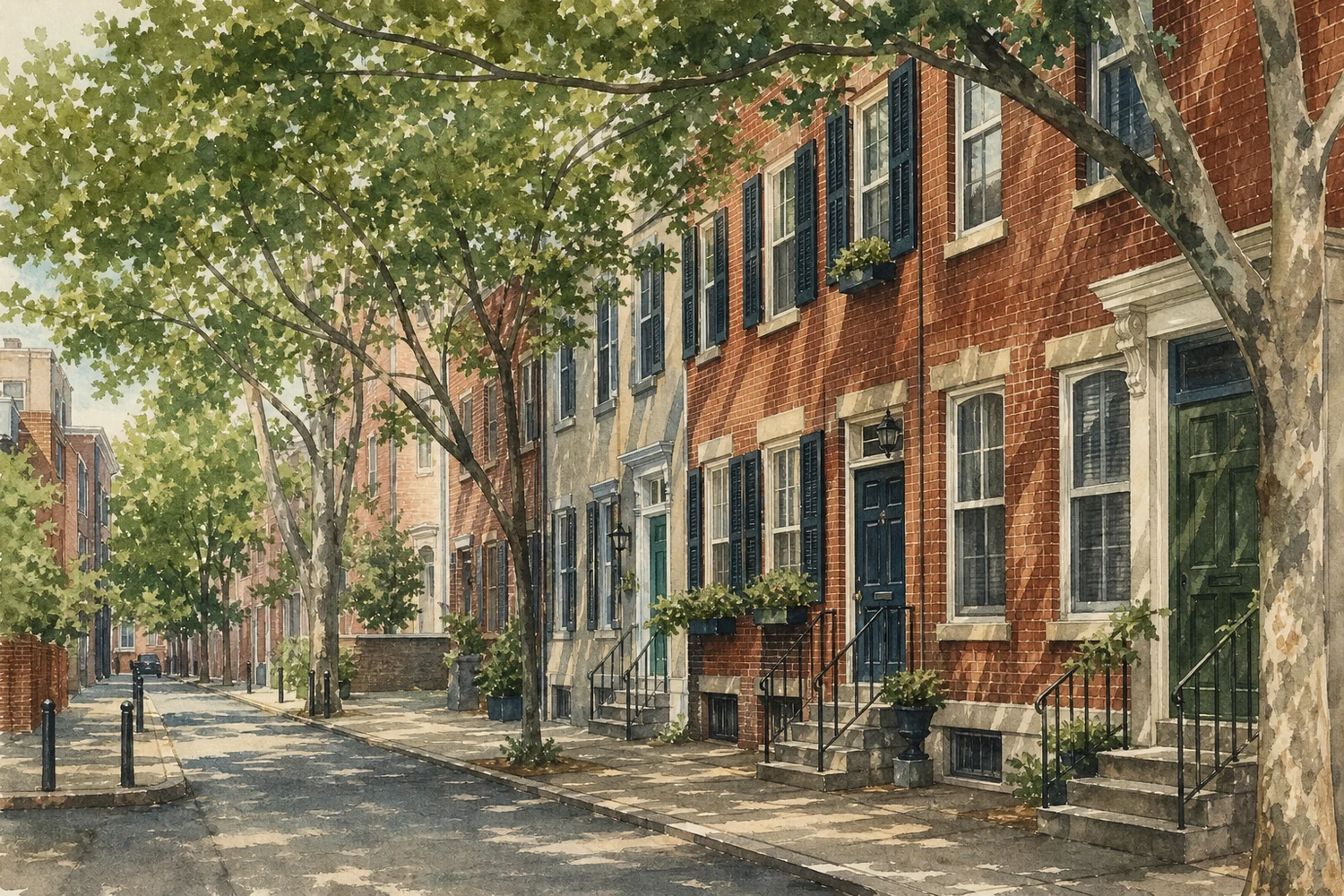
The most charming part of Spring Garden is not Spring Garden Street itself. It is the network of tree-lined side streets that branch off from it. These are the blocks where residents sweep their steps, chat with neighbors, and take slow dog walks. Rowhomes create a sense of enclosure that makes everything feel close. You can walk to a diner, a corner store, a bar, and two bus lines within minutes. It is the kind of convenience that shapes everyday habits. People do not think in miles here. They think in corners and intersections.
What surprises newcomers is how normal and relaxed these pockets feel despite the intensity of the main corridor. Residents talk about leaving their cars unlocked on certain blocks or walking through the area late at night without a second thought. That level of comfort does not extend everywhere in the neighborhood, but it defines the feel of the calmer residential pockets that many long-time locals call home.

A Place That Is Quiet Until It Is Suddenly Not
Spring Garden often gets described as nice overall, and that description is honest. It is a residential neighborhood with walkable amenities and a community feel. The part that outsiders miss is the sense that the neighborhood is always on the edge of something. It is not boring, but it is not bustling either. It is a place where most evenings are quiet until a concert at Union Transfer lets out or a bus pulls up under the overpass and releases fifty travelers onto the sidewalk at once.
Weekdays feel different from weekends, and the area feels entirely different during the school year than it does in the summer. When the campuses empty out, the neighborhood settles. When students return, energy spikes again, especially near intersections that see heavy foot traffic from Drexel or the UCity side.
The real vibe of Spring Garden is this push and pull. Calm on one block, chaotic on the next. Predictable in the morning, unpredictable at night. Locals feel both proud of its residential charm and tired of the issues that never seem to disappear, especially the speeding, the bus congestion, and the occasional burst of violence that reminds everyone that the corridor remains fragile.
Street Smarts And Sidewalk Etiquette
Moving Like You Already Live Here
In Spring Garden, how you carry yourself matters. Locals learn early that walking with purpose changes how people read you. Head up, steady pace, headphones turned down low enough to hear what is going on, phone mostly away unless you are checking directions at a corner. Flashy watches and loose phones in busy areas signal distraction, especially at night or near bus hubs and school corners.
For many people this approach feels empowering.
You blend into the everyday flow of residents heading to work, gardeners coming back from the plots, and neighbors returning from errands.
At the same time, confidence has limits. It can tempt you to push through blocks and hours that are simply not worth testing. If an intersection feels off, or if you see a tense group forming ahead, smart locals do not try to prove a point. They cross the street, slow down, or reroute entirely. Street smarts here are part posture, part willingness to change your plan.
Reading Teen Crowds Without Overreacting
Around Broad and Spring Garden, especially near Franklin High and key bus stops, you see clusters of teenagers almost every school day. Most of the time it is loud talk, jokes, and energy spilling out after classes. Residents tune their radar to the difference between normal loud and the kind of sharp tone that means a fight might start. Raised voices turning into shoving, kids forming a tight circle, or someone pacing at the edge of the group are all signs that the mood is shifting.
Parents, women walking alone, and older residents often build small routines around this reality. They give themselves extra time to take the opposite corner, wait in a storefront until a crowd disperses, or time their walk to miss the first big release after the final bell. It is less about fear of teenagers and more about choosing not to get stuck in the middle when a harmless group suddenly turns into a problem.
Treating The Citizen App Like Background Noise
If you spend more than a week here, your phone will tell you that Spring Garden is in constant crisis. Citizen alerts flag shots heard near 8th Street at three in the morning, suspected fights near student housing, and occasional robberies that spike anxiety. The feed can make it sound like the neighborhood is under siege at all hours. Long-timers see it differently.
They look at patterns instead of single alerts. Multiple notifications tied to the same corner late at night are taken seriously. A one off ping in the middle of the day with no follow up is often filed under background city noise. People who live here balance the app with what they have actually seen on their block. Some keep alerts on but mentally filter them. Others keep notifications off entirely and hear about serious incidents from neighbors or local groups instead. The tool is there to sharpen awareness, not to dictate whether you ever leave your apartment.
The North Line As A Time Based Decision
The mental boundary at Spring Garden is not just about geography. It is about time. An apartment that feels perfectly fine at two in the afternoon can feel very different at ten at night. Many residents happily walk north for daytime errands, visits to friends, or quick trips across Powelton. After dark, the same people will order a rideshare from the door rather than wait at a bus stop in the wrong spot.
For solo walkers, especially those new to the city, off limits often means not experimenting with unlit side streets, unfamiliar alleys, or sections near Mantua that have a history of break ins and shootings. Groups have more flexibility and will sometimes cross into these areas for specific events or to visit friends, but they still plan their routes and return times. The practical rule is simple. If you would not feel comfortable lingering on a corner alone, it belongs in the mental red zone after dark.
Sharing Space Under Overpasses And At Bus Hubs
Bus stops and underpasses in the Spring Garden corridor are a world of their own. Riders from other cities step off intercity coaches carrying everything they own, exhausted and disoriented. Locals passing through are just trying to get home. The most experienced residents treat these spaces with a mix of empathy and self protection. They give travelers physical space, avoid stepping over scattered bags, and keep their own belongings close.
Where you stand matters. People who know the area avoid positioning themselves directly in front of bus doors or pinned between a wall and parked luggage. They pick a spot with a clear line of sight to the street and an easy path out if a shouting match starts or a group becomes agitated. If they have to wait late at night, they lean on well lit corners, stay near other regular riders rather than isolated travelers, and keep waiting time as short as possible. Courtesy and caution both show up in small choices: a nod to someone who clearly slept on the sidewalk all night, and a firm decision not to get pulled into arguments that are not yours.
Finding A Home Without Getting Blindsided
Translating Listing Language Into Actual Blocks
Rental listings in Spring Garden use creative geography. Labels like Spring Garden University City or Legacy Spring Garden sound appealing, but they can mean very different things on the ground. One building might sit near the calmer student heavy area south of Spring Garden with quick access to campus and Center City. Another might hug a louder stretch of the corridor near the bus staging zone or an intersection that appears regularly in crime alerts.
A local lens looks for clues.
Mentions of close to Union Transfer, great for concerts, or easy access to the bus lines can translate into heavy foot traffic and nighttime noise.
Vague promises like walkable to everything need to be cross checked with maps and street level views. If the path from your front door to the nearest grocery or train runs under overpasses and past bus clusters, the convenience comes with tradeoffs.
Living Within Earshot Of Buses And Bike Lanes
Proximity to transit is either the best thing about Spring Garden or the main reason people move out. Apartments facing the main corridor or the old open air terminal area live with the sound of idling engines, air brakes, revving motorcycles, and the occasional siren at almost any hour. Windows rattle when trucks hit potholes at speed. Light pollution from street lamps and headlights never really fades.
A block or two back from the main drag can feel like a different city. You still get the benefits of short walks to bus stops and bike lanes without engines directly under your window. Some residents value the ability to commute easily enough that the noise is worth it. Others treat any mention of bus staging or bike lane facing windows as a strong warning to keep scrolling. The key is to visit both during the day and at night, stand outside the building for fifteen minutes, and listen.
Before signing a lease, locals suggest simple probing. Ask about package thefts and break ins rather than general safety. Look for camera doorbells, window bars that look recently installed, and notes left in the lobby about suspicious activity. Chat with someone who actually lives on the block instead of relying only on the landlord. Their tone will tell you quickly whether concerns are theoretical or ongoing.
When Cracks In The Wall Are A Deal Breaker
If you see stairwells with long diagonal cracks, window frames separating from plaster, or doors that no longer close properly, that is more than just an aesthetic issue in this corridor. Combine that with heavy truck routes or major projects nearby and you have a reason to dig deeper. Ask directly about past inspections and permits, and check public records if possible. In a neighborhood with older housing stock and big infrastructure projects, a casual attitude toward structure should set off alarms.
Short Term Rentals And Weekend Wildcards
Short term rental heavy buildings introduce their own set of variables. Party bookings bring guests who have no reason to invest in block stability and every reason to go hard for forty eight hours.
To gauge how exposed you might be, walk past the building on a Friday and Saturday night before committing. Look for lockboxes stacked on railings, cleaning crews moving in and out constantly, and guests dragging rolling luggage at odd hours. If you crave a lively lobby with new faces, that vibe might be fine. If you want to sleep deeply and not worry about drunk strangers on your stoop, you may want a building with a long lease focus instead.
Eating And Drinking Like Someone Who Has Keys Here
Morning Rituals At The Diner That Still Matters
Spring Garden Restaurant is the kind of place where regulars have a default order and staff already knows their coffee preference. Plates come out with eggs cooked properly, toast coated all the way to the crust, grits spread across half the dish, and scrapple or breakfast meat on the side. The detail that many locals fixate on is the presence of real butter packets and a willingness to hand over alternative sweeteners without fuss.
Service can swing between brisk and warm on busy mornings and distracted during slower periods. Even with the occasional off interaction, many residents defend this diner as a neighborhood anchor.
It offers a predictable breakfast experience at a price point that still feels reasonable compared with trendier city cafes.
For someone new to the area, a solo breakfast at the counter offers a quick crash course in who actually lives here.
Pizza Memories Versus Reality On Spring Garden
Spring Garden Pizza holds a nostalgic place in the minds of people who grew up nearby. They remember grabbing slices as kids and treating it as a default weeknight option.
The shop still has a role. It is open, it is familiar, and it is convenient for late night cravings when the choice is limited. Long timers decide on a case by case basis, treating it as an emergency carb fix rather than a destination meal.
Soul Food Hype At 1519 Spring Garden
The soul food spot at 1519 Spring Garden built a reputation quickly. Locals and visiting food hunters praised generous portions, well seasoned dishes, and a warm atmosphere that felt distinctly Philly rather than a generic chain. Social media clips amplified the praise, turning the address into a hashtag and drawing diners from outside the immediate neighborhood.
When word spread that the restaurant was temporarily closed, regulars did not just shrug and move on. They tracked updates, checked accounts for reopening hints, and slotted it into mental lists of places to visit the moment the doors opened again. For someone moving into the area, this spot is not just about food. It is a barometer of how fragile and special independent businesses are along this corridor.
Takeout Comfort And Tension Around Golden Chopsticks
Golden Chopsticks on Spring Garden is one of those Chinese takeout joints that people rave about in all caps. It is where locals go for reliable fried rice, wings, and late night comfort food that tastes better than the fluorescent lighting suggests. For many, it is the first place they recommend when someone asks where to grab an easy dinner nearby.
It is a corner spot, so pickup timing matters at busy hours; plenty of regulars order delivery instead.
Where The Neighborhood Actually Socializes At Night
Belgian Cafe, Kite and Key, and McCrossen’s serve as unofficial living rooms for different slices of the Spring Garden community. These are not flashy destination bars for tourists. They are the places where locals show up after work, sit at familiar stools, and talk about the latest bus news, a strange Citizen alert, or a garden event. Each bar has its own micro-community. Pick one and you might find more long term residents and families. Pick another and you might find more students and hospital staff blowing off steam.
Timing your visit changes the experience. Early evenings are best if you want to actually talk to the bartender and overhear neighborhood gossip. Later nights, especially on weekends or when there is a show at Union Transfer, tilt more toward crowded rooms and louder energy. For someone new, rotating through each of these spots over a few weeks is an easy way to figure out which segment of Spring Garden feels most like your people.
Eating and drinking like someone who has keys here
The places residents actually use, as the guide describes them.
Spring Garden Restaurant
Where regulars have a default order and staff already know their coffee preference. Eggs cooked properly, toast coated all the way to the crust, grits across half the dish. Real butter packets, and alternative sweeteners handed over without fuss.
Best for · A solo breakfast at the counter
The soul food spot at 1519 Spring Garden
Built its reputation quickly on generous portions, well-seasoned dishes and a warm atmosphere that felt distinctly Philly rather than a generic chain. Social media clips turned the address into a hashtag.
Golden Chopsticks
The reliable fried rice, wings and late-night comfort food that tastes better than the fluorescent lighting suggests. The first place many locals recommend for an easy dinner nearby.
Best for · An early-evening pickup
Belgian Cafe
One of the unofficial living rooms of Spring Garden. Not a flashy destination bar — a place where locals show up after work and sit at familiar stools.
Kite and Key
Another of the corridor's living rooms, each with its own micro-community. Early evenings are best if you want to actually talk to the bartender and overhear neighborhood gossip.
McCrossen’s
Rotating through these bars over a few weeks is the local way of working out which segment of Spring Garden feels most like your people.
The People Who Keep The Place From Coming Apart
The Garden That Holds The Neighborhood Together
The Spring Gardens community garden sits at the center of a very specific kind of pride. In the mid nineties, residents looked at a vacant lot and decided it could be something else. Over time they turned it into a dense patchwork of plots, paths, and shared spaces where flowers and vegetables grow side by side. The space is not casual. It has rules, expectations, and a culture that values showing up and doing your part.
Gardeners weed communal beds, attend work days, and keep an eye on who is actually contributing to the upkeep of the space.
Children learn to water plants alongside older residents who have been in the neighborhood for decades. Seasonal events bring in people who do not have plots but feel connected to the green heart of the area. For newcomers, volunteering at an event or joining the waiting list for a plot is one of the clearest ways to move from visitor to participant.
Memory Of A Different Spring Garden
Online groups dedicated to Spring Garden from the perspective of original families talk about a different era. They describe a time when the area felt like an extended household, when long standing families knew everyone on the block, and when the sense of community overshadowed the kinds of safety conversations that dominate modern threads. That memory sits beside current discussions about bus terminals, shootings, and property issues.
Older residents sometimes struggle with the contrast. They see changes that feel less like natural evolution and more like erosion. They remember the neighborhood as the epitome of tight social ties and now watch as bus trailers and demolition sites reshape corners they once took for granted. That nostalgia is not just sentimental. It influences how they respond to new developments and how protective they feel about the remaining pockets of continuity, such as the garden and long standing businesses.
Food Programs And Quiet Acts Of Solidarity
The Spring Garden Community Development Corporation and similar groups run food programs that are woven into the weekly rhythm of the neighborhood. Neighbors Helping Neighbors is more than a slogan. Residents line up for groceries, volunteers staff tables and booths at events, and local businesses chip in with promotions that encourage people to eat and shop nearby while also giving back.
These efforts take on extra weight in a corridor where intercity bus riders sometimes sleep on sidewalks and where not all households have equal access to stable income. A Saturday food distribution or a community booth at a festival is a visible sign that people still look out for one another at the block level. For someone just moving in, showing up to help at one of these events is a fast way to understand who is actually investing time and energy into keeping Spring Garden livable.
When A Star Running Back Shows Up With Mattresses
One of the more striking recent stories is the visit from Eagles running back Saquon Barkley, who donated dozens of mattress sets to kids in the Spring Garden area. On the surface, it is an NFL charity moment. On the ground, it felt like sudden validation for families who rarely see resources flow their direction so directly. Children who previously slept on couches or worn out beds suddenly had a real mattress of their own.
Residents read this kind of event as a symbol. It highlights the contrast between high profile support and the slower, more frustrating pace of structural improvements such as safer intersections, better bus facilities, or stronger housing code enforcement. The feeling is complex. People appreciate the help and also wish that everyday quality of life received the same attention as a headline friendly donation.
The Bizarre, The Scary, And The Endless Arguments
Gunfire That Arrives Without Warning
Most days people walk to work, grab coffee, and run errands without incident. The tension comes from knowing that occasionally a regular afternoon can flip into chaos in seconds. Locals talk about risk in a calibrated way. They rarely tell newcomers that the area is unlivable, but they also do not pretend these events did not happen. Instead, they describe patterns, share workarounds, and lean on each other for information when something new happens.
Street Theater That Feels Like Another Planet
Spring Garden also produces moments that feel more surreal than dangerous. Videos circulate of a man pacing and shouting about city wide problems near the bus station, or of a naked bike ride rolling past public rental bikes that children are supposed to use. For someone just trying to get to work or cross the street, these scenes can feel absurd and unsettling at the same time.
Locals process this kind of street theater with dark humor. They trade stories at bars and in comment sections, half laughing and half shaking their heads. The coping mechanism is simple. File it as another strange episode in a long list while still noting what time it happened, where, and whether it seems like the kind of thing that might escalate next time.
Is It Falling Apart Or Just A Normal City Neighborhood
Debate over whether Spring Garden is crime ridden or nice overall never really stops. Some reviewers emphasize a sharp downward turn, pointing to shootings, structural issues, and an increase in visible disorder. Others insist that they have lived here for years without a single bad interaction and argue that much of the online panic comes from people who rarely leave their own block.
Class, race, and tenure in the neighborhood shape these views. Longtime residents who remember the area before major redevelopment may feel that certain problems are new and unacceptable. New arrivals from rougher environments might see the same conditions as manageable. The truth lives in the middle. It is a neighborhood with real issues and real strengths, and you can find evidence for both in a five minute scroll through local forums.
Kids In The Middle Of A System No One Trusts
Stories about very young teens mugging people or harassing women in small groups spark intense frustration. Residents know these kids are also products of underfunded schools, limited youth programs, and family stress, but that does not make it easier to be on the receiving end of a grab, a shove, or a stolen phone. Posting about these episodes often leads to arguments about blame, policing, and the right way to respond.
On a practical level, people adjust their routines. Women choose different routes after dark. Parents walk a little further with their children rather than letting them go alone through certain intersections. Elderly residents avoid particular corners during dismissal windows. For newcomers, there is no need to panic. The smarter move is to listen to these stories, identify which corners keep showing up, and build your own daily routes around that living map.

When The Neighborhood Spins Into Motion
Days That Feel Like A Parade And A Detour At The Same Time
Spring Garden has a habit of turning into an unplanned stage for city wide spectacles. The Toys for Tots motorcycle run near Spring Garden and Twenty Third transforms the intersection into a roaring stream of bikes, flags, and revving engines that rattles windows for blocks. Residents either watch from steps with coffee or mentally prepare for a twenty minute delay if they need to drive anywhere. Protests such as the No Kings demonstrations bring crowds that fill entire lanes, redirect traffic, and make every usual route feel suddenly complicated.
These events are not rare.
Spring Garden’s wide lanes and central location make it a natural funnel for marches, charity motorcades, and spontaneous gatherings.
Regulars learn to check route announcements, keep flexible expectations on weekends, and accept the occasional hour of organized chaos. The mood swings between festive and inconvenient, but it is very much part of the neighborhood’s identity.
Concert Nights That Reshape The Whole Corridor
Union Transfer does more than host shows. It sets the pulse of the area after dark. On big concert nights, parking evaporates long before the first opener hits the stage. Foot traffic spills across intersections, and the sidewalks become a mix of excited fans, neighborhood regulars trying to navigate around crowds, and drivers circling endlessly for a rare open space.
Living near the venue means learning the weekly rhythm. Quiet early week shows attract smaller crowds and minimal disruption. Weekend concerts with popular artists turn surrounding blocks into a loud, brightly lit pathway long after the final encore. Concert goers can plan ahead by arriving early, sticking to well lit corners when the crowd disperses, and calling rideshares before the surge kicks in. Neighbors who want to sleep keep their windows closed, run a fan, and pick alternate walking routes that dodge the densest foot traffic.
Heat Waves That Change Everything About A Simple Errand
Summer in Spring Garden comes with its own micro-season. The corridor bakes intensely because of the long concrete stretches and limited shade near the overpasses. Bus riders often wait in direct sun with no benches, which has led to residents handing out bottled water during the hottest afternoons. The simple act of walking to a takeout place becomes a sweaty mission when the air pockets under the viaduct trap heat and exhaust.
During heat waves, every part of the corridor’s design flaws become magnified. Locals adjust by running errands earlier, avoiding long waits under the bridges, and clustering on cooler side streets. Some step up with water and snacks for riders stuck in slow moving lines. Others skip the main corridor entirely and wait until sunset to go out. Summer teaches you quickly which parts of Spring Garden feel comfortable and which feel punishing.
Students As A Seasonal Weather Pattern
Drexel and UCity’s academic calendar creates predictable waves of energy. Move in week floods certain blocks with rolling suitcases, parents circling for parking, and students learning bus routes by trial and error. Finals week brings late night study walks and quiet clusters outside cafes. Once break begins, entire stretches near student housing become noticeably calmer.
Bars near Spring Garden become louder during the first six weeks of the semester and calmer once midterms hit. Streets that feel crowded in October can feel deserted in January. Long time residents enjoy what they jokingly call the student exhale, those rare weeks when the neighborhood loses some of its noise and returns to its slower rhythm. For newcomers, learning the academic cycle helps set expectations for monthly shifts in the feel of the neighborhood.
When the neighborhood spins into motion
The recurring things that reshape the corridor, in the guide's own account.
Union Transfer lets out
Parking evaporates long before the first opener. Quiet early-week shows draw smaller crowds; weekend concerts with popular artists turn surrounding blocks into a loud, brightly lit pathway long after the final encore.
Toys for Tots motorcycle run
Near Spring Garden and Twenty Third. Transforms the intersection into a roaring stream of bikes, flags and revving engines that rattles windows for blocks.
Food distribution
The Spring Garden Community Development Corporation and similar groups run food programs woven into the weekly rhythm. Neighbors Helping Neighbors is more than a slogan.
The students return
Certain blocks flood with rolling suitcases, parents circling for parking, and students learning bus routes by trial and error. Bars get louder for the first six weeks of the semester.
The student exhale
Once break begins, entire stretches near student housing become noticeably calmer. Streets that feel crowded in October can feel deserted in January.
Survival Techniques Only Local Experience Teaches
Choosing The Right Mode Of Travel At The Right Hour
Getting around Spring Garden is about timing and confidence. Walking is ideal in the morning and early evening on the quieter residential blocks. Biking the main corridor works better during the early daytime before traffic jams and aggressive drivers take over. The bus is convenient when schedules line up, but awkward during late night intervals when stops feel isolated.
Rideshares fill the gaps. Locals take Uber for north side trips after dark, especially when heading toward Mantua or across less lit sections. Bus lane cameras on Spring Garden are strict, which means residents plan drop offs and pickups carefully to avoid fines. Everything here is a small calculation. Pick your method, pair it with the hour, and the corridor becomes much easier to navigate.
Side Streets That Save Your Sanity When Parking Implodes
Parking in Spring Garden tests patience. The main corridor fills quickly, especially during concerts, protests, sports events, and construction seasons that close random lanes. Locals rely on specific side streets as pressure valves. Some blocks just off Fairmount or just behind the main corridor offer hidden stretches where you can slip your car between residents who do not move theirs often.
Reading online posts about free parking often leads newcomers in circles. Locals know that many of those tips are either outdated or specific to one lucky afternoon. When the worst happens and you find a barnacle clamped to your windshield, the protocol is simple. Pay it, remove it, and read the lot signage next time.
Timing Errands So They Feel Calm Instead Of Chaotic
Small timing shifts make a massive difference here. Broad and Spring Garden during Franklin High dismissal can feel like threading a path through dozens of loud teens, bus queues, and honking drivers. The same corner twenty minutes later feels normal again. Crashes on the corridor also ripple outward, creating temporary gridlock that makes walking the fastest option.
Locals mentally track when certain intersections feel charged. They cross at different corners, wait out crowds at cafes, or take an extra block to avoid an underpass with aggressive panhandling or heavy bus traffic. Those fifteen to thirty minute adjustments are not paranoia. They are pattern recognition, and they change the whole experience of living here.
Questions That Reveal Whether A Building Will Be Trouble
Housing decisions in Spring Garden require detective work. Before signing anything, locals ask about noise at specific hours, past construction issues, and the number of packages stolen in a typical month. Residents check the Citizen app for repeated incidents on the exact block rather than the broader area. They pull up satellite views to see if the building sits near an overpass, bus staging area, or nightlife zone.
The goal is simple. Avoid inheriting someone else’s problem building. If the lobby has handwritten notes warning about suspicious activity or constant flyers for missing packages, that is a sign. If balconies face a loud corridor or a known crash prone intersection, reconsider. A little pre-lease research saves months of frustration once you move in.
Who Actually Fits Here And Who Should Think Twice
Residents Who Tend To Feel At Home
Spring Garden rewards people who already have some city instincts. Students thrive because the area lets them walk to class and mingle in bars that feel relaxed rather than chaotic. Medical workers who need fast access to transit appreciate the bus lines and easy connections. Young professionals who want walkable basics without Center City prices adjust quickly to the unpredictable parts of the corridor.
Gardeners and community minded neighbors find ways to contribute through local events, garden volunteer days, and food programs. People who do not mind buses rumbling nearby or crowds gathering after concerts settle into a rhythm that feels both urban and neighborly.
Residents Who Tend To Struggle Here
Anyone expecting suburban quiet will feel overwhelmed. People who are highly sensitive to noise, sirens, late night foot traffic, or unpredictable street energy burn out quickly. Newcomers who prefer rigid predictability may find the neighborhood’s shifting vibe stressful. Those who dislike thinking about safety at all times will struggle, since Spring Garden requires active awareness.
Even residents who love the area sometimes reach a limit during heat waves, construction seasons, or strings of late night incidents. It is a place that rewards adaptability. Without that trait, the corridor feels exhausting instead of vibrant.
Matching Your Comfort Level To The Right Block
Spring Garden is not a single experience. It is a grid of micro-zones. People who want peace gravitate toward the residential pockets near Fairmount or deeper into Powelton’s quieter edges. Those who enjoy nightlife or cultural activity prefer the blocks closer to Union Transfer. People with low tolerance for late night noise choose to stay south of Spring Garden where foot traffic is steadier and bus hubs are further away.
Understanding your personal risk tolerance helps. If you are comfortable walking in busy areas at night, the central corridor will not intimidate you. If you prefer controlled environments, focus on the calmer pockets and avoid intersections that appear frequently in neighborhood discussions.
Who actually fits here
The guide's own answer: it is a place that rewards adaptability.
- People who already have some city instincts.
- Students, who can walk to class and mingle in bars that feel relaxed rather than chaotic.
- Medical workers who need fast access to transit and appreciate the bus lines.
- Young professionals who want walkable basics without Center City prices.
- Gardeners and community-minded neighbors, through events, garden volunteer days and food programs.
- Anyone expecting suburban quiet.
- People highly sensitive to noise, sirens or late-night foot traffic.
- Newcomers who prefer rigid predictability, because the vibe shifts.
- Anyone without adaptability — without it, the corridor feels exhausting instead of vibrant.
The Hyper Local Cheatsheet For Daily Life
Corners That Make Your Day Easier
Some corners are simply better than others. Standing on the northeast side of certain intersections gives you better visibility when waiting for a bus. Calling an Uber from a well lit lot near the venue is safer and easier than trying to flag it down closer to the underpass. Dog walkers often choose the residential side streets near Fairmount where sidewalks are calmer and trash is lighter. Meeting a friend before a show feels smoother if you pick a block with both lighting and quick escape routes.
Places Locals Treat As Caution Zones
Certain underpass bus stops feel tense after midnight. Corners near Broad that look harmless during the day can feel charged late at night. Residents do not avoid these areas entirely, but they navigate them with intention, passing through quickly rather than lingering.
Shorthand That Locals Use Without Thinking
The neighborhood has developed its own vocabulary. NoLib refers to the Northern Liberties adjacency. A barnacle boot means you parked in the wrong lot. The old open air terminal still shapes how residents talk about the bus zone. Citizen alerts are referenced casually in conversation. Words like sheisty and strapped crop up when describing the vibe of certain interactions. Understanding these terms helps you decode local conversations.
Fast Filters For Everyday Decisions
Locals often use simple mental checklists. For evaluating a block, they ask whether it feels active at night, whether nearby corners show repeated incidents, and whether foot traffic feels predictable. For deciding how to travel, they consider the hour, the route, and how crowded the sidewalks look. If the answer feels uncertain, the safer option usually wins.
With these quick filters, Spring Garden becomes more navigable. Instead of reacting to every unpredictable moment, you learn to anticipate patterns and make choices that fit your comfort level. The result is a more confident and grounded daily life in a corridor that rewards preparation and awareness.
Make it yours
Five ways to keep the visit grounded
A short list to turn what you read into your own next steps.
Saved checks stay on this device when browser storage is available. This is a personal planning list, not a property inspection or professional assessment.
Sources & next steps
Useful advice should
show its working.
These resources support the reader tools above and help you check details for your own address, date, or plans.
- City property and zoning lookup
Opens the City's address-based zoning and permit tools.
- SEPTA trip planner
Compare transit journeys using your actual stops, date, and departure time.
The tools distinguish an exact location on Spring Garden Street from a neighborhood label. They do not establish broad north/south safety rules or validate unnamed restaurants and programs.
Keep exploring