A little orientation
Plan University City around the buildings you use
Name the actual building
Plan journeys to the doorway you need instead of a broad university or hospital pin.
Use a current grocery listing
Check ACME's 4001 Walnut Street listing rather than relying on the guide's old Fresh Grocer reference.
Check service coverage directly
Penn's escort guidance defines its arrangements; do not substitute a general neighborhood or patrol description.
A closer look
Choose a University City routine
Start with the journey or service you expect to use often.
Plan to the actual entrance
Enter your home and the specific University City building you need into SEPTA's planner. Check the final walking section and the return journey at your usual finishing time, then confirm the entrance with the institution if a large campus or hospital has several.
A useful questionDoes this route reach the doorway I actually need?
Source & next step ↗Start with the current store listing
Open ACME's listing for 4001 Walnut Street and check the services and contact details relevant to your shop. Confirm anything essential directly, then plan how you will carry groceries home rather than treating an old store name as current local knowledge.
A useful questionWhat do I need to confirm before making this grocery trip?
Source & next step ↗Check the provider's actual arrangements
Read Penn Public Safety's current security-services page before relying on a walking escort. Compare your starting point, destination, and planned time with the provider's stated arrangements, and use its request instructions rather than confusing escort coverage with a general claim about neighborhood safety.
A useful questionDo my starting point, destination, and time fit this service?
Source & next step ↗Where academia shapes the streets
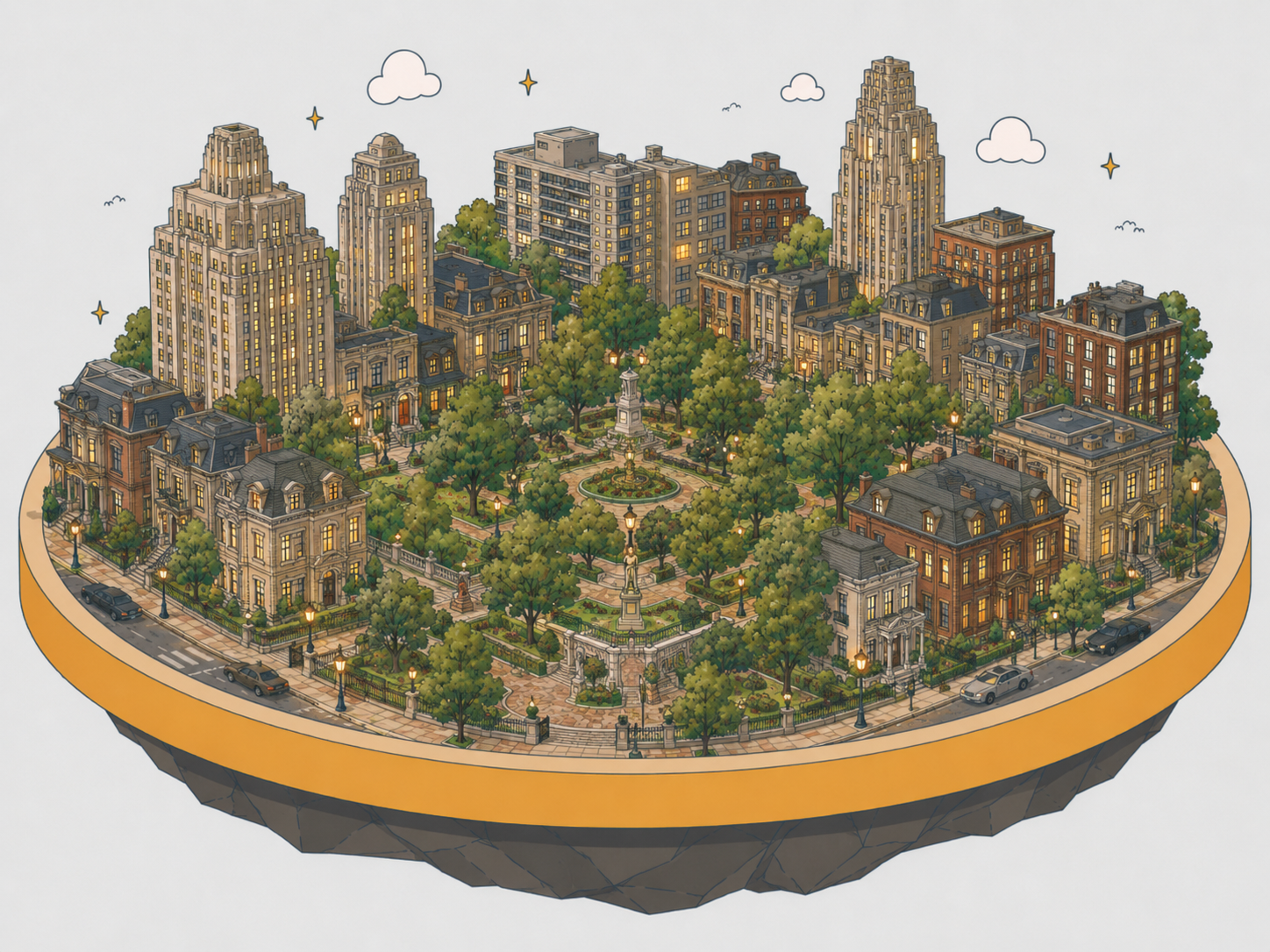
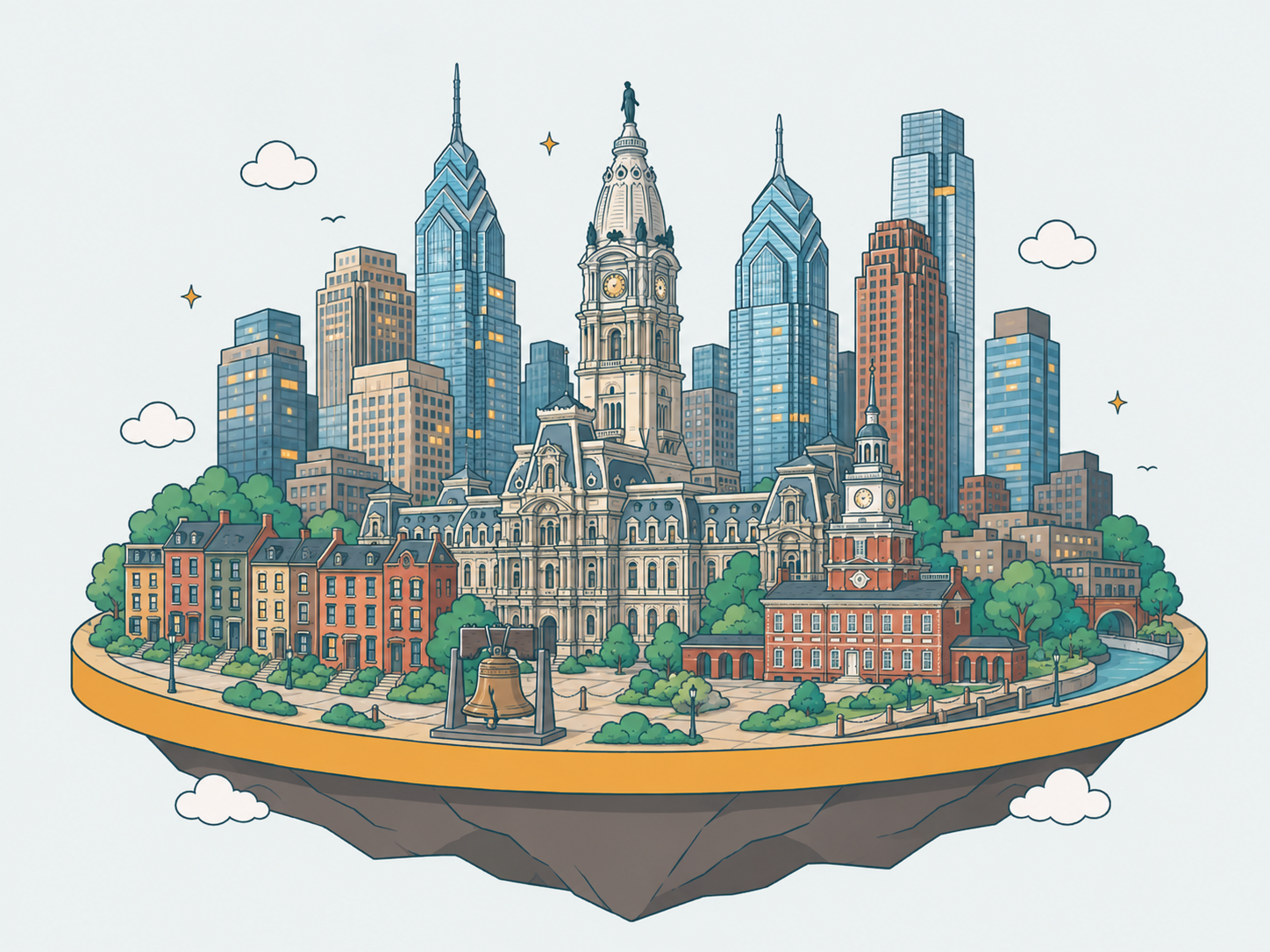
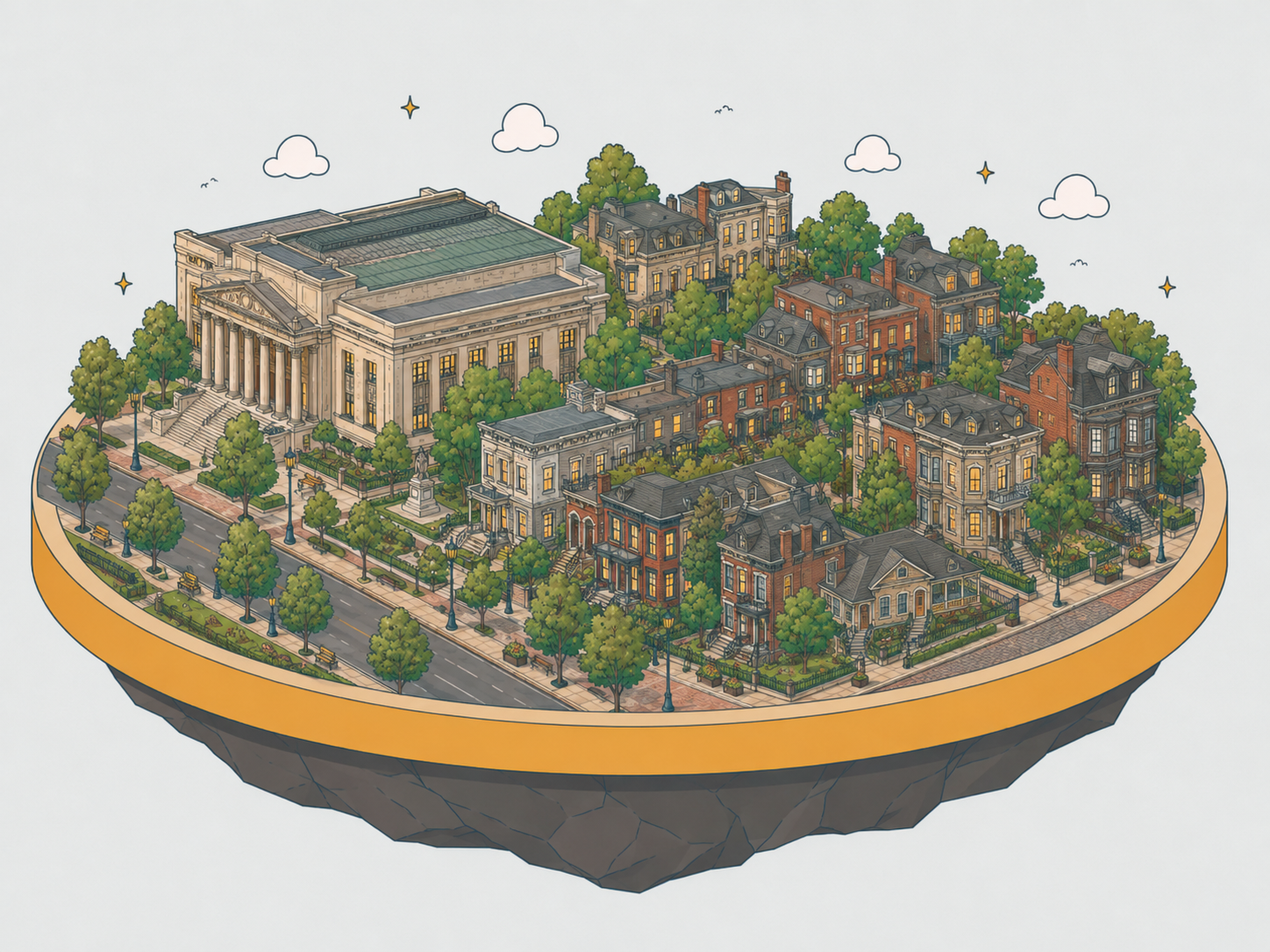
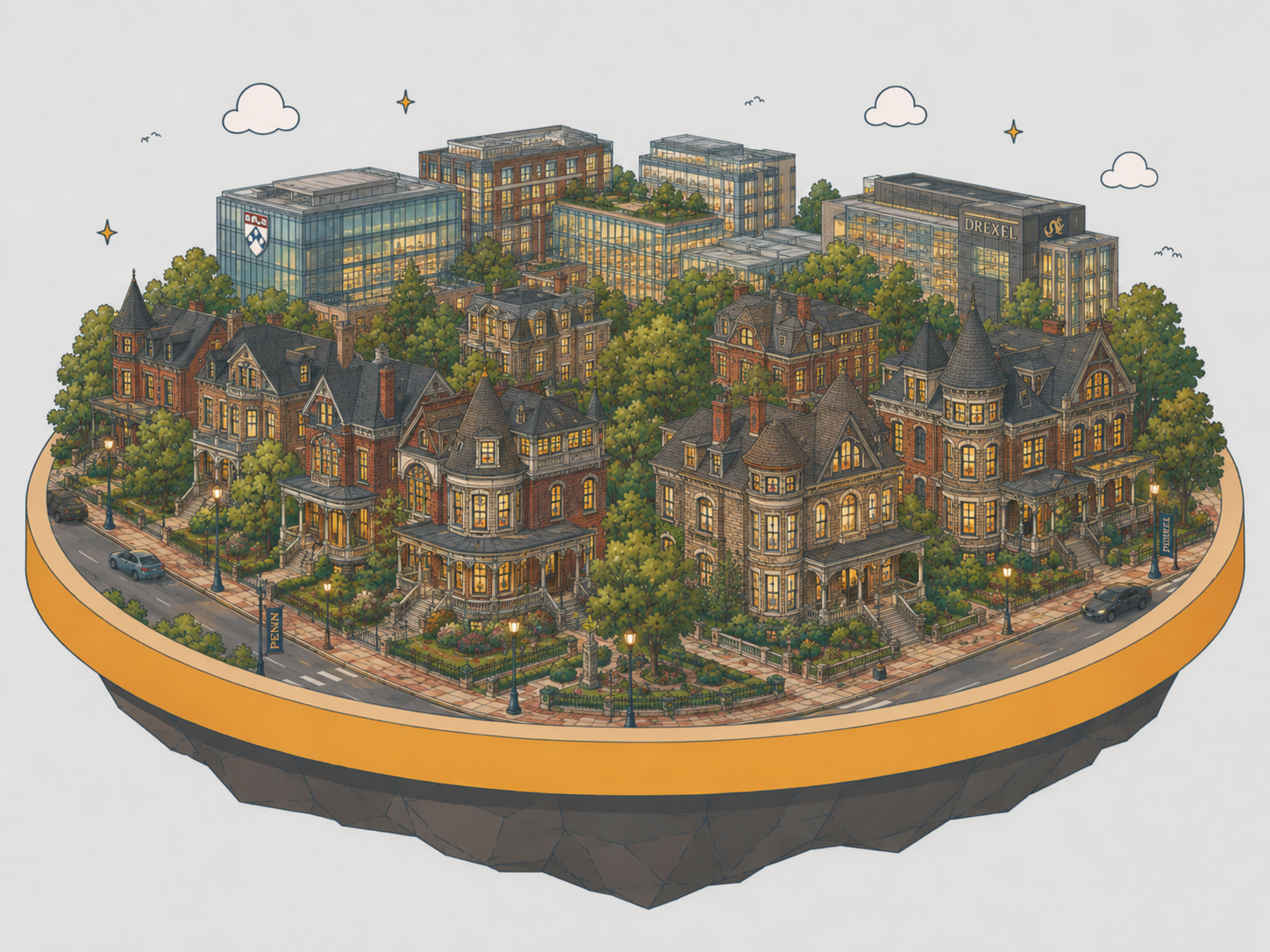
University City is century-old faculty rowhomes near Clark Park, new high-rise apartments overlooking 30th Street Station, and graduate-student rentals in between. The neighborhood has changed fast enough that longtime residents sometimes second-guess which corner they're on. This isn't Center City's quieter sibling. It's Philadelphia's academic engine room, where you can ditch a car entirely — or circle for twenty minutes if you don't.
What makes University City different
This isn't Rittenhouse with a college nearby. University City is what happens when two major universities — the University of Pennsylvania and Drexel — generate enough gravitational pull to reshape an entire district.
It runs from the Schuylkill River west to about 50th Street, and from Market Street south to Baltimore Avenue. ZIP 19104 covers most of it. Those boundaries tell you almost nothing about the reality on the ground, where the difference between 39th Street and 44th Street can feel like two different cities.
What defines the place is constant motion. Penn and Drexel bring tens of thousands of students, faculty, and staff who flood the streets during the academic year and disappear each summer. The universities also bring security patrols, enormous construction projects — the FMC Tower at 30th and Walnut visibly changed the skyline — and an endless supply of halal carts, coffee shops, and international restaurants serving a genuinely diverse population.
The neighborhood's biggest asset is also its complication: Penn Public Safety coverage stops at 43rd Street. Locals know that boundary intimately. East of 40th feels institutional and heavily policed. West of 43rd toward Clark Park feels residential and more authentically West Philly. Neither is a verdict — it's just the line everyone here navigates by.
How walkable is it, really?
The two numbers that carry the neighborhood — and the reason many residents genuinely don't own a car.
The lay of the land
University City reads as one district on a map. On foot it's four or five neighborhoods with different rules.
The campus bubble
30th–40th · Market to WalnutHeavily patrolled by Penn Police and University City District security, with constant daytime foot traffic. Functional and convenient — but nobody would call it cozy. This is the institutional core.
Baltimore Avenue
43rd–51stWhere University City feels most like a neighborhood and least like a campus. The food corridor and culture strip — Ethiopian restaurants, Vietnamese cafés, Lebanese BYOBs, craft breweries, used bookstores, vintage shops. Weekday lunches are manageable; Thursday through Saturday nights fill up.
Clark Park
43rd–45th · Baltimore to PineNine acres and the community hub west of 43rd — the neighborhood living room. Residential, families, consistent community presence, and more space for the money than the campus zone. Farther from transit, and outside Penn patrol coverage.
Powelton Village
North of MarketTechnically University City, but Victorian architecture and a different character — mainly Drexel-focused.
Spruce Hill / Cedar Park
West of 43rdThe “real West Philly” section — more residential, more families, authentic neighborhood energy. This is where the University City branding gets contested, and some residents pointedly still call the whole area West Philadelphia.
Where to actually eat and drink
The dining here punches above its weight — driven by international students, adventurous faculty, and locals who gave up on the supermarket's prepared foods. It isn't trying to impress Center City.
Saad's Halal
$$$$The Chicken Shish Tawook Maroosh gets called “possibly the perfect sandwich” — tons of meat, toasted bread, serious sauce. The line moves fast and prices are reasonable. Only closed during Ramadan. A lunch line is your confirmation.
Best for · the best cheap lunch here
Vientiane Cafe
$$$$Massive portions of papaya salad and curry. Bring your own bottles — and know the Polynesian cocktails are stronger than they taste. Expect a wait on weekends; it's worth it.
Best for · a BYOB group dinner
Terakawa Ramen
$$$$Best ramen in West Philly, full stop. Fast service, rich broth, and you're not paying Center City ramen prices. Lunch beats the dinner crowd.
Best for · a cold night
White Dog Cafe
$$$The weekend brunch spot, whimsical dog decor everywhere, sourcing from farms within 50 miles. Truffle parmesan fries are the move; the churro waffles are a sugar coma. Fair warning: the menu is pork-heavy, which limits options for some diners. Reserve or accept the wait.
Best for · weekend brunch
Han Dynasty
$$$$Sichuan food inside a full-on sports bar. Dan dan noodles with pork are the signature, and the spice levels are real — “medium” means medium. They don't sugarcoat for timid palates.
Best for · people who mean it about spice
Two Locals Brewing
$$$$Pennsylvania's first Black-owned brewery — Liberian jollof rice alongside a malty Nubian ale. The seasonal beer garden at The Lawn at uCity Square is summer perfection. Community vibe, good beer, real food.
Best for · a summer evening
The halal carts
$5–7Everyone has “their guy.” The 41st and Walnut cart gets consistent love for generous portions — most platters run $5–7 with a free soda. Cash moves the line faster. These carts compete hard, so quality stays high.
Best for · a $6 dinner that's actually good
Makkah Market
$$$$Middle Eastern groceries and cheap prepared food around the clock — lamb stew, chicken tawook, kufta kebab, most dishes under $10. Not Instagram-pretty. Extremely real at 2am.
Best for · late nights
Reality check: the Fresh Grocer at 40th and Walnut is the main supermarket, and it is open 24/7. The standard alternative is the Clark Park Farmers Market on Saturday mornings, or a trolley ride out to a larger store. Where you buy groceries matters more for daily quality of life than you'd expect.
Academic & cultural attractions
Two universities' worth of institutions, most of them open to anyone who walks in.
Penn Museum
140 years old, over a million relics, and the 3,000-year-old Egyptian Sphinx that's become the neighborhood's unofficial mascot. A legitimate world-class archaeology museum, not campus filler. Worth the admission.
Best for · a real museum afternoon
30th Street Station
FreeAmerica's third-busiest train station, and a stunning Art Deco building that makes even jaded commuters look up at the five-story windows. Walk through it even if you're not catching a train.
Best for · architecture you didn't plan on
Institute of Contemporary Art
FreeRotating exhibits and a reputation for taking risks — this is where Andy Warhol had his first solo museum show, in 1965. Worth checking what's up before you go.
Best for · a free hour
The Palestra
The “Cathedral of College Basketball.” Even if you're not a sports person, this venue shaped college basketball culture. Penn games are surprisingly accessible — check the schedule.
Best for · a cheap great sports night
Cira Green
FreeA park eleven stories up with panoramic city views, a seasonal beer garden, and movie screenings. Free access, and the best sunset in the neighborhood.
Best for · sunset
Clark Park
FreeNine acres carrying a year-round Saturday farmers market, Shakespeare productions, and August outdoor movies. The dog park's no-pit-bull rule is a contentious local issue. Penn and USciences security patrol the area regularly.
Best for · Saturday mornings
Living here: the real numbers
Housing runs from grad-student high-rise apartments to faculty rowhomes near Clark Park. The figures below were last checked in May 2025 — check current listings before you plan around them.
The good & the challenges
The unfiltered version.
- Transit access is genuinely liberating — you can live here without a car and not feel limited.
- Food diversity is exceptional, driven by actual immigrant communities and international students.
- Intellectual energy: lectures, talks, cultural events, if you want to engage.
- Community spaces that actually work — Clark Park, the farmers market, Baltimore Avenue events.
- Cheaper than Rittenhouse for comparable urban amenities, though that gap is shrinking fast.
- If you work at Penn, Drexel, CHOP, or HUP, your commute is a walk.
- Summer is blissfully quiet once the students leave.
- Parking is genuinely terrible — not annoying, rage-inducing. Circling 20+ minutes is common.
- Enforcement is aggressive; residential permit zones are ticketed routinely.
- Car break-ins and bike theft are real, recurring problems.
- Safety is block-by-block; 39th and Walnut doesn't feel like 45th and Pine.
- The campus core feels institutional. Convenient, but not charming.
- Gentrification tension is real, not abstract — long-time residents are being priced out.
- Student noise. Karaoke at 2am on a Tuesday isn't theoretical.
- The June–August exodus empties the place out and businesses adjust hours.
Should you live here?
The source everyone here agrees on: this neighborhood fits some people extremely well and almost nobody halfway.
- You're a grad student or postdoc who wants campus proximity without undergrad chaos.
- You're early-to-mid 20s working at Penn, Drexel, CHOP, or HUP.
- You genuinely don't want a car and value transit above everything.
- You want cultural diversity and authentic international food on your block.
- You work remote and want urban energy without Center City costs.
- You're faculty or staff who'd rather walk to work.
- You're past your late 20s and want a grown-up neighborhood.
- You need a car for work and value easy parking — you'll be miserable.
- You have kids and want strong public schools; families commute elsewhere for options.
- Rapid change and gentrification dynamics would sit badly with you.
- You need quiet evenings and low student energy.
- You expect suburban-style safety without staying alert.
Getting around
Walk Score 100 is accurate. Restaurants, groceries, coffee, pharmacies, and transit are all minutes away on foot, and there are sidewalks everywhere. You can walk the South Street Bridge to South Philly or the Chestnut Street Bridge to Rittenhouse in 15–20 minutes.
SEPTA — the defining advantage
- Market-Frankford Line (locals call it “the El”) — runs along Market with stops at 30th, 34th, and 40th. Center City in 10–15 minutes, Fishtown in 25. Less pleasant than other lines, but fast and frequent.
- Trolley lines 11, 13, 36 — all run through to Center City, and are generally preferred over the El for comfort. The 11 goes down Market, the 13 down Chester/Woodland, the 36 down Baltimore/Woodland.
- Regional Rail at 30th Street Station — multiple lines terminate here, connecting to the suburbs and the airport.
- Buses — the 21 on Chestnut/Walnut, plus the 9, 27, 32, and others blanketing the area.
Driving (reconsider)
- Residential permit zones dominate; evenings and weekends are competitive.
- The Clark Park area west of 43rd has slightly better residential parking than the campus zone.
- There's a garage across from 30th Street Station for longer-term parking — pricey.
- Enforcement is aggressive; residential permit zones are ticketed routinely.
Keep a car for suburban trips and shopping runs. Don't rely on it for daily campus-area movement — walking or the trolley is usually faster than circling.
Biking: bike-friendly with growing infrastructure, multiple Indego stations, and Schuylkill River Trail access. The caveat is real: bike theft is a persistent problem. Get a serious lock and don't leave anything nice out overnight.
Events worth planning around
Clark Park Farmers Market
Morning through early afternoon, every Saturday, all year. It gets packed, and it's worth it for the produce and baked goods — the Amish stand is the popular one.
Movies in Clark Park
A free, family-friendly outdoor series. Bring blankets and snacks. Popular with neighborhood families and the students who stick around for summer.
Shakespeare in Clark Park
Free outdoor theater that's become a genuine neighborhood tradition.
Baltimore Avenue Dollar Stroll
Vendors between 43rd and 51st offering $1, $3, and $5 deals on everything from food to art. A neighborhood institution that actually delivers value rather than just an Instagram moment.
Lancaster Avenue Jazz & Arts Festival
A celebration of local music and art. Less polished than the big city festivals, and more authentically neighborhood for it.
“Penn Christmas”
Not an official anything. At the end of each semester, departing students leave perfectly good furniture and kitchen supplies near dumpsters, and locals cruise the blocks around 40th–43rd during move-out weeks. Everybody does it.
Honest safety assessment
University City is simultaneously one of Philadelphia's safer neighborhoods and a place where the feeling of safety varies wildly by exact location and hour. Broad statements don't survive contact with the blocks.
Generally safer
- 30th–40th, Market to Walnut — the campus bubble. Heavy Penn Police and University City District presence, constant daytime foot traffic.
- Clark Park, 43rd–45th, Baltimore to Pine — residential, families, consistent community presence. Still worth caution at night, but stable.
- Baltimore, Walnut, Chestnut during business hours — plenty of people around.
Use extra caution
- West of 43rd Street — outside Penn Patrol coverage. Not necessarily dangerous, but a different security reality.
Day versus night is dramatic. Daytime University City, with students flooding around, feels busy and safe. After 10pm the foot traffic drops and the dynamic shifts. Both universities run Safe Ride services after dark and location-sharing security apps — Penn Guardian and Drexel Guardian. Use them.
Our take: block-by-block knowledge matters intensely here. A reputation attached to the neighborhood as a whole, in either direction, will not tell you much about the block you are standing on.
The transformation conversation
Being direct about this is part of writing an honest guide. University City is experiencing acute gentrification. Not subtle, not gradual. As of the May 2025 figures: rents up 8.8% in a single year, median home value near $744k. New luxury high-rises reshaping the skyline. Penn expanding west.
“Destroyed the old neighborhood” and “made the streets safer” are both things you will hear, depending on who's speaking. Long-time Black and immigrant residents are being priced out. The FMC Tower and developments like it bring amenities and also signal whose neighborhood this is becoming.
Some facts without editorializing: cultural institutions and small businesses serving previous communities are closing; and new residents — often university-affiliated, often with more money — are changing the demographic makeup. Some locals pointedly still call it West Philadelphia, treating the “University City” branding as erasure.
If you're considering moving here, you're entering a neighborhood in the middle of that. The good deal on rent exists partly because of displacement pressure on others. That isn't a guilt trip — it's honest recognition of the dynamics at play. The flip side is that cities evolve, and whether this reads as progress or loss depends heavily on where you sit in it.
A University City home, season by season
The academic calendar drives this neighborhood's mess as much as the weather does — and both are predictable if you plan for them.
End-of-semester move-out turns campus-adjacent blocks inside out, and every rental changes hands at once — dust, hauling, and abandoned furniture on the curb.
The move · Move-out and move-in resets timed to lease turnover, plus a deeper entryway pass while the building's whole hallway is in motion.
Students leave, the neighborhood empties out, and homes sit closed and humid through June to August while owners travel.
The move · The best window all year for a deep reset — no schedule pressure, and a light, dry pass that keeps humidity out of older rowhome plaster.
The universities refill at once. Foot traffic on Baltimore and Walnut spikes, and the first heating cycles push a summer's worth of dust through the house.
The move · A pre-semester deep reset — vents, baseboards, kitchen — before the calendar closes and the noise starts.
Salt and slush come in from the campus walks and go after hardwood finish, and radiator heat in older faculty rowhomes bakes dust onto every surface.
The move · Campus-walk salt off the floors every visit, and radiator-adjacent surfaces on a tighter cycle — old faculty rowhomes bake dust on faster than newer buildings do.
Keeping a University City home effortless
There are three different kinds of home here, and they don't want the same thing. New-construction high-rises near 30th Street are modern and sterile and mostly need consistency. Older rowhome conversions — the ones with more character and often better value — need the gentleness a century-old surface asks for. And graduate-student rentals with individual leases turn over on a schedule you can set a watch by.
What these homes need
- Turnover resets — individual leases mean move-outs happen constantly here, not once a year.
- Historic hardwood, handled gently — pH-neutral, no standing water on floors in the older Clark Park and Powelton stock.
- Entryways that see campus grit — heavy foot traffic in, salt in winter, and a mat-and-floor reset every visit.
- Building access, handled — high-rise front desks, elevators, and COIs are routine for us; flag it at booking and we'll sort it.
- Summer deep cleans — the June–August quiet is the single best window in the neighborhood for real work.
Why trust this guide? No one paid to be recommended here. It covers the whole academic cycle — the September move-in crush, the dead quiet of July, and the end-of-semester week when the sidewalks fill with abandoned furniture — because a neighborhood that empties every summer looks different depending on when you see it.
Make it yours
Five University City planning notes
A short list to turn what you read into your own next steps.
Saved checks stay on this device when browser storage is available. This is a personal planning list, not a property inspection or professional assessment.
A few good questions
Before you make a plan.
How much does house cleaning cost in University City?
Do you handle student and grad-student move-outs?
Do cleaners bring their own supplies?
Can I get the same cleaner each visit?
Do you clean the high-rises near 30th Street as well as the rowhomes near Clark Park?
Sources & next steps
Useful advice should
show its working.
These resources support the reader tools above and help you check details for your own address, date, or plans.
- SEPTA trip planner
Compare transit journeys using your actual stops, date, and departure time.
- ACME at 4001 Walnut Street
The store's current listing provides its location, services, and contact details.
- Penn Public Safety security services
The provider explains walking-escort arrangements and the area its service covers.
The current operator listing identifies ACME at 4001 Walnut Street. Escort arrangements come from the provider and are distinct from police coverage or a personal safety guarantee.
Keep exploring