A little orientation
Make a Moyamensing week work for you
Choose the useful connection.
Compare travel from your actual address instead of assuming proximity to Broad Street settles every commute or errand.
Make food stops specific.
Research Los Gallos, Frangelli’s or another guide name directly, then include the confirmed destination in a realistic weekly route.
Ask about the home’s access.
Discuss stairs, entry and delivery arrangements at the actual property before planning a move or a bulky household purchase.
A closer look
Travel, errands and the front door
Build from the address you would use rather than an assumed east-to-west neighborhood rule.
Compare the complete connection.
Enter the home and destination in SEPTA’s planner and compare the available journeys at your travel time. Use Snyder or Oregon station where the current route fits, including the approach and return instead of selecting by the guide’s corridor labels alone.
A useful questionWhich connection fits the complete trip you need in both directions?
Source & next step ↗Confirm one food destination.
Choose a guide reference such as Los Gallos or Frangelli’s and check the business’s current details directly. Plan the outing from your home, then consider whether it fits a repeat errand or a separate visit with its own return journey.
A useful questionWhich confirmed food stop belongs in your normal routine rather than a special trip?
Source & next step ↗Plan for the actual entrance.
Review the property address and ask the owner about entry, stairs, shared access and deliveries before arranging a move. Keep any access measurements and written instructions with your housing notes; the neighborhood’s house descriptions cannot supply those details.
A useful questionWhat needs measuring or confirming before a large item arrives at this home?
Source & next step ↗At Hometress, we believe every Philadelphia neighborhood has its own rhythm, and Lower Moyamensing is one of those places you understand best at block level. Known locally as LoMo, this South Philly neighborhood sits between Snyder and Oregon, Broad and 7th, with Moyamensing Avenue cutting diagonally through its dense rowhome blocks. It is residential, practical, diverse, and close to everything without feeling like a tourist district. This guide walks through what makes Moyamensing feel distinct, from BSL access and stadium-day movement to local food corners, parking realities, rowhome living, and the small details locals notice first.
What Moyamensing Actually Feels Like
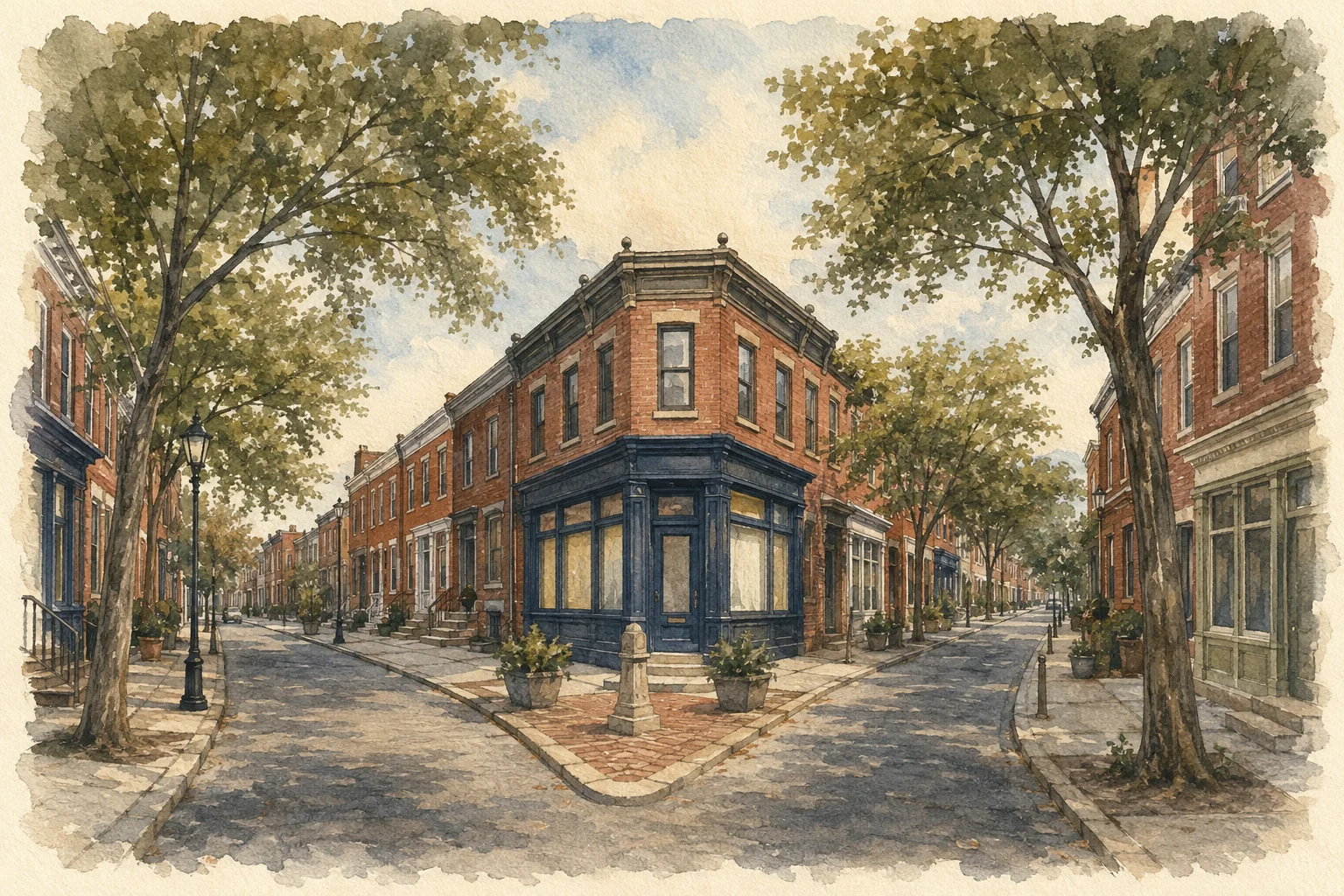
Moyamensing makes more sense when you picture it from the street instead of the map. The blocks sit in that dense South Philly rhythm where brick rowhomes line up shoulder to shoulder, cars squeeze into every legal-looking space, and the neighborhood seems quiet until you realize how much is happening just a few blocks away. Moyamensing Avenue cuts through at an angle, slipping across the grid instead of following it neatly, which gives this part of South Philly one of its easiest local tells. If you know that diagonal, you already understand more than someone who only searched the name.
Lower Moyamensing, or LoMo if you are talking like people who actually use the name, is generally understood as the rectangle from Snyder Avenue down to Oregon Avenue, Broad Street over to 7th Street. That sounds simple enough, but the feel changes depending on exactly where you are inside those lines. Closer to Broad, the Broad Street Line matters more. Closer to 7th, the neighborhood starts to feel more tucked into the eastern side of South Philly. Near Oregon, the stadium pull starts to feel more real. Off Snyder, you are still close enough to the rest of South Philly that the neighborhood does not feel sealed off from anything.
The name itself has become part of the local personality. Some people say Moyamensing carefully, some shorten it in a way that sounds closer to “Moy-mensen,” and almost nobody talks about it like a formal history marker in everyday conversation. Then there is the old name-origin joke: depending on who is telling it, Moyamensing comes from a place of wild black cherry trees or a place of pigeon droppings. That alone tells you something about the neighborhood’s sense of humor. Even the history comes with a little South Philly sarcasm.
The first thing a newcomer usually notices is how residential it feels. It is close to the stadiums, East Passyunk, the subway, and Center City access, but it does not feel like it is trying to perform for visitors. It is not built around boutique sidewalks or a polished dining strip. It is rowhomes, corner businesses, bakeries, delis, families, dogs, stoops, delivery trucks, and neighbors who know which side of a block is easier to park on after dinner.
That parking part is not a small detail. It is one of the everyday truths of LoMo. People here learn to think before moving their cars. A quick errand by car can turn into a 20-minute loop later if you return at the wrong time. Residents build their own private maps of which blocks might open up, where not to bother circling, and when it is better to walk. That is part of what makes the neighborhood feel lived-in rather than staged. Moyamensing is convenient, but it makes you earn that convenience in very South Philly ways.
Where Lower Moyamensing sits
- Moyamensing Avenue
- Broad Street
- Snyder Station
- Oregon Station
Schematic · not to scale
Where Lower Moyamensing Is
The practical map of Lower Moyamensing starts with four streets: Snyder Avenue, Oregon Avenue, Broad Street, and 7th Street. Snyder is the northern edge, Oregon is the southern edge, Broad is the western edge, and 7th is the eastern edge. Inside that box, Moyamensing Avenue runs diagonally and gives the neighborhood its name, its shape, and some of its local confusion.
That confusion matters because “Moyamensing” can mean more than one thing depending on who is talking. Lower Moyamensing, or LoMo, usually means the neighborhood between Snyder, Oregon, Broad, and 7th. Moyamensing Avenue itself runs beyond that and connects to areas that locals may think of differently, including Pennsport, Queen Village, and other parts of South Philly. A business on East Moyamensing can be important to the broader Moyamensing corridor without being part of core LoMo. That distinction matters when someone describes where a business or a block actually sits.
Locals often use cross streets instead of formal neighborhood language. They might talk about 10th & Wolf because of Los Gallos. They might reference 12th & Shunk when talking about water ice. They might mention 8th & Moyamensing because that intersection carries its own mix of visibility, debate, and local recognition. Someone may say they are near Oregon, off Snyder, closer to Broad, or over by 7th, and each phrase gives a different clue about the day-to-day experience.
Closer to Broad, the neighborhood feels more tied to the subway. That side is more convenient for people who care about the Broad Street Line, Center City access, and stadium trips without needing to drive. Closer to 7th, the neighborhood can feel a little more embedded in the eastern side of South Philly, with a different mix of food spots, smaller streets, and block-level feel. The whole area is compact, but small shifts matter.
This is why broad descriptions of Lower Moyamensing usually fall short. Saying it is “in South Philly” is true, but it does not tell you much. Saying it sits between Snyder and Oregon, Broad and 7th, with Moyamensing Avenue cutting diagonally through the grid, gets you much closer. Saying someone lives near 10th & Wolf, off Snyder, or closer to Oregon tells you even more.
For a newcomer, the easiest way to understand LoMo is to stop thinking of it as a destination neighborhood and start thinking of it as a residential pocket with strong access. East Passyunk is close enough for dinner. Broad Street is close enough for the subway. The stadiums are close enough to affect plans. But the blocks themselves still feel like South Philly rowhome blocks first.
Where you are inside the box
LoMo is the rectangle from Snyder down to Oregon, Broad over to 7th — but the feel changes depending on exactly where you are inside those lines.
Closer to Broad
The western edgeThe side where the Broad Street Line matters most. More convenient for anyone who cares about Center City access and stadium trips without needing to drive, and the subway becomes part of daily life.
Closer to 7th
The eastern edgeFeels more tucked into the eastern side of South Philly, with a different mix of food spots, smaller streets and block-level feel. The subway is still there, but the walk is longer.
Near Oregon
The southern edgeWhere the stadium pull starts to feel more real. Close enough to South Philly's sports and concert infrastructure for games and concerts to change traffic and movement patterns.
Off Snyder
The northern edgeStill close enough to the rest of South Philly that the neighborhood does not feel sealed off from anything.
The LoMo Vibe
Lower Moyamensing is residential before anything else. The neighborhood’s strongest identity comes from its rowhomes, dense blocks, corner businesses, and everyday routines. It does not have the same polished restaurant-strip feeling as East Passyunk, and it does not carry the same visitor-facing energy as Center City. LoMo feels more like the place people come home to after they have been somewhere else.
That is a compliment, but it comes with texture. The blocks are tight. Cars are tucked into every available space. Some homes look like they have been updated with new doors, central air, finished basements, and modern interiors. Others still carry that older South Philly feeling, the kind of house where you can imagine the same family keeping the same curtains, tiles, and basement setup for decades. The mix gives LoMo a lived-in character that newer neighborhoods cannot really fake.
The area also has a quiet diversity that shows up through food, family life, and small businesses more than slogans. You feel it in the mix of bakeries, delis, Mexican spots, Cambodian and Asian food near 7th, corner markets, and family-run places that people mention by intersection rather than branding. It is the kind of neighborhood where a food recommendation sounds more like directions than a list: go over to 10th & Wolf, check the spot near 12th & Shunk, stop by that place on Moyamensing.
LoMo is low-key, but it is not empty. There are families, longtime residents, newer arrivals, renters, homeowners, people walking dogs, people carrying groceries, people looking for parking, and people who know exactly where the neighborhood starts to feel different after dark. That last part is important. Residents may love the area, but they are not pretending every block feels the same at every hour.
The pride here is practical. People like that LoMo is close to things without feeling swallowed by them. East Passyunk is nearby when you want more restaurants and nightlife. The Broad Street Line is nearby when you want to get north or south without driving. The stadiums are close enough for games and concerts. But on many interior blocks, the dominant feeling is still rowhouse South Philly, not entertainment district South Philly.
The friction is just as real. Parking can wear people down. Some streets could use more trees. Trash and litter come up often enough that they cannot be ignored. The houses can be small, narrow, and older. Safety gets discussed in a block-by-block way, not a blanket way. None of that cancels out the affection people have for the neighborhood. It explains why the affection sounds so specific. Locals are proud of LoMo because they know the tradeoffs and still choose it.
Getting Around
Getting around Lower Moyamensing depends heavily on where you are inside the neighborhood. On paper, LoMo is compact. In real life, being closer to Broad feels different from being closer to 7th, especially if you rely on transit, walk often, or do not want to fight for parking every time you leave.
The Broad Street Line is one of the biggest advantages. Snyder Station and Oregon Station give the neighborhood straightforward subway access, which matters for Center City, North Philly, stadium trips, and quick movement through South Philly. If you live closer to Broad, the BSL becomes part of daily life. It can make the neighborhood feel much more connected than its quiet residential blocks might suggest.
That is why locals often measure LoMo by how close a place is to Broad. A house deeper toward 7th may still be within the neighborhood, but the daily transit calculation changes. The subway is still there, but the walk is longer. For some people, that does not matter. For others, especially anyone commuting often or going out at night, it matters a lot.
Buses also fill in the gaps. The 11th Street bus is a kind of local cheat code. It is not the first thing a newcomer studies on a map, but it can make regular movement easier if your routine lines up with it.
Walking is part of the neighborhood’s logic too. LoMo is close enough to East Passyunk that dinner, drinks, bakeries, and errands can be handled without treating every outing like a car trip. That matters because parking changes the way people behave. Once someone has a decent spot, they may choose to walk farther rather than give it up.
The stadiums add another layer. Living in LoMo means being close to South Philly’s sports and concert infrastructure without necessarily living right on top of it. For Eagles games, Phillies games, concerts, and other major events, the Broad Street Line can be a major advantage. At the same time, event days can change traffic, parking, and movement patterns. A route that feels easy on a quiet weekday can feel completely different when thousands of people are moving toward the stadium complex.
The short version for getting around LoMo is simple: closer to Broad is better for subway life, closer to 7th can feel more tucked away, walking often makes more sense than driving, and the best transportation advice depends on the exact block. That last part is the local truth. In Lower Moyamensing, a few blocks can change the whole daily routine.
Parking Reality
Parking is one of the most honest ways to understand Lower Moyamensing. People can talk about rowhomes, food, transit, and neighborhood pride, but if they do not mention parking, they are leaving out a major part of daily life.
Street parking in LoMo works like South Philly parking generally works: tightly, competitively, and with a lot of unspoken strategy. Cars line the blocks, corners fill up, and residents learn quickly that moving a car is not always a casual decision. If you leave at the wrong time, coming back can mean circling, waiting, giving up on the first few blocks, and slowly expanding the search.
Locals develop private parking maps. They learn which blocks are worth checking first, which ones rarely open up, and which times are more forgiving. They also learn when walking is less annoying than driving. A quick drive to run an errand may not feel worth it if the return trip costs you the spot you finally found.
This is where the neighborhood’s convenience becomes complicated. LoMo is close to the subway, East Passyunk, local food, and the stadiums. In theory, that makes life easier. In practice, it also means the streets carry a lot of pressure. Residential density, older rowhome blocks, multiple-car households, visitors, deliveries, and event-day movement all compete for limited curb space.
The PPA is part of the background stress, but the bigger issue is the daily calculation. People think about whether they really need to move the car. They think about what time they are coming back. They think about whether a game or concert will make the surrounding area worse. They think about whether it is easier to take the BSL, catch a bus, or just walk.
Parking also shapes the neighborhood’s social mood. Bad parking behavior can irritate people quickly, especially when crosswalks are blocked or cars are squeezed into questionable spaces. At the same time, there is a sense that everyone is dealing with the same impossible math. The frustration becomes part of the local language.
For someone moving to LoMo, the realistic advice is to treat parking as part of the cost of living there. The neighborhood gives you strong access, a real South Philly residential feel, good food nearby, and the ability to live close to major city routes without being in the middle of Center City. It also asks you to plan around your car. If easy parking is a must-have, LoMo will test your patience. If you are willing to walk, use transit, and learn the block-by-block rhythm, parking becomes less surprising, though rarely painless.
Food, Bakeries, and Corner Spots
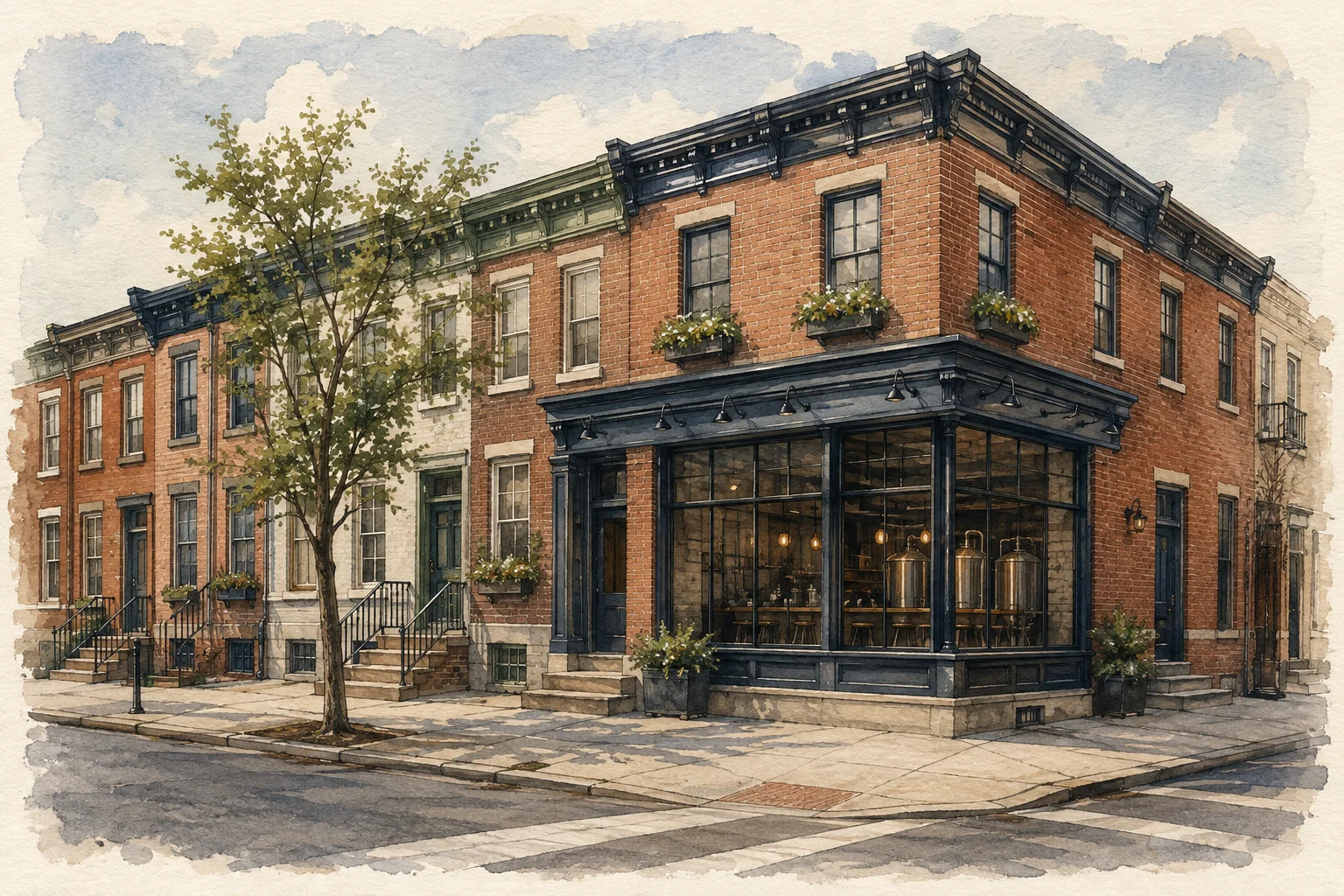
Food in Lower Moyamensing works best when you think of it as a map of corners, not a polished restaurant list. People do not usually talk about the neighborhood like they are planning a food tour. They talk about where they actually go, which intersection matters, which bakery has been part of the routine, and which place is close enough to walk to when they do not want to give up a parking spot.
Los Gallos at 10th & Wolf is one of the strongest food anchors in the LoMo conversation.
It comes up because it is attached to a real corner people know, not because it needs to be dressed up as a destination.
In a neighborhood where directions often sound like cross streets, 10th & Wolf carries weight. It tells you where to stand, which side of the neighborhood you are on, and how local food recommendations usually travel by word of mouth.
Colanzi’s Moira’mensing Cafe at 1301 W Moyamensing Ave has a different kind of local value. The name alone feels built for the neighborhood, and the address places it directly on the Moyamensing corridor. It is the kind of place that makes sense in a guide because it does not feel interchangeable. A café with a Moyamensing wordplay name, comfort-food mashups, and a neighborhood address tells the reader more than a generic “grab a bite nearby” line ever could.
The bakery layer matters too. Frangelli’s Bakery and New York Bakery fit the older South Philly rhythm of the area. Bakeries in neighborhoods like LoMo are not only about dessert. They are part of the weekly pattern: quick stops, family orders, familiar counters, and the kind of places people keep mentioning because they have been folded into daily life.
Then there are the smaller everyday anchors: Pops Homemade Italian Ice, Little Nick’s Deli, Café Canela, and the Cambodian and Asian options near 7th. These places help explain the neighborhood’s diversity better than a broad demographic sentence. LoMo’s food map is not one cuisine or one commercial strip. It is a mix of bakeries, delis, Mexican food, Asian food, water ice, cafés, and corner markets spread across residential blocks.
Italiano’s water ice at 12th & Shunk is worth mentioning because of the kind of detail locals remember: the hours can be weird. That is exactly the kind of information that makes a neighborhood guide feel useful. Anyone can list a water ice spot. Knowing that a place may not always operate on the schedule a newcomer expects is closer to lived knowledge.
Modern Family Market at 1500 Moyamensing Ave gives the guide another everyday anchor. A neighborhood is not only restaurants and bakeries. It is also the corner businesses people support because they are part of the local fabric. That kind of place helps show Moyamensing as a residential corridor where people run errands, pick things up, and recognize businesses by location.
Juicy’s Cheesesteaks at 1820 W Moyamensing Ave sits on the broader W Moyamensing corridor rather than in core LoMo. The same is true of places farther east, including Moonshine Philly and Moyamensing Point. They belong to the larger Moyamensing corridor and the nearby Pennsport and Queen Village edges rather than to Lower Moyamensing itself.
Food here is easier to follow by location than by ranking. Cross streets do most of the work, and whether a place sits in core LoMo, on W Moyamensing, or out on the broader corridor tells you more than a list position would. What you end up with is closer to a resident’s mental map of where to eat, where to stop, and which corners carry neighborhood memory.
A map of corners, not a restaurant list
Food recommendations here travel by cross street. These are the anchors the guide names.
Los Gallos
One of the strongest food anchors in the LoMo conversation. It comes up because it is attached to a real corner people know, not because it needs to be dressed up as a destination.
Best for · Naming where you live
Colanzi’s Moira’mensing Cafe
A café with a Moyamensing wordplay name, comfort-food mashups and a neighborhood address. The kind of place that does not feel interchangeable.
Frangelli’s Bakery
Part of the older South Philly rhythm of the area. Bakeries here are not only about dessert — they are part of the weekly pattern of quick stops, family orders and familiar counters.
Italiano’s water ice
Locals remember the hours as part of the experience: they can be weird. In summer, water ice becomes part of how people move through hot South Philly afternoons.
Best for · A summer afternoon
Little Nick’s Deli
One of the smaller everyday anchors that explain the neighborhood's diversity better than a broad demographic sentence would.
Modern Family Market
A corner business people support because it is part of the local fabric — the everyday side of a residential corridor where people run errands and pick things up.
Homes and Blocks
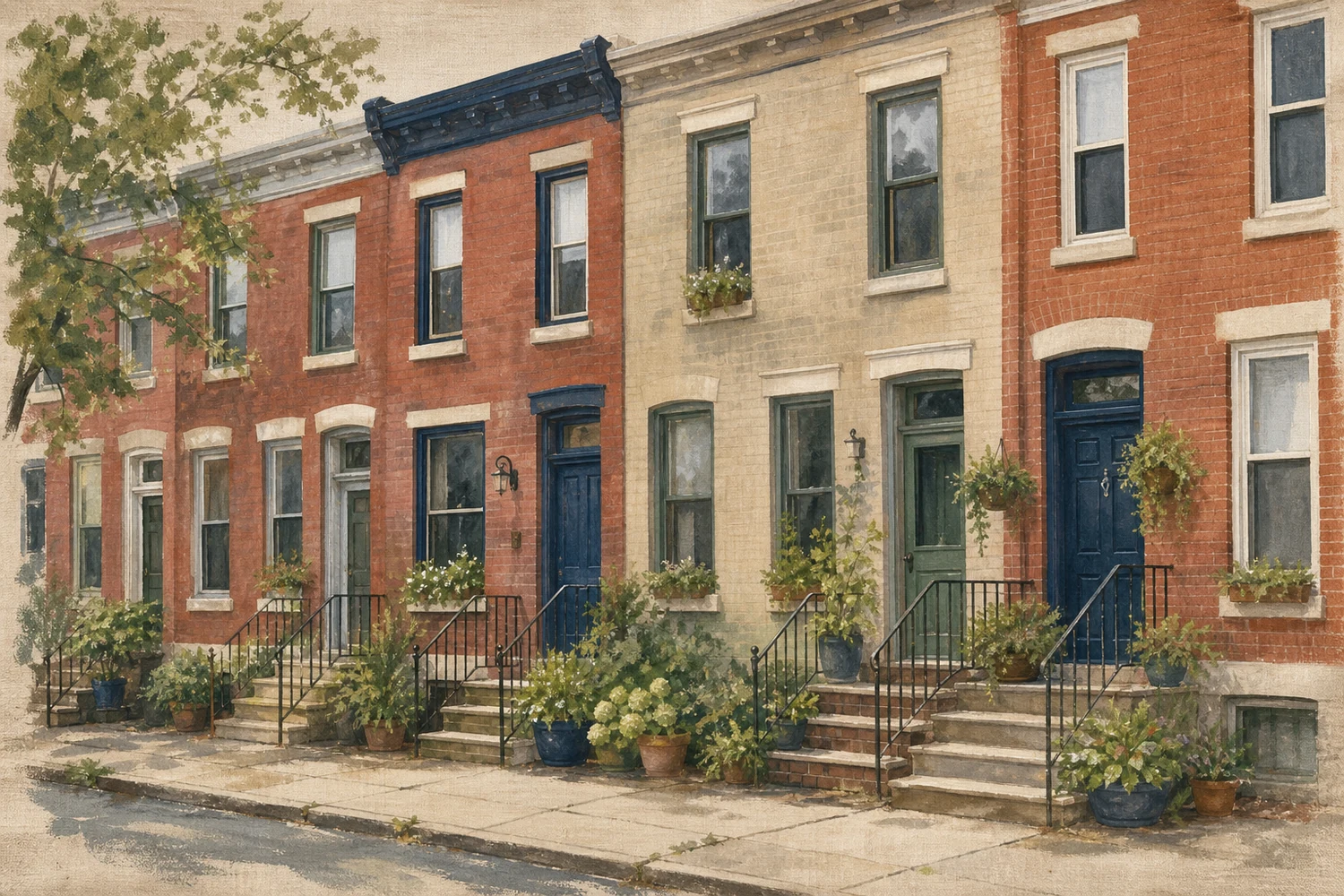
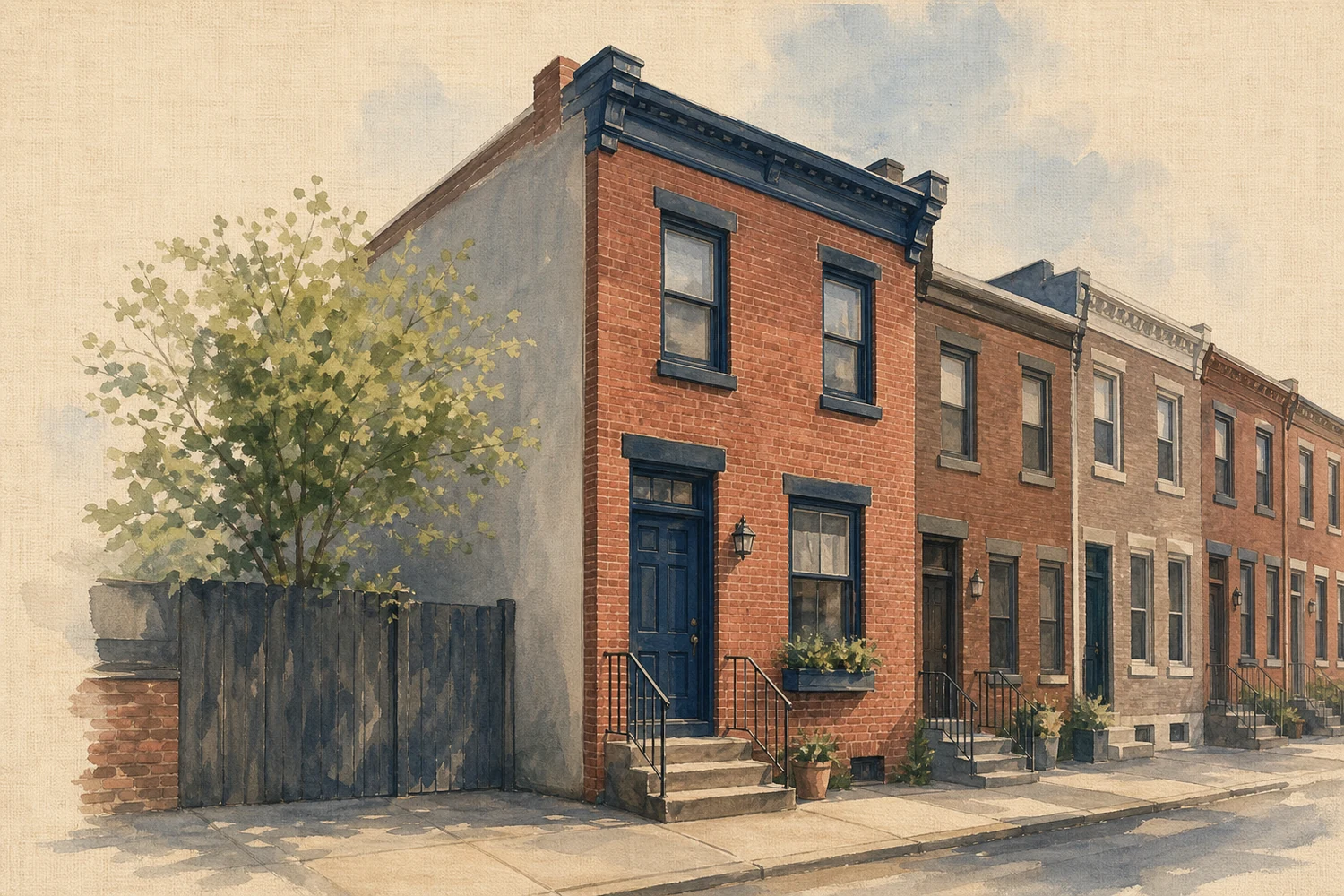
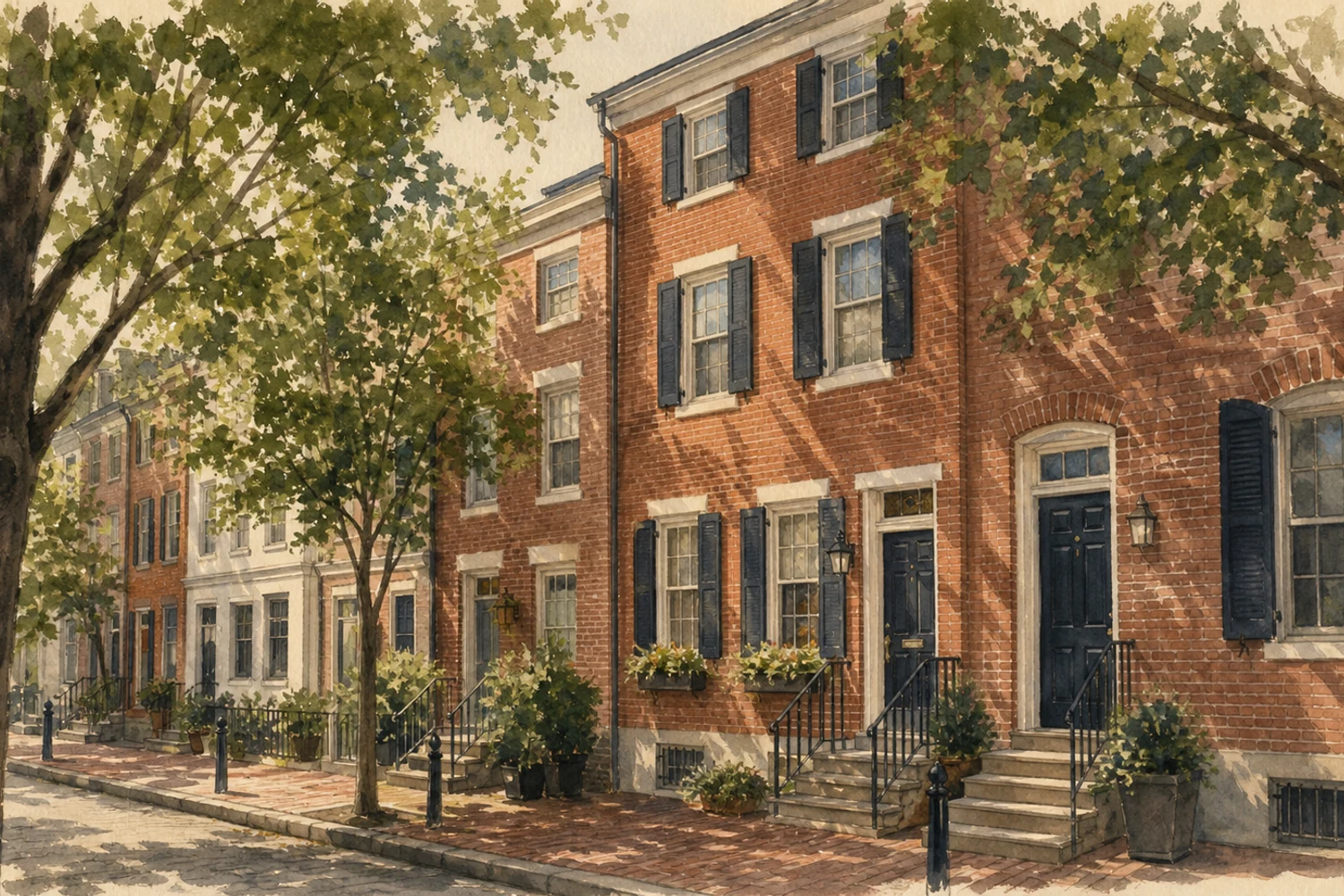
Lower Moyamensing is built around classic South Philly rowhome living. The blocks are dense, the houses are close together, and the rhythm is mostly brick, stoops, narrow sidewalks, and parked cars pressed along the curb. If someone wants a neighborhood of wide lawns, big setbacks, and easy driveways, LoMo will not match that expectation. The appeal is more compact and urban.
Many homes are classic masonry rowhomes, often with smaller footprints than newcomers expect. Narrow layouts, modest bedrooms, tight staircases, and low ceilings come up in resident conversations because they are part of the reality of older South Philly housing. These homes can be charming, but charm does not add square footage. A house can have character and still feel tight if someone is used to newer construction or suburban layouts.
The 1100 block of Cantrell is a good example of the kind of 2 to 3 bedroom rowhomes found in LoMo, with compact square footage and a price point that has historically felt more reachable than trendier nearby areas. The exact market changes over time, but the pattern is important: LoMo has often appealed to people looking for a full South Philly rowhome without paying the highest prices attached to more polished neighborhoods.
There is also a visible split between older homes and updated homes. Some properties still have the feeling of what locals might call a grandmom house, with older finishes, older layouts, and a sense that not much has changed in decades. Others have been renovated with central air, finished basements, newer kitchens, updated bathrooms, and cleaner modern interiors. On the same stretch, you can feel old South Philly continuity and the pressure of the newer housing market.
That mix is part of LoMo’s current identity. The neighborhood is not frozen in time. Newer construction and infill projects have started showing up on residential blocks, and some larger or more updated properties push into higher price ranges. For some residents, that signals improvement and investment. For others, it adds to the feeling that the area is changing one house at a time.
Affordability here is not simple. LoMo can feel more attainable than places with stronger name recognition or a more polished restaurant-scene identity, but that does not mean it is cheap in a simple way. The value depends on what someone is comparing it to. Compared with trendier parts of South Philly, a compact LoMo rowhome may feel like a practical deal. Compared with what longtime residents remember, rising prices and renovations may feel like a major shift.
Both things are true at once. LoMo offers real South Philly rowhome living, good access, and a residential feel that many people want. It also asks residents to accept older housing quirks, tighter layouts, limited storage, parking pressure, and the block-by-block variation that comes with a dense urban neighborhood.
Safety and Comfort
Safety in Lower Moyamensing resists a simple label, and a simple label would not match how locals talk about the area. People describe safety through blocks, time of day, comfort level, and personal experience. The most useful answer is practical: pay attention to exactly where you are, when you are there, and how familiar you are with city living.
The local advice pattern is steady. Stay aware. Use normal city sense. Keep your head up at night. Do not walk around tuned out and assume every block feels the same. That kind of guidance is different from panic. It is the way many city residents talk about moving through familiar but imperfect streets.
The area around 8th & Moyamensing is debated. Some people describe concerns around nearby blocks and talk about discomfort, visible problems, or safety worries. Others push back and argue that some outsiders misread older, dirtier, more diverse, or less polished blocks as automatically dangerous. That tension matters because it reveals how safety perception can overlap with race, class, cleanliness, and familiarity.
Those debates are not crime data. LoMo safety is best understood at street level. Someone living closer to Broad may describe a different routine than someone closer to 7th. A person walking home late from transit may experience the neighborhood differently from someone walking a dog on a quiet morning. A longtime resident may feel comfortable on a block that a newcomer reads as rough.
The key is to avoid both extremes. Do not sell LoMo as carefree. Do not frame it as a place to fear. The honest middle is more useful: it is a dense South Philly neighborhood where many residents feel comfortable and attached, but where awareness matters, block differences matter, and some intersections carry more debate than others.
For newcomers, the best approach is to visit at different times. Walk the blocks near the specific place you are considering, not just the prettiest nearby stretch. Check the walk to Broad, the nearest corner store, the route home at night, and how the area feels near Snyder, Oregon, 7th, and Moyamensing Avenue itself. Local comfort is built from repetition. LoMo rewards people who learn its patterns instead of judging the whole neighborhood from one pass through.
What Locals Complain About
People who like Lower Moyamensing still complain about it. That is part of what makes the neighborhood feel real. The complaints are not random. They cluster around the same daily-life friction points: parking, trash, safety uncertainty, small houses, and the way certain times or events change the neighborhood.
Parking is the complaint that shows up most clearly. Residents know the routine of circling, checking side streets, avoiding unnecessary car trips, and weighing every errand against the risk of losing a good spot. For some people, this becomes background noise. For others, it becomes one of the most exhausting parts of living in the area.
Trash and dirty streets come up as another frustration. Dense blocks, heavy foot traffic in some areas, corner activity, dumping, litter, and normal city wear can make parts of the neighborhood feel rougher than residents want. People may love their block and still wish the sidewalks, curbs, and corners were better cared for.
Safety uncertainty is a third recurring issue, but it usually shows up in nuanced ways. People do not all describe the same blocks the same way. Some residents feel comfortable almost everywhere in their routine. Others are more cautious around certain intersections, at night, or when moving farther east or south. The uncertainty itself becomes part of the experience.
The houses are another common tradeoff. LoMo’s rowhomes create the neighborhood’s identity, but they can be narrow, older, and smaller than expected. Low ceilings, tight rooms, limited storage, older systems, and odd layouts can surprise people who were only focused on location and price. Renovations help, but they also raise costs and change the feel of the block.
Finally, locals complain about timing. Event days near the stadiums change movement. Late-night noise can make a quiet residential area feel different. Summer heat feels sharper on blocks without enough shade. A food spot may be great but only useful on certain days. Even parking has its own timing rules. LoMo is not experienced the same way at all hours.
None of that is a reason to dismiss the neighborhood. They are the terms of the deal. Locals can be proud of LoMo, recommend it, defend it, and still warn someone about parking, trash, narrow homes, or the wrong time to move a car. That combination is the real tone of the neighborhood.
What Locals Are Protective About
Lower Moyamensing residents and South Philly locals can be particular about names and boundaries. That is one of the first things to respect. LoMo generally means Snyder to Oregon, Broad to 7th. The broader Moyamensing corridor reaches beyond that, but not every place on or near Moyamensing Avenue is core Lower Moyamensing.
That distinction matters because locals may correct outsiders who blur LoMo with East Passyunk, Pennsport, Whitman, Newbold, or generic South Philly. Those areas overlap in daily life, and people may walk between them easily, but they are not the same. A restaurant near East Passyunk, a bar on East Moyamensing, and a rowhome block near 10th & Wolf can all be part of someone’s South Philly routine while still carrying different neighborhood identities.
Locals are also protective of the idea that LoMo is a real South Philly family neighborhood. It is not just an affordability play, a realtor label, or a backup option for people priced out of trendier areas. The neighborhood has its own mix of longtime residents, immigrant families, small businesses, bakeries, delis, rowhomes, corner routines, and civic activity. People may argue about its flaws, but they do not want it reduced to a cheaper version of somewhere else.
The third thing locals protect is block-level knowledge. Someone who says all of LoMo feels the same will sound unfamiliar quickly. People who live there know that advice changes depending on whether someone is closer to Broad or 7th, near Snyder or Oregon, around 8th & Moyamensing, or closer to 10th & Wolf. Safety, transit, parking, food, and comfort all shift by a few blocks.
That is why the best local advice tends to be specific. It does not say only that LoMo is convenient. It says how far you are from the BSL. It does not just say parking is hard. It says when moving the car becomes a mistake. It does not just list restaurants. It names the corner. That precision is what locals protect, because it separates lived experience from surface-level neighborhood talk.
Micro-Seasons and Local Rhythms
Lower Moyamensing changes by time, season, and event. A person who only sees it once may miss that. The same block can feel different on a Sunday morning, a summer afternoon, a stadium event day, or a late night when parking is already tight and people are circling.
Sunday morning has a softer rhythm, especially when you look toward Moyamensing-adjacent community activity like the market energy near Dickinson Square. That is broader corridor context rather than core LoMo, but it helps explain the surrounding neighborhood pattern: errands, families, food, parks, and a slower start to the day.
Food has its own timing too. The Friday-to-Sunday activity at 744 W Moyamensing is the kind of detail that matters because it tells you when a place actually comes alive. Italiano’s water ice at 12th & Shunk adds another time-sensitive clue because locals remember the hours as part of the experience. In summer, water ice becomes more than a treat. It becomes part of how people move through hot South Philly afternoons.
Shade is another seasonal detail. On dense rowhome blocks with fewer trees, summer can feel hard on the sidewalk. The neighborhood may look charming in sunny photos, but the lack of shade changes how people walk, wait, and spend time outside. This is the kind of micro-seasonal reality that does not show up in a standard neighborhood summary.
Game days create a different rhythm. The stadiums are close enough to be a real perk, especially for people who like using the Broad Street Line for games and concerts. They are also close enough to affect traffic, parking, and movement. A normal route can feel different when thousands of people are heading south. A parking decision can feel more urgent when visitors and event traffic add pressure.
Late night brings another version of the neighborhood. Some blocks stay quiet. Others feel more active depending on nearby corridors, bars, transit routes, or general street activity. This is where the local advice about awareness, timing, and exact location matters most.
LoMo is best understood through these rhythms. It is not only where something is, but when you are there. Sunday morning, Friday night, a summer afternoon, a Birds game, and the moment after you finally find parking all create different versions of the same neighborhood.
Who Moyamensing Is Best For
Moyamensing is best for someone who wants dense South Philly living with practical access. If you like rowhomes, walkable food, bakeries, delis, corner businesses, the Broad Street Line, and the feeling of being near East Passyunk and the stadiums without living directly inside a nightlife district, LoMo makes sense.
It also works well for people who like neighborhoods with texture. The blocks are not overly polished, and that is part of the appeal. There are older homes, renovated homes, tight streets, long-running businesses, newer arrivals, longtime residents, and a food map that feels more like real life than a curated dining guide. If you want a place where local advice comes in cross streets, LoMo gives you that.
The neighborhood is especially practical for people who can use transit and walking as part of daily life. Being near the Broad Street Line changes the experience. So does being comfortable walking to East Passyunk, local bakeries, water ice, corner stores, or a bus stop instead of driving for every small errand.
LoMo may be harder for someone who needs easy parking, wide streets, newer housing, large rooms, lots of trees, polished sidewalks, or a neighborhood that feels the same from block to block. It may also frustrate someone who wants a simple answer to safety, because comfort here is more specific than that. The right block, time of day, and personal routine matter.
The best way to approach Moyamensing is honestly. It is close to a lot, but it still feels residential. It has strong local food, but it is not a tourist strip. It can feel more attainable than trendier nearby neighborhoods, but it is changing. It has loyal residents, but they will still complain about parking, trash, and tight houses. It gives you South Philly convenience, but it expects you to learn the rhythms.
For the right person, that tradeoff is exactly the point. Lower Moyamensing is not trying to be the flashiest part of Philadelphia. It is a practical, dense, lived-in South Philly neighborhood where the details matter: whether you are closer to Broad or 7th, whether it is game day, whether you already found parking, and whether you know that people around here are more likely to describe a place by the corner than by the listing name.
Who Moyamensing is best for
The guide's own answer: LoMo gives you South Philly convenience, but it expects you to learn the rhythms.
- People who want dense South Philly living with practical access.
- Anyone who likes rowhomes, walkable food, bakeries, delis and corner businesses.
- People who want to be near East Passyunk and the stadiums without living inside a nightlife district.
- People who like neighborhoods with texture — the blocks are not overly polished, and that is part of the appeal.
- Anyone who can use transit and walking as part of daily life.
- Anyone who needs easy parking. LoMo will test your patience.
- People who want wide streets, newer housing, large rooms or polished sidewalks.
- Anyone who wants lots of trees — some streets could use more shade.
- People who expect a neighborhood that feels the same from block to block.
- Anyone who wants a simple answer on safety, because comfort here is more specific than that.
Make it yours
Your Moyamensing routine notes
A short list to turn what you read into your own next steps.
Saved checks stay on this device when browser storage is available. This is a personal planning list, not a property inspection or professional assessment.
Sources & next steps
Useful advice should
show its working.
These resources support the reader tools above and help you check details for your own address, date, or plans.
- SEPTA trip planner
Plan your date, direction and return journey; check service and accessibility details.
- Philadelphia Atlas
Look up an address and review available City property records.
- Philadelphia Parking Authority
Check official parking information; read the restrictions at the actual space.
The tools support individual journeys and home access. They do not promise current restaurant availability or reproduce the guide’s timing and safety assumptions.
Keep exploring