A little orientation
Plan a Queen Village week around your household
Check assignment first
Use the District's tools for the actual address before discussing a school or program as an option.
Name the play space
Choose Weccacoe Playground or another specific facility, then ask about the activity and access you need.
Separate rules from custom
Look up City collection information for the address instead of relying only on a neighbor's preferred routine.
A closer look
Choose a Queen Village household check
Start with a practical question you will need answered after moving.
Use the home address
Open the School District's enrollment tools and look up the Queen Village address you are considering. Contact the relevant school about programs and enrollment arrangements, then compare those answers with your household's needs rather than relying on a general reputation claim.
A useful questionWhich school information should I confirm before choosing this address?
Source & next step ↗Choose the exact activity
Find Weccacoe Playground or another Queen Village recreation destination through the City's listings. Confirm the activity, entrance, and any current arrangements, then plan the approach from the prospective home instead of assuming every nearby green space offers the same visit.
A useful questionWhich facility actually supports the activity our household wants?
Source & next step ↗Check the collection arrangement
Use the City's collection-day lookup for the actual Queen Village address and check linked guidance for your circumstances. Ask the property contact where bins are stored and who handles shared areas so the home's routine follows both the applicable rules and clear responsibilities.
A useful questionWhere do the bins go, and who handles the shared routine?
Source & next step ↗The historic heart with a modern pulse
We've spent years cleaning homes throughout Queen Village — cozy trinities near Bainbridge Green, modern waterfront condos by Front Street, and everything between. Spend that much time inside people's homes and you start to feel the rhythm of the place itself: dogs heading to Mario Lanza Park at sunrise, late-night energy spilling off South Street, and the sense that everyone somehow knows each other without being overbearing.
What makes Queen Village different
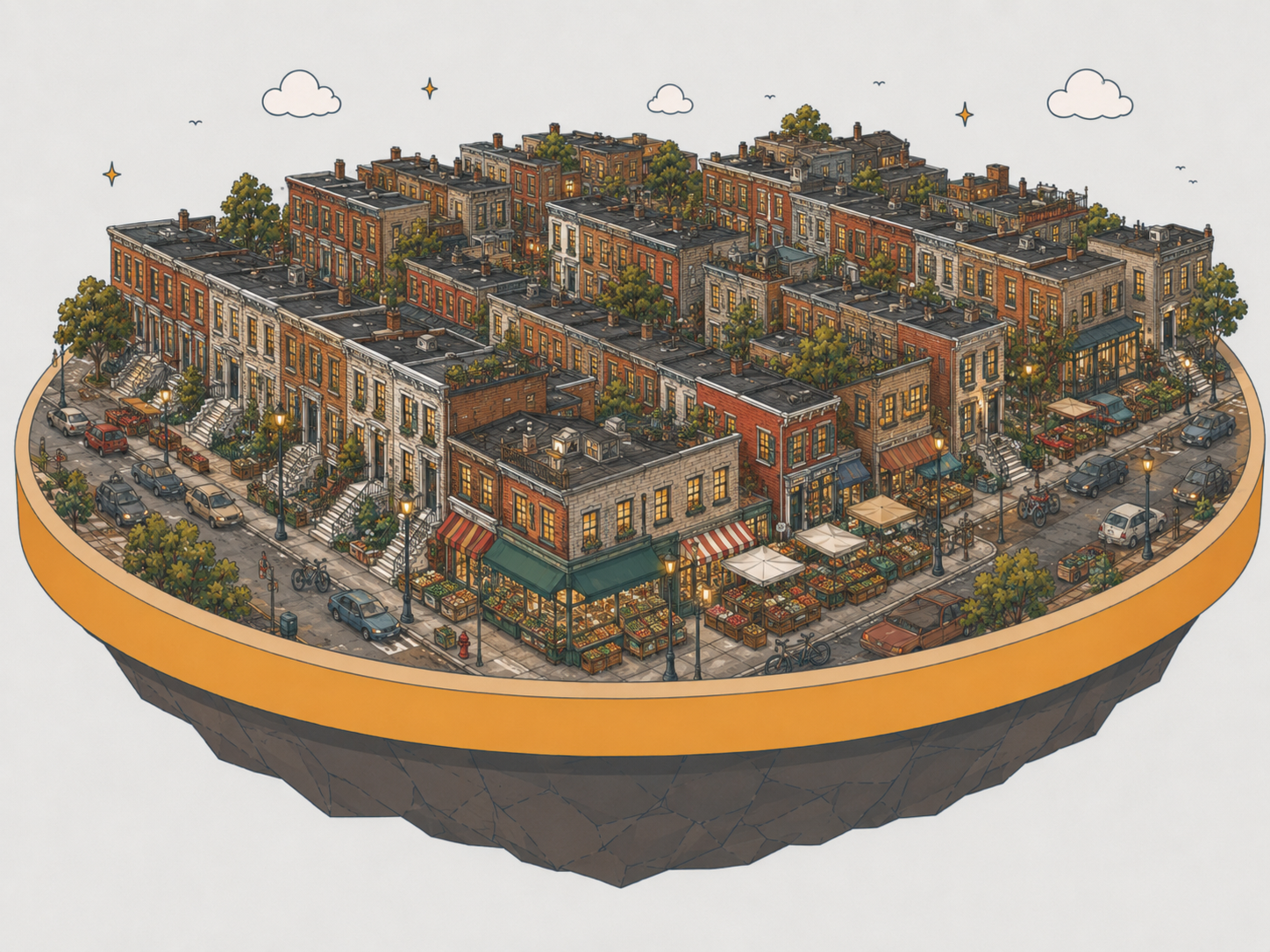
Queen Village is the oldest residential neighborhood in Philadelphia, and it still functions in the present tense. The streets are narrow and shaded by mature trees, and every few blocks turn up a mix of restored rowhomes, Victorian facades, and sleek new architecture. Unlike historic districts that trade on nostalgia, this one is a working community — people walk to markets, wave across stoops, and fill the small parks with ordinary daily life.
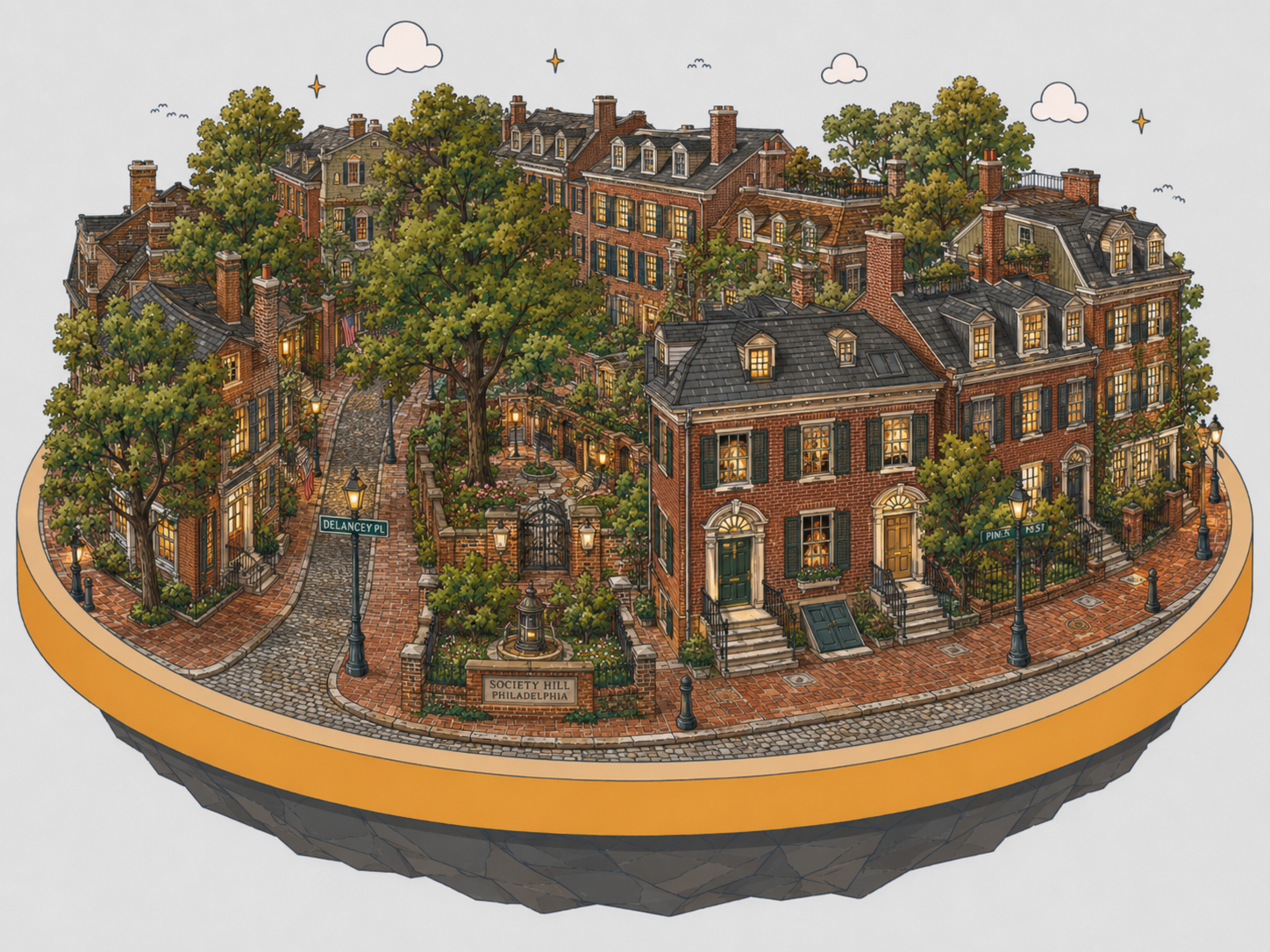
Outsiders lump it in with Society Hill, Bella Vista, and Old City, but the differences show up the moment you walk it. Society Hill leans formal and pristine. Bella Vista is more chaotic and food-driven. Queen Village lands in between — calm without being sterile. Even with new residents and rising prices, it holds a grounded energy that reads unmistakably local.
The architecture makes the point better than any description. One side of a block might hold a 19th-century trinity house with wrought-iron railings; the other, a glass-fronted townhouse with a rooftop deck. Somehow it works. Queen Village doesn't perform its history — it just lives with it.
Micro-zones within the Village
A few dozen blocks, and the character shifts hard depending on where you stand. Walk the block at night before you commit to it.
The South Street edge
North boundary · nightlifeThe loudest, liveliest part of the neighborhood. Mellow by day — shoppers, coffee, dog walkers — and a full entertainment zone by night. Residents here accept that sleep comes late on Fridays and Saturdays, and many pick apartments facing courtyards or interior alleys to buffer it.
The Bainbridge corridor
A few blocks southPicturesque, leafy, and lined with historic rowhomes, with Bainbridge Green as its centerpiece — beloved by day and busiest in the evening. Like most of the neighborhood, people here double-bag trash and put it out close to pickup.
The interior blocks
The residential heartQuieter stretches of trinities, small gardens, and brick sidewalks where stoop culture actually thrives. Neighbors chat over flower boxes; kids play along the narrow sidewalks. The best balance of energy and calm in the neighborhood.
The I-95 corridor
East · toward the riverLess picturesque, far more functional. New construction next to converted warehouses and condos with parking underneath, plus access to the community lots. The tradeoff is the highway hum, which never entirely disappears.
The rhythm, and why timing matters
Queen Village runs on its own schedule, and locals learn it fast. By eight in the morning the sidewalks fill with dog walkers heading to Mario Lanza Park and parents walking kids to Meredith and Nebinger. Coffee shops fill with regulars who claim the same tables daily. The pace is calm, measured, social.
By early afternoon — Tuesdays especially — it quiets noticeably. Plenty of local shops close early on weekdays, which gives the middle of the week a sleepy lull. Longtime residents treat that window as the best time of the week to run errands or walk through Bainbridge Green in peace.
Weekends have their own tempo. Saturday mornings are lively and communal, families filling playgrounds and brunch spots. By afternoon parking is nearly impossible. Then after sunset South Street wakes up: between roughly eleven at night and three in the morning the noise peaks and rolls through like clockwork. Residents close windows early, move cars out of risk zones, and brace for it.
Knowing the rhythm isn't trivia — it's how people plan a day here. Experienced residents time trash for right before pickup, hit brunch lines before eleven, and know exactly when to expect peace or chaos.
Where locals actually go
Queen Village doesn't run on landmarks. It runs on a handful of small places people use every single day.
Mario Lanza Park
The center of the neighborhood's serious dog culture — small, beloved, and as much a social hub for owners as a run for dogs. Conversations here cover everything from grooming to which community meeting is worth showing up to.
Best for · dogs and neighbors
Bainbridge Green
The community gathering place by day and the neighborhood's most argued-about square footage — everyone has an opinion about how it should be used. Beautiful either way, and the first place to fill on the first warm weekend of spring.
Best for · a warm afternoon
Fabric Row
Still carrying traces of the neighborhood's old textile trade, though the sewing-supply stores have mostly given way to boutiques, tattoo studios, and small eateries. The name outlasted the business it described.
Best for · an unplanned browse
Ace Outpost
More meeting hub than coffee shop. Weekday mornings bring freelancers on laptops, parents after school drop-off, and retirees reading by the window. A lot of people build their day around a stop here.
Best for · working, or being seen working
Weccacoe Playground
One of the two weekend anchors — on Saturdays the air around it fills with laughter, dogs tugging leashes, and live music drifting from nearby patios.
Best for · families on a weekend
Delaware River Trail
The autumn walk locals actually take, once the air cools and the sidewalks fill with leaves. Joggers and cyclists use the waterfront hard through the summer too.
Best for · a long fall walk
The food and coffee fabric
Food here is social infrastructure more than a dining scene. It leans small-scale and independent — you won't find many chains. Instead there are tightly packed restaurants that spill light onto the sidewalk, bistros that change menus with the season, and breakfast cafés locals treat like second homes.
Brunch is an institution. By late morning on weekends lines form outside the popular spots, and regulars know to arrive before the rush. Nobody seems to mind the wait — there's a certain pride in being patient for something good. The tone is relaxed rather than pretentious; the meal is half the point and the block-wide social ritual is the other half.
Dinner runs softer than downtown. South Street supplies the lively rooms with music and noise, but plenty of locals prefer the tucked-away restaurants deeper in the neighborhood, where meals move slower and the appeal is familiarity rather than hype. Most of these businesses are owner-operated and community-rooted, which is exactly why people are loyal to them.
The deal, stated plainly
- Deeply walkable — most people run every errand on foot.
- Groceries, pharmacies, restaurants, and parks inside a ten-minute radius.
- A community that looks out for each other without prying.
- Serious dog culture, with Mario Lanza Park at the center of it.
- Independent, owner-operated restaurants instead of a corporate strip.
- Strong local public schools — Meredith and Nebinger.
- Parking. It tops nearly everyone's grievance list, and PPA enforcement is strict.
- Rats, worse in summer heat.
- Strict trash-placement fines from the neighborhood association.
- Weekend noise off South Street rolling into residential blocks.
- A fast, competitive market where anything below average price goes instantly.
- Rising costs pushing housing beyond what long-time families can carry.
Living here: the real numbers
The stock runs from narrow trinities in quiet alleys to million-dollar rowhomes with rooftop decks. What that costs:
Housing, schools, and everyday life
The housing stock reads like an open-air architecture exhibit — colonial-era facades beside glass-paneled new builds, trinities tucked into alleys, renovated rowhomes with private garages. The mix gives the area a sense of evolution rather than replacement. Buyers here tend to value craftsmanship and walkability over square footage, which is why even the small homes stay desirable.
The market moves fast. Anything priced below the neighborhood average doesn't stay listed long, and rentals are just as competitive. Properties with a private parking spot command a noticeable premium — that's how much the parking problem shapes the market.
Families are a visible part of the community, drawn largely by the public schools. William M. Meredith and George W. Nebinger both carry strong reputations, helped along by grants and community funding through the local association. Parents volunteer regularly, and the playgrounds double as social hubs where the conversation runs from education to neighborhood safety.
Is Queen Village for you?
It rewards a particular temperament — patient, participatory, and fine with a little friction.
- You want to run your whole life on foot inside a ten-minute radius.
- You have a dog, or plan to — this neighborhood is built around them.
- You have kids and want strong local public schools in walking distance.
- You'd rather have historic craftsmanship than square footage.
- You like knowing your barista and your neighbors, without either being in your business.
- You need reliable street parking and won't lease a monthly spot.
- You're a light sleeper and can't put your bedroom at the back of the house.
- Rats and strict trash timing are dealbreakers rather than logistics.
- You want a quiet, sealed-off block — the wrong zip code for perfect silence.
- You need a fast, low-competition search; this market moves in days.
Getting around
Owning a car here is optional; managing one is an art form. The narrow streets and aggressive enforcement make parking hard but not impossible for people who adapt — you learn the signs, the cleaning schedules, and the rare stretches that stay open longer than they should.
Parking
- Lease a monthly spot in the community-managed lots under I-95 (about $95/month). Most residents who stop complaining are the ones who did this.
- Best street odds are mid-morning on weekdays — after commuters leave, before deliveries start.
- Weekends are nearly impossible unless you plan around them.
- Check the curb paint and the signs twice. Towing follows quickly when you read them wrong.
Everything else
- Walking is the default — among the most pedestrian-friendly neighborhoods in the city, with shaded sidewalks and everything inside a compact radius.
- Biking is genuinely part of the rhythm; cyclists favor the calm interior streets and use 2nd Street or Delaware Avenue for longer rides.
- Transit — bus routes on the major corridors reach Center City in minutes. The nearest subway stations sit just outside the neighborhood, which costs commuters a few minutes of walking and keeps heavy foot traffic out of the residential core.
The geography adds one wrinkle: sitting just west of the Delaware and south of Society Hill means getting in and out by car often involves going under or over the highway. Frustrating at rush hour, second nature after a few weeks.
The rituals worth planning around
Queen Village measures the year in repeating small things rather than big festivals.
Farmers Market
The unofficial town square. People linger long after they've finished shopping, catching up on neighborhood news and trading tips about what's coming. Even non-shoppers stop for a coffee and a conversation.
Neighborhood cleanups
Organized by volunteers and functionally a social meetup — families and long-time residents working side by side. This is the low-effort way to actually meet the block.
Outdoor movie nights & art shows
Small gatherings on patches of green space and in courtyards, put together by volunteers and local businesses. Low-key by design, and more identity-forming than any citywide festival.
Stoop season
Residents turn the narrow streets into corridors of color, with stoops built out into mini displays that pull families in from nearby blocks.
The unwritten rules (and the invisible infrastructure)
The social code here is built on mutual awareness. Neighbors exchange smiles, help each other through snowstorms, and keep an eye on unattended packages — but there's a firm unspoken rule against intrusiveness. Community works best when you participate without prying.
What people actually watch
- Trash timing. Put bags out just before collection, never the night before. Use sealed bins, double-bag, and store cans in a side alley if you have one. Fines reinforce it; social accountability is what actually keeps people consistent.
- Noise courtesy. South Street nightlife is a given, but within the residential blocks there's an understanding about limits — close windows during parties, warn the neighbors about a gathering.
- Upkeep. Sweep your stoop, water your tree pit, decorate seasonally. It reads as aesthetic; it functions as respect for shared space.
- Snow. Shovel your section promptly. The narrow streets make it a shared responsibility, and people notice.
Behind all of it sits the Queen Village Neighbors Association — QVNA to everyone who lives here. It funds small community grants, manages the parking lots under I-95, coordinates beautification, and enforces cleanliness rules. Some see a quiet backbone; others see a structure that overreaches. Either way it shapes everything from block lighting to trash enforcement. The city's 311 app does the rest, functioning as the neighborhood's digital watchdog — and occasionally as the source of an uncomfortable exchange when someone photographs a violation.
A Queen Village home, season by season
What each season does to a historic home on a narrow street — and the move that answers it.
The neighborhood comes back outside — fresh paint on fences, parks refilling, the first cleanups. Winter grit is still sitting in entryways and on sills.
The move · A full window-and-sill pass plus a deeper entryway reset, timed to the first warm weekends rather than after them.
Heat amplifies the trash and pest realities, windows stay open onto busy sidewalks, and South Street noise stretches later into the night.
The move · Tighter kitchen and bin-area attention on every visit, and a light, frequent surface pass so open-window dust never gets a foothold.
Leaves fill the narrow sidewalks and get walked in constantly, right as patio season stretches into November and entertaining picks up.
The move · Floors and entryway first, every visit — plus a pre-holiday deep reset while the weather still allows open windows.
Snow on narrow streets means salt tracked straight onto old hardwood, and life moves indoors into rooms that never get aired out.
The move · Salt off the old boards fast, and extra attention to the back rooms and stairwells — the spaces that never get aired out are the ones that show a closed-up winter first.
Keeping a Queen Village home effortless
The oldest residential neighborhood in Philadelphia means the oldest houses. Trinities have narrow stairwells and small footprints where every surface counts; the renovated rowhomes and waterfront condos are a different job entirely. Most homes here are some negotiation between the two.
What these homes need
- Old hardwood, handled gently — pH-neutral care and no standing water on floors that have been there for generations.
- Narrow stairs and tight rooms — small spaces show everything, so consistency beats intensity.
- The entryway — narrow-street grit, leaf litter, and winter salt all arrive at the door first. A mat-and-floor reset every visit does most of the work.
- Kitchen and bin areas — in a neighborhood this serious about pests, this is where a routine clean earns its keep.
Why trust this guide? Nothing here is sponsored. It covers the trinities where the stairs turn back on themselves, the renovated rowhomes, and the condos near the river — three centuries of housing stock inside a few blocks, which is more than a walking tour shows you.
Make it yours
Five Queen Village household notes
A short list to turn what you read into your own next steps.
Saved checks stay on this device when browser storage is available. This is a personal planning list, not a property inspection or professional assessment.
A few good questions
Before you make a plan.
How much does house cleaning cost in Queen Village?
Do you clean trinities and older rowhomes?
How do you handle historic hardwood?
Parking is brutal here. Does that affect a cleaning visit?
Can I get the same cleaner each visit?
Sources & next steps
Useful advice should
show its working.
These resources support the reader tools above and help you check details for your own address, date, or plans.
- School District enrollment tools
Find the District's school finder and enrollment guidance; no school ranking is implied.
- Find a playground or recreation center
City facility listings provide locations and contacts for checking programs and access.
- City collection-day lookup
Look up collection arrangements for a specific address and check holiday changes.
This profile does not rank schools, quote current rents, or confirm I-95 parking availability. Collection rules and private parking arrangements require their respective current sources.
Keep exploring