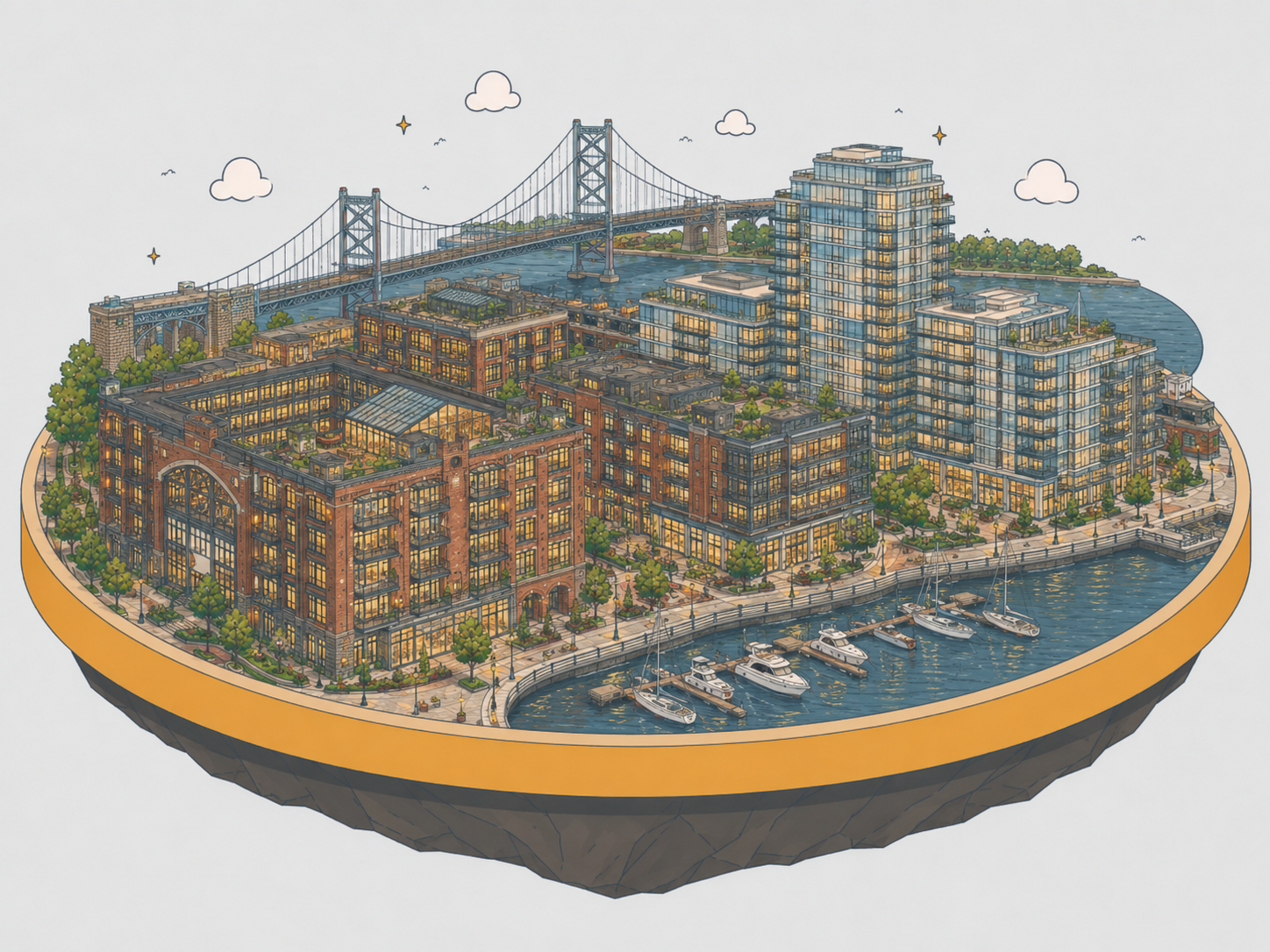
A little orientation
Check what is open around Penn's Landing
Check the specific destination
Penn's Landing is not one venue with one schedule; open the page for the park or event you mean.
Check construction information
Confirm the current approach before planning a walk across or alongside the waterfront.
Keep a simpler option
A shorter waterfront visit can still work if an event or seasonal attraction does not fit your day.
A closer look
Choose a waterfront plan
Use the operator's current information to decide what kind of visit makes sense.
Check the attraction by name
Open the waterfront operator's site and find the current page for Spruce Street Harbor Park or RiverRink. Check the visit date, admission arrangements, and activities you want before booking travel, rather than assuming an old seasonal description means everything is operating.
A useful questionWhat is actually offered on the date I want to go?
Source & next step ↗Verify the approach before setting out
Use the waterfront operator's construction updates and directions to choose the approach to your named park or pier. Plan a short walk with a clear turning point, then inspect the return route rather than assuming an uninterrupted connection along the entire waterfront.
A useful questionWhich approach and return route are currently available?
Source & next step ↗Build around a confirmed event
Find the event on the waterfront operator's own site and check its location and visitor guidance. Then use SEPTA's planner for the outward and return journeys, leaving room to depart early if weather, energy, or the event plan changes.
A useful questionHow will I get home if I leave the event early?
Source & next step ↗The waterfront you have to time
This stretch of the river is condos with the skyline in the window and rowhomes a few blocks inland where the wind still finds you. Here's the thing about Penn's Landing: it is rarely neutral. It is either activated enough to justify the trip or flat enough to make you question it, and the difference is almost never the view. It's the timing.
Why it feels different than it looks online
Penn's Landing photographs better than it explains itself. Scroll through it online and you get a polished waterfront district — sunset views, glowing lights, date-night energy, a full lineup of things to do. None of that is fake. The river views are genuinely beautiful, especially once the light drops and the skyline and bridges take over.
What photos flatten is everything locals learned the hard way. They don't show the wind coming off the Delaware and cutting straight through a jacket. They don't show the parking total that can sour the trip before you're out of the car. They don't show how fast the place shifts from calm and scenic in the late afternoon to crowded and tense on a big event night.
So two people describe Penn's Landing like they visited different cities, and both are telling the truth. One caught RiverRink on a good winter evening and left calling it one of the best seasonal spots in Philadelphia. The other showed up on a windy off-day, paid too much to park, and left wondering about the hype. Locals judge it less by whether it's pretty — it usually is — and more by whether it's worth the hassle that day.
How locals actually map it
Outsiders picture one clean attraction by the river. Residents experience a waterfront zone with different pockets, different moods, and different uses depending on what's happening.
Spruce Street Harbor Park
Warm monthsHammocks, string lights, colorful seating — the version of the waterfront that shows up in most photos. Genuinely good when it lines up, and more competitive than it looks: groups claim the hammocks early and hold them.
The RiverRink
WinterThe clearest example of the area working. When the rink is active the waterfront has structure, light, and a reason for people to be there — it stops being a backdrop and becomes a destination.
Columbus Boulevard
The approachThe drive in matters almost as much as the waterfront. Construction and lane restrictions here can make getting there the most annoying part of the trip.
Race Street Pier
North endOne of the pier spaces locals use as a reference point for navigating the area — an approach to the water rather than a destination in itself.
Festival Pier
The old nameStill called that in conversation. Local memory doesn't update as neatly as official branding, which tells you how lived-in the area's vocabulary is.
The Old City edge
Walk-in approachFront Street, the Hilton, and the Christopher Columbus Monument are the landmarks people orient by. Many locals treat the waterfront as the end of an Old City or Society Hill walk rather than a place they drive to.
The first local rule: know what's happening that day
Penn's Landing is one of the most event-dependent places in Philadelphia. With active programming it feels festive and full. Without it, it's a scenic backdrop without much holding the visit together. Locals don't ask whether they want to go — they ask what's there right now.
Matching the time to what you actually want
- Scenery — late afternoon into sunset, when the water and skyline do the work. Best on a mild day; wind changes it completely.
- Family — daytime, and earlier than you think, especially on weekends and event days.
- Date night — needs a seasonal anchor. Sunset plus RiverRink is the reliable one; a random cold night is not.
- Skip it — windy off-days with no programming, and late arrivals on busy days, when you've lost all margin for error.
The tradeoff nobody escapes: event days solve the nothing-to-do problem and create crowd and parking problems instead. Locals aren't chasing a perfect day here. They're choosing which version of the place they're willing to deal with.
What actually works
People leave satisfied when they came for something specific and got it. The source of most disappointment is treating the whole area as one continuous attraction.
The waterfront walk
The river, the bridges, the skyline. Not about checking off activities — the setting carries a short visit that feels complete on its own.
Best for · a walk that justifies itself
RiverRink
Skating, lighting, and a steady flow of people. The one thing that reliably turns the waterfront from scenery into a plan.
Best for · the winter version
Spruce Street Harbor Park
Seating, string lights, and enough structure to make staying easy rather than just passing through. Arrive earlier than feels necessary if the hammocks matter to you.
Best for · a summer evening, arrived early
Fireworks & major events
When the waterfront feels like a gathering place instead of a backdrop, and closest to what visitors picture. Families get the most out of these.
Best for · the big-night version
Reality check: food is not the highlight here. Most locals either keep expectations low or bring their own. And the features that look casual in photos — the hammocks especially — are in real demand, so they aren't something to count on without planning.
The habits locals never say out loud
Not official guidance. Just the patterns that separate a smooth visit from a frustrating one.
- Decide why they're going first, then build the trip around it.
- Arrive earlier than they think they need to on busy days.
- Assume parking won't be simple, and plan a walk-in approach.
- Check the weather more carefully than for a normal city outing.
- Treat it as part of a larger Center City day, not the whole plan.
- Showing up with no plan to see what's there.
- Late arrivals on event nights, when every small problem stacks.
- Driving straight into the busiest part of the waterfront.
- Relying on the area for basics like restrooms at peak times.
- Expecting the setting alone to carry a night.
The wind problem nobody warns you about
It's the most consistent complaint among people who spend real time here, and it's not a minor detail. The waterfront is open by design, which means very little blocks the wind coming off the Delaware. A day that feels manageable a few blocks inland can feel noticeably harsher the moment you step out toward the water.
It changes how long people stay and how much they enjoy being there — and it changes how crowded the place feels. Mild days keep people lingering, which is most of what creates the energy. Cold or windy days empty the space out even when the view is exactly as good.
The honest safety read
Locals don't treat Penn's Landing as a place to avoid. They treat it as a place where conditions matter — specifically timing and crowd density.
During the day most people describe it as straightforward. Walkers, runners, and families move through without much issue, and the open layout and steady foot traffic keep it feeling normal. The tone can shift in the evening, particularly on nights when large groups gather and the space fills quickly. Past incidents tied to large crowds have shaped how locals think about those nights.
The adjustment people make is practical rather than fearful: go earlier for a relaxed visit, pay attention to what kind of event is drawing people, and stay aware once the crowd builds. Not every busy night turns into a problem — but the possibility is enough that locals plan around it rather than hope.
What gives the waterfront structure
The source names no dated schedule, so this is the shape of the year as residents describe it — programming, not fixed dates.
RiverRink season
The stretch when Penn's Landing feels most complete. Lighting and movement organize the whole space, and planning a visit gets easy because there's something specific to do.
Spruce Street Harbor Park
Seating, hammocks, and small activities that make the waterfront somewhere to stay rather than pass through. Busiest late; easiest early.
Fireworks nights
The waterfront at its most crowded and most alive at once. Worth it with a plan and an early arrival; rough without either.
The quiet version
A walk and a view, and locals are honest that this is all it is. Fine if that's what you came for — thin if you expected a district.
When Penn's Landing is actually worth the trip
It doesn't succeed on autopilot. It rewards people who understand how it works.
- You're going for a sunset walk and the weather cooperates.
- RiverRink is running and gives the place structure.
- There's an event turning it into a gathering rather than a backdrop.
- You arrive early enough to have room to enjoy it.
- You treat it as a guaranteed all-day destination without checking what's on.
- The wind makes standing by the water genuinely unpleasant.
- Parking frustration starts outweighing the visit itself.
- You arrive at the busiest hour with no plan.
A waterfront still arguing with itself
For a lot of Philadelphians this place is tied to memory as much as to the present. The earlier version is remembered as less polished but more familiar — people knew how to use it and how it fit into ordinary life. The current version feels transitional: some parts more developed, others visibly unfinished.
The redevelopment behind that is genuinely ambitious — covering sections of highway and expanding green space to reconnect Center City to the river. On paper it's easy to support. In practice the timelines stretch, lane reductions bite, and people who already find the waterfront awkward to reach aren't eager to wait years for a payoff that still feels theoretical.
Underneath it is a real question about who the finished waterfront is for. Some see a chance to finally match the area's potential; others think the qualities that made it feel like part of the city's everyday fabric are being edited out. Both readings are part of the local reality, which is why the argument hasn't settled.
A waterfront home, season by season
Living this close to the Delaware is a different maintenance problem than living four blocks inland. What each season does, and the move that answers it.
River damp and pollen arrive together, and the first warm weekends put steady foot traffic between the waterfront and the front door.
The move · Glass and sills first while the light is doing the most work, and the entry moves to every-visit once the walking season starts.
Windows open onto river humidity, and the waterfront event season means more coming and going through the house than any other time of year.
The move · A light, dry pass that won't drive moisture into the woodwork, and the kitchen and entry carrying the visit while the house is actually being used.
The wind sharpens off the water and the first heating cycles push a summer of dust through the whole place at once.
The move · Vents and baseboards before the cold sets in, so heating season starts clean instead of redistributing everything that settled all summer.
The river wind drives salt and grit at the windows and the door, and a closed-up waterfront home bakes dust onto every surface.
The move · Glass and sills stay on the schedule all winter here — the wind puts more on the windows than the floors — with the entry reset every visit.
Keeping a waterfront home effortless
Homes this close to the river have their own maintenance profile, and most of it comes down to what the wind carries. A standard reset here is about staying ahead of the exposure, not scrubbing harder.
What these homes need
- Glass and sills, on a schedule — the view is the whole point of living here, and river wind puts a film on it faster than an inland block.
- The entry — grit and winter salt come off the waterfront walk and stop at the door if someone handles them every visit.
- Damp-aware care — proximity to the water means a light, dry pass on woodwork rather than anything that adds moisture.
- Building access, handled — front desks, elevators, and certificates of insurance are normal in the newer buildings. Flag it at booking and we'll handle it.
Why trust this guide? Nobody paid to be included. It covers the whole cycle — the July event crush and the January stretch when the wind empties the place out — because a place that changes this much with the weather can't be described from one visit.
Make it yours
Before heading to Penn's Landing
A short list to turn what you read into your own next steps.
Saved checks stay on this device when browser storage is available. This is a personal planning list, not a property inspection or professional assessment.
A few good questions
Before you make a plan.
How much does house cleaning cost near Penn's Landing?
Do cleaners bring their own supplies?
Can I get the same cleaner each visit?
Do you clean the waterfront condo buildings?
Is parking a problem for your cleaners on event days?
Sources & next steps
Useful advice should
show its working.
These resources support the reader tools above and help you check details for your own address, date, or plans.
- Delaware River Waterfront
The waterfront operator links current park information, events, directions, and construction updates.
- SEPTA trip planner
Compare transit journeys using your actual stops, date, and departure time.
The waterfront operator is the source for current park programming and construction access. These prompts do not certify a seasonal attraction or walkway as open.
Keep exploring