A little orientation
Test a Manayunk address from street to doorstep
Walk the complete approach
Test the route from your boarding point or errand destination to the actual home entrance.
Research flooding by location
Use official maps and ask property-specific questions; position on a hill alone does not settle flood concerns.
Choose a manageable outing
Plan a particular park or trail visit with a clear entrance and return point.
A closer look
Choose your Manayunk check
Start with the property, the commute, or the outing you want to understand.
Start with the exact property
Open the City's flood maps and tools for the Manayunk address you are considering. Use the resources to prepare questions about past water entry, drainage, and relevant records, then ask the property contact rather than treating elevation as an answer.
A useful questionWhat flood or drainage question remains for this particular property?
Source & next step ↗Include the climb and the doorway
Put your Manayunk address and regular destination into SEPTA's planner, then walk the approach from the suggested boarding point. Include the return journey with bags or after a workday when deciding whether the full route fits your normal routine.
A useful questionWould I still choose this route after an ordinary workday?
Source & next step ↗Choose a clear turning point
Use the City's facility information to identify the Manayunk park or recreation destination you want, such as Pretzel Park. Plan the approach and a short return option before linking it with Main Street or extending the outing toward the river.
A useful questionWhere will we turn back if we want a shorter outing?
Source & next step ↗Manayunk runs from the canal apartments that watch the river rise to the ridge-top rowhouses that look out toward Center City. What makes this community special is easy to spot: neighbors who wave from their porches, Saturday mornings filled with the smell of coffee and river air, and a quiet toughness that shows up after every storm. Whether you’re a new arrival or a long-time “Yunk” local, living here means balancing charm with challenge, and loving every bit of it.
The Feel of the Place
There’s no mistaking when you’ve arrived in Manayunk. The air smells faintly of river water and roasted coffee, and the streets rise and fall in a way that feels like a workout just walking home. This is one of those rare Philadelphia neighborhoods that feels like a town within a city, stubbornly self-contained and proud of it. The locals call it “Yunk,” a name that says everything about its dual personality: equal parts old mill grit and late-night bar energy. People who live here joke that you don’t really move to Manayunk. You survive it, and if you do, you earn the right to stay. The hills shape your legs, the floods test your patience, and the community teaches you the rhythm of a place that doesn’t apologize for being both messy and magnetic.
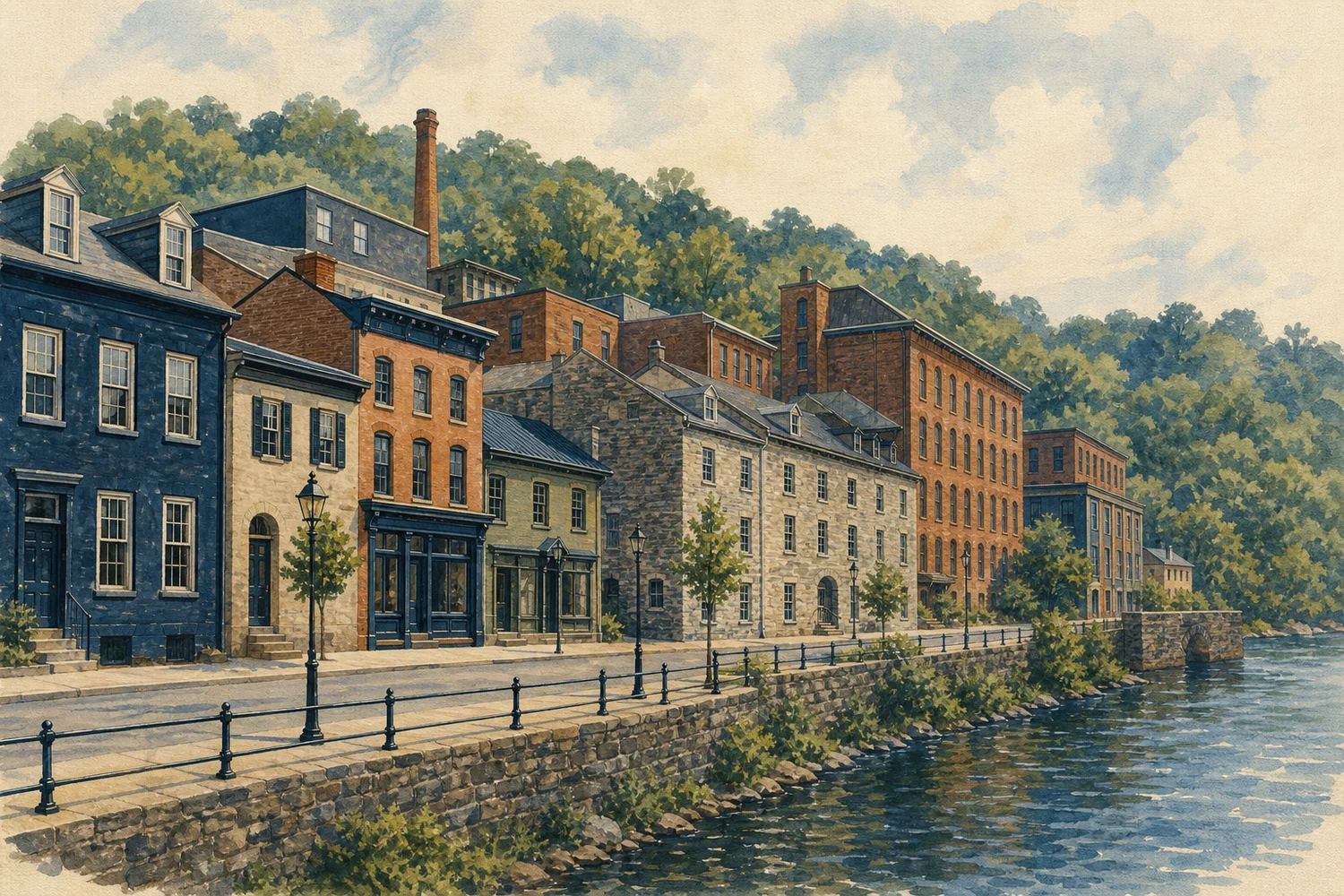
To the east lies East Falls and the low curve of Ridge Avenue; to the west, the quieter slopes of Roxborough. Downtown Philadelphia sits just fifteen minutes away by train when the schedules line up, though traffic on I-76 can turn that into half an hour. Standing on Main Street, you can feel the neighborhood’s geography wrap around you, the Schuylkill River on one side, steep stone houses stacked above on the other. On summer evenings, the smell of hops drifts from Manayunk Brewing Company’s riverside deck, mingling with the metallic tang of the canal.
You feel that tension in small ways. On any weekday morning, runners cut up Levering Street while contractors climb the same hill with tool bags and sweatshirts. Down below, Main Street hums with brunch chatter and delivery trucks. It’s the kind of place where you might spot a couple in gym clothes grabbing smoothies next to an older resident complaining about property taxes, and both somehow fit perfectly into the same picture. The sense of belonging here isn’t built on polish. It’s built on persistence. People stay because they’ve built muscle memory for the chaos, and because no other neighborhood quite matches the mix of beauty, trouble, and small-town warmth that Manayunk manages to balance every single day.
Where Manayunk sits
- Main Street
- Pretzel Park
- Manayunk/Norristown Line
- Levering Street
Schematic · not to scale
Geography That Shapes Daily Life
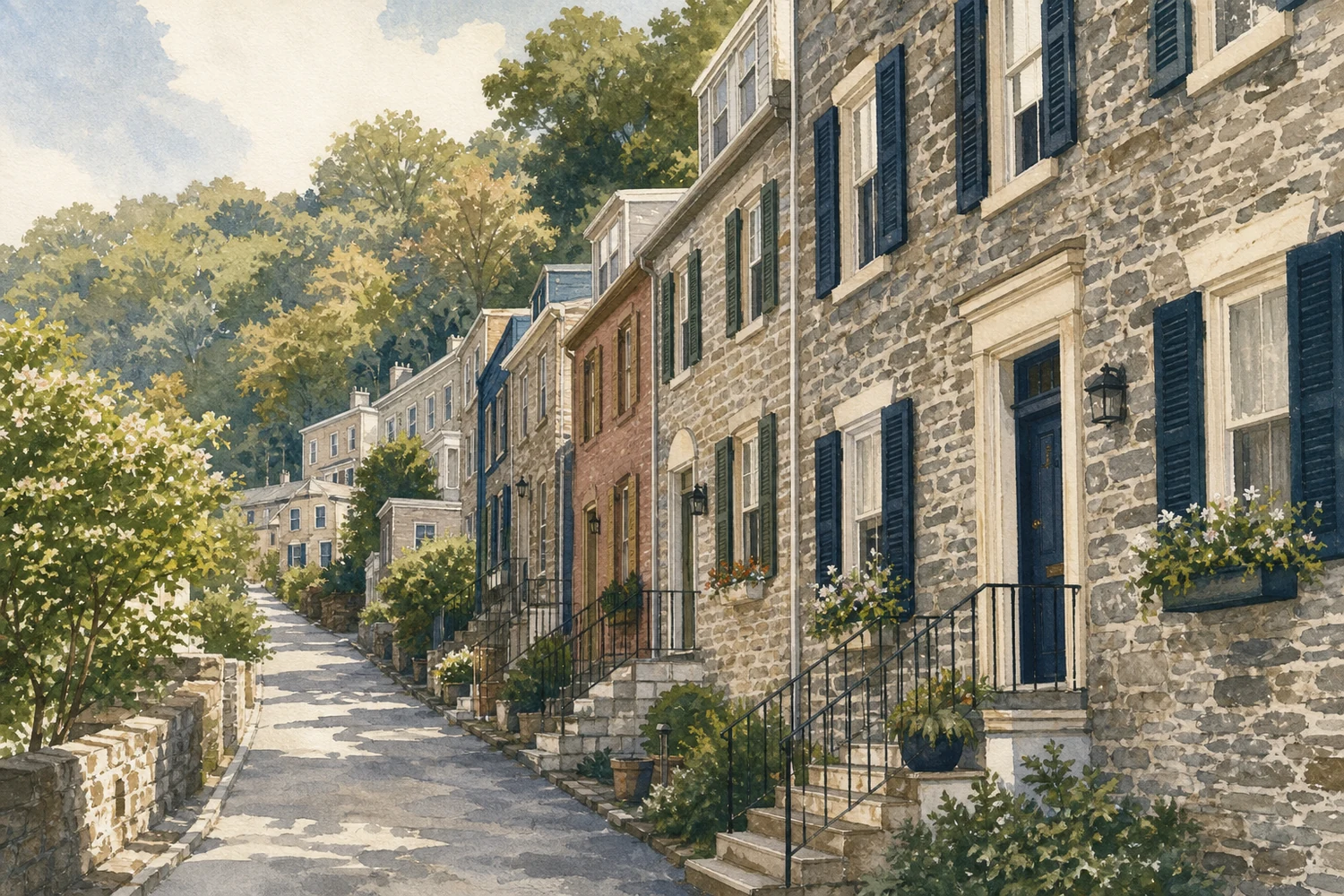
The first thing you learn here isn’t where to eat or shop. It’s how to climb. Geography defines everything about living in Manayunk. The lower section hugs the Schuylkill River, a narrow stretch of cobblestone streets, train tracks, and renovated mills. Above that, the terrain rises so sharply it can feel like another town altogether. Streets like Cotton and Green Lane climb steeply enough to make you question your fitness level, and locals measure daily life by elevation as much as by address. Living near Main Street means convenience but also flood anxiety. Living on the hill means better air and less noise, but good luck hauling groceries on foot.
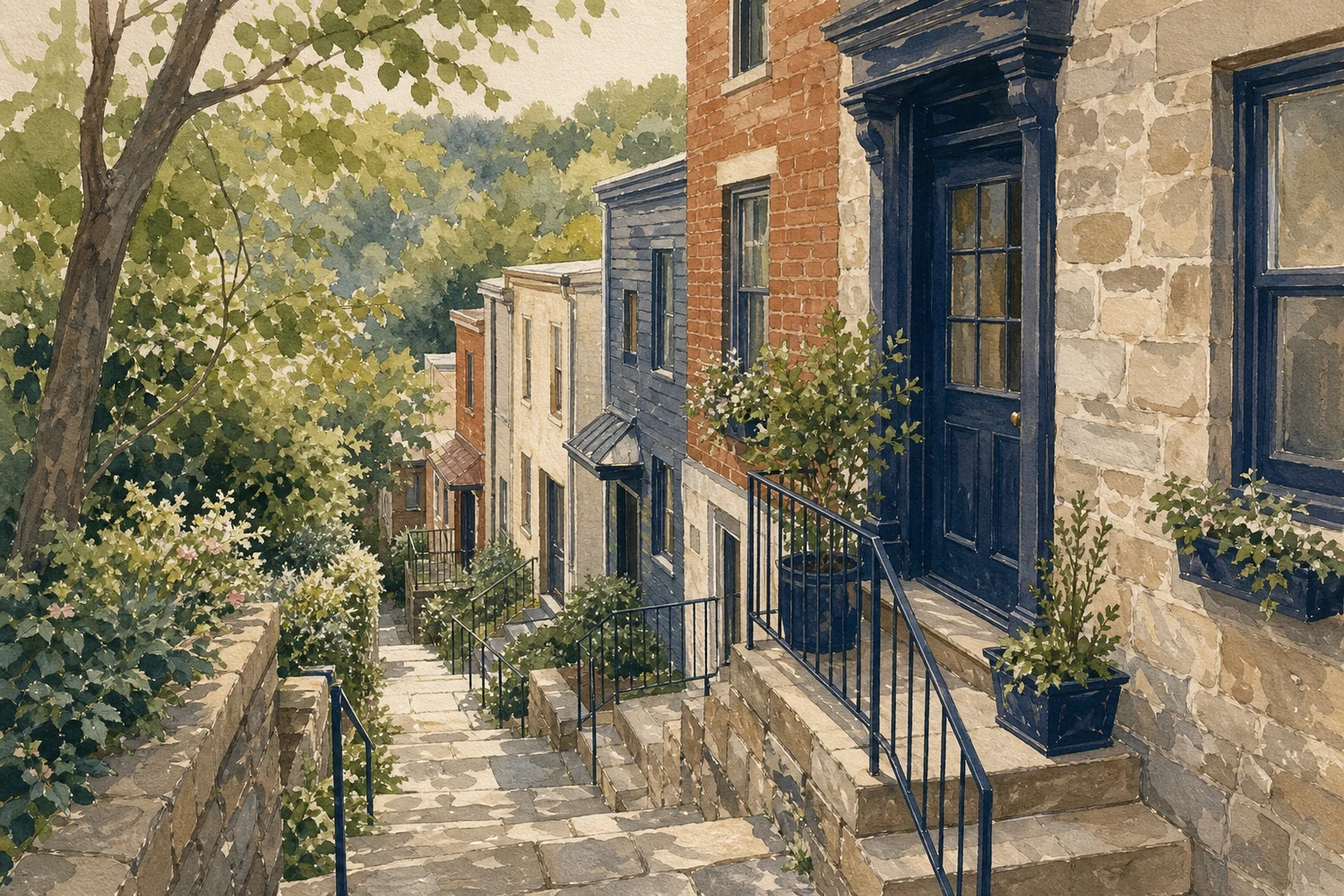
Google Maps calls some of these routes “mostly flat,” which anyone who has ever tried walking up Levering Street knows is an outright lie. That climb is infamous among runners and cyclists. It’s a landmark of its own, equal parts pride and punishment. Then there are the hidden staircases, like the ones tucked near Pretzel Park, shortcuts that connect streets the way old footpaths once did. Knowing which staircase shaves ten minutes off your commute or which slope will ice first in winter is a form of local literacy. Outsiders see a pretty hillside; locals see a vertical puzzle that dictates when they leave home, what shoes they wear, and how often they restock their fridge.
Even weather patterns bend around the terrain. Heavy rain rolls down into the canal streets, pooling in predictable spots that everyone who’s lived here more than one flood season can name. On clear nights, the upper blocks catch sunset light that doesn’t reach the river level until minutes later. Early spring mornings smell faintly of wet brick, while late August brings heavy, humid air that sits low in the valley. Geography isn’t background in Manayunk. It’s destiny. It decides how you move, what you fear, and where you’ll end up when the sky starts turning dark.
Life measured by elevation
The legacy guide's own map: in Manayunk the address matters less than the altitude.
The lower canal blocks
Along the SchuylkillCobblestone streets, train tracks and renovated mills. Energy and walkability, but a tolerance for weekend crowds, higher insurance rates and flood anxiety.
Main Street
The nervous systemA walkable corridor of cafes, boutiques and independent restaurants by day. By night a crowded artery of music and rideshares. Wonderful if you time it right, unbearable if you don't.
Green Lane and Shurs Lane
The upper streetsWhere parking turnover is slower and flood risk is lower. Better air and less noise, but good luck hauling groceries on foot.
Cotton Street and Pretzel Park
Uphill and westMore residential, with the nightlife noise faded out. Steep enough to make you question your fitness level, and the first slopes to ice in winter.
Main Street: Heart, Headache, and Hangover
Main Street is the neighborhood’s nervous system. By day it’s a walkable corridor of cafés, boutiques, and the kind of independent restaurants that make weekend reservations necessary. By night it transforms into a crowded artery of music, laughter, and the occasional police lights. For better or worse, everything in Manayunk flows through this one strip. People come here to celebrate, to meet, to show off, or just to feel like they’re part of something loud and alive. Locals will tell you that Main Street can be wonderful if you time it right and unbearable if you don’t. Weekday afternoons bring quiet charm, patio tables, stroller walks, the sound of the river moving softly behind the buildings. Friday and Saturday nights, though, it becomes a completely different place. The music from bars bleeds into the street, rideshares clog both lanes, and the sidewalks shimmer with spilled drinks and high heels that were a mistake on the cobblestones.
Every block has its own personality. The Rook serves the kind of sandwiches people still talk about days later. The Manayunk Brewing Company anchors the riverfront with big open decks and crowds that range from first dates to family gatherings. Bayou Bar and Grill stays packed late, famous for drinks that are too strong and prices that are too good to resist. Tubby Robot Ice Cream and The Goat’s Beard add their own flavors. One nostalgic and sweet, the other warm and wood-paneled with bourbon-heavy comfort. By midnight, the sidewalks turn into a current of college students, young professionals, and neighborhood regulars who swear they were just stepping out for one drink. The next morning, those same blocks smell like coffee again, and the brunch lines snake around corners. That quick transformation from party to normalcy is part of what defines Main Street. It’s both the neighborhood’s stage and its mirror. Everything good and bad about Manayunk shows up here first.
Even safety shifts with the clock. Early mornings feel peaceful and neighborly, but late nights bring louder crowds, tight traffic, and the need for awareness. Locals don’t worry about crime so much as about chaos, noise, lighting, and who’s backing out of a parking space after midnight. The danger isn’t hidden; it’s simply part of the rhythm, managed through timing and familiarity.
The Food and Drink Culture
If you eat or drink your way down Main Street, you’ll understand why Manayunk has built such a loyal following among Philadelphians who crave energy without heading downtown. The food scene isn’t flashy, but it’s personal. Most places are independently owned, and the best ones have weathered both floods and rent hikes. Restaurants like The Rook have become everyday staples for locals who want quality without pretense. The Manayunk Brewing Company, with its riverfront deck and friendly service, remains the neighborhood’s unofficial gathering spot. A few doors away, spots like White Yak bring unexpected variety, serving plates that fill the air with spice and warmth that cut through the damp river breeze. Even tiny places like Cupid Bookshop and Artesano Café add to the rhythm, blending food and culture in a way that feels distinctively “Yunk.”
Dining here is as much about timing as taste. Weekends belong to brunch crowds, where mimosas outnumber coffee refills and the sidewalks buzz from mid-morning to early afternoon. Weekdays, though, belong to the locals. That’s when the regulars reclaim their favorite spots, catching up with servers who actually remember their names. The prices reflect a mix of neighborhood accessibility and city proximity. Coffee in the morning, dinner out at night, and the late drink deals that explain the energy pouring into the streets all reflect that mix. It’s not cheap, but it’s rarely pretentious. The food culture thrives because it mirrors the neighborhood itself: resilient, unpolished, and proud to stay independent.
When you talk to people who’ve lived here for a while, food often carries stories of loss and rebuilding. Floods have forced restaurants to close for months, and every reopening feels like a small celebration. Locals remember which kitchens reopened first and which never made it back. Eating out here isn’t just about flavor. It’s a kind of loyalty, a way to show support for the businesses that keep the neighborhood alive between storms and construction seasons. Manayunk’s culinary heartbeat doesn’t come from a Michelin list. It comes from the consistency of places that just keep coming back, no matter how high the water gets.
Where Main Street eats and drinks
Five spots the legacy guide names, with its own notes.
The Rook
Serves the kind of sandwiches people still talk about days later, and has become an everyday staple for locals who want quality without pretense.
Best for · A weekday lunch
Manayunk Brewing Company
Anchors the riverfront with big open decks and crowds that range from first dates to family gatherings. On summer evenings the smell of hops drifts from the riverside deck.
Best for · A group by the water
Bayou Bar and Grill
Stays packed late, famous for drinks that are too strong and prices that are too good to resist.
Best for · A late night
The Goat's Beard
Warm and wood-panelled, with bourbon-heavy comfort.
Best for · A slow dinner
Tubby Robot Ice Cream
Nostalgic and sweet, and the guide's named reset button for a stop with kids.
Best for · Kids
The Daily Grind: Parking, Hills, and Workarounds
Ask anyone who lives in Manayunk what their biggest frustration is, and they’ll answer before you finish the question. Parking defines the daily grind here. Main Street and its surrounding blocks weren’t designed for the volume of residents, restaurant visitors, and festival-goers that now crowd them. The limited lots fill quickly, and residents who rely on street parking learn to treat it like a competitive sport. Monthly rates for private spots keep climbing, pushing some to gamble on free church-adjacent spaces or risk an overnight ticket. The city’s parking enforcement feels like an ever-present shadow, and people budget for tickets the way others budget for groceries.
Driving itself is a test of patience and skill. Hills curve sharply, narrow intersections force you to hold your breath, and a wrong turn can send you into a loop of one-way streets with no exit for blocks. Most long-term residents build their own survival systems. Some park their cars uphill on dry nights just in case a storm hits. Others schedule errands based on flood warnings or local event calendars. Those who bike or run along the Schuylkill River Trail often claim the moral high ground, skipping the chaos altogether. Everyone else finds their own balance between convenience and sanity.
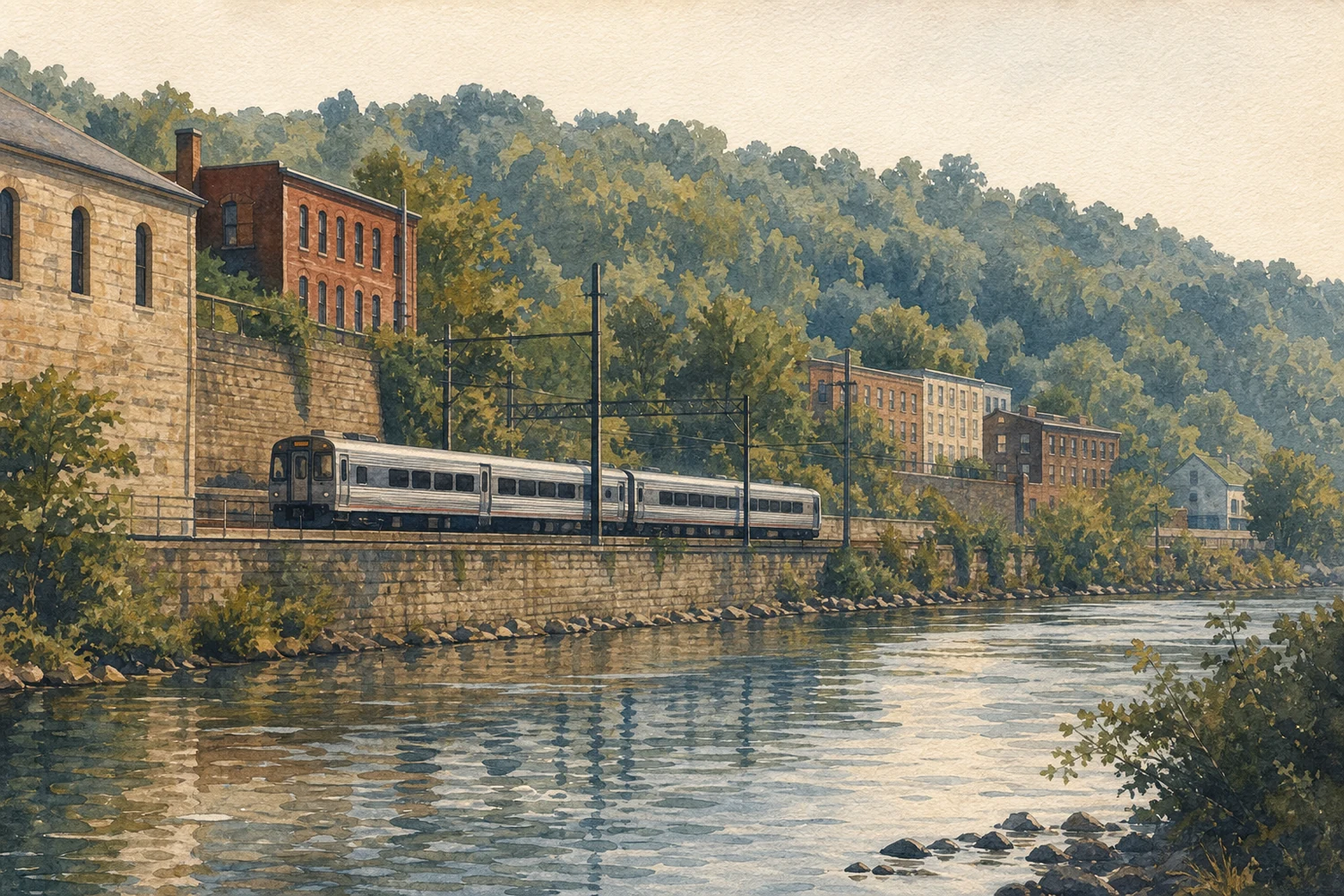
Transportation threads through local debates like an unsolved riddle. People talk about the idea of a circulator bus connecting Ridge Avenue, Main Street, and the train stations, but it’s remained a dream. The Manayunk/Norristown Line runs hourly on good days but can feel unreliable late at night, and the Ridge Avenue bus slows to a crawl at rush hour. Commuting options exist but rarely line up smoothly, so locals improvise. A typical day might include driving to a station, biking part of the way, or timing your trip around when you can actually find a place to park afterward. Living in Manayunk means accepting that daily logistics are a form of endurance sport. The neighborhood’s beauty and character are worth it, but only if you learn the shortcuts, both literal and emotional, that make the grind bearable.
Charm and challenge
The legacy guide's own framing: living here means balancing the two.
- The Schuylkill River Trail, one of the neighborhood's greatest assets
- Neighbors who wave from their porches and show up after every storm
- Downtown is fifteen minutes by train when the schedules line up
- A Main Street of cafes, boutiques and independent restaurants
- Parking defines the daily grind, and people budget for tickets
- Flooding is a defining feature, not an occasional inconvenience
- The train runs hourly on good days and feels unreliable late at night
- Property tax bills that land on top of flood insurance and city maintenance
Flood Life and Resilience
Flooding isn’t just an occasional inconvenience in Manayunk; it’s a defining feature of the neighborhood’s identity. The Schuylkill River has always been both the town’s backdrop and its biggest threat. Every few years, the water reminds residents who really controls the lower blocks. The flood of 2021 left entire buildings gutted, and the water main break in 2025 closed businesses for weeks. People here talk about those events not as isolated moments, but as chapters in a long story of survival. Each time the water rises, the same cycle repeats: damage, cleanup, reopening, and eventually a quiet return to normal.
You can see the evidence of that resilience everywhere. Some restaurants have moved their electrical systems above flood level. Apartment buildings on lower streets have reinforced floors or permanently closed their basements. The phrase “move your car uphill when it rains” isn’t advice. It’s protocol. Locals treat flood alerts with the same seriousness others reserve for fire alarms. When a big storm approaches, text chains light up across the neighborhood, warning people which lots are already filling and which streets will go under first. Once the rain stops, volunteers show up with bleach, brooms, and coffee. That kind of community response has become muscle memory. The nearby train bridge often becomes a visual marker of how high the river has climbed; if the arches are halfway covered, everyone knows it’s time to grab the sandbags.
The hardest part isn’t the cleanup; it’s the uncertainty. Each flood chips away at insurance patience and raises questions about long-term safety. Yet the people who stay rarely consider leaving for good. They describe the area’s beauty on calm mornings, the way the light hits the water, the easy walk to a favorite café, the friendships built over shared repairs. The smell of fresh rain mixing with damp wood along Main Street has become a seasonal scent locals recognize instantly. Resilience here isn’t romantic. It’s practical. Manayunk doesn’t forget its floods, but it also refuses to let them define everything. The river gives the neighborhood its name, its rhythm, and its scars, and somehow, it keeps people anchored through all of it.
Community Pulse and Culture Wars
Spend enough time in Manayunk and you’ll notice that community here is both close-knit and complicated. The neighborhood has a kind of small-town heart wrapped inside a big-city tempo. People greet one another on the sidewalk, wave from porches, and look out for each other when storms hit. There’s a sense that everyone knows someone who knows you, which can be comforting or claustrophobic depending on your day. Social media groups act like modern town halls, where residents organize clean-ups, trade recommendations, and argue about everything from potholes to nightlife noise. What binds the community isn’t agreement. It’s endurance. Living here means participating in the ongoing conversation about what Manayunk should be.
That conversation often divides along familiar lines. Longtime residents sometimes see the influx of new apartments and trendy shops as erasing the neighborhood’s working-class character. Newer arrivals appreciate the improvements in safety and walkability, but they also struggle to find parking and affordable rent. The phrase “Old Yunk versus New Yunk” surfaces again and again, describing a cultural tug-of-war between preservation and progress. Yet for all the tension, there’s still a shared pride that runs deeper than opinion. Everyone who stays has weathered the same floods, climbed the same hills, and dealt with the same frustrations. In that sense, survival itself becomes the unifying culture.
The real glue of Manayunk isn’t nostalgia or aesthetics. It’s the neighborly habits that quietly sustain the place. People share sandbags, lend ladders, and watch each other’s pets. When a small business struggles, regulars rally behind it. There’s a kind of informal code of decency that doesn’t need to be written down. You earn respect here not by how long you’ve lived in the neighborhood but by how you show up when it counts. Manayunk may argue with itself, but when trouble comes, those arguments dissolve fast. On warm evenings after storms, you’ll see neighbors out with brooms and buckets, laughing through exhaustion. That’s how Manayunk keeps its balance: through shared work, shared memories, and an unspoken agreement that no one faces the floods alone.
Fitness and the Outdoors
For a place that spends so much of its time battling rain and steep slopes, Manayunk is remarkably active. Fitness isn’t a trend here as it’s a necessity. The hills turn every walk into a leg workout, and residents embrace it with pride. The Schuylkill River Trail, which winds along the water toward Center City, is one of the neighborhood’s greatest assets. It’s where runners, cyclists, and families converge for exercise and fresh air. You can spot early-morning joggers pacing past the old mills, kids riding scooters near the murals, and fitness groups gathering for interval sessions that make full use of the terrain. For many, physical activity isn’t just about health; it’s about community and mental reset.
The most iconic example is the Manayunk Running Club, which meets weekly for a hill workout that’s as much social ritual as exercise. Climbing Levering Street, known simply as “The Wall,” has become a local badge of honor. Even those who don’t participate feel a connection to it because it reflects the neighborhood’s attitude toward challenge: tough it out, and then celebrate together afterward. Pretzel Park doubles as an outdoor gym for dog owners chasing energetic pets up the steps, and the nearby stairs serve as impromptu fitness circuits for anyone brave enough to tackle them repeatedly. On summer mornings, the air feels thick and heavy near the river but cool and breezy by the upper ridge, a subtle reminder that even climate shifts with elevation.
Outdoor life here changes with the seasons. Spring brings crowds to the Arts Festival and weekend markets. Summer heat drives people to early morning runs before the hills turn brutal. Autumn offers cooler air and some of the best views in the city as leaves frame the river. Winter transforms sidewalks into slippery slopes, forcing even the most athletic locals to move carefully. Living in Manayunk means syncing your rhythm with the landscape. The environment demands effort, but it rewards you with scenery, stamina, and a community of people who understand that fitness and endurance are just part of daily life.
Events and Traditions
Manayunk’s calendar is packed with festivals that turn its narrow streets into stages for art, food, and community life. The Arts Festival each June stretches for nearly a mile, filling Main Street with local vendors, musicians, and food stands that represent the best of Philadelphia’s creative energy. It’s the kind of event that tests both patience and parking but reminds everyone why they put up with the challenges of living here. Residents open their porches to friends, small businesses bring out their best displays, and the air feels electric with summer optimism. As dusk falls, the mix of grilled food, beer, and river air gives Main Street its signature summer scent.
Autumn brings its own kind of celebration. The Fall Fest and Mac and Cheese Crawl mark the start of cooler weather, attracting families in the afternoon and nightlife crowds by evening. It’s equal parts comfort food and social gathering, an excuse to explore new restaurants while catching up with neighbors you might not have seen since the last flood cleanup. During summer, Thursday nights become community favorites thanks to “Stroll After Hours,” when local shops and restaurants stay open late with live music and street vendors. It’s less chaotic than a weekend night and often described as the perfect time to rediscover the neighborhood at an easier pace.
Even outside of official festivals, Manayunk finds ways to celebrate itself. Caribbean-themed nights fill the air with music and spice, charity runs wind through the river trail, and spontaneous block parties appear after big sports wins. These gatherings aren’t just for entertainment; they help repair the social fabric frayed by stress, weather, and change. Every event is a reminder that the neighborhood’s strongest instinct is to gather, to connect, and to keep finding reasons to come together, no matter how many times the water rises or the city forgets to fix the roads. During these festivals, SEPTA service slows, parking becomes impossible, and locals simply laugh. It’s all part of the Manayunk cycle.
Events and traditions
Manayunk Arts Festival
Stretches for nearly a mile, filling Main Street with local vendors, musicians and food stands. It tests both patience and parking.
Fall Fest and Mac and Cheese Crawl
Marks the start of cooler weather, drawing families in the afternoon and nightlife crowds by evening.
Stroll After Hours
Shops and restaurants stay open late with live music and street vendors. Less chaotic than a weekend night.
Housing and Everyday Economics
Housing in Manayunk tells a story of contrasts. On one side are the old stone rowhomes that climb the hills, each with uneven steps and stories stretching back a century. On the other side are the newer apartments near the canal, shiny with glass fronts and modern finishes that sometimes hide the scars of repeated flooding. Prices have crept steadily upward over the past few years, mirroring the rest of the city’s growth but feeling sharper here because of how compact the neighborhood is. Renters pay for convenience and walkability, while homeowners face property tax bills that land on top of flood insurance costs and unpredictable city maintenance. For a small community, that combination feels heavy.
Economic life in Manayunk operates on a rhythm that locals understand instinctively. Rent spikes when a new apartment building opens, and dips slightly after the next major storm. Flood-prone units become “temporary bargains” until another optimistic newcomer moves in. The nickname “Canal Suites” has developed as a half-joking reference to basement apartments that constantly battle humidity and water damage. Still, demand never really fades. The location, the nightlife, and the proximity to Center City keep drawing new residents who are willing to trade a little unpredictability for easy access and charm.
Not everyone welcomes the wave of development. Zoning fights, like those around the old St. Mary’s Church site, reveal a deep distrust of projects that promise growth but strain parking and infrastructure. Yet even those who resist change admit that without renovation and investment, the area might have slipped into decline. Housing here is less about perfect stability and more about calculated compromise. You accept the quirks, the leaks, and the steep sidewalks because there’s still something magnetic about having a home that overlooks both the river and the city’s edge. On clear nights, the skyline flickers faintly across the water, a small reminder of how close downtown is, even if it sometimes feels a world away.
Living Etiquette and Survival Rules
To live comfortably in Manayunk, you have to learn the unspoken rules that everyone follows. Some are practical, like never parking on Cresson Street when heavy rain is forecast or moving your car uphill before the first thunderclap. Others are social. The two-finger wave from the steering wheel is how you acknowledge a fellow local. If someone is hauling groceries up Cotton Street, you give them space and maybe even a sympathetic nod. These tiny gestures form the social glue of the neighborhood, signaling that you understand how things work here.
Slippery stair days arrive fast in late fall when wet leaves collect on the Cotton and Pretzel Park steps, so people slow down and give each other room.
Style itself bends to geography. No one wears heels on Main Street unless they want to regret it, and winter boots are less a fashion choice than a survival tool. Timing matters in almost everything. Go out for brunch too late and you’ll wait an hour; hit the grocery store right before a storm and you’ll find the parking lot flooded. Outsiders might see these habits as inconveniences, but locals know they are acts of foresight. The best compliment anyone can give you is that you “know your way around,” which really means you’ve earned the right to call yourself a local.
The neighborhood also carries an emotional etiquette. Residents who’ve lived through past floods hold a quiet authority that newcomers instinctively respect. You don’t question their routines or their warnings. When they start stacking sandbags or moving cars, you follow suit. Helping each other is not a grand gesture here since it’s a norm. The rules that keep this community functioning aren’t written down anywhere, yet everyone seems to know them. They’re passed along in conversations, gestures, and the shared understanding that life in Manayunk rewards the prepared.
Transit etiquette fits in too. People check the last evening Manayunk/Norristown Line departures before a night out and share quick heads ups if Ridge Avenue buses are crawling so neighbors can shift to rideshare or walk to East Falls.
The Emotional Core
For all its frustrations, Manayunk holds a rare kind of loyalty. People complain about parking, taxes, and floods, yet they rarely leave. The attachment runs deeper than convenience or scenery. It’s the pride of living in a place that demands something from you and gives something back in return. The hills make you stronger, the floods make you resourceful, and the people make you feel seen. It’s a neighborhood that tests your patience but never your purpose. Every storm cleanup and every reopening adds another layer of shared history, and those moments form the heartbeat of the community.
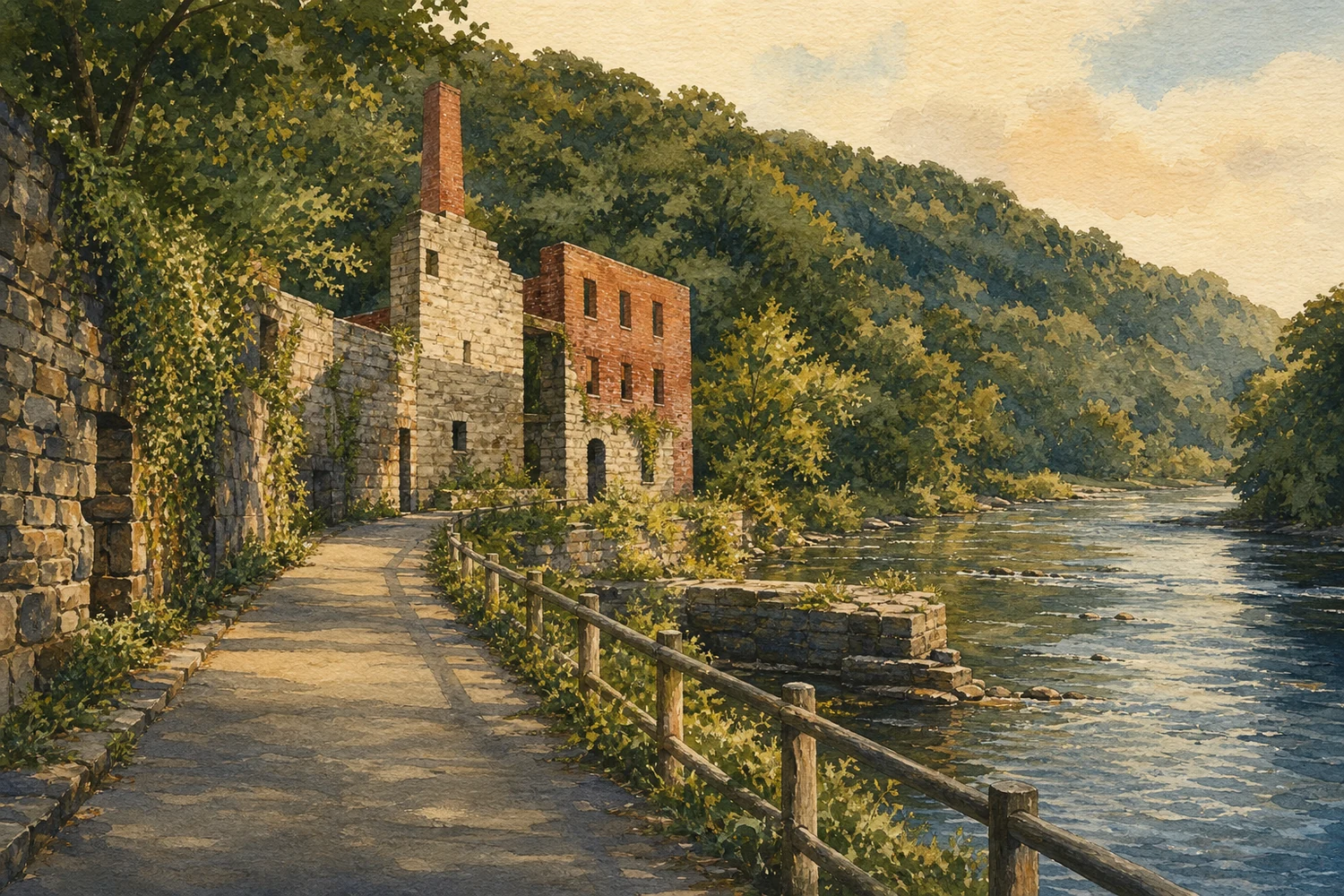
On quiet mornings you can hear the train horn drift across the water and see a thin mist sit over the canal before the sun reaches Main Street.
Living here teaches resilience without pretending it’s easy. It’s a place where neighbors trade knowing smiles when the rain starts, where laughter replaces panic because everyone already knows the drill. The collective toughness doesn’t erase the warmth; it defines it. People celebrate the small victories: a freshly reopened café, a repaired sidewalk, a clear weekend with no water warnings because they know how fragile those wins can be.
After big events or storms, porch lights flick on early and you can smell bleach and coffee at the same time, a scent that locals now read as progress.
If Philadelphia has neighborhoods that symbolize grit, Manayunk is where that grit feels personal. It’s not about survival for survival’s sake; it’s about choosing to stay, to rebuild, to wave at your neighbor even after a sleepless night listening to rain on the roof. The emotional truth of Manayunk is simple: it’s imperfect, unpredictable, and unforgettable. It gives back exactly as much as you’re willing to put in, and for most who stay, that’s more than enough.
Practical Newcomer Guide
Moving to Manayunk is a bit like joining an ongoing experiment in city living. The neighborhood rewards curiosity and punishes assumption. The first thing you’ll need is a strategy for parking. If you plan to live near Main Street, explore the upper streets like Green Lane or Shurs Lane, where parking turnover is slower and flood risk is lower. Many long-time residents rent a private spot even if it feels expensive, simply for peace of mind. Venice Island parking lots seem convenient until the rain starts; locals know to relocate early rather than risk a soaked car. If you rely on public transit, check train and bus schedules carefully since service gaps can leave you waiting longer than expected.
The Manayunk/Norristown Line can feel hourly late evenings, and Ridge Avenue buses bunch at rush hour, so people keep a rideshare backup or walk to East Falls if trains are delayed.
When it comes to daily routines, timing makes life smoother. Grocery runs are best done early morning or late evening to avoid street congestion. Main Street is charming during weekdays but can feel overwhelming by Friday night, so plan errands or meet-ups accordingly. For quiet living, look uphill toward Cotton Street or further west past the Pretzel Park area, where the vibe is more residential and the nightlife noise fades. If you enjoy being in the center of things, the lower blocks near the canal offer energy and walkability but demand a tolerance for weekend crowds and higher insurance rates.
For kid stops and low-key treats, Tubby Robot Ice Cream is a reset button, and Trek on Main is the go-to for SRT maintenance or gear fixes.
Getting involved in the community is the easiest way to feel at home. The local running club welcomes newcomers, and neighborhood groups regularly organize cleanup events after storms or festivals. Online forums are useful for everything from plumber referrals to lost-pet alerts, and they double as the best place to learn what’s really happening in the area. The language may sound like insider shorthand at first, but you’ll pick it up quickly. “Yunk” means you’ve earned your place, “The Wall” is the hill that will test you, and “Flood Folk” refers to anyone who has had to mop a floor after Ida or Lee. Once you start speaking the dialect of daily survival, you’re part of the rhythm.
Safety basics are practical rather than fearful. Stick to lit routes after late nights, avoid parking on Cresson during storms, and keep porch steps salted when the first freeze hits.
Manayunk in One Breath
Manayunk is the kind of neighborhood that refuses to fit a single label. It’s both historic and restless, both exhausting and magnetic. Its hills can wear you out, but its views can stop you in your tracks. The floods can test your patience, but the recoveries remind you how strong a community can be when people show up for one another. Every porch, every cobblestone, and every corner bar tells part of a story that’s still unfolding. Life here is a patchwork of determination and charm, of laughter echoing up narrow streets and neighbors trading nods that mean more than words.
On clear nights the Center City skyline flickers across the water while the ridge above Pretzel Park sits quiet, like two versions of the city in one glance.
For newcomers, the lesson comes quickly: Manayunk demands participation. You can’t live passively here. You have to plan around the weather, learn the shortcuts, and adapt to the quirks that make it unpredictable. Yet that effort pays off in the form of belonging. Once you find your rhythm, your parking spot, your favorite coffee shop, your go-to stair route, you start to feel the quiet satisfaction that only locals understand. You realize that beneath the noise and the floods and the endless debates lies a community that endures.
The real initiation is simple. Move your car before storms, nod at drivers with two fingers on Cotton, and keep a spare pair of dry sneakers by the door.
Manayunk is not perfect, but it’s real in every sense of the word. It challenges you, humbles you, and somehow keeps you hooked. The people who thrive here are the ones who accept its contradictions and learn to move with them. In a city full of neighborhoods that compete for attention, Manayunk doesn’t need to shout. It simply keeps climbing, rebuilding, and waving back, proving every day that resilience can be a way of life.
Make it yours
Bring these Manayunk questions
A short list to turn what you read into your own next steps.
Saved checks stay on this device when browser storage is available. This is a personal planning list, not a property inspection or professional assessment.
Sources & next steps
Useful advice should
show its working.
These resources support the reader tools above and help you check details for your own address, date, or plans.
- City flood maps and tools
City resources link flood mapping tools for researching a specific location.
- SEPTA trip planner
Compare transit journeys using your actual stops, date, and departure time.
- Find a playground or recreation center
City facility listings provide locations and contacts for checking programs and access.
Flood maps are a research starting point, not a property inspection or insurance decision. This tool makes no claim that moving uphill eliminates flood exposure.
Keep exploring