A little orientation
Build an East Falls routine around a real route
Use the exact destination
Plan for the building or entrance you need, especially when visiting a campus or another large site.
Check the river approach
Identify the crossing and entrance before treating a nearby riverside path as a simple extension of your walk.
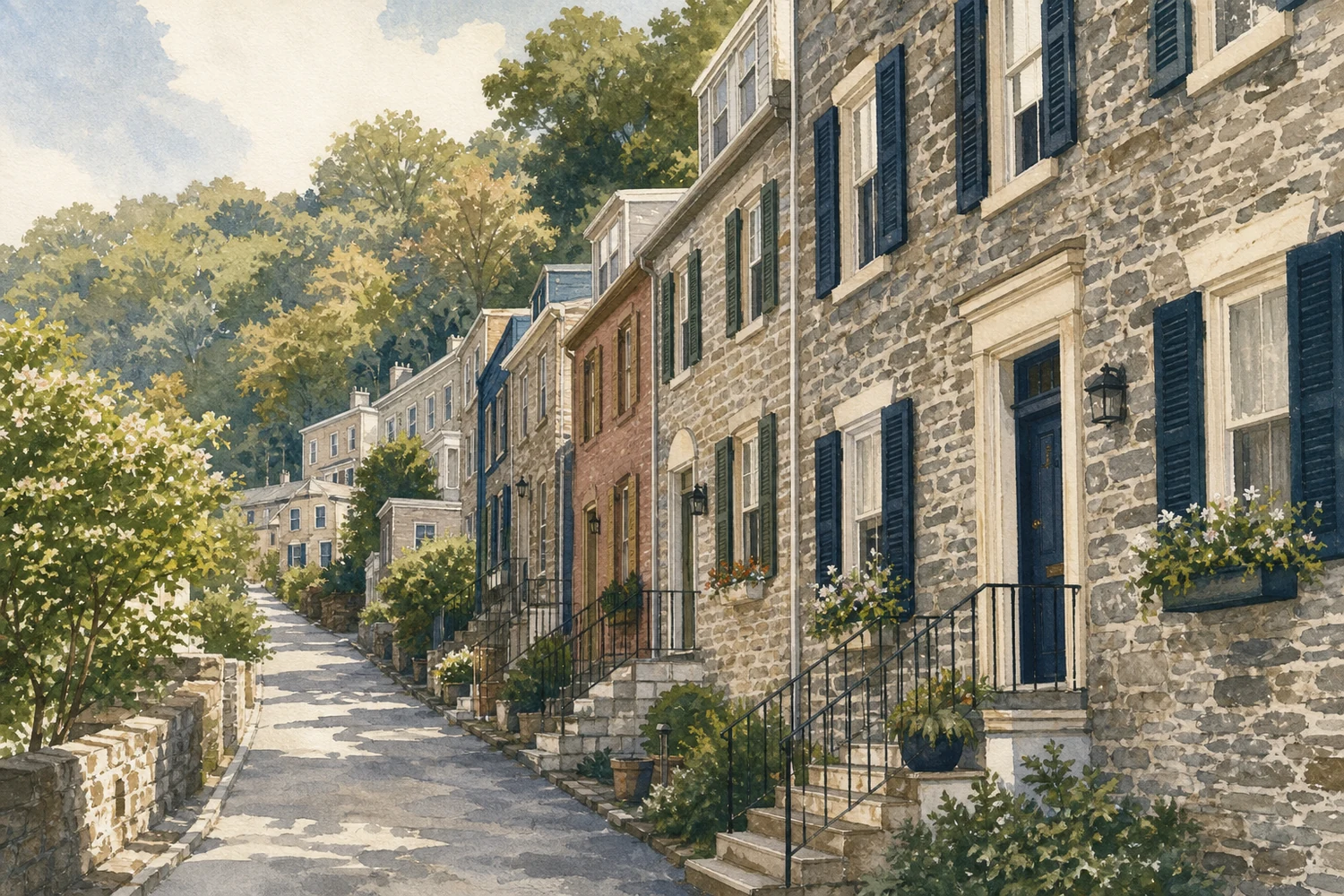
Inspect the home entrance
Consider stairs, storage, and shared access at the property rather than inferring convenience from the neighborhood name.
A closer look
Choose an East Falls route to test
Pick the part of your week you would like the neighborhood to support.
Plan beyond the campus label
Use the East Falls home and the exact workplace, class building, or appointment address in SEPTA's planner. Compare the outward and return trips, then inspect the walking section at each end rather than relying on a broad campus or neighborhood pin.
A useful questionDoes the route finish at the entrance I need?
Source & next step ↗Choose an approach before a loop
Look up the park or recreation destination you mean to visit near East Falls. Trace your approach toward the river, including any crossings around Kelly Drive or Falls Bridge, and choose a clear return point before extending the outing.
A useful questionWhich approach works for everyone joining this river outing?
Source & next step ↗Make access part of the comparison
Look up the exact East Falls address in the City's property tools before visiting. Ask about the entry, steps, shared areas, and maintenance contact, then consider how groceries, deliveries, and cleaning equipment would move through the spaces you actually see.
A useful questionHow would everyday things move through this particular home?
Source & next step ↗East Falls is one of those neighborhoods that reveals itself slowly. It is calm, green, and scenic in a way that surprises people, especially with how close it sits to the rest of Philadelphia. At the same time, it has a strong personality. Residents care about their blocks, their routines, and the way the neighborhood evolves. That shows up in conversations, in community involvement, and sometimes in the kind of debates you only see in places where people are deeply invested.
From a home perspective, East Falls also has its own rhythm. Some houses sit in quieter, more insulated pockets, while others are right in the middle of busier streets near Ridge or closer to Jefferson. That difference affects everything from foot traffic to how often homes need maintenance and cleaning. It is part of what makes this neighborhood unique. No two blocks feel exactly the same.
This guide is built from real patterns, real behaviors, and real day-to-day experiences. The goal is simple. Help you understand East Falls the way someone who has lived here for months would, not the way it looks in a quick search.
East Falls in One Honest Sentence
East Falls feels like a small town stitched onto the edge of Philadelphia, the kind of neighborhood where you can spend the morning near the Schuylkill, grab coffee and a few essentials along the Ridge, complain about parking by lunch, and still end the day thinking you would rather be here than almost anywhere else in the city.
That is the honest version of East Falls. It is green, calm in ways that surprise people, and unusually scenic for a Philadelphia neighborhood. It gives you river access, tree cover, and pockets of walkability that can make daily life feel easy and grounded. It also comes with its own set of neighborhood habits, territorial moods, parking arguments, committee politics, and social codes that newcomers do not always understand right away. Locals rarely talk about East Falls as if it is flawless. They talk about it the way people talk about a place they are deeply attached to and occasionally exhausted by. The attitude is usually some version of I love it, but it is a mess.
That contradiction is the whole neighborhood. The physical environment is what wins people over first. You can feel it the moment you realize how quickly residential blocks give way to the river, how close Kelly Drive feels to everyday life, and how much the Schuylkill changes the mood of the area. Even if you are not out on the trail every day, just knowing it is there affects how East Falls lives in your head. It feels calmer, more breathable, more removed from the grind of the city than many neighborhoods with a much louder reputation.
Then there is the social environment, which is what people talk about most. East Falls has a lot of opinions packed into a relatively small place. Neighbors care, and because they care, they argue. They argue about development, parking, students, neighborhood groups, who belongs, and who gets to define what East Falls is becoming. That does not make the area fake or fragile. It makes it human, local, and unusually self-aware.
To understand East Falls, you also have to understand its language. People say Ridge when they are talking about the neighborhood’s daily life, where they grab food, coffee, wine, or flowers. They tend to say Ridge Ave when they are annoyed about traffic, circling for parking, or dealing with one more minor street headache. That small distinction tells you a lot. East Falls is not a neighborhood you understand from a map alone. You understand it by how people move through it, talk about it, and keep choosing it anyway.
Where East Falls sits
- Kelly Drive
- Ridge Ave
- McMichael Park
- Falls Bridge
Schematic · not to scale
Where East Falls Actually Starts to Feel Like East Falls
East Falls makes more sense when you stop thinking about it as one flat neighborhood and start reading it in lived zones. Official boundaries matter less here than the way residents actually describe the place to each other. Ask someone what East Falls is like, and they usually answer by talking about a specific stretch, a certain side, or a particular rhythm tied to a few blocks. The neighborhood changes quickly depending on whether you are near the Ridge core, closer to Jefferson, farther north near Warden Lane, down toward Conrad and the rowhomes, or moving along the river edge.
The Ridge Core
If you want the part of East Falls that feels most like a small village inside the city, it is the strip around Ridge, Conrad, and Newton.
That is where daily life feels the most compact and intuitive. You can grab coffee, stop by a flower shop, pick up a bottle of wine, get takeout, meet someone at a bar, and take care of a few ordinary errands without turning the day into a driving project. This is the part of East Falls that makes people describe the neighborhood as walkable. It is also the part that gives East Falls its strongest sense of local identity. When residents casually say they are heading to Ridge, this is often the feeling they mean.
The businesses matter, but the bigger point is how close together everything feels. It is not urban intensity in the Center City sense. It is neighborhood usefulness. The scale is smaller, quieter, and more personal. That is why people who live near this pocket often talk about East Falls more warmly than people who live farther from it.
The Jefferson-Adjacent Blocks
The blocks around Jefferson carry a different energy. They have more weekday movement, more student presence, and more of the traffic and parking friction that locals tend to complain about. The mood can shift depending on the time of day, and it is one of the areas where East Falls feels less tucked away and more visibly in motion. On some afternoons, especially when campus life is driving foot traffic, these blocks feel distinctly different from the quieter residential stretches deeper into the neighborhood.
This part of East Falls also sits at the center of one of the neighborhood’s most persistent tensions. Families, longtime residents, renters, and students all use the same streets differently, and those differences become visible fast when parking is tight or trash, noise, and turnover start to feel like recurring patterns instead of isolated annoyances.
The North Side
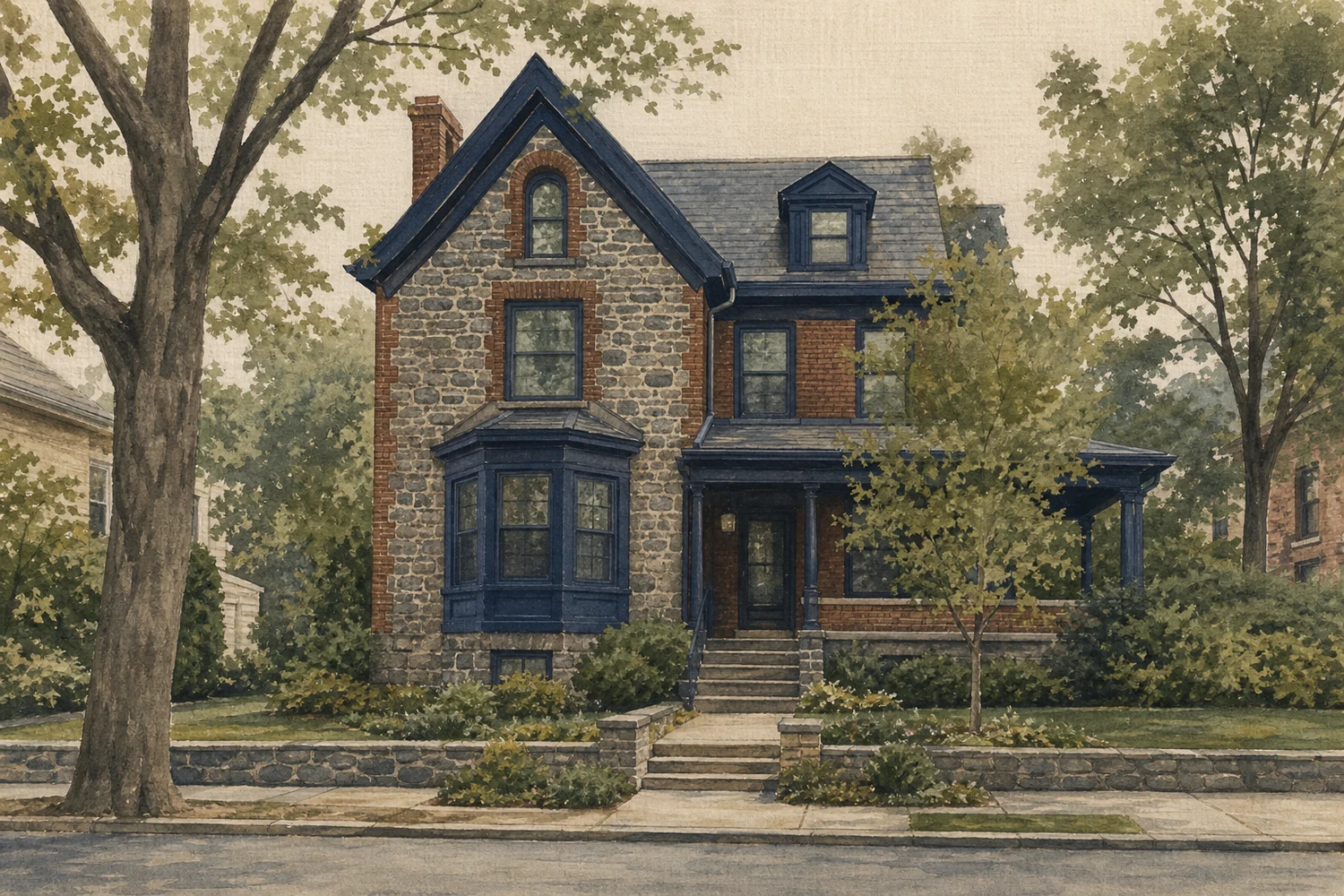
The north side, especially near Warden Lane and the quieter residential pockets above the busier core, reads more suburban than people expect. The houses are larger, the streets feel more insulated, and the pace is slower. This is the side of East Falls that can feel almost detached from the noise of the rest of the neighborhood. Yards show up more. The blocks are quieter. The atmosphere feels steadier and more protected.
For some residents, this is the ideal version of East Falls. It has the greenery and calm people come here for, but less of the street-level friction that shows up elsewhere. For others, it can feel slightly removed from the part of East Falls that has the strongest street life and neighborhood texture.
The South Side
Head down toward Conrad and the rowhome-heavy sections closer to the river-facing streets, and the texture changes again. This part of East Falls feels denser, more active, and a little rougher around the edges. It is still desirable and still recognizably East Falls, but it is where more of the noise complaints, parking tension, and student-family friction tend to concentrate. The streets feel more lived on top of each other here. The social atmosphere is more exposed.
This is also the side that tends to produce stronger opinions about who is doing what on which block. Daily life is closer together, so the neighborhood becomes more visible in both good and irritating ways.
The River Edge
Then there is the river edge, which is the emotional core of East Falls even for people who do not live directly against it. The Schuylkill, Kelly Drive, and the trail system shape how the neighborhood feels far beyond the waterfront itself. This is the part people point to when they explain why they put up with the rest. It is restorative, scenic, and deeply woven into everyday life.
Still, even the river edge has its own local logic. It is not the same experience at every hour. In the daytime and early evening, it can feel like the best version of East Falls. Later at night, especially in the summer, longtime residents tend to be more cautious. That kind of time sensitivity is part of what makes East Falls feel truly local. The neighborhood rewards people who learn its patterns block by block, hour by hour.
Where East Falls starts to feel like East Falls
Residents read the neighborhood in lived zones, not official boundaries — it changes quickly block to block.
The Ridge core
Ridge, Conrad and NewtonThe part that feels most like a small village inside the city. Coffee, a flower shop, a bottle of wine, takeout and a bar are close enough together to become routine. This is the pocket people mean when they call East Falls walkable.
The Jefferson-adjacent blocks
Around the campusMore weekday movement, more student presence, and more of the traffic and parking friction locals complain about. The mood shifts with the time of day.
The north side
Near Warden LaneReads more suburban than people expect. Larger houses, more insulated streets, a slower pace, and yards that show up more often. The side that can feel almost detached from the rest of the neighborhood.
The south side
Toward Conrad and the rowhomesDenser, more active, a little rougher around the edges. Where noise complaints, parking tension and student-family friction concentrate, because daily life sits closer together.
The river edge
Against the SchuylkillThe emotional core of East Falls even for people who do not live on it. Restorative and scenic, but not the same experience at every hour.
The East Falls You Experience on Foot
A generic neighborhood guide will tell you East Falls is walkable. That is true, but only if you understand what kind of walkability people here are actually talking about. East Falls is not evenly walkable in every direction, and it does not offer the same experience on every block. It is selectively walkable. The difference matters.
If you live near the Ridge, Conrad, and Newton pocket, daily life can feel surprisingly easy. This is where East Falls functions best on foot. You can grab coffee, pick up flowers, stop for wine, get takeout, and drift into a couple of everyday neighborhood places without needing to plan much. The scale is comfortable. You are not covering huge distances, and you are not dealing with the kind of commercial overload that can make other Philadelphia neighborhoods feel frantic. It feels like a real village center, not because it is full of attractions, but because the useful things are close enough together to become part of routine.
That sense of ease is what drives a lot of the neighborhood’s reputation. People do not only mean that sidewalks exist. They mean that there is a practical corridor where life can feel simple. You can leave your house with no grand plan and still get several things done. That is a specific kind of urban comfort, and East Falls delivers it best in concentrated pockets, not across the entire neighborhood.
Once you move away from that corridor, the experience changes. East Falls can quickly feel more residential, more spread out, and more dependent on your exact block. If you are farther from the Ridge core, you may still love where you live, but your daily walkability can feel less immediate. You are no longer moving through a dense cluster of useful stops. You are moving through quieter residential stretches that may be beautiful but less functionally connected. That is why two people can both live in East Falls and describe it very differently.
The river trail also plays an important role in how people judge walkability here, even when they are not using it for errands. The Schuylkill changes the emotional geography of the neighborhood. It makes East Falls feel open, breathable, and connected to something larger. A walk here is not only about going to the store or getting coffee. Sometimes it is about clearing your head, getting in a run, biking toward Manayunk, or heading down toward Center City on a route that feels far better than a typical urban sidewalk grind.
That is the real distinction. East Falls is not walkable in the broad, all-purpose way some neighborhoods are. It is walkable if you know which pocket you are in, what kind of day you want to have, and how much your routine depends on being near the useful stretch of Ridge. People who understand that tend to love living here on foot. People who assume the whole neighborhood works the same way usually need a little time to figure it out.
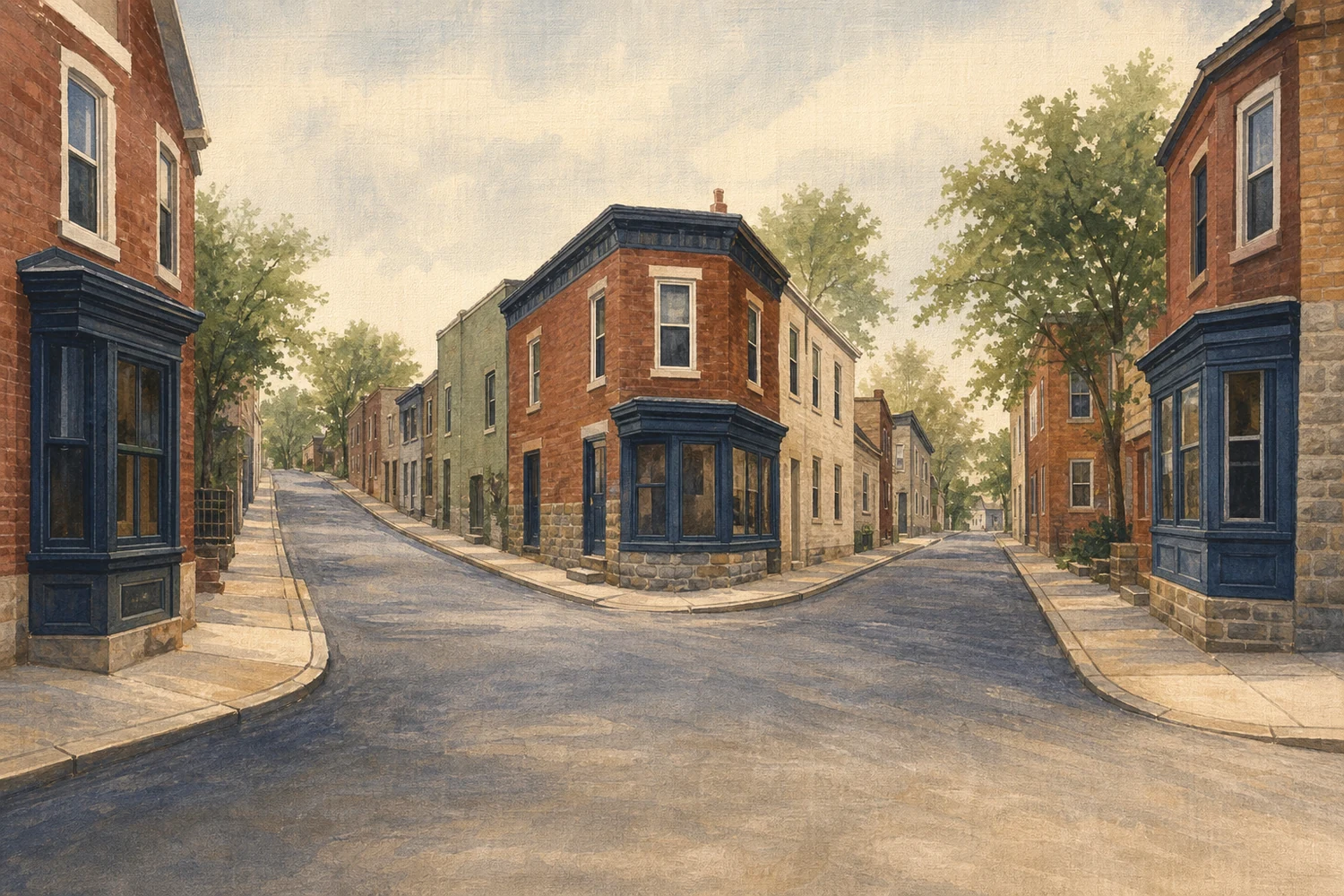
The River, Kelly Drive, and Why People Put Up With Everything Else
If East Falls has one feature that consistently outweighs its frustrations, it is the river. The Schuylkill, Kelly Drive, and the trail system do more than give the neighborhood a nice view. They shape the emotional life of the place. They are the reason many people choose East Falls in the first place, and the reason many stay after they have already learned about the parking, the neighborhood politics, and the endless stream of minor local grievances.
There is something unusual about being able to move from ordinary residential blocks to the river this quickly in Philadelphia. In East Falls, that transition is part of daily life. You can be on a quiet street lined with houses and, not long after, find yourself near the water with space to run, bike, walk, or simply slow down. That physical closeness changes the way the neighborhood feels. It creates a sense of openness that many other city neighborhoods cannot offer in the same way.
Locals understand this instinctively. The river is often treated as the neighborhood’s real amenity, the one thing that justifies the rest. Businesses come and go. Neighborhood organizations fight. Parking remains annoying. None of that competes with the fact that East Falls gives you direct access to one of the city’s best outdoor corridors. It is not just pretty. It is useful. It is a daily reset button.
The routes matter too. Heading toward Manayunk gives you one kind of outing, a little more social and destination-oriented. Heading toward Center City gives you another, with longer scenic stretches that make the city feel close without pressing in on you. For runners and cyclists, this is one of the most important practical advantages of living here. For everyone else, it still matters because the option exists. You may not use it every day, but it affects how you understand your neighborhood when you know that path is there.
The river also gives East Falls ritual. People build routines around it. Morning walks feel different here. Evening runs feel more rewarding. A stressful day does not always require a major plan when the best decompression route is already nearby. That is why the neighborhood can feel calmer than many places that are technically just as urban.
Still, locals do not romanticize it blindly. The trail has its own time-sensitive rules. Early evening is one thing. Summer nights, especially after 10 p.m. and especially alone, are another. Longtime residents tend to make that distinction clearly. It is a reminder that even East Falls’ biggest advantage comes with local knowledge attached.
Even with that caution, the river remains East Falls’ best argument for itself. It gives the neighborhood beauty, motion, and breathing room. It softens the hard edges of city life without removing them. More than anything else, it explains why people here put up with the mess and keep calling East Falls home.
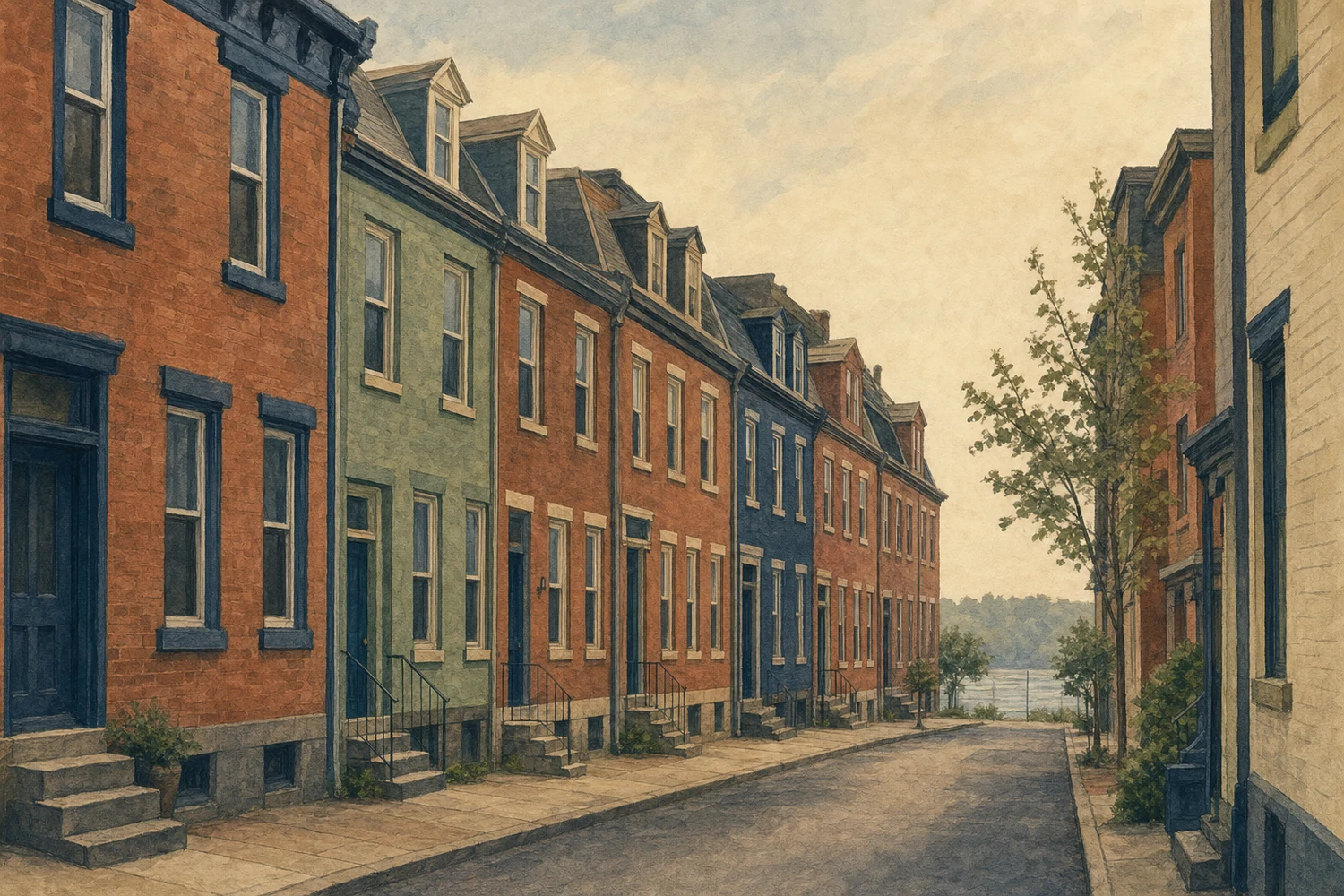
Parking, Street Logic, and the Real Beginner Mistakes
Parking in East Falls is one of the first things new residents notice and one of the last things they fully figure out. It is not just difficult. It is inconsistent. The mistake most people make early on is assuming that the problem is the same everywhere. It is not. Parking here is block-specific, time-specific, and tied closely to who uses each street and when.
Where Parking Feels Worst
The areas that give people the most trouble are predictable once you know what to look for. Streets close to the Ridge core tend to fill up quickly because that is where daily activity concentrates.
If you are trying to park right along Ridge during busy hours, you are competing with residents, visitors, and anyone stopping in for food, errands, or a quick drink.
Jefferson-adjacent blocks are a separate category altogether. These streets carry a different kind of pressure because of student life, campus activity, and people moving in and out at all hours of the day. On some blocks, parking feels like it resets every few hours, which is why locals describe parts of the area as having an “hourly parking” feel. You can find a spot, leave, and come back to a completely different situation.
The south side, especially around Conrad and the denser rowhome stretches, also brings its own version of the problem. Streets are tighter, homes are closer together, and there is less buffer space. When something small changes, like a few extra visitors or a shift in who is home, it becomes visible immediately. That is where parking starts to feel less like a routine inconvenience and more like a daily contest.
What Locals Actually Do
The way people who live in East Falls deal with parking is not by solving it, but by working around it. One of the most consistent habits is avoiding the obvious spots. Instead of circling near Ridge or trying to land directly in front of where they are going, many residents head for side streets just off the main drag. They park a few blocks away and walk in.
That tradeoff is not theoretical. People who have lived here for a while will tell you that a ten-minute walk is often better than spending thirty minutes looping the same streets. It becomes part of the rhythm. You stop expecting convenience at the front door and start planning for a short walk as part of the process.
Another pattern is learning which blocks behave differently at certain times. Some streets feel manageable in the morning and completely saturated by evening. Others turn over more frequently because of student schedules or nearby activity. The more time you spend in East Falls, the more you start to recognize these patterns and adjust without thinking about it.
The Social Side of Parking
Parking in East Falls is not just a logistical issue. It is part of the neighborhood’s social culture. People notice who parks where, how long they stay, and whether someone seems to be taking more space than they should. That attention turns into commentary, and that commentary often ends up online.
Posting about parking in neighborhood groups tends to produce a flood of responses, but not necessarily solutions. People weigh in, agree, disagree, and sometimes escalate small incidents into full conversations about neighborhood behavior. It is one of the ways East Falls processes its own frustration.
There are also smaller, almost unspoken behaviors that show how territorial parking can feel. On certain corners, like around 41st and Conrad, you will see examples of informal “claiming” where someone signals that they plan to use a spot at a certain time. It is not enforceable, but it reflects how seriously people take the issue. Space is limited, and over time, it becomes personal.
Understanding parking in East Falls means understanding that it is part of daily life in a deeper way than in many neighborhoods. It shapes how people move, how they plan their day, and how they interact with each other. Once you learn the patterns, it becomes manageable. Until then, it can feel like the one thing that tests your patience the most.
What East Falls Feels Like on Monday vs Tuesday vs Weekend
East Falls is not one steady, predictable experience. It shifts depending on the day of the week and even the time of day. A street that feels active one evening can feel almost empty the next afternoon. Understanding those shifts is what separates someone who knows the neighborhood from someone who is still figuring it out.
Monday evenings have their own rhythm, especially near the river. Around Falls Bridge, you will notice a steady pattern of people gathering for a run. It is not loud or overwhelming, but it is consistent enough that it gives that part of East Falls a sense of routine. You start to recognize faces, groups, and the quiet energy of people showing up at the same time each week.
Tuesday afternoons, especially around Billy Murphy’s and the nearby coffee spots along Ridge, feel completely different. The same stretch that carries casual foot traffic on a busier day can feel almost paused. Aside from people connected to the campus or working nearby, there is very little movement. If you walked through at that time without context, you might assume the area is always that quiet. It is not. It is just a specific window where the neighborhood dips.
Weekends shift everything again. Saturdays, in particular, take on a different tone because of the Farmers’ Market under the bridge. The area around 4100 Ridge becomes more social and more visible. People who might otherwise stay on their own block come out, browse, pick up food, and interact in a way that feels more communal. It is one of the moments when East Falls feels most like a shared space rather than a collection of individual routines.
Seasonal events amplify that effect. When something like the Cherry Blossom Festival is happening near Red Ring Park, the neighborhood briefly expands. Streets feel more connected, and there is a sense that something is going on beyond the usual patterns. Those moments do not last long, but they stand out because they break the normal pace.
The river follows its own timeline. During the day and early evening, it feels open, active, and comfortable. Later at night, especially in the summer, the tone changes. People who know the area adjust their behavior without thinking too much about it. They go earlier, go with others, or simply choose a different time.
What all of this adds up to is a neighborhood that rewards attention. East Falls is not static. It has micro-rhythms that repeat week after week. Once you learn them, the place starts to feel predictable in a useful way. Until then, it can feel like it is constantly changing.
The recurring things
The neighborhood's own repeating rituals, as the guide describes them.
Farmers' Market under the bridge
At 4100 Ridge. The area becomes more social and more visible; people who might otherwise stay on their own block come out, browse and pick up food.
The Falls Bridge run
A steady pattern of people gathering for a run near Falls Bridge. Not loud, but consistent enough to give that part of East Falls a sense of routine.
Stitch Club at Vault + Vine
One of the small, recurring gatherings that give East Falls a rhythm not tied to big attractions.
Cherry Blossom Festival
Held near Red Ring Park. The neighborhood briefly expands — streets feel more connected and something is clearly going on beyond the usual patterns.
Lovelights at McMichael Park
A neighborhood-specific gathering rather than a large-scale city event, which is part of why it feels personal.
The Bars, Cafes, and Food Spots That Locals Actually Use
East Falls is not built around nightlife, and it does not try to be. What it has instead is a set of places that people return to regularly. These are not always the most talked-about spots in the city, but they are the ones that make daily life feel complete.
Billy Murphy’s Irish Saloon sits at the center of that local identity. It has the kind of presence that only comes from time and repetition. People know it, rely on it, and treat it as part of the neighborhood rather than a destination. It is where familiarity matters more than novelty. The energy is steady, recognizable, and grounded in regulars who keep coming back.
Frank’s Pizza fills a different role. It is not about atmosphere. It is about reliability. The fact that people remember the price of a slice says a lot about how it fits into daily life. It is the kind of place you mention casually because it is always there when you need it. That consistency carries more weight than hype.
Vault + Vine adds something softer to the mix. It is one of the places that makes the Ridge core feel like a village instead of just a commercial strip. Coffee, flowers, and small gatherings blend together here in a way that gives East Falls a more relaxed social layer. It is not loud, but it is important.
East Falls Beverage is harder to categorize, which is part of why locals talk about it the way they do. It functions as a practical stop, but over time it becomes one of those places that feels oddly essential. It is not polished, but it is part of how people move through the neighborhood.
Johnny Manana’s represents the upper edge of what East Falls offers in terms of nightlife. It is where people go when they want something a little more social without leaving the neighborhood. Still, even with spots like this, many residents will head to Manayunk or Center City if they are looking for a full night out. East Falls supports a quieter kind of social life.
The way people talk about food here also reveals how they navigate the area. Instead of always naming places formally, they describe them by where they are. The Chinese spot on Ridge gets identified by its proximity to the fire department rather than its name. That kind of reference tells you more about how locals think than any list of top restaurants.
Other spots like Franklin’s East Falls, LeBus, In Riva, Fiorino, Shan Chuan, and Taqueria Cresta round out the food landscape. Each adds something, but none tries to redefine the neighborhood. Together, they create a mix that feels functional and familiar rather than curated for visitors.
The key to understanding East Falls food and social life is realizing that it is built around routine. These are places people fold into their week without thinking too much about it. They are not trying to compete with the busiest parts of Philadelphia. They are there to support the pace that East Falls naturally settles into.
The spots locals actually use
Not the most talked-about places in the city — the ones that make daily life feel complete.
Billy Murphy’s Irish Saloon
At the center of local identity. Treated as part of the neighborhood rather than a destination, with steady energy grounded in regulars who keep coming back.
Best for · Familiarity over novelty
Frank’s Pizza
Not about atmosphere — about reliability. The kind of place you mention casually because it is always there when you need it.
Vault + Vine
Makes the Ridge core feel like a village instead of a commercial strip. Coffee, flowers and small gatherings blend together into a more relaxed social layer.
Best for · A quiet weekday sit
East Falls Beverage
Hard to categorize. A practical stop that over time becomes oddly essential — not polished, but part of how people move through the neighborhood.
Johnny Manana’s
The upper edge of what East Falls offers at night. Where people go when they want something more social without leaving the neighborhood.
Jefferson, Students, Families, and the Parts of East Falls That Argue With Each Other
One of the most persistent conversations in East Falls revolves around Jefferson and the students who come with it. It is not a simple issue, and it does not produce a single shared opinion. Instead, it reveals how different parts of the neighborhood experience daily life in different ways.
On blocks closer to the campus, the presence of students is more visible. Parking turns over more frequently. Trash and noise can feel more noticeable. The pace of the street changes depending on the academic calendar and the time of year. For residents living in these areas, the impact is direct and constant, which is why their opinions tend to be stronger.
In quieter parts of East Falls, especially on the north side, that same presence can feel more distant. Students still move through the neighborhood, but they do not shape daily life in the same way. For those residents, the conversation around students often feels exaggerated or misplaced. They see the benefits without experiencing the same level of friction.
That difference in perspective drives most of the disagreement. Some people see students as a source of disruption, pointing to parking issues, late-night noise, and a sense that the neighborhood is being treated casually. Others see them as part of what keeps East Falls active. They support local businesses, bring movement to the area, and contribute to a more dynamic environment than a purely residential neighborhood might have.
The debate rarely stays limited to students themselves. It blends into larger questions about who East Falls is for. Longtime residents sometimes frame the issue as part of a broader change in the neighborhood. Newer residents may see it as part of what makes the area livable and connected to the rest of the city. Families, renters, and homeowners all approach it from slightly different angles.
It also overlaps with the physical layout of East Falls. The north side versus south side distinction plays into how people interpret what is happening. Blocks that feel calm and insulated produce different expectations than those that feel denser and more exposed. What one resident considers normal activity, another may experience as a disruption.
Understanding this tension is important because it shapes how the neighborhood talks about itself. East Falls is not unified in how it sees change, growth, or even everyday behavior. It is a place where different groups are constantly negotiating how to share the same space.
In the end, the conversation about students is not just about students. It is about identity, ownership, and the future of the neighborhood. It is one of the clearest examples of how East Falls works as a living, evolving place rather than a static one.
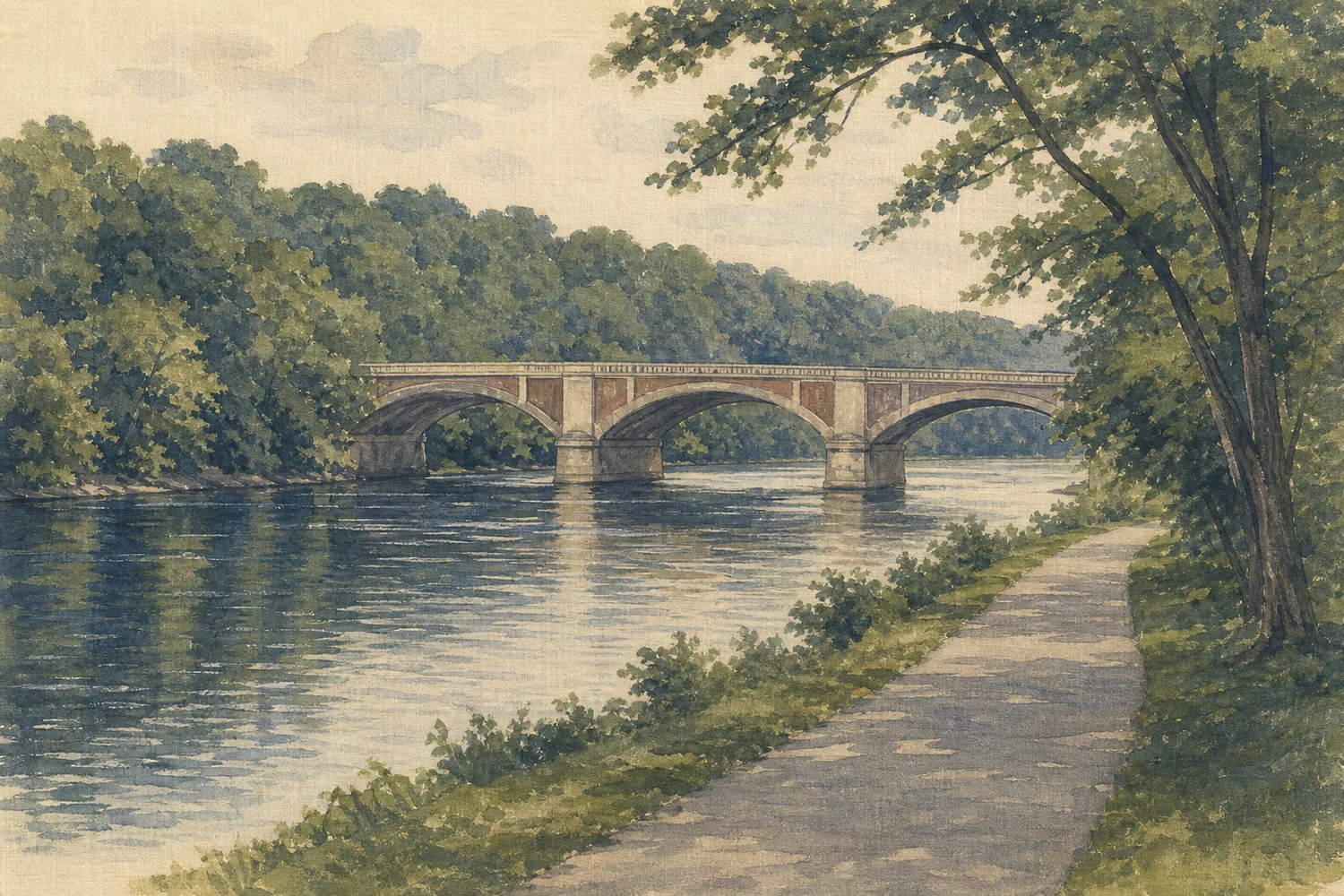
The Politics of Being a “Real Fallser”
In East Falls, belonging is partly about address, but it is just as much about tone.
The word “Fallser” comes up quickly once you start paying attention. At its simplest, it refers to someone who was born and raised in East Falls. In practice, it carries more weight than that. It signals a kind of lived familiarity, a sense that you understand how the neighborhood works beyond what you can see on a map. It shows up in conversations about history, about old businesses that are no longer there, and about how things used to be before newer residents and newer habits started reshaping the area.
That said, the definition is not fixed. Someone who has lived in East Falls for years, knows the streets, understands the rhythms, and participates in neighborhood life can feel like a Fallser in practice, even if they were not born here. At the same time, someone can live in the neighborhood for a long time and still be treated as slightly outside if they do not speak the same language or approach the neighborhood in the same way.
One of the clearest signals of belonging is how people talk about East Falls itself. Locals rarely describe the neighborhood as perfect. They tend to frame it with a mix of appreciation and critique. The unwritten rule is that you acknowledge both sides. If you only praise it, you can come across as someone who has not seen enough of it yet. If you only complain, you can be read as someone who does not understand why people stay.
That balance shows up across different spaces. In nostalgia groups, people perform belonging by remembering what used to be there and how the neighborhood felt years ago. In rant groups, they perform it by participating in the ongoing conversation about parking, noise, development, and everyday frustrations. In more formal community groups, the performance shifts toward involvement in events, meetings, and neighborhood initiatives. Each space has its own version of what it means to belong, but all of them rely on the same underlying idea that you are part of the place, not just passing through it.
Longtime residents and newer arrivals often measure authenticity differently. For some, it comes down to history and continuity. Knowing what stood on a block before it changed, recognizing familiar faces, and remembering how the neighborhood evolved all matter. For others, it is about participation. Showing up, learning the rhythms, contributing to the community, and adapting to the local way of doing things becomes its own form of credibility.
The tension between those perspectives is part of what gives East Falls its distinct social texture. It is a neighborhood that cares deeply about its identity, and that care shows up in how people listen, respond, and sometimes push back against each other. Over time, most residents find their place within that dynamic. They learn when to speak, how to frame their opinions, and how to navigate the mix of pride and critique that defines the neighborhood’s voice.
Why the Neighborhood Has So Much Drama for a Place This Pretty
East Falls looks calm on the surface, but it runs on a high level of participation. People pay attention here. They notice changes, they have opinions about them, and they are willing to express those opinions in public. That level of engagement creates a strong sense of attachment. It also creates friction.
One of the clearest examples is the divide between different neighborhood organizations. The relationship between the long-standing community council and newer groups focused on development and walkability has shaped a lot of the conversation in East Falls. Each side sees itself as protecting the neighborhood in a different way. That difference in approach leads to ongoing disagreement about how the area should grow, what should change, and what should stay the same.
This is where the feeling of constant meetings comes from. Residents often talk about the volume of discussions, forums, and updates tied to neighborhood decisions. It can feel like there is always another issue to weigh in on, another proposal to consider, or another conversation that needs attention. Over time, that creates fatigue. People stay involved because they care, but they also feel the weight of that involvement.
The language that develops around this is telling. Terms like “RCO-space” and “EFCC-verse” reflect how large and complex the ecosystem of neighborhood groups can feel. It is not just one organization or one conversation. It is a network of overlapping voices, each with its own priorities and perspective. For someone new to East Falls, it can take time just to understand who is who.
Safety discussions follow a similar pattern. There is a lot of talk about community awareness, town watch efforts, and how to respond to incidents. At the same time, there is skepticism about how effective those efforts are. Conversations about safety often circle back to the same themes, with people questioning whether the amount of discussion is matched by action.
The difference between official tone and everyday conversation is another important piece. On the surface, community messaging tends to emphasize cooperation, improvement, and shared goals. In comment threads and informal spaces, the tone shifts. Conversations become more direct, more personal, and sometimes more heated. Both versions exist at the same time, and together they form a fuller picture of how East Falls operates.
The reason all of this happens comes back to the same core idea. People care about East Falls. They care enough to show up, to argue, and to try to shape what happens next. The downside is that caring often looks like conflict. The upside is that the neighborhood never feels indifferent.
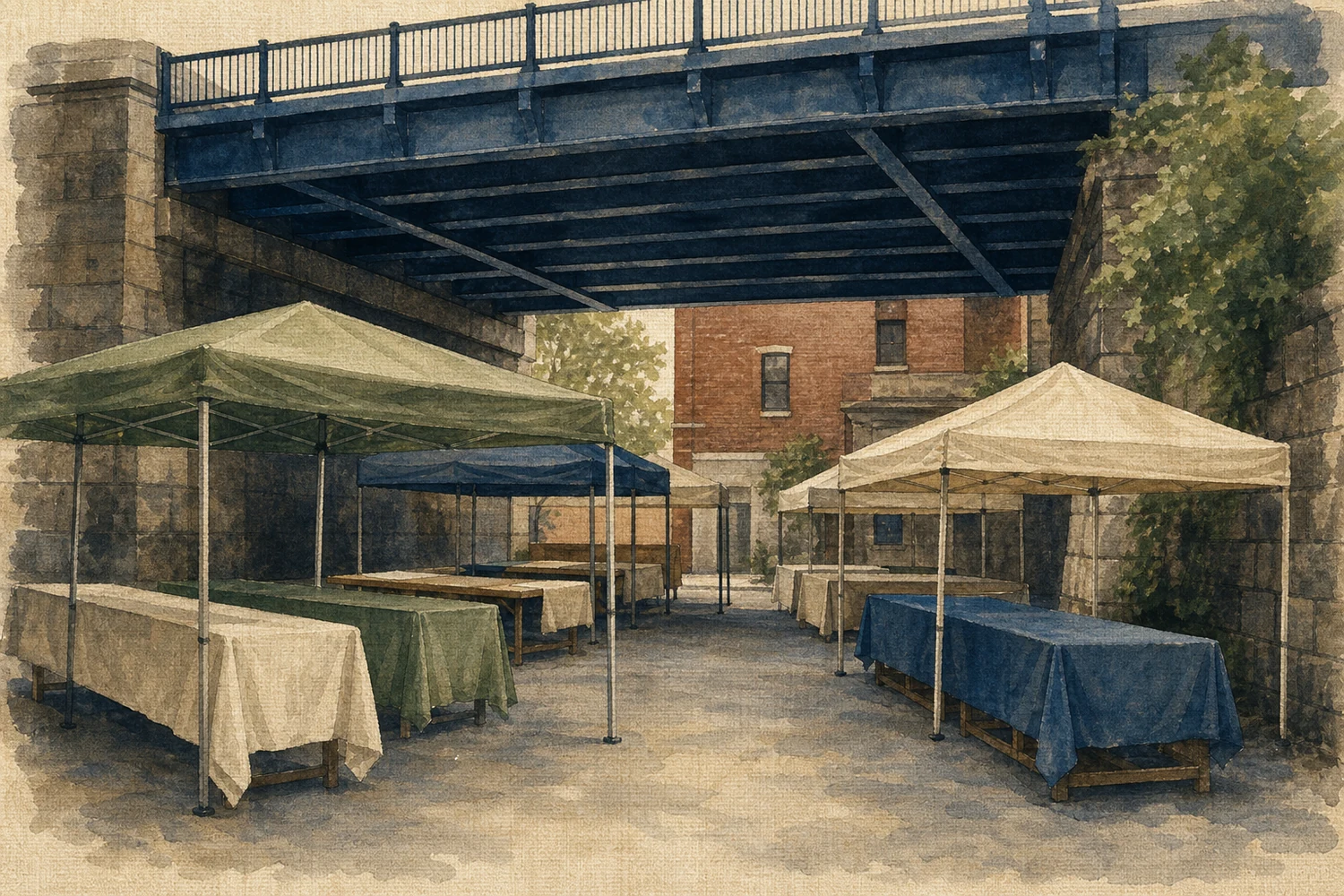
The Softer Side: Mutual Aid, Markets, Park Rituals, and Why People Still Love It
For all the discussion, disagreement, and constant background noise of neighborhood life, East Falls has a quieter side that is just as important. It shows up in the routines and small acts that keep people connected to each other and to the place itself.
One of the clearest examples is the community fridge on Midvale Avenue. It operates on a simple idea. People contribute what they can and take what they need. Over time, it has become more than just a resource. It is a signal that the neighborhood takes care of its own in practical, visible ways. It also comes with its own set of understood norms, which reinforces the idea that even acts of generosity here are shaped by shared expectations.
Vault + Vine plays a role in this softer layer as well. Beyond being a place to grab coffee or flowers, it hosts regular gatherings like the weekly Stitch Club. These kinds of small, recurring events give East Falls a rhythm that is not tied to big attractions or major happenings. They are simple, consistent, and rooted in everyday life.
The Farmers’ Market under the bridge at 4100 Ridge adds another layer to that rhythm. Saturdays feel different because of it. People who might otherwise stay within their usual routines come out, walk around, and spend time in a shared space. It is one of the moments when the neighborhood feels more visibly connected.
Parks carry that same energy. McMichael Park, along with seasonal events like Lovelights, gives residents a place to gather, celebrate, and participate in something that feels collective. These are not large-scale city events. They are neighborhood-specific, which makes them feel more personal.
The running group that meets near Falls Bridge adds a different kind of routine. It brings people together through movement, creating a steady, repeatable pattern that becomes part of the neighborhood’s identity. Even for those who do not participate, seeing the same activity happen week after week reinforces the sense that East Falls has its own internal rhythm.
The community-wide yard sale is another example of how these patterns come together. It turns ordinary blocks into a shared event, blending practical activity with social interaction. It is not about attracting visitors. It is about giving residents a reason to engage with each other in a different way.
All of these elements work quietly alongside the louder parts of East Falls. They do not cancel out the complaints or the debates, but they balance them. They remind people why they stay. The same neighborhood that argues constantly also shows up, contributes, and builds small systems of support that make daily life feel grounded.
Who East Falls Works Best For and Who Might Get Frustrated Fast
East Falls tends to work best for people who appreciate its specific combination of calm, access, and routine. It is a good fit for someone who wants to be close to the city without feeling surrounded by it all the time. The river plays a big role in that. For runners and cyclists, it is one of the most appealing aspects of living here. Being able to step out and move along the Schuylkill without much planning adds real value to everyday life.
It also appeals to people coming from busier parts of Philadelphia who want a quieter environment without leaving the city entirely. East Falls offers that middle ground. It is residential enough to feel calm, but still connected enough that you do not feel isolated. For buyers looking for a place that feels more settled than some of the faster-changing neighborhoods, it can be an attractive option.
Students and renters connected to Jefferson often find it convenient as well. Proximity to campus makes daily routines easier, even if it comes with tradeoffs around parking and noise depending on the block. For some, that balance works. For others, it becomes a source of frustration.
On the other side, East Falls can be challenging for people who expect simplicity. Parking is not easy, and it does not become easy just because you have lived here longer. Civic life is active, which means there is always something being discussed, debated, or organized. If you prefer a neighborhood where issues stay in the background, this level of engagement can feel overwhelming.
Nightlife is another factor. While there are places to go within the neighborhood, it does not offer the range or intensity that you find in areas like Manayunk or Center City. People who want that kind of environment often end up leaving East Falls for the evening.
There is also the social aspect to consider. East Falls has a strong identity, and that identity comes with expectations. Learning how the neighborhood works takes time. People who are willing to observe, adapt, and engage with the local rhythm tend to settle in more comfortably. Those who expect the neighborhood to adjust to them right away can feel out of sync.
In the end, East Falls rewards patience. It is a place where understanding grows gradually. Once you learn the patterns, the blocks, and the way people interact, the neighborhood starts to make sense in a deeper way.
Who it works for, and who gets frustrated fast
The guide's own answer: East Falls rewards patience, and understanding grows gradually.
- People who want to be close to the city without feeling surrounded by it all the time.
- Runners and cyclists, who can step out and move along the Schuylkill without much planning.
- People coming from busier parts of Philadelphia who want quiet without leaving the city.
- Students and renters connected to Jefferson, for whom proximity to campus makes daily routines easier.
- Anyone who expects simplicity — parking does not get easier just because you have lived here longer.
- People who prefer a neighborhood where issues stay in the background, because civic life is constantly active.
- Anyone who wants the range or intensity of nightlife found in Manayunk or Center City.
- People who expect the neighborhood to adjust to them right away.
Frequently Asked Questions
Is East Falls actually walkable, or do you still need a car?
East Falls is walkable in specific pockets, especially around the Ridge, Conrad, and Newton area where daily essentials cluster together. Outside of that core, the neighborhood becomes more residential and spread out. Many residents still rely on a car, but they also build walking into their routines when it makes sense.
What part of East Falls feels the quietest?
The north side, particularly near Warden Lane and the surrounding residential streets, tends to feel the most insulated. Homes are larger, streets are calmer, and there is less of the day-to-day activity that shows up in other parts of the neighborhood.
Is East Falls safe at night?
East Falls generally feels calmer than many parts of the city, but it is not without concerns. The river trail, for example, feels comfortable during the day and early evening but becomes less predictable later at night, especially in the summer. Most residents adjust their routines accordingly.
Where is parking worst in East Falls?
Parking tends to be most challenging near the Ridge core, on Jefferson-adjacent streets, and in denser rowhome areas on the south side. These areas experience more turnover, more demand, and more competition for limited space.
What do locals mean when they say “Fallser”?
A Fallser traditionally refers to someone born and raised in East Falls, but the term also reflects a broader sense of belonging. It signals familiarity with the neighborhood’s history, habits, and way of talking about itself.
Is East Falls more like Manayunk or more like a quiet Northwest Philly neighborhood?
East Falls sits between those two identities. It offers some of the accessibility and activity associated with Manayunk, but with a quieter, more residential feel. It does not have the same level of nightlife, which is part of its appeal for many residents.
Are the Jefferson students really a big issue?
It depends on where you live. Blocks closer to the campus experience more of the impact, especially when it comes to parking and noise. Other parts of East Falls are less affected. Opinions vary widely based on individual experience.
What is the most local thing to do in East Falls on a weekend?
A typical local weekend might include stopping by the Farmers’ Market under the bridge, walking or running along the river, and spending time in one of the neighborhood’s regular spots. It is less about a single destination and more about moving through a set of familiar routines.
Make it yours
Take a useful East Falls walk
A short list to turn what you read into your own next steps.
Saved checks stay on this device when browser storage is available. This is a personal planning list, not a property inspection or professional assessment.
A few good questions
Before you make a plan.
Is East Falls walkable?
Is East Falls safe at night?
Sources & next steps
Useful advice should
show its working.
These resources support the reader tools above and help you check details for your own address, date, or plans.
- SEPTA trip planner
Compare transit journeys using your actual stops, date, and departure time.
- Find a playground or recreation center
City facility listings provide locations and contacts for checking programs and access.
- City property and zoning lookup
Opens the City's address-based zoning and permit tools.
These are route-planning prompts, not assurances about particular walking conditions or event schedules. Campus access and river approaches should be checked for the destination you choose.
Keep exploring