A little orientation
Plan a thoughtful Antique Row visit
Start with a purpose.
Decide whether you want furniture, restoration advice or a slow look at Pine Street before choosing your stops.
Measure before you leave.
Bring the space dimensions and access measurements a seller would need to discuss a large or awkward piece.
Keep collection separate.
Ask about delivery and collection terms before paying; an appealing object still needs a workable journey into your home.
A closer look
From browsing to bringing it home
Use the guide’s named shops as leads to confirm directly, not promises that every door will be open.
Choose your Pine Street stretch.
Use Pine Street and the guide’s nearby Washington Square or Kahn Park references to sketch a modest outing. Find each shop’s current contact details before setting out, and leave an alternative if your first stop is unavailable.
A useful questionWhich two stops matter most, and what will you do between them?
Source & next step ↗Make room for the object.
For a furniture search, write down the room dimensions, doorway widths and questions about condition. Ask the seller for written collection terms, then compare the practical loading options before committing to a piece you cannot carry.
A useful questionCan this piece reach its intended room without an unplanned delivery problem?
Source & next step ↗Add one nearby stop.
If your visit extends toward South Street or Fabric Row, choose one named business from the district directory and confirm it directly. A small plan leaves time to browse without relying on the whole corridor being open.
A useful questionWhich nearby stop would still make the trip worthwhile if plans change?
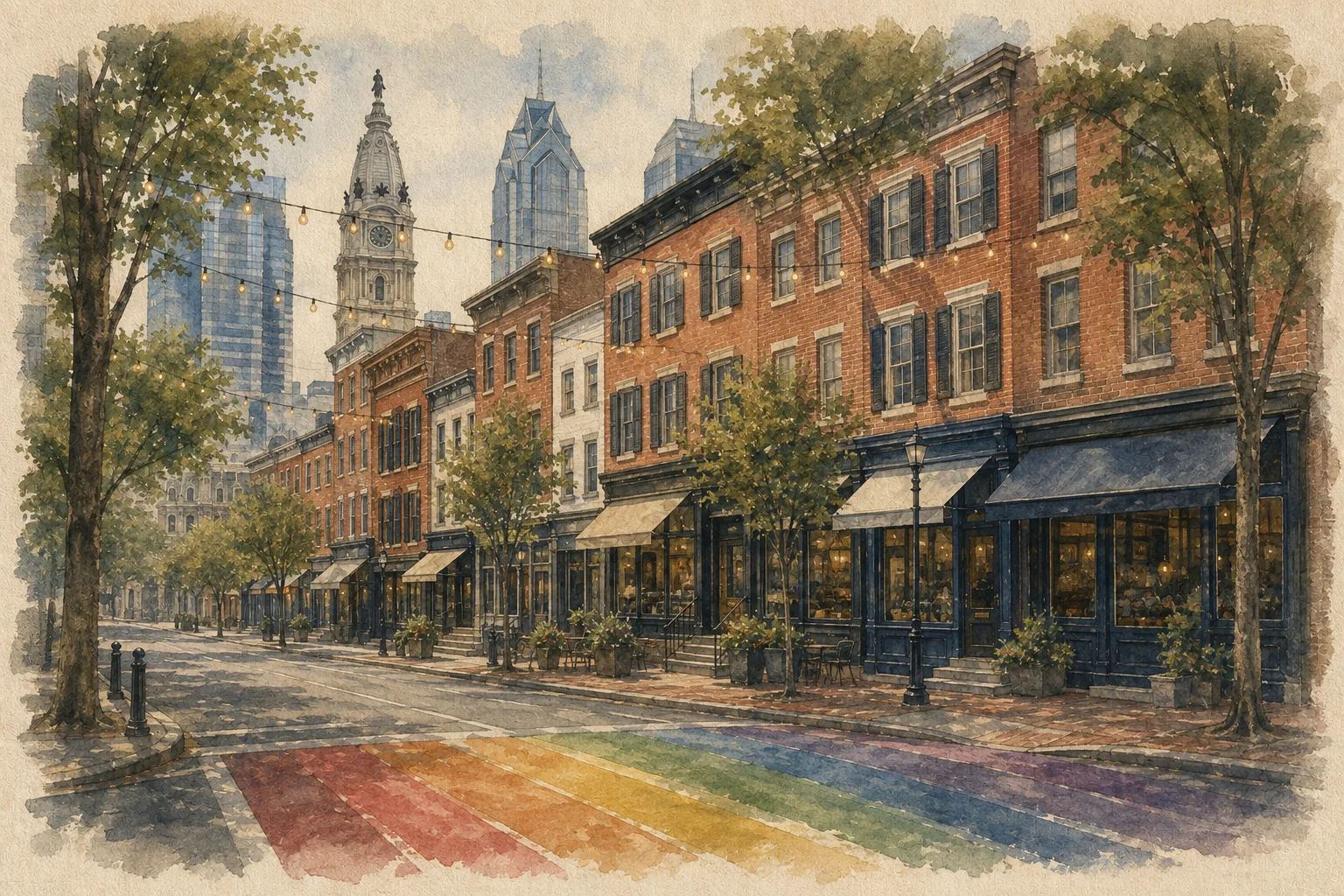
Source & next step ↗Antique Row is one of those Philadelphia places where the name tells only part of the story. Along Pine Street in Washington Square West, the old antiques district is still there, but it is quieter, smaller, and more mixed than many visitors expect. Today, it is less about wall-to-wall antique shops and more about a slow walk through historic blocks, specialty design stores, restoration businesses, vintage pieces, beautiful facades, and the kind of neighborhood texture that makes Center City feel lived-in.
At Hometress, we spend a lot of time thinking about how Philadelphia homes, streets, and neighborhoods actually function day to day. Antique Row is a good example of that local reality. It is charming, but it is not a giant market. It is worth visiting, but only with the right expectations. This guide breaks down where Antique Row is, what you will actually find there, when to go, how to avoid parking headaches, and how to pair Pine Street with nearby spots like South Street, Fabric Row, Washington Square, and the Gayborhood.
Antique Row Is Real, But It Is Not Wall-to-Wall Antiques Anymore
Antique Row still exists, but the name can set people up for the wrong kind of visit.
If you hear “Antique Row” and picture block after block of antique dealers, packed storefronts, dusty treasures, and bargain finds waiting in every window, Pine Street may feel smaller than expected. The area still has history, character, and a few specialty shops that keep the old identity alive. What it does not have anymore is the dense antiques-only feeling that longtime Philadelphians remember.
Today, Antique Row is best understood as a short historic corridor in Washington Square West. You come here for a slow walk, old buildings, select shops, design inspiration, and the chance of finding one memorable piece. You do not come here expecting a giant antique market.
That distinction matters because it changes the whole experience. Visitors who arrive expecting a full afternoon of shop-hopping often leave disappointed. People who come with a looser plan usually have a better time. They notice the old rowhomes, the brick facades, the quieter pace, the windows, the lighting stores, and the way Pine Street feels different from louder shopping areas nearby.
The core experience is not fast. You walk, look around, step into what is open, and let the block reveal itself. Some stops may lean antique. Others may feel more like vintage design, interiors, craft, restoration, or boutique retail. Some stretches feel more residential than commercial. That mix is part of the current reality.
For longtime locals, Antique Row carries a different emotional weight. Many remember when the area had more antique shops and stronger retail density. For newer residents or visitors, the same blocks may simply feel charming, quiet, and historic. Both reactions make sense. The disconnect usually comes from expecting the old version of Antique Row to still be fully intact.
A better way to approach it is this: Antique Row is not gone, but it has changed. It is still worth knowing, especially if you like architecture, small shops, old objects, and neighborhood walks. It just needs to be visited on its own terms.
If your goal is a full vintage crawl, Antique Row should be one stop on the route. If your goal is to understand one of Center City’s older shopping corridors and enjoy a slower side of Pine Street, you are much closer to the right mindset.
Where Antique Row Actually Is: Pine Street in Wash West
Antique Row is not a single building, market, or formal shopping center. It is a stretch of Pine Street in Washington Square West, commonly associated with the blocks between about 9th and 13th Streets.
That detail matters. You are not looking for a big entrance sign or a plaza. You are walking a corridor. The experience is street-level: narrow sidewalks, old storefronts, residential facades, small shops, and side streets that remind you this is still a lived-in Center City neighborhood.
Locals are more likely to orient you by saying Pine Street, Wash West, or sometimes Antique Row, depending on the conversation. “Washington Square West” is the neighborhood name you will see in more formal descriptions. “Wash West” is the shorthand that sounds more local. The area also sits near the Gayborhood, South Street, Washington Square, Kahn Park, and other walkable Center City spots.
That surrounding geography is part of why Antique Row works better as a route than a destination. You can start around the western side near 13th and Pine, drift east along Pine, then branch toward food, parks, South Street, or other nearby streets depending on what is open and what kind of day you want.
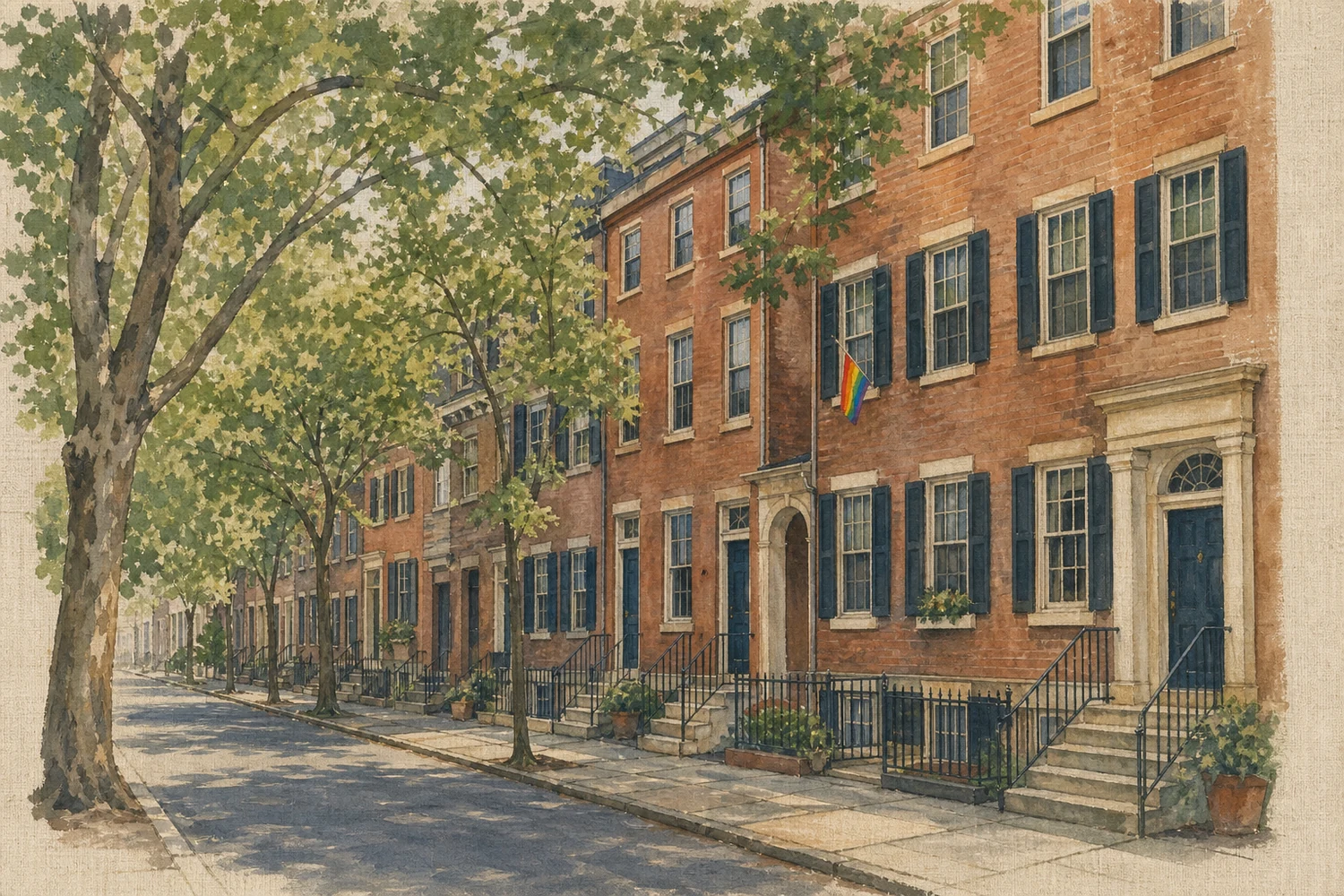
The blocks themselves are part of the draw. Pine Street has the kind of older Philadelphia texture that can be easy to miss when you are only focused on shopping. You see brick, bay windows, narrow buildings, older facades, and the quieter rhythm of a neighborhood that is central without feeling like a mall district.
This is also why some visitors feel confused. They expect every building to announce itself as part of an attraction. Instead, Antique Row blends into Wash West life. A shop may sit next to a residence. A design-focused business may sit near a restaurant. A beautiful block may have fewer open retail doors than the name suggests.
The best mental map is simple: Antique Row is Pine Street first. Treat it as a short, walkable corridor through Wash West, not a standalone attraction that guarantees constant activity.
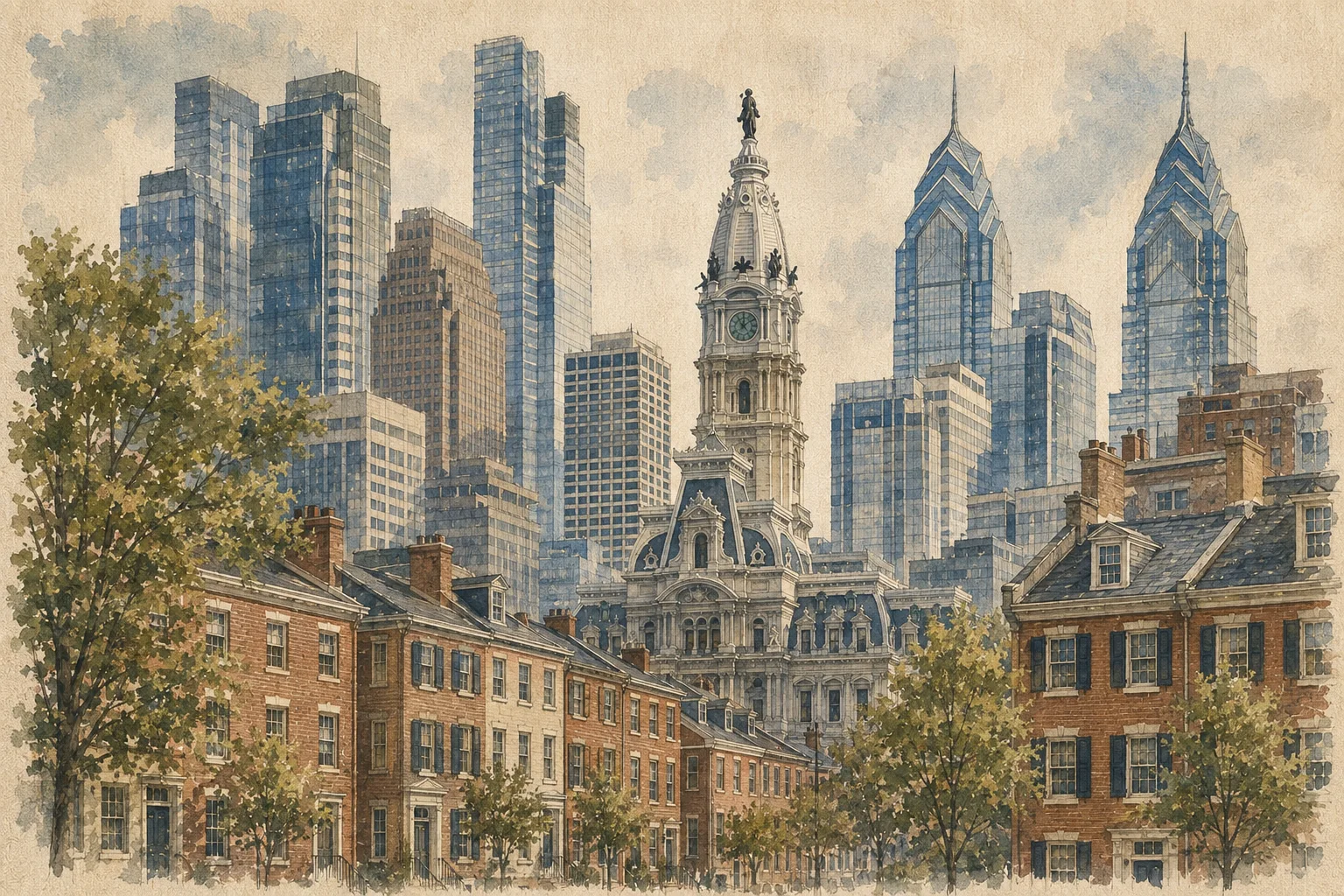
If you are already nearby, it is easy to fold into a Center City walk. If you are coming from farther away, pair it with another plan. Washington Square, South Street, Fabric Row, the Gayborhood, Queen Village, or a café stop can turn Antique Row into part of a stronger afternoon.
- Pine Street
- Washington Square
- Kahn Park
- South Street
Schematic · not to scale
Why Longtime Locals Say It Is Not What It Used to Be
The phrase that follows Antique Row around is some version of the same idea: it used to be more.
That does not come from one person being dramatic. It reflects a real shift in how Pine Street functions. Antique Row once had a stronger identity as a concentrated antiques district. The name made more literal sense when more storefronts were devoted to antiques and related businesses. Over time, the mix changed.
Some antique shops closed. Some retail shifted toward design, interiors, vintage, craft, food, or boutique concepts. Some parts of the corridor now feel more residential or mixed-use. Online shopping also changed how people buy furniture, collectibles, lighting, and decor. A shopper who might once have spent a Saturday moving from dealer to dealer can now search across the country from home.
That shift explains the divided reactions. A longtime Philadelphian may walk Pine and see what is missing. A newer visitor may see a pretty historic street with a few interesting shops and wonder why people sound disappointed. They are looking at the same place from different baselines.
The oldhead perspective matters because Antique Row is not only a shopping label. It is a memory of a more active retail corridor. For people who knew the older version, today’s quieter blocks can feel like a loss of identity. The sadness is not just about stores closing. It is about the feeling that one of Philadelphia’s distinct shopping districts became less distinct.
At the same time, the current version is not empty. That is where the story gets more nuanced. Antique Row has not simply disappeared. It has become more hybrid. You can still find antique and design-oriented businesses. You can still see specialty shops tied to old objects, restoration, interiors, lighting, and vintage style. You can still walk Pine and feel the historic character that made the area memorable in the first place.
What changed is the density. The name now carries more history than guarantee. That is why some people call it charming and others call it underwhelming. Both reactions can be accurate depending on what they expected to find.
For a guide, the useful truth is not to pretend Antique Row is still the same as it was. It is also not fair to dismiss it as irrelevant. The better story is that Pine Street has moved from a concentrated antiques district into a smaller, quieter, design-and-history corridor.
That context helps visitors enjoy it more. If you know the old reputation before you arrive, the current mix makes more sense. You are not walking into a failed version of a giant market. You are walking through a historic retail corridor that has thinned out, adapted, and kept pieces of its identity alive.
What You’ll Actually Find on Pine Today
The current Antique Row experience depends heavily on what is open when you go, but the general mix is clear. Expect a blend of antiques, vintage design, interiors, restoration, lighting, boutique retail, craft, and nearby food or café options rather than a long run of traditional antique shops.
Some businesses still carry the Antique Row identity in a direct way. Classic Antiques PHL at 922 Pine Street is one of the clearest present-day anchors associated with the area’s antique and design reputation. Chelsea Plating Company also fits the specialty side of the corridor through restoration and old-object expertise. Depending on current openings and hours, you may also encounter shops that lean more toward curated home decor, vintage pieces, interiors, artisan goods, or private design-focused shopping.
One of the strongest visual experiences connected with Antique Row is lighting. Visitors often remember chandelier-heavy shops and interiors where the ceiling itself becomes part of the attraction. This is the kind of place where looking up matters. Glass, brass, old fixtures, and statement lighting can make a shop feel more like a small design museum than a simple retail stop.
That tells you a lot about the current district. Antique Row is less about digging through piles and more about looking carefully at selected pieces. The best finds may be a lamp, mirror, frame, small decor piece, old hardware, restored item, or a statement piece for a home. If you are furnishing a rowhome, restoring an older space, or looking for something with character, the remaining shops may feel more useful than they do to a casual bargain hunter.
Prices can reflect that. The area often feels curated, not cheap. Lighting, furniture, and specialty decor can sit closer to investment-piece territory than thrift-store pricing. Small items may be more approachable, but the overall feel is not flea-market casual. That is one reason some people call the area overpriced while others see it as a place for distinctive, better-selected pieces.
You may also notice how much of the experience happens between shops. The walk itself matters. Pine Street’s residential architecture, quiet blocks, and old facades are part of what people remember. On a good day, the rhythm is simple: stop into an open shop, look at the windows, notice the buildings, maybe step onto a nearby side street, then continue toward food, a park, or another shopping corridor.
The important thing is to expect variety. Do not judge the area only by whether every storefront sells antiques in the strictest sense. Antique Row today is a mixed corridor with antique DNA. The strongest stops tend to be the ones that preserve that connection through old objects, design, restoration, lighting, or a sense of history.
The names the guide puts on the corridor
What is open varies by the day you go.
Classic Antiques PHL
922 Pine Street. The clearest present-day anchor associated with the area's antique and design reputation.
Chelsea Plating Company
Fits the specialty side of the corridor through restoration and old-object expertise.
Who Antique Row Is For, and Who Should Lower Expectations
Antique Row is not for every shopper. The people who enjoy it most usually arrive with patience and flexible expectations.
If you like architecture, slow neighborhood walks, old storefronts, and small independent shops, Antique Row can be a satisfying stop. It is especially good for people who enjoy browsing without needing to buy something. You can walk Pine, step into whatever is open, admire the buildings, and still feel like the visit was worthwhile.
Design-minded visitors are also a strong fit. If you are looking for a statement light, a vintage decor piece, old-house inspiration, restored details, or a more curated interiors feel, the area makes sense. Antique Row is not only about antiques in the collector sense. It also works for people who like objects with age, texture, and personality.
It can also be a good stop for visitors who are already in Center City and want a quieter route through Wash West. Pairing it with Washington Square, the Gayborhood, South Street, Fabric Row, or a nearby café makes the experience more forgiving. If one shop is closed or the street feels quieter than expected, the day still works.
The people most likely to be disappointed are the ones expecting volume. If you want dozens of antique stores lined up back to back, this is not that kind of place anymore. If you want bargain bins, thrift-store prices, or reseller-friendly finds, Antique Row may feel too curated and too small. Serious collectors may find some worthwhile stops, but they should not expect the density of an antique mall or estate-sale circuit.
It is also not ideal for visitors who need a guaranteed plan. The hours can be inconsistent, and some shops may be closed when you expect them to be open. A person who builds their whole day around Antique Row without checking individual businesses first is taking a risk.
The best visitor is curious rather than rushed. Someone who can enjoy a historic block, browse without pressure, appreciate a chandelier ceiling, look at old facades, and move on if a shop is closed will have a much better experience than someone trying to force the street into a full shopping itinerary.
A useful way to decide is to ask what kind of reward you want. If you need a deal, go elsewhere. If you want atmosphere, design inspiration, old Philadelphia texture, and the possibility of one special find, Antique Row is still worth your time.
When to Go: Why Weekends Beat Random Weekdays
Timing can change the whole feel of Antique Row.
A weekend afternoon is usually the safer choice if your goal is to browse. More people are likely to be out, the area feels less sleepy, and you have a better chance of finding shops open. It still may not feel packed, but it is more likely to match the slow-shopping version of Antique Row that people imagine.
Random weekdays can be trickier. A Tuesday late morning or midweek afternoon may feel quiet enough that a visitor wonders whether they came to the wrong place. Some shops may open late, keep limited hours, close unexpectedly, or operate differently than a casual visitor assumes. That pattern is one of the recurring frustrations around Antique Row.
For this reason, checking individual shop hours matters more here than it does in a conventional shopping district. Do not rely only on the idea that Antique Row exists as a named area. The corridor may be there, but the specific businesses you want to see may not all be open at the same time.
Evenings are another expectation to manage. Antique Row is not normally a nightlife strip. Under regular conditions, the shopping side winds down earlier than someone might expect if they are thinking of nearby restaurant or bar areas. That said, special events, markets, or evening activations can change the mood. On those nights, the street can feel more social, with food, music, and a stronger sense of energy. Those moments are worth watching for, but they should not be treated as the everyday baseline.
Weather and season can also shape the experience in a simple way. Antique Row is a walking corridor. A mild day makes the architecture, side streets, and window browsing more enjoyable. Bad weather can make the limited-shop issue feel worse because you are less likely to linger outside or branch into nearby routes.
The safest plan is flexible. Choose a weekend if possible. Check hours for the specific places you care about. Build in a nearby café, restaurant, park, or South Street/Fabric Row extension. That way, Antique Row can be what it is: a quiet historic corridor with a few worthwhile stops, not a rigid itinerary that falls apart if two doors are closed.
A good Antique Row visit rarely comes from forcing it. It comes from giving Pine Street enough time to be interesting without asking it to fill the whole day.
Parking, PPA, and the Problem With Buying Big Pieces
Parking is one of the quickest ways to turn Antique Row from a pleasant walk into a stressful errand.
Pine Street is narrow, central, and surrounded by the usual Center City parking pressure. If you are only coming to browse, driving can feel like more trouble than it is worth. You may spend more time thinking about the meter, the PPA, and whether you are blocking someone than actually enjoying the shops.
That matters because Antique Row is best experienced slowly. You want to be able to walk, look in windows, step into a shop, notice a side street, and change plans without worrying that your meter is about to run out. The area rewards wandering. A car makes the visit feel more rigid.
The bigger issue comes when you actually find something large. Antique Row may tempt you with mirrors, chairs, small tables, lighting, frames, fixtures, or restored pieces that do not fit neatly into a casual shopping bag. A chandelier or vintage chair sounds romantic until you are standing on Pine trying to figure out where your car is, whether you can pull over, and how quickly you can load it.
That is why the smartest move is to separate browsing from hauling. If you are seriously shopping for furniture, lighting, or larger decor, ask about delivery, pickup windows, wrapping, and loading before you commit. Do not assume you can simply double-park, carry something out, and make it work. This is still Center City, and the PPA does not care that you found the perfect piece.
For casual visitors, walking, transit, rideshare, or building Antique Row into a larger Center City route usually makes more sense. You can enjoy Pine without turning the whole trip into a parking calculation. If you are already near Washington Square, South Street, the Gayborhood, or another Wash West stop, Antique Row is easy to fold in on foot.
If you do drive, give yourself patience. Check parking signs carefully, assume enforcement is active, and do not cut it close on timing. The blocks are beautiful, but they are not designed for effortless furniture pickup.
The local reality is simple: browsing Antique Row is easy on foot. Buying something bulky requires a plan.
A Realistic Antique Row Walking Route
The best Antique Row route is loose, not overplanned.
Start around the western side of the corridor near 13th and Pine, then walk east along Pine at an easy pace. Do not treat the route like a checklist. Treat it like a slow pass through one of Wash West’s older, quieter streets.
As you move along Pine, pay attention to what is open rather than what you expected to be open. Some days, a few shops may carry the experience. Other days, the architecture does more of the work. That is part of Antique Row now. You are walking through a living neighborhood, not a controlled retail complex.
Look at the storefronts, but also look above them. Some of the best details are in the upper floors, old facades, windows, brickwork, and the way residential buildings sit beside retail spaces. If you step into a lighting or design shop, look up. Antique Row’s most memorable interiors are often overhead, where chandeliers, old fixtures, glass, and brass create the kind of visual moment people remember later.
As you walk, let the side streets add texture. The area around Pine has the narrow, tucked-away feeling that makes this part of Center City different from larger commercial corridors. If your route takes you near smaller side streets, hidden alleys, or trinity-style blocks, give yourself time to notice them. That is where the neighborhood starts to feel less like a listing on a map and more like a place people actually know.
From Pine, you can branch in several directions. If you want a quieter continuation, move toward Washington Square or Kahn Park. If you want food, cafés, or a livelier walk, connect toward the Gayborhood or South Street. If you still want more shopping after Antique Row feels finished, continue toward South Street, Fabric Row, Queen Village, or another vintage-friendly corridor.
The route works best when you build in a backup plan. Antique Row can be short, and shop hours can be inconsistent. That does not ruin the visit if you already planned to keep moving. It only becomes frustrating when the whole afternoon depends on every shop being open.
A realistic Antique Row walk might look like this: start on Pine, browse whatever is open, notice the architecture, stop for one or two specialty shops, then head toward food, a park, or another shopping area. That rhythm fits the current Antique Row better than trying to force it into a full antique-hunting itinerary.
Give Pine Street enough attention to be interesting, but do not make it carry the entire day.
How Antique Row Fits With South Street, Fabric Row, and Philly Vintage Shopping
Antique Row makes more sense when you place it inside the larger Philadelphia shopping map.
Pine Street has history, atmosphere, and a few specialty stops. South Street, Fabric Row, Queen Village, Passyunk, Fishtown, and other parts of the city may offer more current vintage, thrift, boutique, or street-level shopping energy depending on what you want. That does not make Antique Row useless. It just means it plays a different role.
Think of Antique Row as the quieter, older, more design-oriented part of the route. It is strongest for historic character, architecture, lighting, restoration, antiques, curated interiors, and the possibility of one unusual find. It is weaker if your goal is volume, bargain hunting, or a full afternoon of back-to-back vintage stores.
South Street and Fabric Row bring a different rhythm. They tend to feel busier, broader, and more obviously retail-focused. If someone wants to keep shopping after Pine Street, those nearby corridors can help extend the day. Queen Village can add food, neighborhood browsing, and a softer residential feel. Fishtown and Passyunk belong to different vintage-shopping ecosystems entirely, with their own audiences and pace.
That is why Antique Row should not be sold as the only place to go for vintage or antiques in Philadelphia. Locals looking for thrift crawls or broad vintage lists often talk about other neighborhoods first. Antique Row’s value is narrower but still real. It gives you a historic Pine Street experience that other corridors do not duplicate.
The best route depends on the reader. A design-minded visitor might start with Antique Row, then continue toward interiors, galleries, food, or other small shops nearby. A thrift-focused visitor might treat Antique Row as a short atmospheric stop before moving toward areas with more volume. A history lover might stay closer to Wash West, Washington Square, and the older side streets.
This comparison also helps manage disappointment. If you expect Antique Row to do the job of South Street, Fabric Row, or a full thrift crawl, it may feel too quiet. If you expect it to provide a slower, older, more selective part of the day, it fits much better.
The stronger plan is to let each corridor do what it does best. Antique Row gives you historic Pine Street, old-object energy, design details, and a slower walk. Other Philly shopping areas can give you more density, more trend-driven vintage, more foot traffic, or a broader retail mix.
Where Pine Street sits on the shopping map
Each corridor does something the others do not.
Antique Row
Pine Street · Wash WestThe quieter, older, more design-oriented part of the route — historic character, lighting, restoration, curated interiors.
South Street & Fabric Row
South and eastBusier, broader, more obviously retail-focused. Where to keep shopping once Pine Street feels finished.
Queen Village
SouthAdds food, neighborhood browsing, and a softer residential feel.
Fishtown & Passyunk
Farther outDifferent vintage-shopping ecosystems entirely, with their own audiences and pace.
The Unwritten Rules of Antique Row
Antique Row has a few rules that nobody hands you when you arrive, but they shape whether the visit works.
First, do not make it your whole day unless the walk itself is the point. The area is too short and too inconsistent to carry a rigid full-day itinerary for most visitors. Treat it as part of a Center City route, not the only stop.
Second, check hours before you go. This matters more here than in a typical shopping district. Some shops may keep limited hours, open later, close on certain weekdays, or change their schedule. A casual weekday visit can feel thin if you do not know what is actually open.
Third, do not expect thrift-store prices. Antique Row leans more curated, especially when you are looking at lighting, furniture, restored pieces, interiors, or specialty decor. You might find something small and approachable, but the general mood is not bargain-bin shopping.
Fourth, avoid driving casually if you are just browsing. Walking gives you the best version of Antique Row. Driving gives you meters, PPA, tight streets, and pressure to move quickly. If you are planning to buy something large, solve the pickup or delivery question before you buy.
Fifth, look beyond the merchandise. Antique Row is not only about what is for sale. The buildings, windows, side streets, old facades, and interiors are part of the value. Some visitors miss the best parts because they are only counting how many antique shops are left.
Sixth, have a backup plan. That might be coffee, lunch, Washington Square, Kahn Park, South Street, Fabric Row, Queen Village, or another nearby walk. A backup plan does not mean Antique Row failed. It means you understand how the area works.
Seventh, use the local geography. Think Pine Street, Wash West, Center City, South Street, Gayborhood, Washington Square. Antique Row is part of that neighborhood web. It feels strange when treated like an isolated attraction.
The final rule is more about attitude. Do not rush it, and do not overhype it. Antique Row works best when you let it be small, specific, historic, and a little unpredictable.
Is Antique Row Still Worth Visiting?
Antique Row is still worth visiting if you know what you are walking into.
Go if you like historic streets, old buildings, small shops, design details, and the chance of finding one unusual piece. Go if you are already spending time in Washington Square West, the Gayborhood, South Street, or Center City and want a quieter walking route. Go if you enjoy browsing without needing every stop to produce something.
It is also worth visiting if you care about the older retail history of Philadelphia. Antique Row tells a very specific city story: a once-denser shopping district that has changed with online buying, shifting tastes, closures, redevelopment, and new types of independent retail. You can feel that transition on Pine. Some blocks still carry the old identity clearly. Others show how much the corridor has changed.
Where Antique Row struggles is as a standalone promise. If someone comes only because the name suggests a packed antiques destination, the visit may feel too small. If they want low prices, constant inventory, or a full row of dealers, they may leave frustrated. That reaction is common enough that it should be taken seriously.
The better answer is conditional. Antique Row is worth it for atmosphere, architecture, specialty shops, and context. It is less worth it for volume shopping or bargain hunting.
That makes it different from a typical attraction. You do not go to Antique Row just to check it off a list. You go because you want to understand a small part of Pine Street and how it fits into the older fabric of Center City. You go because you like the idea of walking through a historic corridor that still has traces of its antique past, even if the present is more mixed.
For many visitors, the best Antique Row experience will be modest but memorable. Maybe one shop is open and surprisingly good. Maybe the chandelier ceiling is the thing you remember. Maybe the buildings are more interesting than the buying. Maybe the walk leads you toward lunch, a park, or another neighborhood.
That is enough, as long as the expectation is honest.
Quick Cheat Sheet Before You Go
Best for:
Architecture, slow browsing, historic Pine Street, design inspiration, lighting, restoration, specialty antiques, small decor, and one unusual find.
Not best for:
A full-day antique hunt, flea-market pricing, thrift-store bargains, reseller volume, or dozens of shops lined up one after another.
Where it is:
Pine Street in Washington Square West, commonly associated with the blocks around 9th to 13th Streets.
What locals may call it:
Antique Row, Pine Street, Wash West, or Washington Square West.
Best time to go:
A weekend afternoon is usually safer than a random weekday. Check individual shop hours before you make the trip.
Biggest warning:
Do not assume everything will be open just because the area is called Antique Row.
Parking reality:
Parking can be annoying, and the PPA is part of the local experience. Walking is easier if you are only browsing.
If buying furniture or lighting:
Ask about delivery, pickup, wrapping, loading, and timing before you pay.
Best way to experience it:
Walk Pine slowly, stop into whatever is open, notice the architecture, then branch toward food, Washington Square, Kahn Park, the Gayborhood, South Street, Fabric Row, or Queen Village.
Best mindset:
Come for the street, the history, the old-object energy, and the chance of one good find. Do not come expecting the old wall-to-wall antiques district to still be fully intact.
Bottom line:
Antique Row is still worth knowing, but it works best as a short, atmospheric piece of a bigger Center City day.
The cheat sheet, in the guide's own words
- Architecture and slow browsing
- Historic Pine Street and design inspiration
- Lighting, restoration, specialty antiques
- Small decor, and one unusual find
- A full-day antique hunt
- Flea-market pricing and thrift-store bargains
- Reseller volume
- Dozens of shops lined up one after another
Make it yours
Your Antique Row shopping notes
A short list to turn what you read into your own next steps.
Saved checks stay on this device when browser storage is available. This is a personal planning list, not a property inspection or professional assessment.
Sources & next steps
Useful advice should
show its working.
These resources support the reader tools above and help you check details for your own address, date, or plans.
- SEPTA trip planner
Plan your date, direction and return journey; check service and accessibility details.
- Philadelphia Parking Authority
Check official parking information; read the restrictions at the actual space.
- South Street District
Use the district’s business and event listings to plan individual stops.
Shop names are research leads from the guide. These tools do not verify stock, opening hours, authenticity or individual sellers.
Keep exploring