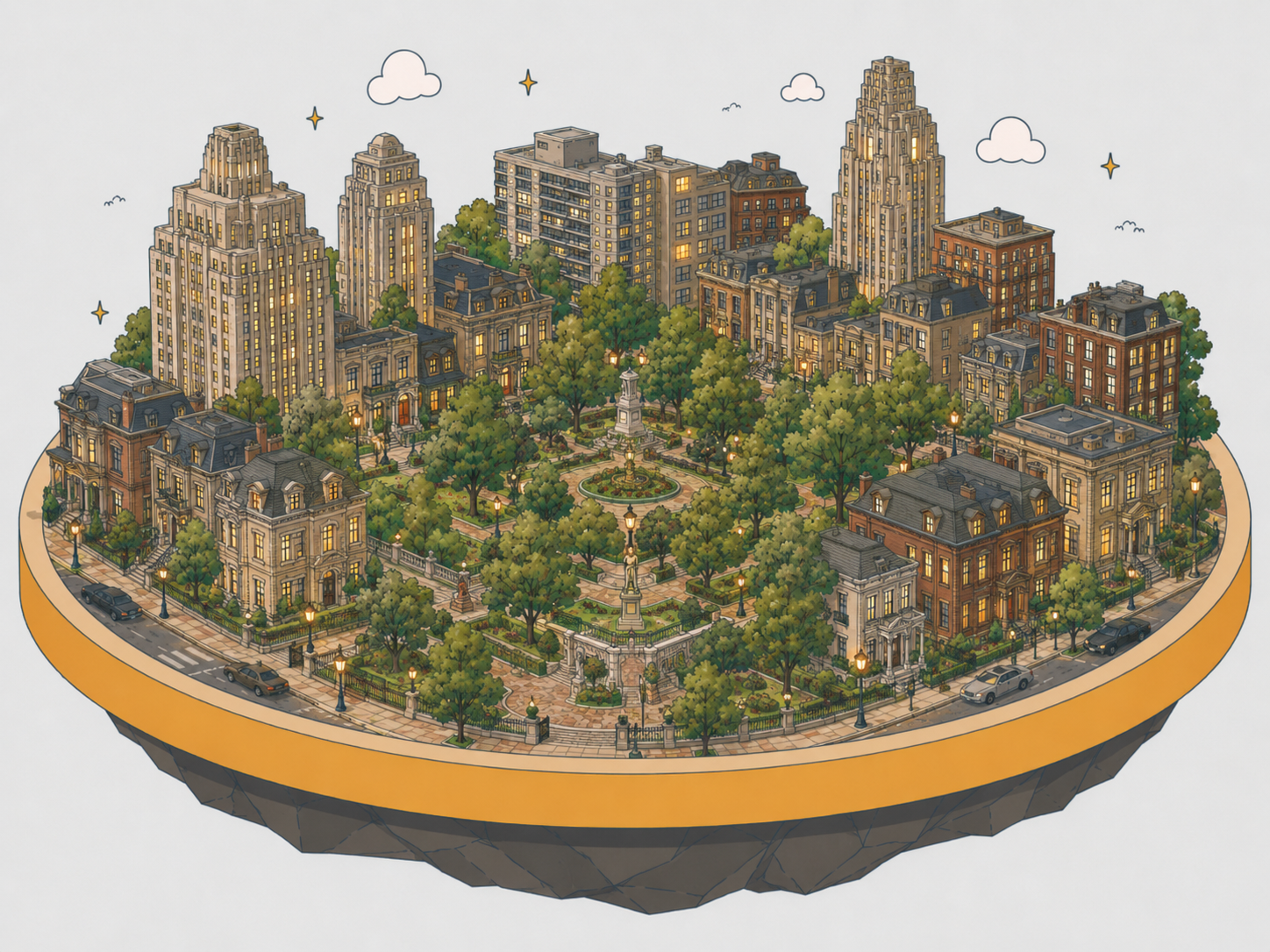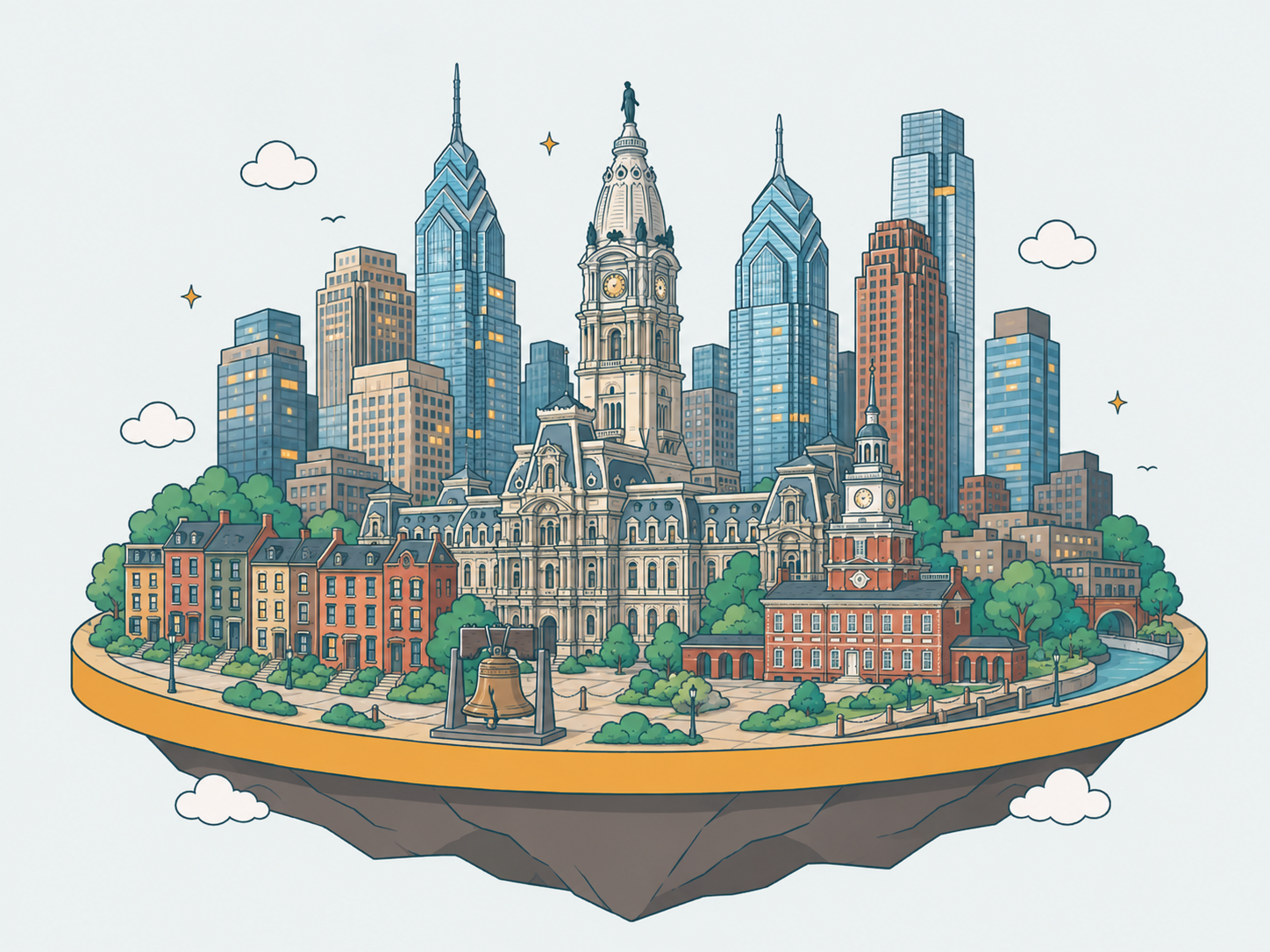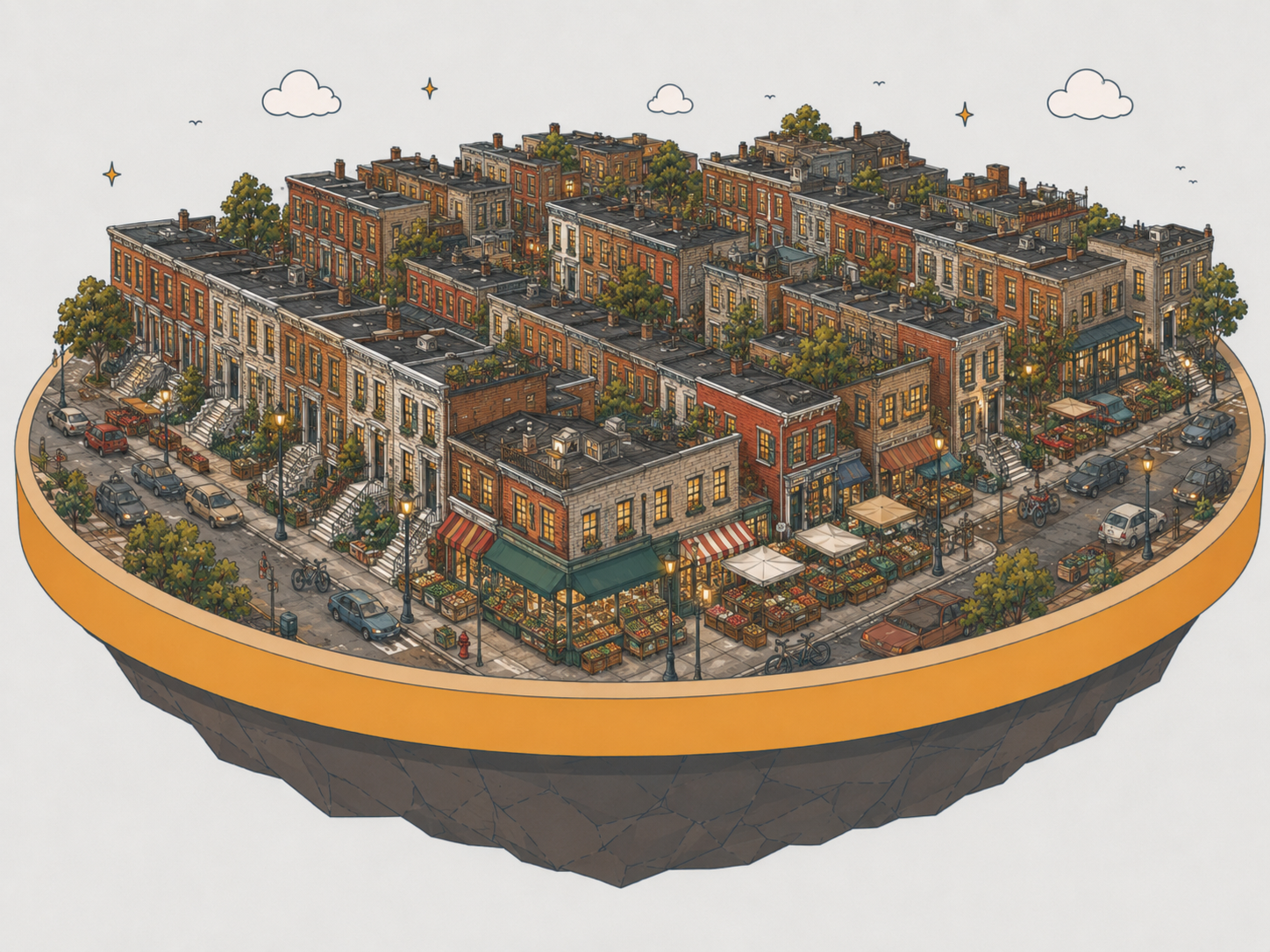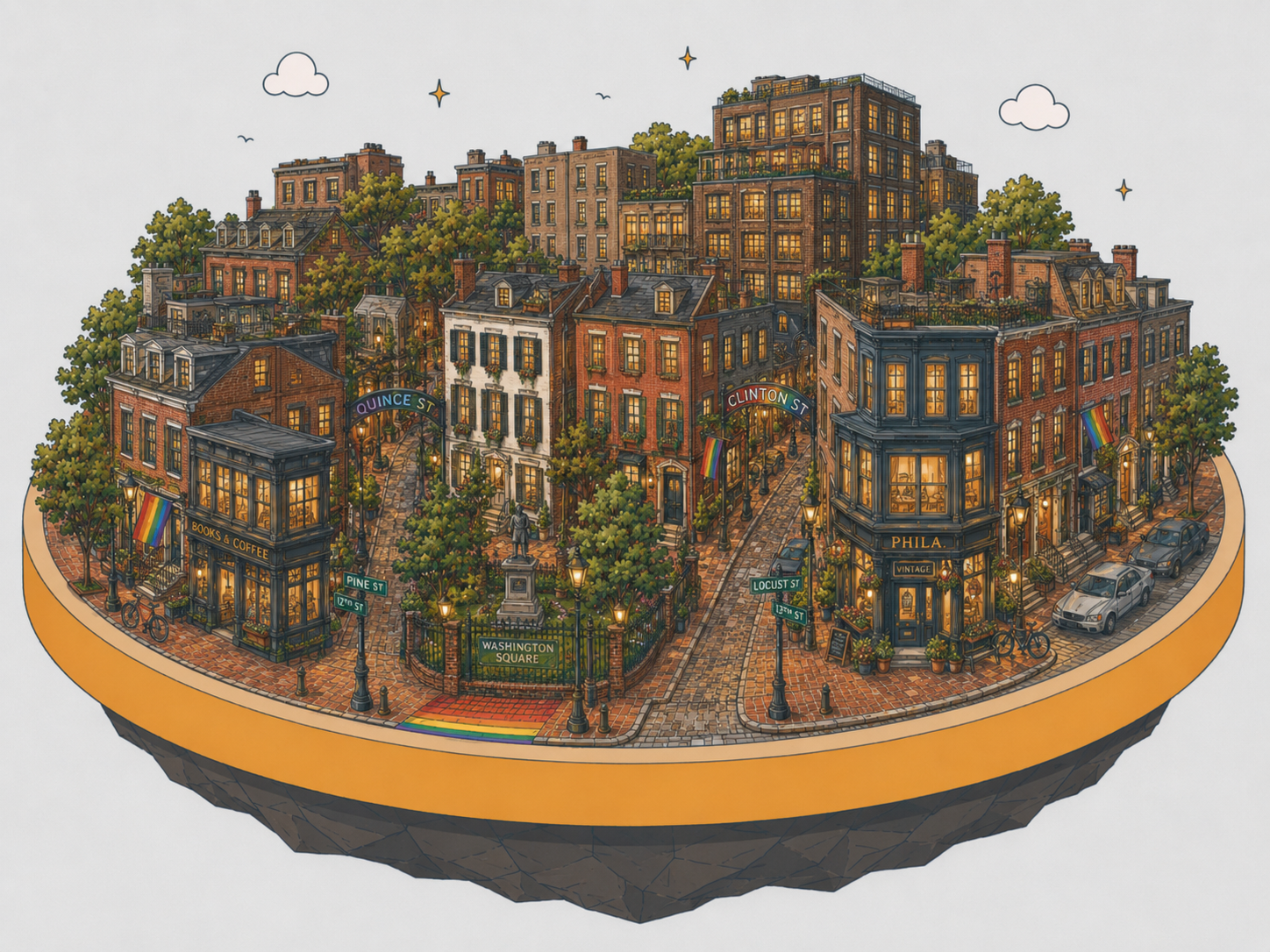
A little orientation
Try Washington Square West as an ordinary day
Start from the doorway
Use the exact home entrance when comparing travel and nearby destinations.
Check the current destination
Confirm a restaurant or cultural stop through its operator rather than relying on an old development or venue claim.
Inspect the home itself
Ask about room position, shared areas, and exterior work at the particular property you are considering.
A closer look
Choose a Washington Square West check
Pick a daily journey, a home question, or a small recreation plan.
Check the actual station approach
Enter your Washington Square West home and regular destination in SEPTA's planner. Save the named boarding point and inspect the walk to it, then compare the return trip so a station mentioned elsewhere in the guide does not become an assumed nearby entrance.
A useful questionWhich entrance and service would I use from this home?
Source & next step ↗Ask about the specific exterior
Use the City's historic-property guidance if you are considering changes to a Washington Square West home's exterior. Establish the property's status and describe the proposed work before asking about the review process, keeping general neighborhood character separate from a decision about one building.
A useful questionWhat should I establish before planning work on this exterior?
Source & next step ↗Choose something you would repeat
Search the City's recreation listings for an activity within a journey you would comfortably repeat from Washington Square West. Confirm the program and entrance directly, then combine it with one current errand rather than adding destinations only because the guide names them.
A useful questionWhich activity would fit naturally into my ordinary week?
Source & next step ↗The neighborhood that argues because it cares
Wash West is Pine, Spruce, 13th and Locust, and it has a side that doesn't make the tour: the parking battles, the pre-dawn calm in Washington Square Park, and the nightlife that lands on 13th Street right after midnight. Ask a dozen Philadelphians what Wash West feels like and you'll get twelve answers, all of them true. It's fiercely communal and unapologetically chaotic, usually on the same block.
What makes Wash West different
You can walk from Pine Street's tree-canopied calm to 13th Street's neon in under ten minutes. That range — quiet mornings to loud, glittery nights — defines the neighborhood more than any zip code does.
The phrase that comes up over and over, in local posts and casual sidewalk conversation, is “perfectly imperfect.” It isn't an insult here; it's the badge. Wash West doesn't pretend to be polished. It's the kind of place where someone complains about construction noise while signing a petition to protect the block's historic character, in the same breath.
The civic backbone is real and not abstract: the Washington Square West Civic Association (@washwestcivic) manages to make sidewalk cleanups and tree planting feel like community events. Even the quieter stuff — the local Silent Reading Club, people sitting quietly together in a park — says something about how residents want connection without pretense.
And it has its own folk heroes — the crossing guards, baristas and shopkeepers people greet by name on the same corner every morning.
The geography of vibes
There's no single feel to Wash West. It changes block by block, sometimes hour by hour.
8th & Pine
The quiet pocketTree-lined and residential — historic rowhomes behind iron railings, families walking kids to school. Mornings here are slow, mostly dog walkers and coffee runs.
10th & 11th
Antique RowOld and new mixed together. Antique Row runs through here, where the same shopkeepers have watched the neighborhood cycle for decades. Also home to the “Pine Street puddle,” a local in-joke that never fully dries after rain.
13th & Broad
Restaurant RowThe electric strip. Rooftop bars like Attico put the skyline in play, clubs like Voyeur turn the nights into organized chaos. Locals know it's fun and also know better than to live too close if they value sleep.
Jefferson Station & Locust
The commuter arteryBy 8:30am it's a rush-hour crush; by evening it settles again, with a crossing guard in a yellow vest working the intersection. This is the corridor the whole neighborhood funnels through.
The back alleys
Behind 11thTiny passages locals use to dodge delivery trucks and nightlife traffic. If you walk a dog here long enough, you learn every one of them.
What everyone loves & what everyone complains about
Both lists are said with equal conviction, often by the same person.
- Walkability — groceries, cafés, SEPTA, a dog park, and a dozen brunch spots inside a ten-minute stroll.
- The grid. It's genuinely hard to get lost, and the sidewalks are shaded enough to make summer bearable.
- The Gayborhood identity — Pride flags fly all year, not just in June, and inclusivity is baked into daily life.
- A food scene as good as Center City's but more personal.
- Antique Row's slower rhythm — handwritten tags, shopkeepers who remember names.
- The civic association, which functions as the neighborhood's actual heartbeat.
- The PPA. Six-minute expired meters, orange envelopes, and a monthly garage bill on top. Locals call it Philly's unofficial car-free tax.
- Construction fatigue — condo projects, high-rise conversions, endless repaving. Dust on the windowsills, detours every week.
- Weekend noise. After 10pm Friday and Saturday, 13th Street is laughter, horns, and bass through the walls.
- 2am trash pickup, described locally as both a blessing and a curse.
- Arena anxiety — the proposed Sixers arena near Market splits the neighborhood.
- Cost. Studio and one-bedroom rents feel surreal to people who remember when grad students could afford this.
Where locals actually eat
Restaurant Row gets the attention, but the neighborhood's best meals are scattered across it.
Talula's Garden
Candle-lit dinners under string lights, and the reservation everyone plans weeks around. This is the special-occasion table in the neighborhood.
Best for · the night that matters
Green Eggs Café
Brunch treated as a local sport. The line wraps down Locust before 10am on weekends — the move is to be there before it forms, or come back after 1pm.
Best for · weekend brunch (early)
Kanella
Keeps a legendary off-menu “sushi toast” for people who know to ask. Quietly one of the neighborhood's better-kept secrets.
Best for · ordering like a regular
Restaurant Row
Less a place than an ongoing block party of plates, drinks, and laughter spilling onto the sidewalk. Great to walk, loud to live above.
Best for · deciding once you're there
Antique Row
Not food, but the counterweight to all of it — frame shops, antique boutiques, and old-school repair stores that smell faintly of old wood. Locals make a point of shopping the Row at least once a season.
Best for · a slow afternoon
The Gayborhood, in locals' terms
“Gayborhood” isn't a marketing term here. It's how people identify the blocks around 13th and Locust, where rainbow crosswalks and year-round Pride flags signal something residents treat as non-negotiable. Bars like Woody's and clubs like Voyeur carry the history and the joy, but so do the smaller things — the queer-owned bakeries, the neighborhood's plain comfort with who everyone is. Visitors see color. Locals see belonging.
There's an honest tension inside it, too. Older residents talk about “the real Gayborhood” of the 2000s — grittier, friendlier, more authentic. Newer arrivals love the polished bars, the rooftop views, the Pride events that pull national attention. Between the two sits a quiet ache about identity shifting from community hub to brand, and it shows up in small ways: eye rolls at influencer photoshoots, debates about whether rainbow crosswalks feel corporate.
What both sides protect is the same thing — that it stays safe, inclusive, and unmistakably queer. That protection isn't abstract. It looks like volunteer patrols during Pride events, petitions, and constant reminders online that this place was built by love and struggle.
After dark on 13th
The reason the neighborhood is loved by visitors and cursed by anyone trying to sleep above it.
Attico
The rooftop that glows gold against the skyline at sunset. Skyline markup is real — the local move is midweek, before 6pm, when you can actually get a seat.
Best for · sunset with a view
Voyeur
Organized chaos, and the source of the bass that hums like a low heartbeat through the block after 10:30pm on weekends. Lines stretch down the street on good nights.
Best for · a late one
Woody's
History and joy in the same room. One of the anchors of the 13th and Locust blocks, and a place locals defend as part of the neighborhood's identity, not just its nightlife.
Best for · the classic night out
Washington Square Park
The opposite end of the same neighborhood. Tai chi groups at 7am, office workers at lunch, dog owners trading gossip under the trees at dusk. Residents call it their reset button and organize cleanups to keep it that way.
Best for · the morning after
Living here: the real numbers
The ranges Wash West residents quote, last checked in 2025 — check current listings and posted rates before you plan around them. Nobody lives here to save money; they live here because every errand doubles as a walk.
The arguments that never die
Every Philadelphia neighborhood has debates. Wash West lives on them, and they define local identity as much as the cobblestones do.
Historic preservation vs. housing growth
To outsiders the historic-district fight sounds bureaucratic. To locals it's personal. Supporters say protections keep developers from swapping rowhomes for glass boxes. Opponents call it a back-door way to freeze housing supply and push prices higher. The thread resurfaces every few months and usually ends on the same weary line: we want progress, not pretension.
The arena war
“No Arena WSW” started as a Facebook group and became a petition. Opponents expect a Sixers arena to clog narrow residential streets and end the neighborhood's peace; supporters — often younger residents and business owners — expect foot traffic and jobs. On X it has its own hashtag, #ArenaFight. It was never really about basketball.
Safety: “it's safe if you're smart”
Wash West isn't dangerous, but locals have rules: walk the lit blocks, don't flash your phone after midnight near Broad, keep your head up. Some call that common sense; others call it paranoia. Both camps agree street smarts still matter.
The debates never resolve. They recycle, like weather patterns. That's the point — people argue here because they care enough to fight for it.
The unwritten rules
Nobody prints these. Break them and you'll find out fast why everyone else follows them.
- Don't expect to park near your home. Plan on a long walk from whatever legal space you find, or a garage. Locals joke that finding parking counts as cardio.
- Walk or take SEPTA — it's faster. Between one-way streets, loading zones, and PPA patrols, a car mostly adds stress.
- Respect the morning quiet. From 7 to 9am people sweep stoops, walk dogs, and take the silence seriously.
- Avoid Pine & Broad after heavy rain. The Pine Street puddle is neighborhood legend and never drains completely.
- Timing is everything. Green Eggs before 10am. Attico before 5:45pm. Knowing when to go is how you live well here.
- Honor the village. Smile at your barista, wave to the crossing guard, follow @washwestcivic. This place runs on relationships as much as routine.
The local vocabulary
PPA — never said in full, rarely said without an expletive. Jawn — a person, a place, an object, a vibe; the most flexible word in the city. The Grid — the straight-lined street layout that makes the neighborhood so walkable. Restaurant Row and Antique Row — the 13th Street dining corridor and the quieter Pine Street shops, respectively.
Is Wash West for you?
Everything great about it comes attached to something that will annoy you. Locals accept the trade knowingly.
- You'd rather walk everywhere than own a car — and you're fine giving one up.
- You want a neighborhood with an actual civic life you can join.
- You value a year-round LGBTQ+ community, not a June-only one.
- Being ten minutes from Independence Hall, Jefferson, and SEPTA is worth paying for.
- You like the historic rowhome blocks north of South Street more than new construction.
- You need a car daily and want to park it near your door.
- You're saving money — this costs more than the Philadelphia average and locals admit it.
- You need quiet weekend nights and would live near 13th Street.
- Construction noise, scaffolding, and detours would wear you down.
- You want a neighborhood that's finished arguing about itself.
A day in the life
Living in Wash West means measuring the day by rhythm instead of by clock.
7:00–9:00am. Washington Square Park fills with tai chi groups, sleepy dogs, and Jefferson Hospital staff on coffee runs. You can hear birds over the buses. The regulars wave to the crossing guard. It's the city's version of a small-town ritual.
Late morning. Green Eggs has a line down Locust before ten. Talula's opens for the people who reserved weeks ago. Antique Row shopkeepers sweep their stoops and talk to whoever walks by. The streets read like an outdoor museum of brickwork, murals, and stoop plants.
Afternoon into evening. Professionals file out of Jefferson Station around five. Civic volunteers meet for cleanups or the Silent Reading Club. Attico's rooftop turns gold against the skyline, and Restaurant Row's patios fill up.
10:30pm, weekends. The transformation. Cars double-park, drag-show lines stretch down the block, and Voyeur's bass hums through the walls. Equal parts dazzling and exhausting. By sunrise the streets are clean again — partly thanks to the same locals who were out the night before.
What the neighborhood plans around
Block cleanups
Volunteers haul out brooms as the cherry trees along Pine and Spruce come in. The civic association turns sidewalk work into something closer to a neighborhood event.
Philly Pride March
Floods Broad Street, and the neighborhood answers with flags on every balcony. Peak Pride and patio season — locals call it open-window season, and not for the breeze.
Civic meetings & safety walks
The most active stretch of the civic calendar — budget discussion, safety walks, and tree-planting drives before winter. Fall is also the local favorite for weather.
Antique Row under lights
After the December rush the streets calm down, the Row glows under holiday lights, small restaurants run hot-chocolate specials, and — briefly — people actually find parking.
A Wash West home, season by season
What each season does to a historic rowhome on these blocks — and the move that answers it.
Cherry-tree bloom along Pine and Spruce coats sills, and the block-cleanup season kicks a winter's worth of grit off the sidewalks and toward your door.
The move · A full window-and-sill pass while the light is worth having, plus a deeper entryway reset for the sidewalk grit.
Open-window season on the 13th Street side means street dust and patio noise both come in, and the humidity settles into old plaster.
The move · Frequent dusting of molding and horizontal detail, and a light, dry pass that won't drive moisture into century-old surfaces.
Leaf litter on the narrow blocks and the first heating cycles push dust through the whole house — right as the neighborhood's busiest civic season starts.
The move · Vents and baseboards early, and a standing rhythm through the civic season — when the neighborhood hosts this much, the home can't be caught mid-project.
Salt and slush come in at the stoop and go after hardwood finish, and radiator heat bakes dust onto every surface in a closed-up rowhome.
The move · The stoop and entry floor every visit, and radiator-adjacent surfaces on a tighter cycle — in a closed-up rowhome that's where baked-on dust starts.
Keeping a Wash West home effortless
Two things define cleaning here, and neither is in the listing. The first is construction dust — with condo projects, high-rise conversions, and repaving running more or less continuously, windowsills in this neighborhood collect a fine grit that a quick wipe just smears. The second is nightlife rhythm: homes near 13th and Locust host more than homes four blocks east, and they host on short notice.
What these homes need
- Sills and glass, on a schedule — the neighborhood's construction dust doesn't wait for spring.
- Entryway resets — sidewalk grit, salt in winter, and the puddle blocks after rain all land at the door first.
- Historic hardwood, handled gently — pH-neutral, no standing water on floors this old.
- Plaster and molding — rowhome detail holds dust in every profile; a soft, dry pass keeps it crisp.
- Hosting turnarounds — a reset before or after a weekend of people, which is most weekends here.
Why trust this guide? Nobody paid to be listed. It comes down to which sills collect construction grit and which buildings host on a Thursday. Parking complaints included.
Make it yours
Take these notes on your next visit
A short list to turn what you read into your own next steps.
Saved checks stay on this device when browser storage is available. This is a personal planning list, not a property inspection or professional assessment.
A few good questions
Before you make a plan.
How much does house cleaning cost in Washington Square West?
Do cleaners bring their own supplies?
Can I get the same cleaner each visit?
How do you handle parking in Wash West?
Can you clean around construction dust?
Sources & next steps
Useful advice should
show its working.
These resources support the reader tools above and help you check details for your own address, date, or plans.
- SEPTA trip planner
Compare transit journeys using your actual stops, date, and departure time.
- Work on a historic property
City guidance identifies the review process for work affecting a historic property.
- Find a playground or recreation center
City facility listings provide locations and contacts for checking programs and access.
These tools avoid relying on an arena-development claim or a general station description. Current venue details and a property's historic status need their own checks.
Keep exploring