A little orientation
Compare Philadelphia and New York using the same ordinary week
Compare equivalent home needs
Use similar space, household requirements, and included services when collecting current housing quotes.
Test both commutes separately
Use each city's official transit information with actual addresses and the hours you expect to travel.
Use your own monthly totals
Include recurring bills and occasional intercity travel rather than relying on a headline savings claim.
A closer look
Which comparison would change your decision?
Start with the Philadelphia journey, the New York journey, or the same monthly worksheet for both.
Test one plausible Philadelphia address
Put a realistic Philadelphia home and your regular destination into SEPTA's planner at your expected travel times. Record the walks, transfers, and return journey, then repeat the exercise for the occasional trips that would still be part of your ordinary week.
A useful questionWhat does the Philadelphia option ask of my time each week?
Source & next step ↗Give New York the same test
Use the MTA's official planning information for a realistic New York home and the destination you would regularly use. Keep the work hours and household needs consistent with your Philadelphia comparison, then record the full journey rather than comparing only the time spent aboard transit.
A useful questionWhat does the New York option ask of my time each week?
Source & next step ↗Put the same categories beside each other
Use a CFPB spending or cash-flow worksheet for each city with current quotes and your own bills. Compare equivalent housing needs, utilities, local travel, and any intercity journeys, keeping moving costs separate so a one-time expense does not distort the ordinary monthly comparison.
A useful questionWhich recurring difference matters enough to change my choice?
Source & next step ↗Let’s skip the brochure talk. If you’ve spent time in both cities or even just people-watched on a random Tuesday, you already know the truth: New York is a volume knob snapped to 11; Philly is the sibling who talks with their hands, knows your barber’s name, and actually remembers your order. You can love both. You can roll your eyes at both. Which one’s “better” depends on what you want your average Wednesday to feel like.
Quick Comparison: Philly vs. NYC in 2025
| Category | Philadelphia | New York City |
|---|---|---|
| Overall Cost of Living | ~37% lower overall (rent ~56% cheaper) | Higher across the categories below |
| Median Rent (1-BR) | ~$1,495 | ~$4,395 |
| Vibe | Grounded, local, “sticky,” people plant roots | Fast, global, transient, always in motion |
| Job Market | Healthcare, biotech, education, small business | Finance, media, tech, fashion, arts |
| Transit | Compact network (SEPTA), grittier but human | Vast 24/7 subway/bus system |
| Nightlife | Ends early (2 a.m. last call) | 24-hour city that never shuts down |
| Food Scene | Diverse, neighborhood-driven, affordable | Global, elite, expensive |
| Community Feel | Strong neighborhood identity, civic pride | Constantly renewing population |
| Safety | Improving but “block-to-block” | Generally safer perceptions citywide |
| Best For | Balance, affordability, community, space | Scale, ambition, culture at full blast |
The gap, in the body's own numbers
Median rent is across all unit types, as of October 2025.
The Honest Frame, Two East Coast siblings, totally different throttle
If you throw a dart at a random night in NYC, you’ll probably hit noise, options, and a mild surge of adrenaline before you’ve even decided where to eat. In Philly, that same dart lands on a block where the bartender already knows your order, the kitchen closes earlier than you expect, and someone will 100% bust your chops if you show up in a Cowboys hat. You’ll feel the shared Northeastern bluntness in both places, but the pacing is not the same. New York runs hot; Philly idles like a trusted truck that still gets you everywhere you need to go, just without the rev limiter screaming. Pennsylvania retail liquor licensees generally stop alcoholic-beverage sales at 2 a.m.; patrons may remain until 2:30 a.m., and club licenses and extended food-service permits follow different rules. That quietly edits your nights into something more intentional.
What locals keep repeating, in different words, is that Philly feels “stickier.” People plant roots. You see the same faces at the coffee shop, you join a run club or a neighborhood cleanup, and there’s a better chance you’ll still be bumping into those folks a year from now. NYC is magic and inexhaustible, but it turns over fast. In Philly, it’s easier to feel like the city remembers you back.
The Feel (Straight from people who’ve lived in both)
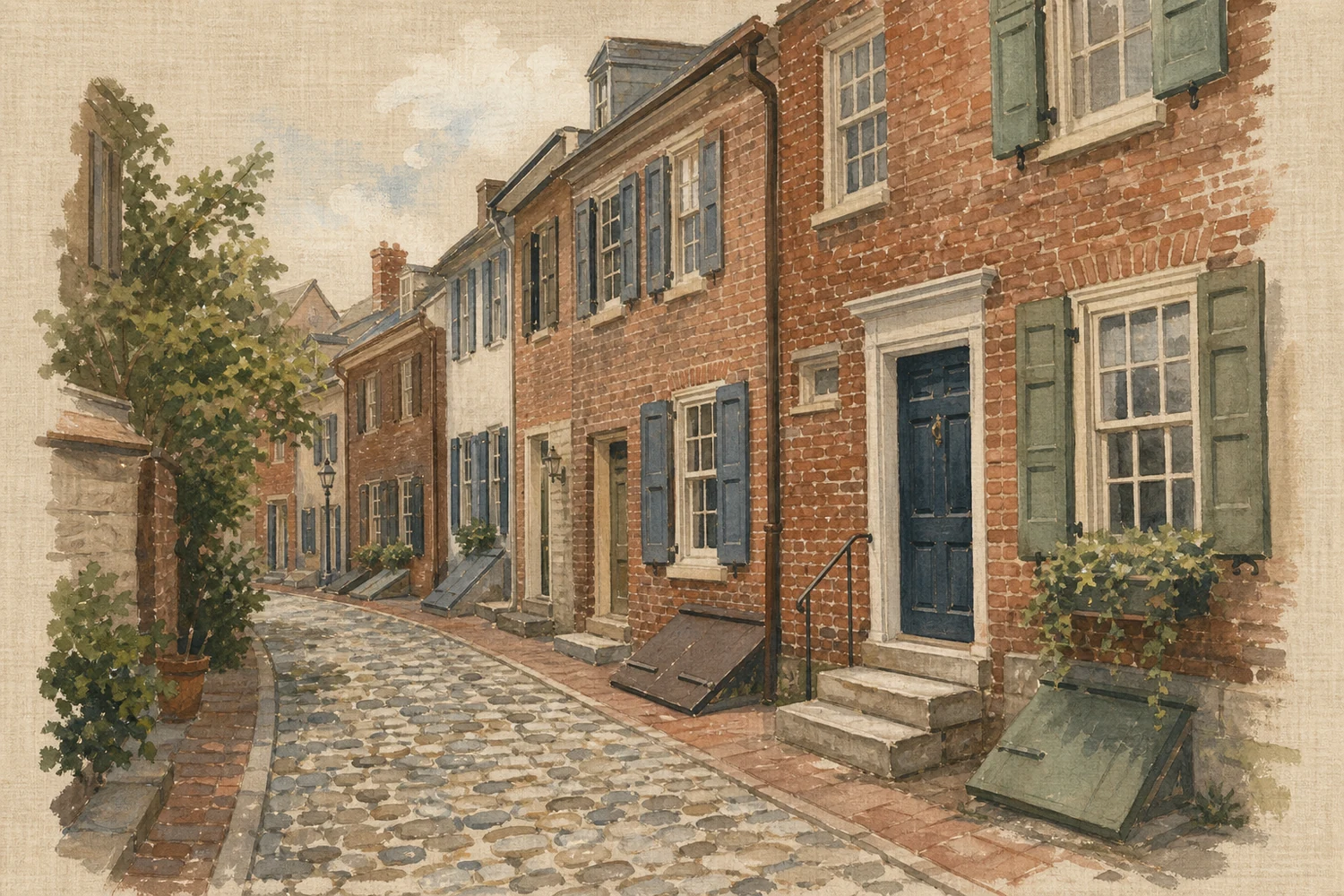
If you’re coming from Queens or Brooklyn, parts of Philly can feel oddly familiar: tree-lined blocks, attached rowhouses, corner groceries that actually know what you mean by “a bacon egg and cheese,” and a daily rhythm that’s less selfie, more neighbor. A bunch of folks who’ve done both describe Philly as “Brooklyn/Queens 10-20 years ago”, not in a nostalgic, everything-was-better way, but in that you can still recognize people on your block and snag a good dinner without booking two weeks ahead. You’ll hear love for the Vietnamese and Southeast Asian food scene, shoutouts to the Southeast Asian Market at FDR Park, and a kind of neighborhood pride that’s affectionate and a little feral. (Yes, the sports loyalties are real; wear opposing logos at your own risk, mostly kidding, but only mostly.)
The flip side of that “sticky” quality: if you’re brand-new and crave a ready-made cohort of transplants, NYC can be easier because it’s full of people arriving and forming new circles every five minutes. In Philly, people are friendlier than their reputation but they aren’t auditioning. There’s less networking theater, more “tell me who your people are.” And yes, you’ll also notice the driving culture; locals will rant about rolling stops with the same passion they reserve for soft pretzel opinions. That mix, neighborly + blunt + occasionally chaotic, isn’t brochure-pretty, but it’s honest, and it grows on you if you want a life, not a performance.
The Money Reality (where the gap isn’t subtle)
If you’re deciding with your wallet even a little, this is the section you bookmark. The short version: Philadelphia is dramatically cheaper than New York on rent and daily life.
As of October 2025, the median rent across all unit types is about $4,500 in NYC versus $1,650 in Philadelphia. That’s not a rounding error. That’s a radically different monthly baseline before you buy a single slice, metro pass, or lamp.
Zoom out to the broader basket of living costs and the picture stays lopsided. Using the same set of goods, services, and housing, Philadelphia comes out roughly 37% cheaper than NYC overall, with rents around 56% lower on average, restaurants roughly 24% cheaper, and groceries meaningfully lower too. If your income doesn’t scale with NYC prices, or you’re remote and can live anywhere, Philly hands you back both cash and headspace.
If you do have NYC-rate income, the math can still pinch. At New York’s current median, you’re looking at numbers that force trade-offs: less space, more roommates, a longer commute, or a tighter social budget. That’s the unglamorous line item behind New York’s sizzle. In Philly, the same dollars buy you an apartment you can exhale in, or a little rowhouse to fuss over, without needing to win the lottery or become the world’s most strategic subletter.
Jobs & Scale, the trade-off between “bigger sandbox” and “breathing room”
Let’s get this out of the way early: New York’s economy is a behemoth. It’s the kind of place where even the interns seem to have business cards, and the number of industries crammed into one skyline is almost unfair. Finance, publishing, fashion, tech, theater, design, startups, you name it, it’s here, scaled to global levels. By comparison, Philly looks smaller on paper because it is; the New York metro area’s GDP hovers around $2.3 trillion, while Philly’s sits closer to $550 billion. But scale isn’t the whole story.
Philly’s got a different backbone, healthcare, biotech, education, and small-to-medium creative businesses instead of mega-corporate towers. The University of Pennsylvania, Jefferson, Temple, Drexel, and CHOP anchor an entire ecosystem of hospitals, labs, and spinoffs that quietly employ hundreds of thousands of people. The salaries aren’t Wall Street-high, but the living costs aren’t Wall Street-level either. If your idea of success involves owning your space, actually seeing your friends, and having a Saturday, Philly’s version of “making it” might feel a lot more livable.
That’s something locals keep circling back to in threads: in Philly, your career doesn’t swallow you whole. You can be ambitious without becoming a caricature of ambition. “Since moving to Philly I’ve had time for hobbies, made friends, and eaten well,” one New York transplant wrote. “In NYC, every time I left the city, I missed it after a few days. In Philly, I just… enjoy being here.” There’s less glamour, sure, and fewer billion-dollar firms, but there’s time for a life.
Transit & Mobility, how each city moves (and how that feels day-to-day)
Both cities are transit cities at heart, but they move differently.
In NYC, the subway is its bloodstream. It runs 24/7, it’s almost mythic, and it still moves over a billion paid rides a year — 1,194.9 million paid subway rides in 2024, per the MTA’s year-end ridership report. You can be out at 3 a.m., swipe your MetroCard, and find your way home half-asleep with a halal plate in your lap. The subway and local-bus base fare is $3.00, but what you’re paying for is coverage, you can basically get anywhere.
Philly’s system, SEPTA, is smaller, scrappier, and, depending who you ask, “a little grungier.” It handled 791,101 average daily unlinked passenger trips in September 2024, per SEPTA. Buses and trolleys fill in the gaps, Regional Rail stretches into the suburbs, and the Market-Frankford Line is the closest thing to a subway spine. The fare climbed from $2.50 to $2.90, which sparked its usual civic debates.
Here’s the lived difference: NYC transit makes you anonymous; Philly transit still feels personal. You’ll notice the driver might wave, someone might comment on your hoodie, and a stranger might give you directions before you ask. SEPTA isn’t polished, but it’s human. Just know it doesn’t run all night, so plan accordingly. The same goes for walking and biking: Philly’s scale makes both doable, but the city’s drivers are famously impatient, so “street radar” is a must.
It’s also worth noting that commuting times are wildly different. In New York, a 45-minute subway ride feels normal. In Philly, if your commute’s that long, you’ll get sympathy and maybe a recommendation for a closer job. It’s a city where you can realistically live near your work without sacrificing your entire paycheck or your sanity.
How each city moves
Both are transit cities at heart. The scale of the two systems is not close.
Culture, Food & “Things to Do”, the difference between spectacle and soul
New York’s cultural engine doesn’t need a sales pitch. Broadway, the Met, MoMA, Michelin-star temples, rooftop bars, weeknight concerts that feel like Super Bowls. It’s the city that never shuts up about how alive it is, and it’s earned that reputation. If your joy is in constant novelty, it’s unbeatable.
Philly, on the other hand, surprises you differently. It’s not about scale. It’s about access. You can stroll into a museum without a reservation, catch a First Friday gallery in Old City, or eat world-class food without navigating three reservation apps. A lot of people who moved down from Brooklyn or Queens say Philly feels “like New York before everything became a brand.” You’ll still find chefs experimenting, local jazz in basements, pop-up galleries, block parties, and enough weirdness to remind you this city doesn’t need validation from anyone up I-95.
And the food, Philly eats so far above its weight class. From the Vietnamese strip on Washington Avenue to Syrian pastries at Majdal Bakery, to pizza that now rivals the old boroughs, the city quietly runs one of the most diverse food scenes in the country. The Southeast Asian Market at FDR Park is a must-do for any transplant who equates culture with taste; it’s a reminder that Philadelphia’s immigrant communities aren’t trends. They’re roots. People here still run corner stores and bake bread in family kitchens, not just for the vibe.
Nightlife, though? That’s where New York keeps its crown. Bars close at 2 a.m. in Philly by law. Some morph into private clubs to skirt the rule, but for the most part, the city starts winding down while Manhattan is just warming up. What Philly offers in exchange is conversation. It’s the kind of place where you’ll actually talk to your bartender, run into your neighbor, and remember the people you met the next day.
Where Philadelphia eats above its weight class
Not about scale. About access — world-class food without navigating three reservation apps.
Southeast Asian Market at FDR Park
A reminder that Philadelphia's immigrant communities are not trends, they are roots. People here still run corner stores and bake bread in family kitchens, not just for the vibe.
The Vietnamese strip on Washington Avenue
Part of what makes the city quietly one of the most diverse food scenes in the country. Ex-New Yorkers single out the Vietnamese and Southeast Asian food scene by name.
Majdal Bakery
One end of the range that runs from Washington Avenue to pizza that now rivals the old boroughs.
First Friday in Old City
You can stroll into a museum without a reservation or catch a First Friday gallery, alongside local jazz in basements, pop-up galleries and block parties.
Quality of Life & Safety: Comfort, chaos, and the “block-to-block” rule
Ask ten New Yorkers what quality of life means and you’ll get ten versions of the same shrug: “It’s New York. What did you expect?” That phrase covers a lot of sins, crowding, cost, relentless pace, but also explains why people stay. You trade comfort for proximity to possibility. The city is inconvenient by design, yet millions still grin and bear it because of what it gives back: energy, connections, access.
In Philly, the math feels different. Quality of life here is about space, not just physical, but emotional. It’s the ability to run errands without scheduling an entire afternoon, to park within sight of your front door, to see trees without needing a weekend upstate. There’s more breathing room, literally and figuratively. You’ll still deal with grit, trash days, graffiti, drivers who treat stop signs as decoration, but the daily friction feels survivable rather than existential.
Safety perceptions vary wildly, and that’s because Philly’s reality truly is block-to-block. One corner feels peaceful; three blocks later you’re gripping your steering wheel tighter. Crowd-sourced data (Numbeo, etc.) ranks Philly’s perceived crime index higher than NYC’s, which measures perception rather than recorded crime. What locals emphasize, though, isn’t just stats. It’s situational awareness. “If you’ve got healthy street radar, you’ll be fine,” one old-timer wrote. And the Philly version of “fine” usually includes looking out for your neighbors.
There’s also an unquantifiable softness here that big cities often lose: people actually apologize when they bump into you. They hold the Wawa door. They’ll roast you affectionately, then watch your dog when you’re late from work. That counts for a lot in a world that’s always moving faster than it should.
When Each City Wins: Finding your fit, not a victor
If you think of NYC and Philly as rivals, you’ll miss the point. They’re more like siblings with wildly different temperaments. NYC is the overachiever with three side hustles and a packed calendar. Philly’s the cousin who works hard, grills in the backyard, and knows everyone on the block by name.
NYC wins if you crave scale: global industries, constant motion, art openings on a Tuesday, bagels at 2 a.m., and the adrenaline of being at the center of the universe. The city rewards ambition, reinvention, and absurd work ethics. It’s perfect if you’re young, single, restless, and ready to trade peace for possibility.
Philly wins if you value balance: genuine community, affordability, and a slower rhythm that still feels like a city. Here you can buy a home, know your neighbors, and have enough left over for dinner out that isn’t a financial decision. Philly gives you access without the ego tax.
There’s a reason so many ex-New Yorkers describe it as “Brooklyn fifteen years ago.” You still get diversity, edge, and great food, but fewer people are trying to out-hustle you for a bar stool. And when you’re older, raising kids, or just tired of chasing every opportunity, that shift feels less like settling and more like sanity.
The real trick is honesty about what fuels you. Do you thrive on chaos and competition? Or do you want a rhythm that lets you breathe between wins? Both cities can deliver happiness, just not the same kind.
When each city wins
Finding your fit, not a victor. Neither needs to win for you to.
- Genuine community, affordability, and a slower rhythm that still feels like a city.
- You can buy a home, know your neighbors, and have enough left over for dinner out that is not a financial decision.
- Your career does not swallow you whole — you can be ambitious without becoming a caricature of ambition.
- You can realistically live near your work without sacrificing your paycheck or your sanity.
- Global industries, constant motion, art openings on a Tuesday, bagels at 2 a.m.
- The city rewards ambition, reinvention and absurd work ethics.
- Perfect if you are young, single, restless, and ready to trade peace for possibility.
- Easier when you are brand-new and want a ready-made cohort — it is full of people arriving and forming new circles every five minutes.
Changing Trends & Trade-offs: What both cities are becoming
Neither place is static. New York is still recovering from its pandemic exodus, yet new luxury towers keep rising and creative scenes are migrating outward to Queens, to Jersey City, to upstate enclaves where rent doesn’t feel like ransom. Remote work softened some of the city’s urgency, but the gravitational pull remains: people still want to make it there, even if “making it” now means three roommates and a shared desk at a café.
Philly, meanwhile, has been absorbing that overflow. Every year, more ex-Brooklynites and Jersey commuters quietly relocate here, lured by cheaper mortgages and human-sized streets. The influx is changing things, rents in neighborhoods like Fishtown and East Passyunk have climbed, restaurants now fill with split accents of old locals and new arrivals. But Philly still feels grounded. It’s proud, imperfect, and allergic to pretension.
The trade-off is visibility. New York’s excess can be exhausting, but it’s also empowering; you’re surrounded by possibility at all hours. Philly’s accessibility can feel like calm or limitation, depending on your mindset. Some transplants eventually head back north chasing scale again; others swear they’ll never leave because here, life finally fits.
If the past few years proved anything, it’s that “better” isn’t a scoreboard. It’s a reflection of where you are in your own timeline. NYC gives you the rush to build; Philly gives you the space to live. Neither needs to win for you to.
So, Which City Feels Right For You?
If you stripped away bragging rights, hashtags, and skyline comparisons, this is what it really comes down to: how do you want your days to feel?
New York is the never-off switch. It’s electric, relentless, and expensive in every possible sense of the word. You’ll never run out of things to do, people to meet, or dreams to chase. But you’ll pay in energy, rent, and personal bandwidth. The city demands your full participation.
Philadelphia asks less of you, but gives you more back in return. You can own your rhythm here. You can afford an apartment that isn’t a closet, see the same people twice, and find quiet without needing to leave town. There’s pride, roughness, and heart on every block and a sense that the city’s pulse actually beats at a human pace.
They’re both quintessentially East Coast, both sarcastic, both fiercely loyal. The difference is voltage. NYC is high-voltage ambition. Philly is steady current. Neither is the “better” city in any absolute way, only the better fit depending on what stage of life you’re in and how much noise you want around you.
Make it yours
Build one fair comparison
A short list to turn what you read into your own next steps.
Saved checks stay on this device when browser storage is available. This is a personal planning list, not a property inspection or professional assessment.
Sources & next steps
Useful advice should
show its working.
These resources support the reader tools above and help you check details for your own address, date, or plans.
- SEPTA trip planner
Compare transit journeys using your actual stops, date, and departure time.
- New York MTA
Official trip planning and fare information support testing a New York commute.
- CFPB budgeting worksheets
Worksheets help record spending and cash flow using your own figures.
This worksheet does not claim either city is cheaper or better for every household. It uses current quotes and your own journeys rather than invented savings, safety rankings, or take-home-pay calculations.
Keep exploring