A little orientation
Choose your Fishtown routine before your address
Compare home types directly
A rowhome and a converted loft can raise different access, storage, and maintenance questions; inspect the actual unit.
Plan from your doorway
Test the journey between the home and your regular destination, including boarding points and the return trip.
Name the park destination
Choose the particular Penn Treaty Park visit you mean and check the approach before adding other stops.
A closer look
Choose a Fishtown test
Pick a routine that will tell you something useful about the address you are considering.
Connect the avenue to your week
Enter your Fishtown starting address and a regular destination into SEPTA's planner. Compare the boarding points and walking sections around Frankford Avenue, Girard, or Berks as relevant to that route, then save the return journey at your usual finishing time.
A useful questionWhich connection fits the way my weekday actually runs?
Source & next step ↗Make a simple park outing
Find Penn Treaty Park in the City's facility information and choose your meeting point or entrance. Trace the approach from the home you are considering, then plan a modest visit that leaves enough time for the journey back and an ordinary errand.
A useful questionWould I use this park from the home I am considering?
Source & next step ↗Inspect the everyday details
Search the City's property tools for the actual Fishtown unit or building before viewing it. Compare entry access, shared areas, storage, and any renovation questions, then ask who handles maintenance rather than assuming a particular home type supplies the answer.
A useful questionWhat would I share, maintain, or carry upstairs here?
Source & next step ↗A neighborhood mid-argument with itself
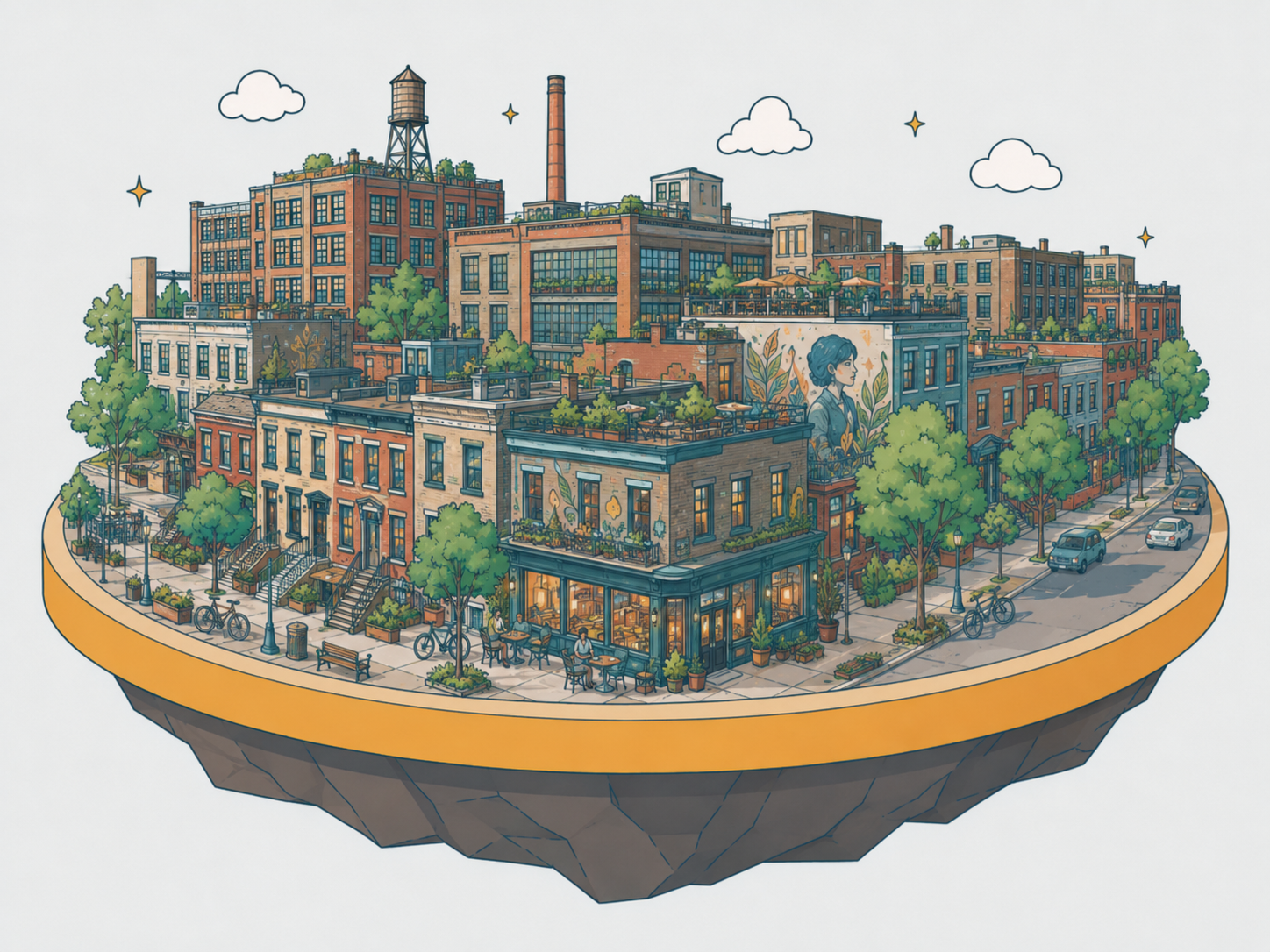
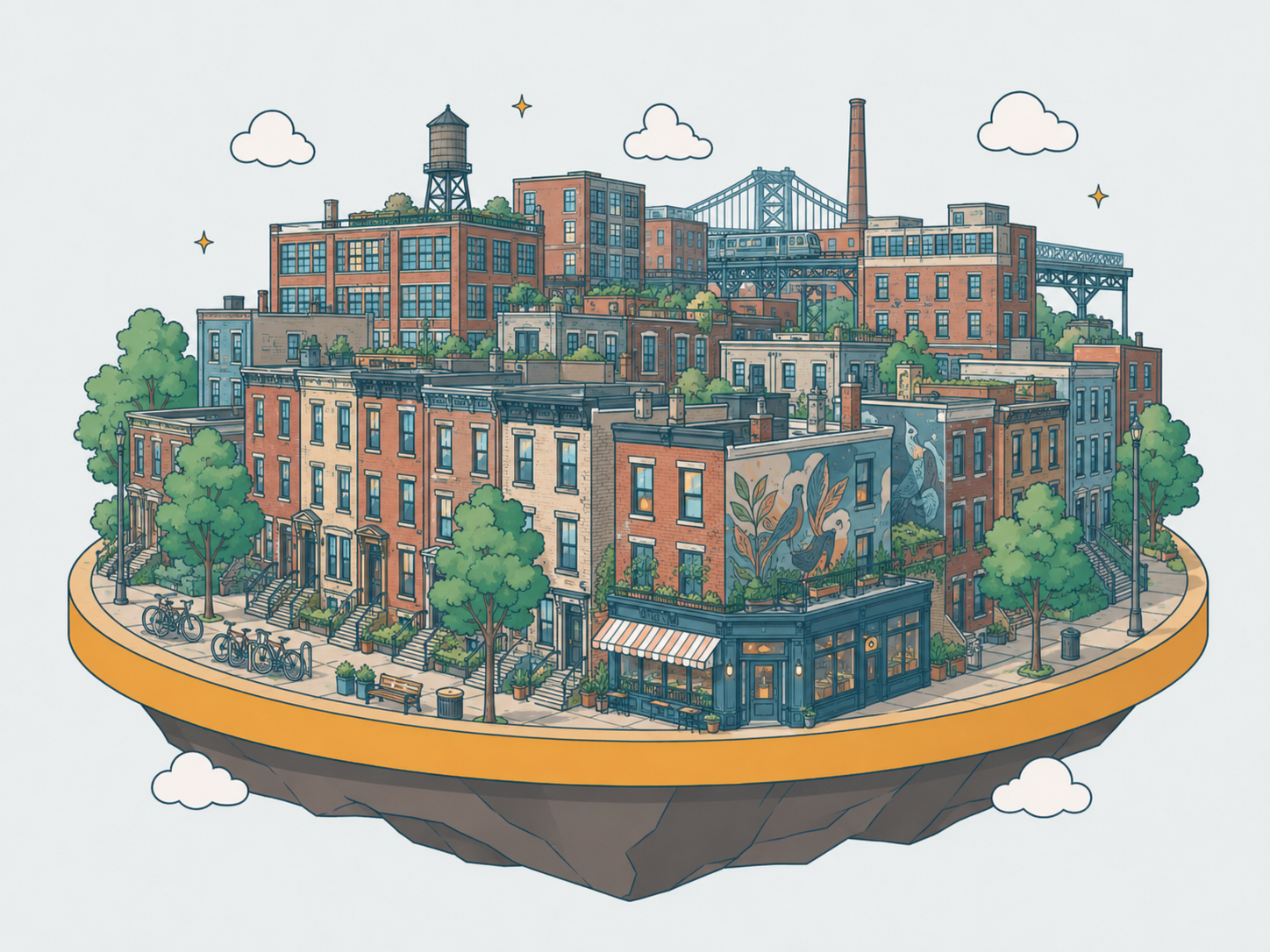
Fishtown housing is newly renovated rowhomes off Frankford Avenue and converted warehouses along the Delaware, and it has changed in real time. Here's the truth: Fishtown isn't trying to be polished Center City or hipster Brooklyn. It's Philadelphia's most honest example of what happens when artists, young professionals, and longtime residents share the same blocks — sometimes uncomfortably, always interestingly.
What makes Fishtown different
This isn't Rittenhouse with its luxury condos and white tablecloths. It's not Old City with tour groups hunting for history. Fishtown is gentrification done messily — which means it's real, complicated, and still moving.
The neighborhood sits 3.3 miles northeast of Center City along the Delaware. Boundaries run roughly from Girard Avenue south to the river, Front Street west to York Street east, with the Market-Frankford El cutting straight through the middle. ZIP code 19125 covers most of it.
It was a working-class industrial neighborhood first, named for the 18th-century shad fishing industry. Cheap warehouse lofts turned it into an artists' enclave through the 1990s and 2000s. Young professionals followed in the 2010s, drawn by the arts scene and the restaurant boom. Fishtown has firmly arrived — and the artists who made it cool are being priced out by people who moved here because artists made it cool. That tension is visible on every block.
Getting here: the El connects Fishtown to Center City in about 15 minutes via the Girard or Berks stations. That's what makes living here practical for downtown workers, though locals will tell you the trains can feel sketchy late at night.
The lay of the land
Frankford Avenue is the spine, and how far you live from it determines almost everything about your day.
Frankford Ave · Girard to Thompson
The dense stretchThe highest concentration of restaurants and bars in the neighborhood. On a Friday night this becomes a scene — 20-somethings bar-hopping, couples waiting for tables, beer gardens packed. One local called it an outdoor fraternity party, and some longtime residents avoid the strip on weekends entirely.
Frankford Ave · Thompson to York
The calmer stretchA slightly more residential feel, with newer developments mixed into the older stock. Still the corridor, just a few decibels down.
The residential side streets
Belgrade · Marlborough · Berks · ThompsonWhere the real neighborhood character lives. The blocks immediately off Frankford get quieter fast, and walking them shows you what Fishtown actually looks like for people who live here.
The Delaware waterfront
East edgePenn Treaty Park and the Delaware River Trail — the open space most visitors never reach. Skyline views, dog walkers, and a way to move through the neighborhood without touching Frankford Avenue.
The western edge
Toward Front StreetGenerally the part of the neighborhood that feels safest, and it gets more so the farther south toward Girard you go. Blocks bordering Kensington are where residents say to pay more attention.
What the corridor actually gives you
- 30+ breweries and bars within walking distance.
- One of the city's highest concentrations of James Beard-nominated restaurants.
- The El to Center City in about 15 minutes, from Girard or Berks.
- Block parties and active neighborhood associations that survived the change.
- Murals throughout — many with fish and ocean themes nodding to the history.
- A neighborhood where every single person has a dog, and the patios welcome them.
- Parking. Street-only, competitive, and 20+ minutes of circling after 6pm.
- Quiet on or near Frankford Thursday through Saturday — bars close at 2am.
- The bargain it was. Rents jumped 26% since 2020.
- A break from construction. New development is going up constantly.
- A settled neighborhood. It's still transforming, visibly, week to week.
Where to actually eat
Arguably Philadelphia's most exciting restaurant scene outside Center City. What locals actually frequent, and what it now costs.
Suraya
$$$$A massive garden patio and platters built to share, beautifully presented. People rave about the hummus and the grilled meats. Expect waits on weekends — make a reservation. Roughly $15–35 per person.
Best for · a long dinner outside
Pizzeria Beddia
$$$$Chewy crust, quality ingredients, proper char — the pies are legitimately excellent, not just famous. Lines can be long. Slices at lunch.
Best for · pizza that earns the hype
Middle Child Clubhouse
$$The Shabazzi — a Thanksgiving-style sandwich — has a genuine cult following. Expect a wait on weekend mornings.
Best for · a weekend sandwich
Human Robot Brewing
$$A local favorite focused on lagers and pilsners. Much better beer than the touristy spots, with a quieter vibe — it's actually about the beer rather than being a scene.
Best for · people who care about beer
Lloyd Whiskey Bar
$$An extensive whiskey list in a relatively chill room, by Frankford Avenue standards. Good for a date or a small group when you don't want to yell over the music.
Best for · a conversation
Frankford Hall
$$A massive German beer garden with long communal tables. Packed on warm evenings, and the vibe skews young and rowdy. Bring cash for pretzels and sausages, and don't try to drive — walk or take the El.
Best for · a big warm-weather group
Reality check: the food scene is genuinely excellent and the prices have crept up hard. Spots that were affordable neighborhood places now charge Center City prices — dinner with drinks at the acclaimed ones easily hits $50–70 per person. The quality justifies it. Fishtown is just no longer a budget dining destination, and everyone here knows it.
Nightlife & music venues
Fishtown's identity is tied to its bar culture. This is a neighborhood built for people in their 20s and 30s who like to drink.
Johnny Brenda's
$$Upstairs music room, downstairs bar. Books indie rock, punk, and experimental acts. This is where locals go for shows.
Best for · a real show
The Fillmore
$$$$A large room hosting national touring acts, capacity around 2,500. The acoustics are solid and the space still feels intimate for its size.
Best for · touring headliners
Garage
$$$$Another large beer-garden space, drawing the post-grad crowd that aged out of college bars but still wants that energy.
Best for · a loud, easy night
Other Half Brewing
$$Excellent IPAs, on the Port Richmond border. A bit outside central Fishtown, and worth the walk for serious beer people.
Best for · the IPA walk
The honest version: Fishtown nightlife is loud, crowded, and young. Live on or near Frankford Avenue and you should expect noise until 2am Thursday through Saturday. Some residents love being in the middle of it. Others move out after a year because they can't sleep. The blocks just off Frankford — Berks, Thompson, Palmer — get quiet fast.
Living here: the real costs
Fishtown runs from $300K rowhomes that need work to $600K renovations with roof decks. The honest numbers:
Price context: compared to Center City you're saving maybe $100–200K on a purchase, or $300–500/month on rent. But Fishtown prices are rising faster than most Philadelphia neighborhoods — homes that sold for $200K in 2015 now go for $450K+, new construction can exceed $700K, and a luxury 2-bedroom loft can hit $3,500. The gap with downtown is closing fast.
The good & the trade-offs
- Walkable — groceries, coffee, restaurants, bars, pharmacies inside 10–15 minutes.
- The El puts you in Center City in 15 minutes, frequent during commute hours.
- Arguably the best dining outside Center City, all within walking distance.
- Block parties still happen and neighborhood associations are active.
- More space for your money than Rittenhouse or Washington Square West.
- Deeply dog-friendly — dog runs in the parks, dogs on every patio.
- Parking is miserable — street only, and 20+ minutes of circling after 6pm.
- Noise until 2am Thursday through Saturday near Frankford Avenue.
- Safety varies block by block; property crime remains an issue.
- Gentrification tension between longtime residents and newcomers is real and visible.
- Rents jumped 26% since 2020, and purchase prices more than doubled since 2015.
- Construction everywhere — noise, dust, and street closures are constant.
Is Fishtown for you?
This one sorts people quickly. The same things that make it great make it wrong for a lot of households.
- You're in your 20s or 30s and value walkability and nightlife.
- You like bar and brewery culture — genuinely, not occasionally.
- You want an urban feel without Center City prices.
- You have a dog.
- You're comfortable living in a neighborhood that's still in flux.
- You can tolerate weekend noise without it ruining your week.
- You have young kids — the noise and the bar scene are constant.
- You're sensitive to noise, full stop.
- You need easy parking.
- You want a polished, quiet residential neighborhood.
- You're uncomfortable with gentrification's visible effects.
Getting around
Walking handles daily life for most residents — groceries, coffee, restaurants, and bars sit inside a 10-to-15-minute walk from most of Fishtown.
The El (Market-Frankford Line)
- Stations at Girard and Berks serve the neighborhood.
- Trains run every 5–15 minutes during peak hours.
- Reliable for getting to Center City, though it can feel sketchy late at night — especially at Berks.
Bus & bike
- Route 5 runs along Frankford Avenue; Route 25 also serves the corridor.
- Flat terrain, growing bike infrastructure, and the Delaware River Trail make biking genuinely practical. Plenty of residents bike to Center City for work.
Driving (only with off-street parking)
Street parking is competitive and frustrating, and some blocks require residential permits. Arrive by 5pm on the corridor or expect to circle for 20+ minutes. For occasional trips, Uber or Zipcar makes more sense than owning a car here.
Events worth planning around
Fishtown Music and Arts Festival
Local music, art vendors, and food, with Frankford Avenue closed down for it. Fun, and extremely crowded.
Fishtown Beer Festival
Exactly what it sounds like — dozens of breweries, packed crowds, a full Frankford Avenue takeover.
First Fridays
Gallery openings and studio visits. More low-key than the big festivals and actually about the art.
Block parties
Individual blocks host their own through the summer. This is where you see the neighborhood community still thriving, gentrification notwithstanding.
The gentrification conversation
There's no honest way to write about Fishtown without addressing this directly, because the neighborhood is deeply conflicted about its own transformation.
Old Fishtown was a tight-knit, multigenerational, working-class community — Polish, Irish, and German ancestry, families on the same block for generations. People worked in the factories, went to St. Laurentius, drank at the corner bars, and kept to themselves.
That Fishtown is largely gone. The factories closed. St. Laurentius was demolished in 2022 after years of legal battles. Property values skyrocketed and longtime residents sold — sometimes by choice, sometimes because they couldn't carry the rising property taxes.
New Fishtown draws young professionals, many from New York, who can afford $1,900 rent and $15 cocktails. They're here for the restaurants and the walkability. Some engage with the neighborhood's history; others treat it as a lifestyle amenity. The friction is real, and neither side is entirely wrong.
What's being lost: affordability, longtime businesses, multigenerational community, and the grittiness that made the place feel authentic. What's being gained: safety improvements, better restaurants, more amenities, and real equity for anyone who owned before prices soared. Whether that trade is worth it depends entirely on which side of it you're standing on.
Honest safety assessment
No neighborhood-level crime rate is published here: the figures this guide carried could not be traced to a dataset or a boundary, and a citywide number cannot stand in for one. What is on the record is citywide — Philadelphia recorded a 43% drop in homicides in 2024 compared with 2023, per the City of Philadelphia.
Generally safer
- West of Frankford Avenue, toward Front Street.
- The farther south toward Girard you go, the safer it typically feels.
Use more caution
- Blocks bordering Kensington to the west.
- Around the Berks El station late at night.
- The southeast sections of the neighborhood.
Property crime is the main concern. Package theft is common, and car break-ins happen regularly — especially if anything visible is left inside. Don't leave a bike unchained, even for a minute. Violent crime is less common than property crime here; most incidents are targeted rather than random, which is cold comfort if you're just walking home.
The real answer: many residents, women especially, are uncomfortable walking alone late at night on certain blocks, and the area around Berks after midnight can feel sketchy. During the day and early evening, most of Fishtown feels reasonably safe. Crime varies significantly block to block — some streets feel completely fine, and one block over feels dicey.
A Fishtown home, season by season
What each season does to a rowhome or warehouse conversion here — and the move that answers it.
Construction dust from the development going up on nearly every block settles across the whole house once the windows open.
The move · A full window-and-sill pass plus a top-down dusting sweep, aimed at the construction grit specifically.
Roof decks and patios get used constantly, tracking grit back inside, and the corridor's late-night foot traffic comes right up to the front door.
The move · A deck-and-entry reset paired with more frequent floor care through the months the outdoor space earns its keep.
First heating cycles in an old rowhome push months of duct dust through every room, right as the house starts hosting again.
The move · Vents and baseboards before the first cold snap, so an old rowhome's heating season starts clean instead of redistributing a summer's worth of dust.
Salt off the sidewalk attacks refinished hardwood at the entry, and dry radiator heat bakes dust onto every surface.
The move · Salt gets off refinished floors the same week it lands — pH-neutral, no standing water — because a floor someone just paid to redo is the wrong thing to learn that lesson on.
Keeping a Fishtown home effortless
The housing here splits two ways: rowhomes at every stage of renovation, and warehouse and loft conversions along the river. Both have their own maintenance profile.
What these homes need
- Refinished hardwood, handled gently — pH-neutral care with no standing water on a floor someone just paid to redo.
- Roof decks and their doorways — the outdoor space is the point, and it tracks straight back inside.
- Exposed brick and beams — warehouse conversions hold dust in every seam; a soft, dry pass keeps them crisp.
- Construction dust — with new development on nearly every block, it finds its way in whether you like it or not.
Why trust this guide? Nothing here is a paid placement. It tracks particular blocks turning over — the same rowhome mid-renovation one year and fully finished the next — rather than reviewing the neighborhood from the outside.
Make it yours
Take these notes into Fishtown
A short list to turn what you read into your own next steps.
Saved checks stay on this device when browser storage is available. This is a personal planning list, not a property inspection or professional assessment.
A few good questions
Before you make a plan.
How much does house cleaning cost in Fishtown?
Do you clean rowhomes and warehouse conversions?
Parking is brutal here. Does that affect a booking?
Can you handle post-renovation and construction dust?
Can I get the same cleaner each visit?
Sources & next steps
Useful advice should
show its working.
These resources support the reader tools above and help you check details for your own address, date, or plans.
- SEPTA trip planner
Compare transit journeys using your actual stops, date, and departure time.
- Find a playground or recreation center
City facility listings provide locations and contacts for checking programs and access.
- City property and zoning lookup
Opens the City's address-based zoning and permit tools.
This profile supplies no school or safety ranking and makes no noise guarantee. Compare the specific unit, route, and park approach in person.
Keep exploring