A little orientation
Put Whitman errands in a useful order
Match the service to the location.
For a driver or vehicle task, use PennDOT’s current service finder rather than assuming every location described as the DMV handles it.
Confirm the shop directly.
Use Whitman Plaza and the guide’s store names as research leads, then check the actual business address and arrangements you need.
Ask the library about the program.
Look up Whitman Library’s own current information and contact the branch before planning around a service mentioned in the article.
A closer look
Three errands, three kinds of information
A shopping-center reference, a public-service location and a library program should each be checked at the source.
Choose the service before the center.
Use PennDOT’s location and service guidance to identify where your particular task can be handled. Check the listed requirements and current arrangements before traveling; the guide’s DMV reference should not be treated as confirmation that a nearby center offers every service.
A useful questionWhich location handles your specific task, and what must you prepare beforehand?
Source & next step ↗Find the branch’s current offering.
Locate Whitman Library in the Free Library directory and read its notices and services. Ask the branch about the exact program or resource you want, including relevant access needs, rather than assuming an old event or general library description is current.
A useful questionWhat should the branch confirm before you add this library visit to your day?
Source & next step ↗Plan from the confirmed storefront.
Check the current business details for a Whitman Plaza or other guide destination, then use the actual address to plan your journey. Include the return with purchases and any connection across Snyder or Oregon Avenue relevant to your route.
A useful questionHow will your confirmed errand connect to the rest of your day?
Source & next step ↗Whitman is one of South Philadelphia’s most practical, block-by-block neighborhoods, shaped by rowhomes, tight parking, front-step culture, Whitman Plaza errands, Snyder and Oregon Avenue routines, and quick access to the Walt Whitman Bridge, I-95, I-76, the Navy Yard, and the stadium area. It is not a polished destination neighborhood, and it should not be judged from a map alone. The real Whitman experience depends on the exact block, the time of day, and how well the neighborhood’s everyday trade-offs fit your lifestyle.
In this Hometress guide, we look at Whitman the way locals tend to understand it: by corners, routes, rhythms, and practical daily life. That means paying attention to the official Snyder-to-Bigler, Front-to-6th boundary, but also understanding local labels like East Oregon, nearby comparisons to LoMo and Pennsport, the role of Whitman Plaza and ShopRite, the cultural layer around 7th Street and Cambodia Town, and the difference between a quiet afternoon visit and a weekend night on the same block.
Whitman Is Not a Neighborhood You Understand From a Map
Whitman is one of those South Philadelphia neighborhoods where a map can tell you the borders, but it cannot tell you the experience. On paper, the neighborhood is usually framed around Snyder Avenue to Bigler Street, and Front Street to 6th Street. That box is useful if you are trying to understand where Whitman sits, but it does not explain how people actually talk about it, judge it, or decide whether they would live on a particular block.
In Whitman, the real answer to most questions is about the exact block. Someone asking whether the neighborhood feels safe, quiet, convenient, family-friendly, affordable, or too rough will usually get a more useful answer if they name the intersection. Locals talk about places like 5th & Oregon, 6th & Shunk, 5th & Porter, Snyder, Shunk, Porter, Oregon, 7th Street, Whitman Plaza, and the blocks around Cambodia Town. A person asking about Whitman in general may hear two completely different opinions from two people who are both telling the truth, because they are describing different micro-areas.
That is what makes Whitman difficult to summarize with the usual neighborhood-guide language. It is not a polished destination neighborhood, and it is not a place that can be understood through restaurants, nightlife, or a neat list of attractions. Whitman is more practical than polished. It is rowhomes, front steps, tight parking, trash day, grocery runs, bus routes, the DMV at Whitman Plaza, the Walt Whitman Bridge, and a constant local debate over which blocks feel fine and which ones should be checked carefully after dark.
The neighborhood has real advantages. It is close to highways, shopping plazas, the stadium area, the bridge, the Navy Yard, and other parts of South Philly. It is often more affordable than East Passyunk or Pennsport while still keeping you close to their orbit. It also has a deeper cultural layer that outsiders can miss, especially around 7th Street and the Cambodian community connected to unofficial Cambodia Town.
But Whitman also comes with the normal and not-so-normal headaches of dense South Philly living. Parking can feel territorial. Noise can depend on the block and the season. Trash conditions can change the feeling of a street by morning. Real-estate labels like East Oregon can create side-eye from people who think someone is trying to dress up a Whitman address. If you want to understand the neighborhood, start with this rule: do not ask whether Whitman is good or bad. Ask which block, what time of day, and what kind of daily life you expect.
Where Whitman Actually Is: The Official Box vs. What Locals Call It
The Official Boundaries: Snyder to Bigler, Front to 6th
Whitman is commonly described as the South Philly neighborhood running from Snyder Avenue down to Bigler Street, and from Front Street over to 6th Street. That official frame gives you the basic shape. Snyder works as the northern edge and also as a practical corridor. Bigler marks the lower end in many descriptions. Front and 6th help define the east-west sides of the box.
That is the clean version. It is the version you would use to explain Whitman to someone looking at a neighborhood map for the first time.
It tells you where Whitman sits in relation to Pennsport, Lower Moyamensing, East Passyunk, Oregon Avenue, and the stadium area.
It also helps explain why the neighborhood is so tied to infrastructure. From Whitman, people think about I-95, I-76, the Walt Whitman Bridge, Columbus Boulevard, the sports complex, and the shopping plazas nearby.
But once you move from a map into local conversation, the boundaries get less clean. Someone might refer to a block as Whitman, while another person calls it East Oregon, LoMo-adjacent, Pennsport-adjacent, or simply South Philly. That is not just casual confusion. In South Philly, names carry reputation, price, identity, and sometimes a little bit of salesmanship.
Why East Oregon Gets Side-Eye
East Oregon is one of the most sensitive labels around Whitman. Some people use it casually to describe the area around or east of Oregon Avenue. Others hear it as real-estate language, the kind of label that tries to make a block sound more marketable than simply calling it Whitman.
That reaction matters because neighborhood names are not neutral here. If a listing calls something East Oregon, a longtime South Philly person may wonder whether the seller is trying to avoid the Whitman name or borrow the feel of a more desirable nearby area. To a newcomer, the difference may seem small. To a local, it can signal whether the speaker understands the neighborhood or is repeating listing copy.
This does not mean East Oregon is never used by real people. It does show why the term should be handled carefully. In a hyper-local sense, the name is part of the story because it reveals how Whitman is being repositioned, argued over, and compared with nearby neighborhoods.
Whitman, LoMo, Pennsport, or Just South Philly?
LoMo and Pennsport also show up in the way people sort this part of South Philly. Pennsport often functions as a more polished comparison point. Lower Moyamensing, or LoMo, is another nearby identity marker people use when talking about borders, pricing, and neighborhood feel. East Passyunk is the trendier benchmark, especially when people are comparing what they can afford.
Whitman sits in the middle of all that comparison. It is close enough to better-known areas to benefit from their pull, but it has its own texture. A person priced out of East Passyunk or Pennsport may look at Whitman because the rowhome life, commute, and South Philly access still work. At the same time, that lower price can come with more block-by-block uncertainty, more rough edges, and a stronger need to check the exact street before making a decision.
The practical takeaway is simple. The official box matters, but it does not settle the local conversation. Whitman is Snyder, Bigler, Front, and 6th on paper. On the ground, it is also Oregon Avenue, 5th Street, 7th Street, Whitman Plaza, Shunk, Porter, LoMo arguments, East Oregon skepticism, Pennsport comparisons, and the question locals will ask before giving any serious advice: which block are you talking about?
Where Whitman sits
- Snyder Avenue
- Oregon Avenue
- Whitman Plaza
- Walt Whitman Bridge
Schematic · not to scale
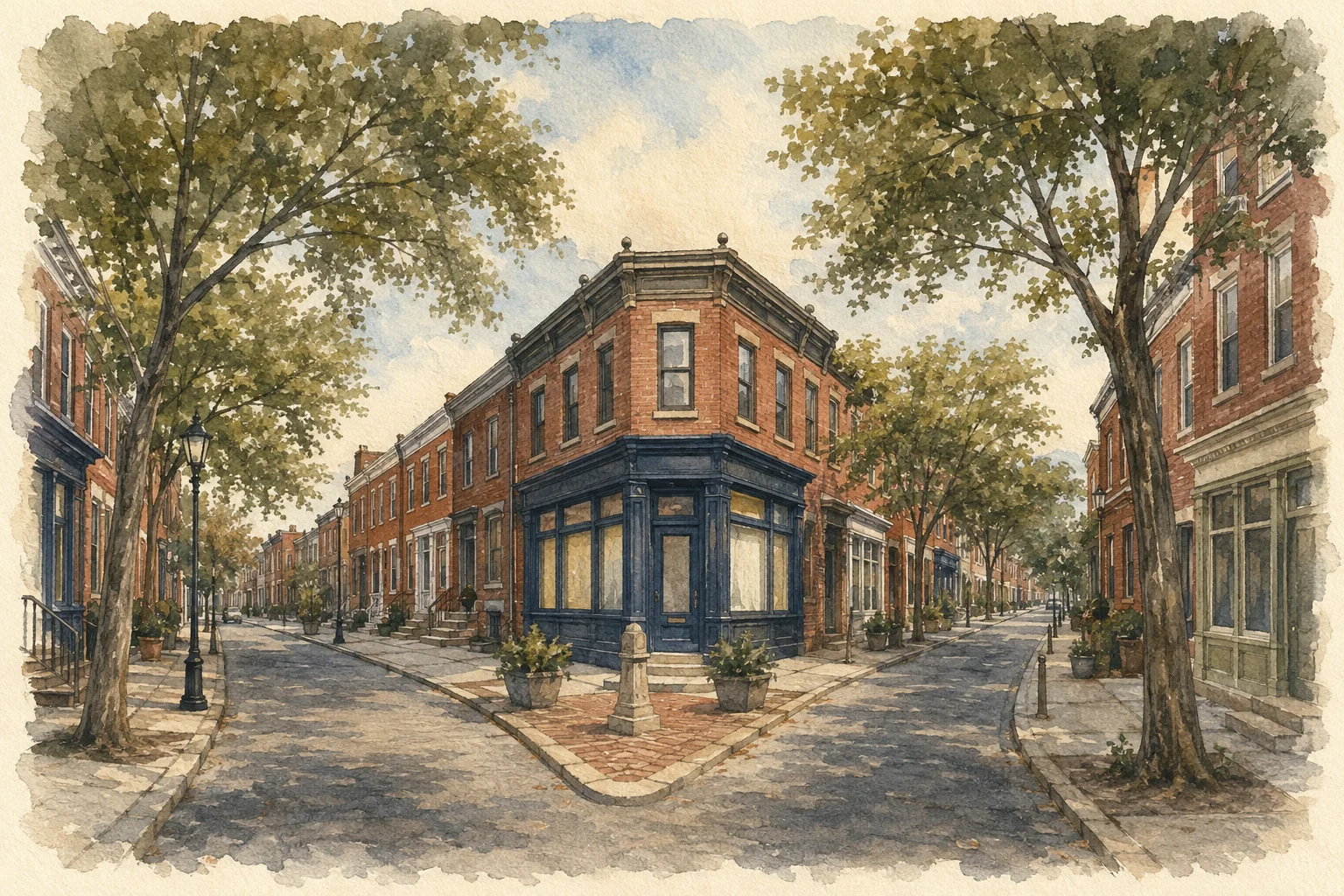
The Block-by-Block Rule: Why One Corner Can Feel Different From the Next
Why Safe and Sketchy Can Both Be True
Whitman has a reputation that can sound contradictory until you understand how locals talk about it. One person may say the neighborhood is fine, quiet enough, and full of regular families. Another may warn strongly against certain corners. Both can be describing real experiences because Whitman changes quickly from one stretch to the next.
That is why broad labels do not work well here. Calling all of Whitman safe is too simple. Calling all of Whitman rough is also too simple. The useful information comes from the micro-patterns: which blocks have steady homeowners, which corners have people hanging outside all day, which streets feel loud at night, which sidewalks are kept cleaner, and which parts feel different after dark than they do at noon.
The most repeated local advice is to walk the exact block. Not just once, and not only during the day. A weekday afternoon can make a street look calmer than it really feels on a warm weekend night. Trash day can reveal whether neighbors handle their sidewalks carefully or let the block get messy. Evening parking can show whether the area becomes a curb-space battle after everyone gets home from work.
Why Locals Tell You to Walk the Block at Night
Walking the block at night is not just dramatic advice. It is practical. Noise, parking, step gatherings, and general street activity are all easier to understand after the workday ends. A block that looks quiet when cars are gone and people are at work may feel very different after everyone returns home.
Weekends matter too. Late evenings, warm weather, and weekend nights can bring out a different version of the street. If you are sensitive to noise, you need to know whether the block settles down or turns into a gathering spot.
If you have kids, you need to know whether the route to the library, park, bus, or grocery store feels comfortable when you would actually use it.
If you depend on a car, you need to see what parking looks like after 7 p.m., not when spaces are easier to find.
Trash day is another local test. A block with bags torn open, scattered litter, or careless dumping gives a different impression than a block where neighbors keep the sidewalk under control. In Whitman, cleanliness is not only about appearance. It can signal how much people on the block care, how much informal accountability exists, and whether residents treat the street like shared space.
What 5th & Oregon Shows About Whitman’s Contradictions
The area near 5th & Oregon shows why Whitman should not be judged by one warning zone. Some residents around that area describe it positively and say they enjoy living there. That does not erase concerns about nearby blocks, but it does prove the main point: the neighborhood changes fast.
This is the mistake outsiders often make. They hear one warning and apply it to the entire neighborhood, or they hear one positive review and assume the whole area is easy. Whitman does not work that way. A better approach is to treat each block like its own small case study. Look at the corner. Look at the sidewalks. Look at the cars. Listen at night. Notice who is outside. Check how far you are from Whitman Plaza, Snyder, Oregon, 7th, Shunk, Porter, and the streets people keep naming.
That is the Whitman rule. The neighborhood is not one answer. It is a set of conditions that change by block, time, and tolerance level.
Daily Life in Whitman: Rowhomes, Steps, Noise, Trash, and Parking
Rowhome Density Is the Whole Story
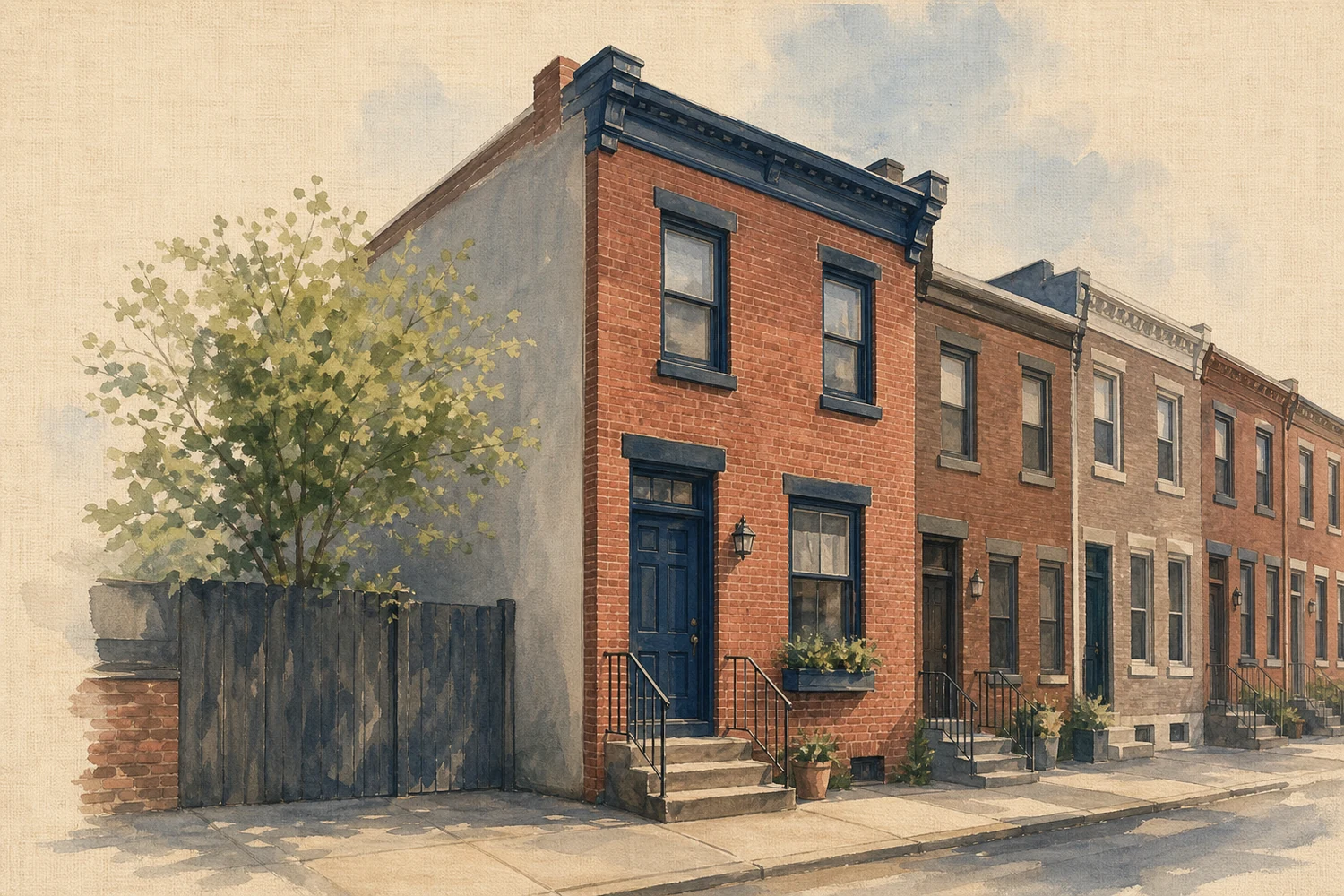
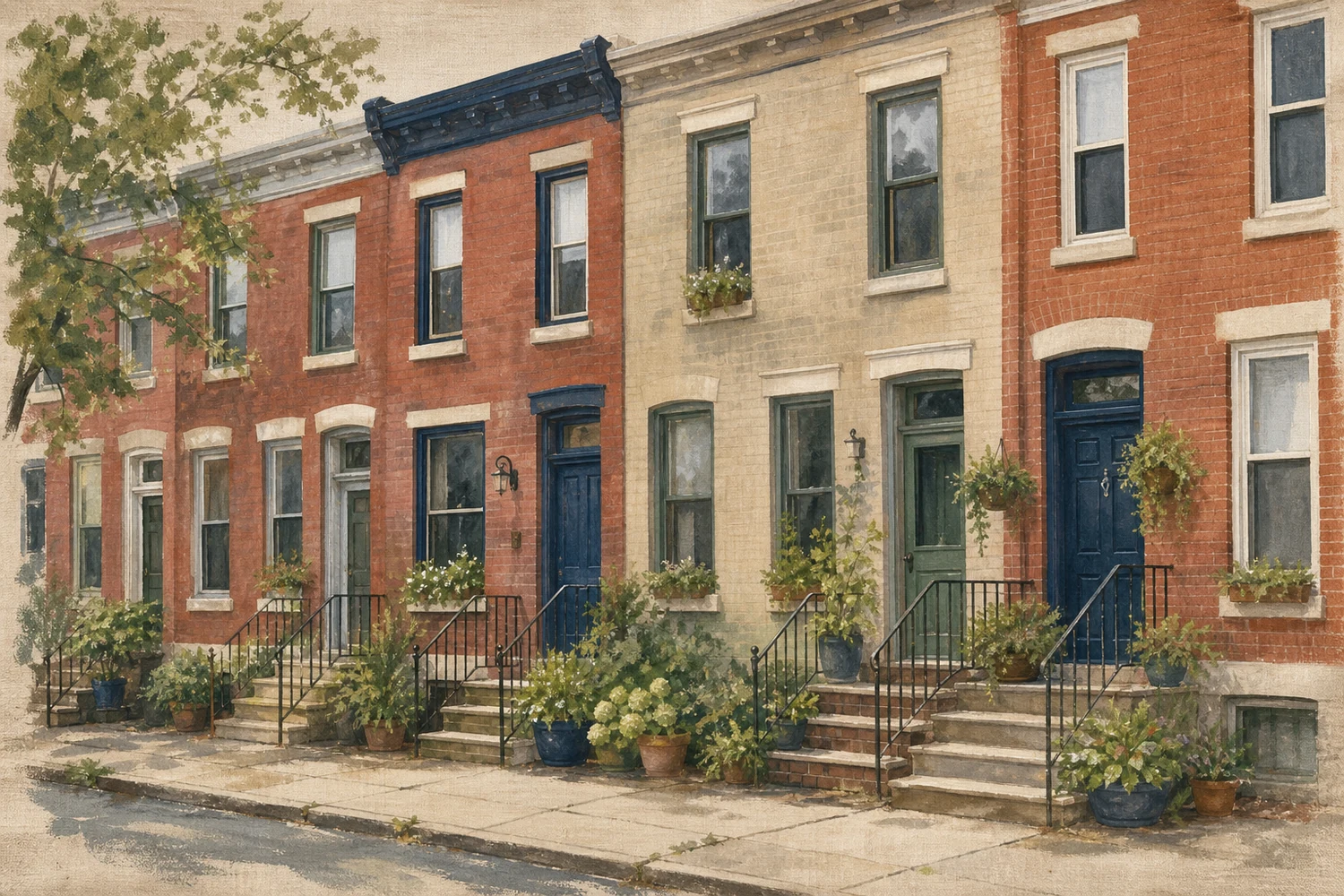
To understand daily life in Whitman, start with the rowhomes. The neighborhood is shaped by dense South Philly blocks, narrow streets, front steps, tight sidewalks, and cars packed along the curb. That physical setup explains many of the things people like and dislike about living here.
Rowhome density can make a block feel connected. Neighbors see each other. Families recognize who belongs. Longtime residents know the rhythms of the street. Kids, seniors, workers, and homeowners all share the same tight public space. On the better blocks, that can create a sense of familiarity that people associate with old South Philly.
The same density can also make everyday problems feel bigger. A loud speaker travels. A messy trash bag affects the whole sidewalk. One double-parked car can slow the block. A group on the steps can feel unavoidable when the houses sit close to the street. In Whitman, there is not much buffer between private life and public life.
That is why a good block is not judged only by crime. Locals also notice whether people keep the sidewalk clean, whether the street quiets down at night, whether parking is manageable, whether step culture feels neighborly or aggressive, and whether the people outside feel like part of the block or a source of tension.
Front Steps: Community to Some, Noise to Others
Front steps matter in Whitman. They are not just entrances to houses. They are social spaces. People sit outside, talk, watch the street, gather with family, play music, and pass time. This is part of the South Philly rowhome experience, and for some people it is part of the charm.
But step culture is also one of the most divisive parts of the neighborhood. On one block, people outside may make the street feel watched and familiar. On another, the same basic behavior can feel loud, intrusive, or exhausting.
When people complain about step parties, they are usually talking about the point where normal outside socializing turns into hours of noise, music, yelling, or crowds that make the block feel harder to live on.
This is where tolerance matters. A person moving from another dense city neighborhood may barely notice it. Someone expecting quiet nights may struggle. A family with young kids may care about whether the block calms down early. A night-shift worker may care about daytime noise. There is no single rule except to observe the exact block at the hours that matter to your life.
Trash Day as a Neighborhood Stress Test
Trash is one of the clearest quality-of-life complaints tied to Whitman and South Philly more broadly. The issue is not just that trash exists. It is the way trash can change the feel of a block by morning. Bags left out early, torn bags, overflowing cans, loose litter, and dumping can make a street feel neglected even if the houses themselves are cared for.
Trash day is a small recurring event that tells you a lot. A block where residents manage their bags, sweep up after pickup, and keep the sidewalk passable feels different from a block where debris sits around after collection. People read those details as signs of respect. They help answer the quiet local question: do people here care about the block?
For a newcomer, this is easy to miss during a quick showing. A property tour may happen when the block is clean and calm. A better test is to return after pickup or the morning after trash has been out. That is when the everyday habits of the street become visible.
Parking Is Not Just Parking in South Philly
Parking in Whitman is part logistics, part patience, and part social code. Like much of South Philly, the streets are narrow and demand can outpace available spaces. By evening, especially after people come home from work, the block can feel very different than it did at midday.
Parking also has an emotional layer. People may treat a spot near their house as if it belongs to them, even when the curb is public. Cones, chairs, saved spaces, double-parking, and irritation over the PPA are part of the larger South Philly parking mindset. A newcomer may see only a space. A longtime resident may see a spot that carries history, habit, and conflict.
The best way to understand parking in Whitman is to test it at the time you would actually need it. Visit after 7 p.m. Visit on a weekend. Notice whether people circle, whether cars are squeezed onto corners, whether the block uses cones or chairs, and whether nearby commercial traffic from Whitman Plaza or Oregon Avenue changes the situation.
Parking may not be the most dramatic issue in the neighborhood, but it is one of the most constant. Over time, that daily stress can shape how people feel about the block as much as safety or affordability.
Whitman Plaza, ShopRite, the DMV, and the Errand-Based Neighborhood
Whitman Plaza Is the Neighborhood’s Errand Hub
Whitman is not built around a restaurant strip or a nightlife corridor. Its strongest daily-life anchor is Whitman Plaza. For many residents, that says a lot about the neighborhood. Whitman is useful. It is practical. It makes ordinary errands easier.
Whitman Plaza functions as a shopping center, grocery reference point, parking lot, bus destination, DMV landmark, and general meeting point in the mental map of the area.
People may not describe it romantically, but they use it. That is the difference between a destination and an anchor. A destination is where people go for an experience. An anchor is where people keep returning because life requires it.
This is one of the reasons Whitman appeals to people who value convenience. You can live in a rowhome neighborhood and still be close to groceries, shopping, big-box retail, highways, and the bridge. For households, that matters. It means errands do not always require a long trip across the city.
ShopRite, Bus Routes, and the Practical Side of Living Here
ShopRite at Whitman Plaza is one of the clearest examples of Whitman’s practical identity. It comes up as a grocery destination and a familiar piece of everyday life. People even notice the music inside the store, which is exactly the kind of small observation that makes a place feel lived-in rather than summarized.
The plaza also matters because of bus access. Local comments reference bus routes serving or ending around Whitman Plaza, which makes the area more than just a car-based shopping stop. For residents without a car, or for people who do not want to drive every errand, that transit connection matters.
This daily convenience is part of Whitman’s value. It may not sound exciting in a neighborhood guide, but it is exactly the kind of thing that affects whether living somewhere feels easy. Can you get groceries without turning it into a project? Can you reach basic services? Can you get to a bus, a plaza, a pharmacy, a store, or a highway without crossing half the city? In Whitman, the answer is often yes, depending on the block.
The DMV Detail Only Locals and New Drivers Know
The Whitman Plaza DMV adds another layer to the plaza’s identity. On TikTok and in local conversation, the driver’s test connection turns the plaza into a rite-of-passage location, especially for teens, young adults, and anyone dealing with the stress of getting licensed.
That detail matters because it reveals a different kind of neighborhood importance. Whitman Plaza is not just where people shop. It is where people deal with bureaucracy, parking lots, driving anxiety, test routes, and the practical milestones of city life. For someone who grew up nearby, the plaza may be tied to errands with family, grocery runs, or the nervous energy of a road test.
Those small experiences are what separate a real neighborhood guide from a generic one. A tourist guide would not care about the DMV. A local or future resident might.
Convenience Comes With Parking Lots, Traffic, and Spillover
The convenience around Whitman Plaza also creates friction. Big shopping anchors bring traffic, parking pressure, carts, outsiders, and congestion. If you live close enough to benefit from the plaza, you may also be close enough to deal with its spillover.
The wider retail map adds to that practical identity. Snyder Plaza, Columbus Boulevard, IKEA, Target and Costco-type runs, Columbus Crossing, Pier 70, and other nearby shopping centers all help explain why Whitman is attractive to people who drive and manage a household. The neighborhood sits near a web of useful places.
But usefulness has a cost. Plaza traffic, game-day movement, bridge access, and highway proximity all feed into the same daily rhythm. Whitman works well for people who want errands and access close by. It may feel less comfortable for someone looking for quiet, low-traffic residential isolation.
That is the trade-off. Whitman is loved less for being trendy and more for being useful. It helps people get things done.
Cambodia Town, 7th Street, and the Cultural Layer People Miss
The 7th Street Story Is More Complicated Than Good or Bad
If Whitman is described only as affordable rowhomes, parking stress, and rougher pockets, the story is incomplete. One of the most important cultural details here is the connection between Whitman and Philadelphia’s Cambodian community, especially around unofficial Cambodia Town.
This matters because 7th Street appears in more than one kind of local conversation. In some safety discussions, the 5th to 7th Street band is treated cautiously.
In cultural and community discussions, 7th Street is also part of a meaningful Cambodian business and community corridor.
A shallow guide would choose one version and ignore the other. A better guide recognizes that the same street can hold more than one truth.
Whitman has always been more layered than a simple old South Philly rowhome story. Older Italian families, long-term residents, newer buyers, Cambodian businesses, public housing history, families using the library, and people moving in for affordability all shape the neighborhood at the same time. The result is a place where identity depends heavily on which block, which generation, and which community you are listening to.
Cambodia Town and Whitman’s Cambodian Community
An unofficial Cambodia Town is centered around 7th Street near Morris and nearby blocks. That is one of the strongest details a generic neighborhood guide would likely miss. It gives Whitman a cultural specificity that should be treated with respect.
The word unofficial matters. This is not necessarily a neatly branded district with tourist signage and a fixed boundary. It is a lived cultural geography, shaped by businesses, families, community memory, food, religion, and daily routines. People who know the area may understand it through specific storefronts, community ties, and walking patterns rather than through a map label.
For a newcomer, the right approach is to recognize this layer without turning it into a novelty. Cambodia Town is not just an interesting fact to drop into a guide. It is part of how Whitman connects to the broader Southeast Asian story of South Philadelphia. It also complicates any attempt to describe the neighborhood as only one kind of South Philly.
Mifflin Square, Cultural Memory, and Public Space
Mifflin Square Park sits close to this cultural story and carries its own public-space meaning. In the broader neighborhood picture, parks like Mifflin Square are rarely just green space. They are gathering points, walking routes, family spaces, cultural reference points, and sometimes sources of debate about maintenance, safety, vendors, loitering, or events.
That makes Mifflin Square important even when someone is technically talking about Whitman’s edges or nearby blocks. It connects the residential grid to public life. It gives people a place to gather outside the rowhome structure. It also brings up the kinds of public-space questions common in dense neighborhoods: who uses the park, when it feels comfortable, how it is maintained, and whether different groups experience it the same way.
Preah Buddha Rangsey Temple adds another cultural anchor to the broader Cambodian South Philly landscape. Mentioning it carefully helps move the article beyond vague diversity language. Whitman and its nearby streets should not be described as diverse in the abstract. The guide should name the cultural geography that gives that diversity shape.
Why Diversity Here Should Be Described Specifically
Whitman is often compared with Pennsport, East Passyunk, and LoMo, but one of its key differences is that its identity is less cleanly packaged. It includes old South Philly memory, working-class rowhome blocks, Cambodian community life, practical shopping plazas, public housing history, new real-estate interest, and residents who disagree sharply about safety and quality of life.
That mixture can be easy to flatten. Some outsiders may focus only on rough-block warnings. Some real-estate posts may focus only on renovated interiors and highway access. Some old-timer stories may overemphasize what the neighborhood used to be. A useful guide should hold the layers together.
The 7th Street and Cambodia Town story is essential for that reason. It reminds readers that Whitman is not just a cheaper alternative to Passyunk or Pennsport. It has its own cultural map, its own community anchors, and its own streets where pride, caution, memory, and everyday life overlap.
When writing about Whitman, the most respectful approach is specificity. Say 7th Street. Say Morris. Say Mifflin Square. Say Cambodia Town is unofficial but meaningful. Say that the same area can be discussed through safety, culture, food, family, and public space, depending on who is speaking. That is what makes the neighborhood real.
The names locals actually use
The official box explains where Whitman sits. It does not settle what people call any given block.
The official box
Snyder to Bigler, Front to 6thThe clean version, the one you would use to explain Whitman on a map for the first time. It tells you where the neighborhood sits relative to Pennsport, Lower Moyamensing, East Passyunk, Oregon Avenue and the stadium area.
East Oregon
Around or east of Oregon AvenueThe most sensitive label here. Some people use it casually; others hear real-estate language trying to make a block sound more marketable than simply calling it Whitman.
7th Street and Cambodia Town
Around 7th StreetAn unofficial Cambodia Town, not a neatly branded district with tourist signage. It is a lived cultural geography shaped by businesses, families, community memory, food, religion and daily routines.
Whitman Plaza
The errand hubA shopping center, grocery reference point, parking lot, bus destination, DMV landmark and general meeting point on the mental map. An anchor rather than a destination.
Mifflin Square
The public-space edgeA gathering point, walking route, family space and cultural reference point that connects the residential grid to public life.
Getting Around: Highways, the Bridge, Stadiums, and the Convenience Trade-Off
Whitman Works Well If You Drive
Whitman makes the most sense when you understand how much of its value comes from movement. People often talk about the neighborhood in relation to where it can get them: I-95, I-76, the Walt Whitman Bridge, the stadium area, the Navy Yard, Columbus Boulevard, Whitman Plaza, Snyder Plaza, and the big-box shopping corridors nearby.
That practical access is one of the reasons people consider Whitman when other South Philly neighborhoods feel too expensive.
You can live on a rowhome block and still be close to major roads, grocery stores, shopping centers, and work routes. For someone commuting to the Navy Yard, crossing into New Jersey, getting to the stadiums, or managing regular errands along Columbus Boulevard, Whitman can feel like a useful base.
The trade-off is that the same infrastructure that makes the neighborhood convenient also brings movement, pressure, and congestion. A quiet block can still sit near routes that carry a lot of cars. A plaza that makes groceries easy can also bring parking lot traffic and spillover. A highway ramp that saves time on a workday can become part of a larger traffic mess when there is construction, an accident, or stadium activity.
That is why Whitman is better understood as a practical neighborhood than a polished one. Its convenience is real, but it is tied to the daily systems around it.
The Walt Whitman Bridge Is More Than a Name
The Walt Whitman Bridge is one of the biggest orientation points tied to the neighborhood, even when people are not talking about the bridge directly. It helps explain the name, the regional identity, and the way outsiders often understand this part of South Philly. Some people outside the area think of Whitman mostly through bridge tolls, traffic, or the route between Philadelphia and New Jersey.
For residents, the bridge is more than a landmark. It is part of the daily map. It affects commuting, traffic patterns, and how people think about access. If you cross into New Jersey often, work near the waterfront, or use the bridge as part of your routine, Whitman’s location can feel very convenient. If you are sensitive to traffic or want a tucked-away residential feel, that same proximity may feel like part of the neighborhood’s pressure.
The bridge also connects to the way Whitman gets misunderstood. To a traveler, Whitman may mean a bridge, a toll, or something related to Walt Whitman outside the neighborhood. To someone living in South Philly, Whitman is a rowhome grid with named corners, trash days, shopping runs, 7th Street, Oregon Avenue, and the question of which exact block you mean.
Stadium Days Can Change the Neighborhood Rhythm
The sports complex is close enough to matter. For some residents, that is a benefit. Games, concerts, and events are within easy reach, and the neighborhood’s location makes it possible to get to the stadium area without feeling disconnected from the rest of South Philly.
But event days can change how nearby routes feel. Traffic that seems manageable on an ordinary night can become slower and more frustrating when the stadiums are active. Parking pressure can feel different. Drivers who do not usually pass through may cut across nearby areas. If you live in Whitman and depend on a car, timing matters. A route that works on a regular Tuesday can feel different around a major game or event.
That is part of the larger Whitman pattern. The neighborhood changes by time and situation. Nights matter. Weekends matter. Trash days matter. Stadium days matter. A person judging Whitman from a single visit may miss the way these micro-events shape daily life.
Why Convenience and Traffic Come Together Here
Whitman’s convenience depends on its position near useful but busy places. I-95 and I-76 help people move. The Walt Whitman Bridge connects the area to New Jersey. The stadiums give the neighborhood regional access. Columbus Boulevard, Whitman Plaza, Snyder Plaza, IKEA, Target-type errands, Costco-type runs, Columbus Crossing, and Pier 70 make the area practical for household life.
Those benefits are exactly why the neighborhood can also feel busy, squeezed, or exposed to outside traffic. The same roads that make life easier for residents are used by people passing through. The same plazas that make errands convenient create parking lots, congestion, shopping carts, and spillover. The same stadium proximity that makes a game easy to reach can complicate the ride home.
Whitman is not a tourist neighborhood. It is an infrastructure neighborhood. People value it because it helps them commute, shop, cross the bridge, get to work, reach the Navy Yard, and handle everyday errands. The cost is that movement is always part of the atmosphere. If you are considering living here, test the routes you will actually use. Drive to work from the block. Check the parking situation after 7 p.m. Try the grocery run when you would normally do it. Notice how the area feels when there is a game, heavy traffic, or a busy plaza weekend.
Whitman rewards people who understand its routes as well as its blocks.
Community Anchors: Whitman Library, Whitman Council, Buy Nothing Groups, and Local Services
Whitman Library Is More Than a Library
A neighborhood can sound very different depending on which online conversations you read first. If you only read complaints about rough pockets, trash, parking, and noise, Whitman may sound like a place defined by friction. Those issues are real, but they do not explain the whole neighborhood. Whitman also has institutions that show people using the area in steady, ordinary, community-building ways.
Whitman Library is one of the strongest examples. Located on Snyder Avenue between 2nd and S. Philip, it serves as more than a place to borrow books.
Its programming points to a neighborhood with children, teens, adults, seniors, parents, and caregivers all using the same civic space.
LEAP after-school programs, teen video game club, adult yoga, senior activities, book groups, and game clubs all give the library a rhythm that changes by hour and by audience.
That kind of programming matters because it shows Whitman through daily use. Around the library, the neighborhood is not just rowhomes and parked cars. It is kids after school, teens gathering for activities, adults showing up for programs, and seniors using a familiar public place. For families thinking about the area, the library is one of the details worth checking in person, along with the walking route from the specific block they are considering.
The Civic Layer: Whitman Council and Neighborhood Meetings
Whitman Council, Inc. adds another layer to the neighborhood’s civic life. Community councils matter in places like Whitman because so many local issues are practical and block-based: zoning, development, trash, public safety, parks, traffic, and quality-of-life concerns. These topics rarely feel abstract when you live on a dense rowhome block. They affect what your street looks like, how safe people feel walking at night, and whether residents believe anyone is listening.
Council meetings have been connected to neighborhood venues like Brian Donnelly Funeral Home on S 3rd. That kind of detail matters because it shows how civic life actually happens here. It is not always in a grand public building or a place that would appear in a travel guide. It happens in ordinary local spaces that residents already know.
The civic layer also helps explain why Whitman should not be reduced to online complaints. People do complain, but they also organize, attend meetings, follow local updates, discuss neighborhood conditions, and try to influence what happens around them. That is part of the lived reality too.
Facebook Shows the Practical Side of Neighbor Life
Facebook-visible spaces show a quieter but important version of Whitman. The Buy Nothing East Passyunk / Pennsport South / Whitman group is a good example because it places Whitman inside a practical neighbor network. People use groups like this to give away furniture, request household items, pass along kids’ things, and solve small domestic problems.
That kind of activity tells you something different from a safety thread. It shows households, families, routines, and neighbors helping each other with everyday needs. It also shows how locals mentally group Whitman with nearby areas like East Passyunk and Pennsport South, even while people argue about exact boundaries in other contexts.
Broader South Philly nostalgia groups add another layer. Longtime residents may share memories, photos, and stories about what the neighborhood used to feel like. Those memories can be affectionate, frustrated, or protective. They help explain why people react strongly to change, new labels, and real-estate language. For someone who grew up around these blocks, the neighborhood is not a market category. It is personal history.
Local Services That Quietly Hold the Neighborhood Together
Whitman’s local services add a lower-drama but meaningful part of the picture. Whitman Dental Center is one of the local services residents name. A dental office is not the kind of place that usually defines a neighborhood’s public image, but it matters to the people who live nearby. Reliable appointments, polite staff, and a trusted service close to home all contribute to how livable a place feels.
Murphy Recreation Center is another community topic worth treating carefully. Rec centers often sit at the intersection of youth programming, neighborhood pride, public investment, and quality-of-life concerns. In a neighborhood like Whitman, where kids, teens, families, and public spaces all matter, a rec center is never just a building. It can become part of the conversation about safety, activities, maintenance, and whether young people have somewhere constructive to go.
Together, the library, council, Buy Nothing group, local services, and rec-center conversations show that Whitman has social infrastructure. The online arguments can make the neighborhood sound like parking, trash, and rough blocks only. The institutions tell a fuller story: people are raising families, attending programs, sharing items, going to meetings, using local businesses, and trying to make daily life work.
The social infrastructure
The online arguments make the neighborhood sound like parking, trash and rough blocks only. These are the institutions that tell the fuller story.
Whitman Library
More than a place to borrow books. LEAP after-school programs, a teen video game club, adult yoga, senior activities, book groups and game clubs give it a rhythm that changes by hour and by audience.
Best for · Families checking the walking route from their block
Whitman Council, Inc.
Where zoning, development, trash, public safety, parks, traffic and quality-of-life concerns get argued out. Meetings have been connected to neighborhood venues like Brian Donnelly Funeral Home on S 3rd.
ShopRite at Whitman Plaza
The clearest example of Whitman's practical identity, and a bus destination as well as a car-based one. Locals notice details down to the music inside the store.
Whitman Dental Center
One of the local services residents name. Not the kind of place that defines a neighborhood's public image, but reliable appointments close to home are part of how livable a place feels.
Who Whitman Works For, and Who Might Struggle Here
Whitman Makes Sense If You Want Practical South Philly
Whitman works best for people who understand what they are choosing. It is a practical South Philly neighborhood with rowhomes, errands, access, and a strong block-by-block reality. If you are looking for a polished restaurant district, easy parking, and quiet streets every night, Whitman may frustrate you. If you want affordability, South Philly density, shopping access, and a location that connects easily to highways and nearby neighborhoods, it may make sense.
The neighborhood is especially appealing to people priced out of East Passyunk or Pennsport who still want to stay close to that part of South Philly.
Whitman can offer a lower-cost way into the area, but the savings come with the need for more careful block research. A good price is not enough. The exact street, nearby corners, parking conditions, and night rhythm matter.
It can also work well for drivers. Access to I-95, I-76, the Walt Whitman Bridge, the stadium area, Columbus Boulevard, and the Navy Yard makes Whitman useful for people whose lives are spread across South Philly, New Jersey, and nearby job centers. The neighborhood also works for residents who value errands: ShopRite, Whitman Plaza, the DMV, Snyder Plaza, and nearby big-box shopping all make day-to-day logistics easier.
Whitman also suits people who want rowhome living without needing a trendy commercial corridor outside their front door. The neighborhood is more residential and errand-oriented than nightlife-driven. That can be a strength if you want a home base rather than a scene.
You May Struggle If You Need Quiet, Easy Parking, or Predictability
Whitman can be harder for people who need quiet nights or dislike visible street life. Step culture, music, people sitting outside, and weekend noise can be part of the experience depending on the block. Some residents may see that as normal South Philly life. Others may find it tiring.
Parking is another test. If you expect to find a space easily every evening, you may be disappointed. Like much of South Philly, Whitman has tight streets, heavy curb demand, and local habits around saved spots. Parking after 7 p.m. is a better measure than parking in the middle of the day.
The neighborhood may also be frustrating for people who want every block to feel consistent. Whitman does not offer that kind of predictability. Some blocks feel quiet and settled. Others feel louder, messier, or more tense. The difference can be close enough to surprise someone who only looked at a map or listing photos.
People who rely too heavily on real-estate labels may also struggle. A listing that says East Oregon, Pennsport-adjacent, LoMo-adjacent, or Whitman still needs to be tested on the ground. Local names can help orient you, but they cannot replace walking the exact block.
The Real Test: Your Exact Block, Not the Neighborhood Name
The most honest way to evaluate Whitman is to match the block to your life. If you have kids, check the route to Whitman Library, nearby parks, rec options, and the streets you would actually walk. If you drive, test the commute and parking at the times you would use them. If you work odd hours, notice daytime noise as well as nighttime noise. If you are sensitive to trash, visit after pickup. If you want quiet, check a weekend evening in warm weather.
Whitman should not be reduced to good or bad. It works when the exact block, daily routine, commute, parking tolerance, and noise tolerance match the person living there. Someone who wants practical South Philly access may see value that another person would miss. Someone who expects a calmer, cleaner, more predictable neighborhood may feel worn down quickly.
That is why the best advice is specific. Do not fall in love with the price alone. Do not panic because one person criticized the whole neighborhood. Do not trust a label without checking the block. Whitman rewards people who do the extra work before committing.
Who Whitman works for
The guide's own framing: Whitman works best for people who understand what they are choosing.
- Affordability, South Philly density and shopping access in one place.
- A lower-cost way to stay close to East Passyunk and Pennsport.
- Driving access to I-95, I-76, the Walt Whitman Bridge, the stadium area and the Navy Yard.
- Errands close by — ShopRite, Whitman Plaza, the DMV, Snyder Plaza and nearby big-box shopping.
- Rowhome living as a home base rather than a scene.
- Quiet nights — step culture, music and people sitting outside vary by block.
- An easy space every evening; curb demand is heavy and spots get saved.
- Consistency block to block, which this neighborhood does not offer.
- A listing label you can trust without walking the exact street.
Quick Local Checklist Before Renting or Buying in Whitman
The 12-Point Whitman Reality Check
Before renting or buying in Whitman, treat the exact block like the main decision. The broader neighborhood label is only the beginning.
- Walk the exact block on a weekday afternoon, when the street may be calmer and easier to observe.
- Walk it again after dark, when noise, gatherings, lighting, and comfort level become easier to judge.
- Check it on a weekend night, especially if you are sensitive to music, step gatherings, or late-night activity.
- Look at the block after trash pickup, not only when everything is clean for a showing.
- Pay attention to who is outside, how people use the steps, and whether the street feels watched in a neighborly way or tense in a way that bothers you.
- Check parking after 7 p.m., when residents are home and curb pressure is more realistic.
- Ask about the specific relationship to 5th, 6th, 7th, Snyder, Shunk, Porter, Oregon, and the plaza if those streets are nearby.
- Do not rely only on names like Whitman, East Oregon, LoMo, Pennsport-adjacent, or South Philly. The label is less important than the block.
- Test your actual commute to I-95, I-76, the Walt Whitman Bridge, the Navy Yard, Columbus Boulevard, or the stadium area.
- Visit Whitman Plaza, ShopRite, the DMV area, and nearby errand spots at the times you would realistically use them.
- If you have kids, walk the route to Whitman Library, parks, rec options, bus stops, and the places your family would use.
- If quiet matters to you, try to visit during warm weather or at least on an evening when people are more likely to be outside.
What to Look For When You Walk the Block
When you walk a Whitman block, look beyond the house. Notice the sidewalks. Notice whether trash is managed well. Notice whether people seem to know each other. Notice how much noise travels. Look at where cars are parked and whether cones or chairs are part of the block’s parking culture. Notice if the street feels different from one end to the other.
Also pay attention to what is nearby. Being close to Whitman Plaza can make errands easier, but it can also mean more traffic and parking activity. Being near Snyder or Oregon may help with access, but the corridor rhythm may be different from a quieter interior block. Being near 7th Street may connect you to important cultural life and also place you in a part of the neighborhood people discuss with more nuance.
The goal is not to find a perfect block. The goal is to understand the trade-offs before they become part of your daily routine. Whitman is manageable for many people when expectations are clear. It becomes frustrating when someone buys into a label, a price, or a listing photo without studying the street.
Whitman Rewards Specific Knowledge
Whitman is a practical, rowhome-heavy South Philadelphia neighborhood shaped by corners, routines, and trade-offs. Its strengths are real: affordability compared with hotter nearby areas, access to highways and the Walt Whitman Bridge, proximity to shopping and errands, cultural depth around 7th Street and Cambodia Town, and community anchors like Whitman Library, Whitman Council, local groups, rec spaces, and neighborhood services.
Its challenges are just as real. Some blocks draw repeated warnings. Parking can be stressful. Trash and noise can shape how a street feels. Real-estate labels can blur more than they clarify. The same neighborhood name can produce completely different experiences depending on whether someone lives near 5th & Oregon, closer to 6th & Shunk, near Whitman Plaza, along a quieter interior block, or around the 7th Street cultural corridor.
That is why Whitman does not reward broad assumptions. It rewards specific knowledge. Learn the blocks. Walk the corners. Check the street after dark. Look at trash day. Test parking at night. Understand what locals mean when they say Whitman, East Oregon, LoMo, or Pennsport-adjacent. Notice how errands, routes, parks, schools, the library, the bridge, and the plaza shape actual daily life.
Whitman starts making sense when you stop treating it like a single neighborhood label and start reading it the way locals do: by the block, by the corner, by the time of day, and by the errands, routes, and people that shape life there.
Make it yours
Your Whitman errand checklist
A short list to turn what you read into your own next steps.
Saved checks stay on this device when browser storage is available. This is a personal planning list, not a property inspection or professional assessment.
Sources & next steps
Useful advice should
show its working.
These resources support the reader tools above and help you check details for your own address, date, or plans.
- PennDOT driver and vehicle service locations
Find the location and service type for a driver or vehicle task.
- Free Library locations
Find a branch, its services and current access notices.
- SEPTA trip planner
Plan your date, direction and return journey; check service and accessibility details.
PennDOT’s source helps identify service types and locations. These tools do not confirm that every task is available at the guide’s named shopping center.
Keep exploring