A little orientation
Plan a Packer Park day around your address
Check the date before the trip.
Use the sports-complex calendar as a starting point and confirm the event with its host before arranging a time-sensitive visit.
Ask about the specific development.
Different housing offers need their own access and maintenance questions; a Packer Park label does not establish what a property includes.
Plan a park visit separately.
Research the FDR Park activity and entrance you want rather than assuming an event-day journey and park outing use the same plan.
A closer look
Home access, event dates and time outside
Keep the calendar useful without turning it into a prediction of congestion or noise.
Look for overlapping plans.
Check the Sports Complex Special Services District’s linked calendar for your intended day, then confirm relevant events with the hosts. Compare that date with your appointment or delivery, leaving time to adjust without assuming a fixed traffic delay.
A useful questionWhat other scheduled events should you consider before setting your arrival plan?
Source & next step ↗Find the terms for your home.
Use the actual address in Atlas, then ask the owner or association about parking, shared areas and maintenance. Keep named developments from the guide separate in your notes, so one project’s features are not assumed to apply to another.
A useful questionWhich access and upkeep arrangements belong to this specific property or development?
Source & next step ↗Choose the purpose of the visit.
Research the FDR Park activity and access point through official facility information before setting out. Confirm current arrangements for your group, then plan the approach independently of any sports-complex event rather than treating nearby destinations as one interchangeable outing.
A useful questionWhich FDR Park entrance and activity have you confirmed for your visit?
Source & next step ↗Packer Park is one of South Philly’s quieter residential pockets, known for its family homes, calmer streets, easier parking, and close access to FDR Park, NovaCare Complex, and the Sports Complex. It has a more suburban feel than many nearby neighborhoods, but daily life is still shaped by Philly realities like game-day traffic, roadwork, trash timing, seasonal events, and busy family routines. At Hometress, we understand that keeping a Packer Park home clean is not just about surface-level upkeep. It is about helping families maintain the calm, comfortable feeling that makes the neighborhood so appealing, whether you need recurring cleaning, deep cleaning, move cleaning, post-construction cleaning, clutter cleaning, or a seasonal reset before hosting.
Where Packer Park Actually Is, and Why the Boundaries Matter
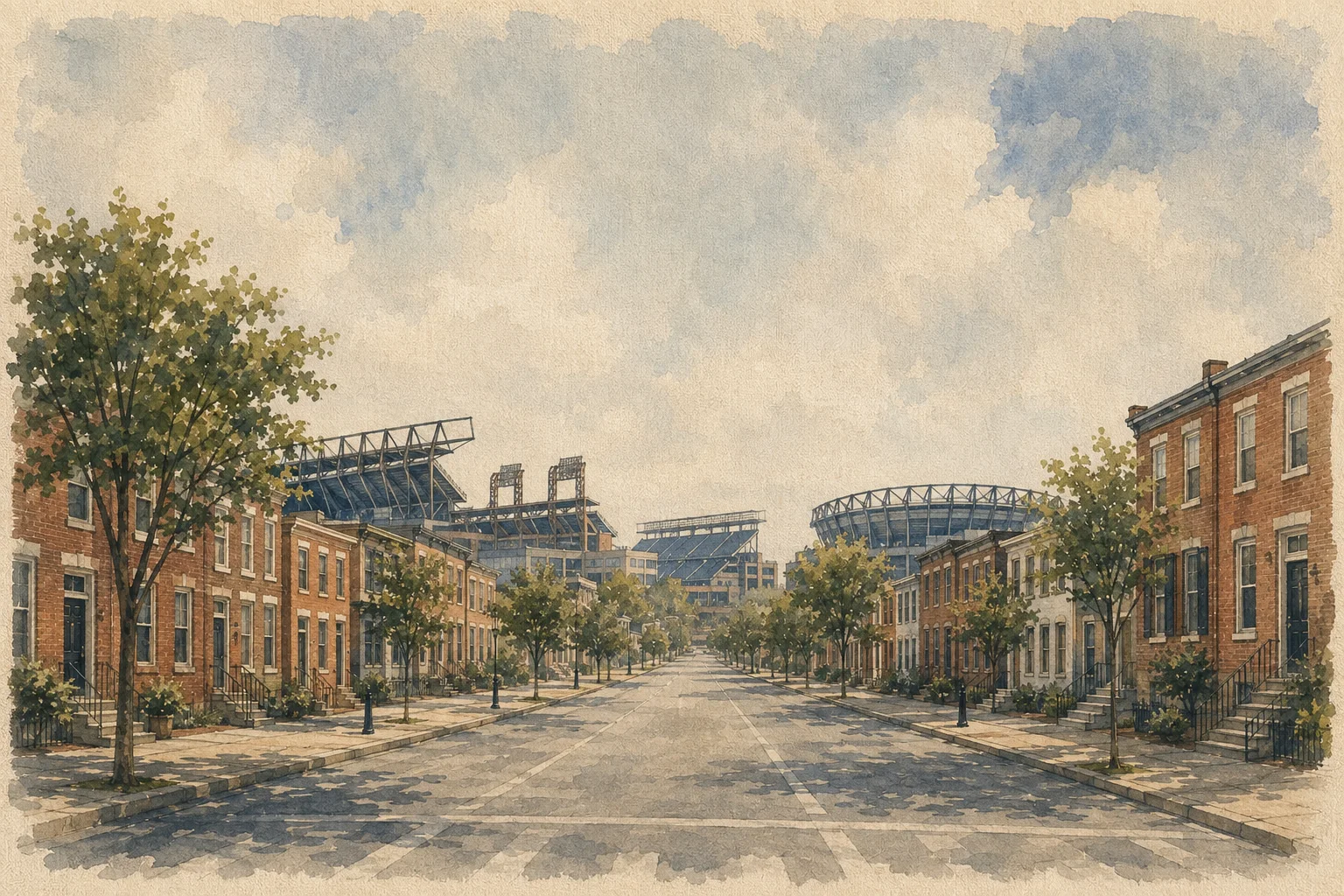
Packer Park is one of those South Philly neighborhoods where the exact boundaries matter more than an outsider might expect. If you only know the area from Google Maps or from driving to a Phillies game, it is easy to lump everything together as the stadium area. Locals tend to be more precise. Packer Park is residential first, while the Stadium District is built around event traffic, parking lots, arenas, and crowds moving in and out around Broad and Pattison.
A common way to understand Packer Park is to place it around the area between South Broad Street and South 20th Street, with the Schuylkill Expressway and I-76 shaping one side and Pattison Avenue, FDR Park, and the Sports Complex shaping the southern edge. Packer Ave is one of the main local reference points, but it should not be treated like the whole neighborhood. Hartranft Street, South 20th Street, the FDR Park edge, and the streets tucked behind the busier corridors all help define the quieter residential side of the area.
This distinction matters because Packer Park does not feel like the stadium lots, and it does not function like the busier parts of South Philly closer to East Passyunk or Broad Street. The neighborhood has pockets of newer homes, older homes, garages, driveways, cul-de-sacs, and small residential streets where the day-to-day rhythm is much calmer than the traffic outside it suggests. You can be near Lincoln Financial Field, Citizens Bank Park, Wells Fargo Center, and Xfinity Live without feeling like you live inside the crowd zone every day.
That said, Packer Park’s location means the Stadium District still shapes daily life. When there is a major event, traffic patterns shift. Pattison gets heavier. Broad carries more visitors. Packer Ave can feel busier than usual. Routes that seem simple on an ordinary weekday can become slow or annoying when thousands of people are heading toward the Sports Complex. That is why a local guide to Packer Park should also point readers toward a separate guide for the Stadium District, because the two areas are connected but not interchangeable.
There is also some neighborhood-name overlap that can confuse newcomers. Depending on who is talking, nearby areas may be described as Marconi, Stella Maris, the Sports Complex area, or simply South Philly. Those names can be useful, but they are not always substitutes for Packer Park. A house near Packer Ave may be Packer Park to one person and stadium-adjacent South Philly to another, depending on the block. A business on a major corridor may serve Packer Park residents without being in the heart of the residential neighborhood.
For practical purposes, Packer Park is best understood as the residential pocket tucked near the Sports Complex, FDR Park, and major highways, with Packer Ave, South 20th, Broad, Pattison, I-76, and I-95 access all shaping how people move through it. The closer you get to the stadium side, the more event schedules matter. The deeper you get into the residential streets, the more you notice why locals talk about Packer Park as one of the quieter and more orderly parts of South Philly.
Where Packer Park sits
- Packer Ave
- FDR Park
- NovaCare Complex
- The Sports Complex
Schematic · not to scale
The Feel of Packer Park: Suburban South Philly, but Still Philly
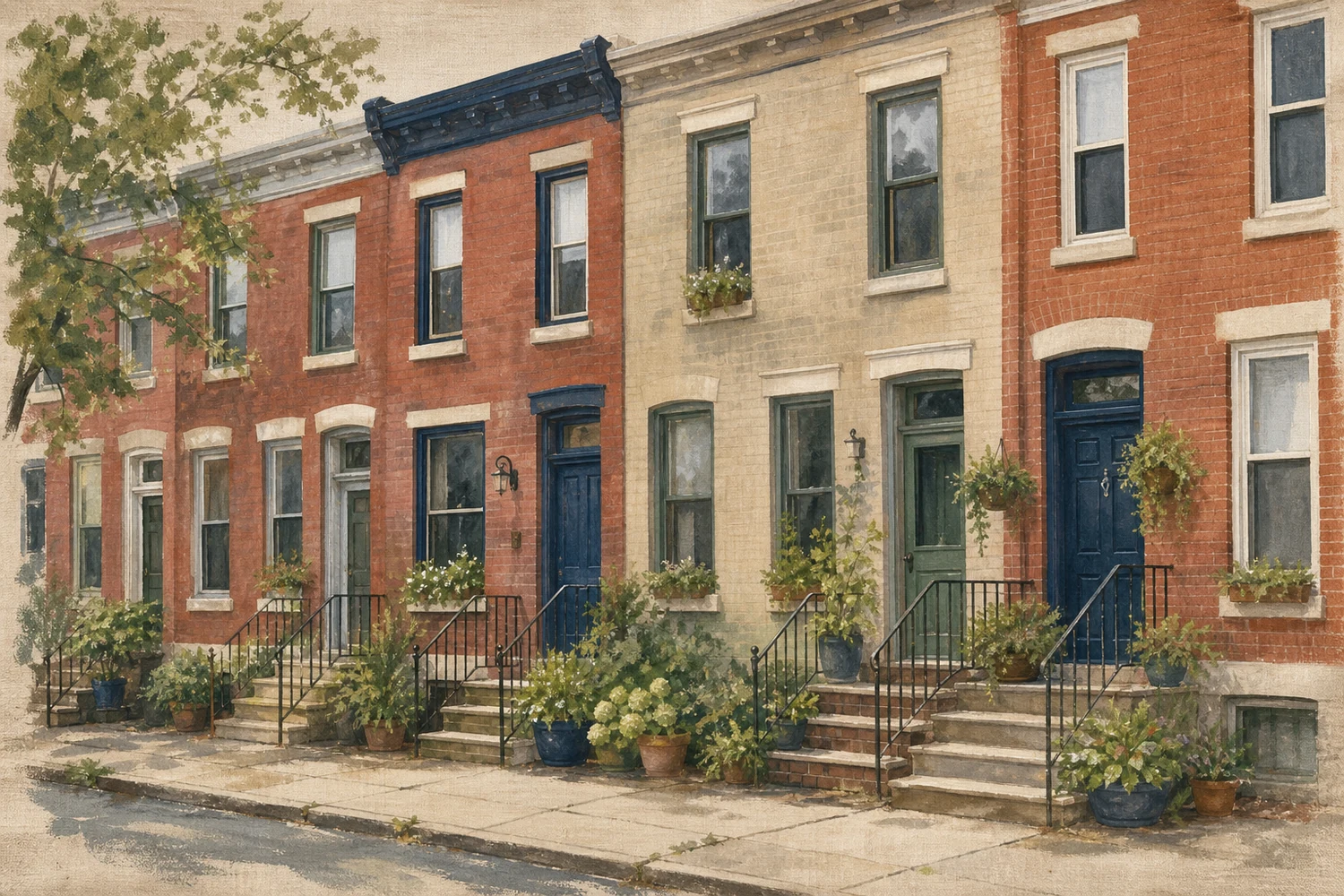
The reason Packer Park stands out is simple: it does not feel like the rowhouse-heavy South Philly blocks many people imagine first. There are still unmistakable South Philly elements here, including longtime families, strong neighborhood identity, familiar local routes, and plenty of opinions about parking. But the built environment feels more spread out, more residential, and more car-friendly than many nearby neighborhoods.
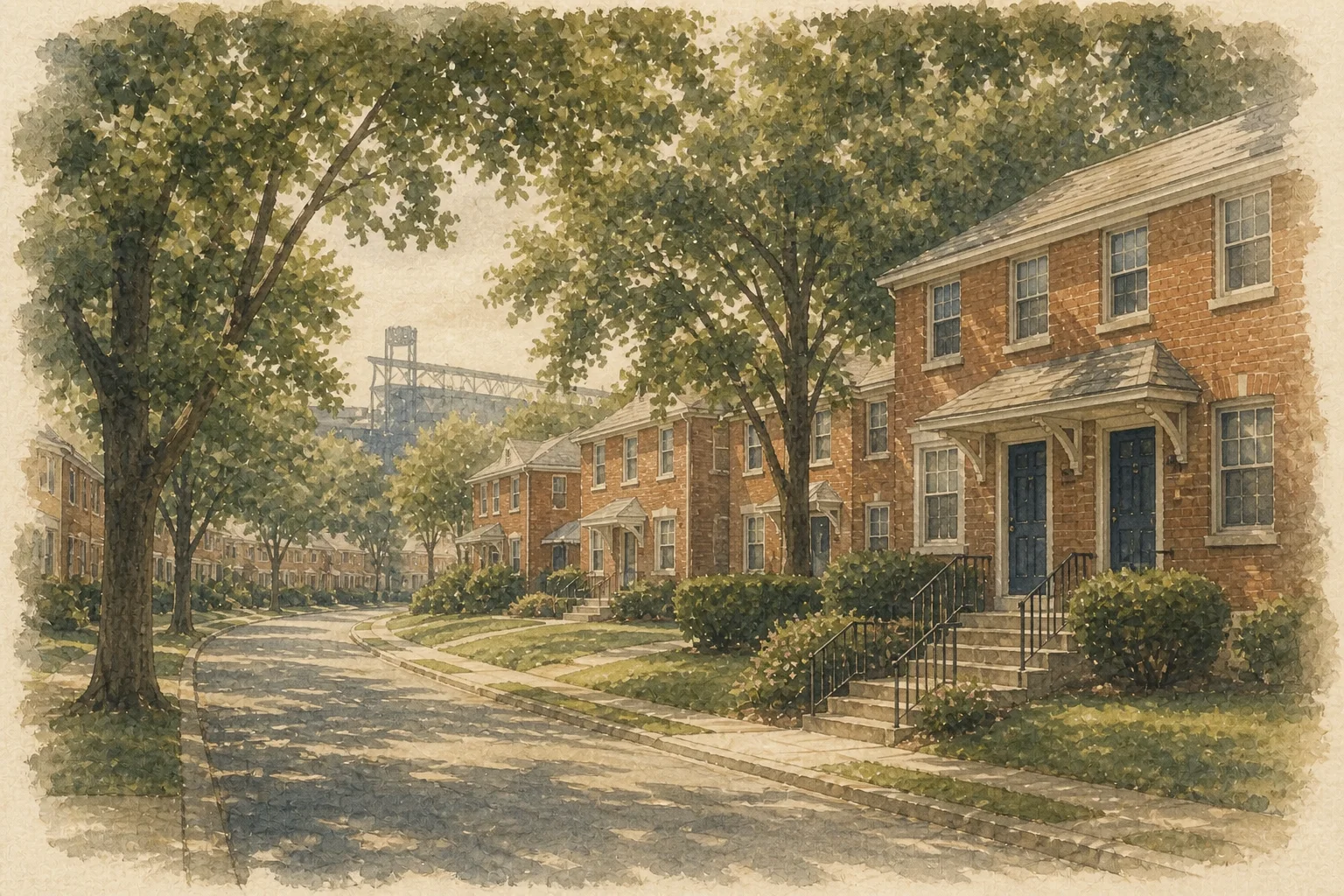
The clearest difference is the housing layout. In parts of Packer Park, you see cul-de-sacs, driveways, garages, front lawns, pocket parks, tot lots, and quieter streets that feel closer to a suburban development than a traditional South Philly grid. That physical layout changes the whole mood of the neighborhood. The streets feel less compressed. Cars are not always fighting for every inch of curb. Families have more room to come and go. For people used to tight rowhouse blocks, that alone can make Packer Park feel like a different category of South Philly living.
The Reserve at Packer Park is one of the clearest examples of this planned residential feel. Its cul-de-sacs, green pockets, and family-oriented layout help explain why people describe the neighborhood as a suburban pocket inside the city. Siena Place adds another layer, with newer townhomes, garages, and roof decks that appeal to buyers who want South Philly access without giving up more modern housing features. Brinton Estates, Renaissance Estates, Renaissance Walk, and older Packer Park blocks each bring a slightly different texture, so the neighborhood is not one uniform style. Some parts feel more established and old South Philly. Some feel more like planned residential development. Some feel like newer construction pushing the neighborhood’s footprint outward.
That mix is part of why Packer Park attracts people who want calm without leaving the city. It works well for households that care about parking, safety, space, and family routines. You can live near the Sports Complex, FDR Park, and major highways while still coming home to a block that feels quieter than the traffic outside the neighborhood. For many residents, that is the appeal. Packer Park gives you South Philly access without the full intensity of denser commercial corridors.
The neighborhood’s family-centered feel also shows up in smaller details. Kids outside, holiday decorations, block-level routines, and long-term neighbors all fit the image of a place where people settle in rather than just pass through. The area’s Italian-American roots and multi-generational South Philly identity also shape the social feel. There is a sense that some families have been connected to the area for a long time, and that history matters when people talk about change, development, and what should or should not happen nearby.
Still, Packer Park is not separate from Philadelphia. It may feel calmer than many nearby areas, but city issues still show up. Trash pickup, roadwork, illegal dumping, potholes, package concerns, parking rules, and event spillover are all part of life here. A quiet street can still deal with dust from roadwork. A home with a garage can still be affected by stadium traffic. A block that feels tucked away most of the week can feel different when FDR Park has a major event or the Eagles are playing.
That combination is what makes Packer Park feel specific. It has a suburban feel in Philadelphia, but it is still tied into South Philly’s routes, habits, sports culture, and city-service frustrations. It is a family-friendly South Philly neighborhood, but not a sealed-off bubble. The calm is real, and so are the pressures around it.
Not one uniform neighborhood
Packer Park reads as a single label from outside. Inside, it is a set of distinct residential pockets.
The Reserve at Packer Park
Cul-de-sacs and green pocketsThe clearest example of the planned residential feel, and why people describe the neighborhood as a suburban pocket inside the city.
Siena Place
Newer townhomesGarages and roof decks that appeal to buyers who want South Philly access without giving up more modern housing features. Tied to development on former public housing land.
Brinton Estates, Renaissance Estates and Renaissance Walk
The mixed textureEach brings a slightly different texture. Some parts feel more established and old South Philly, some more like planned residential development.
The Stadium District
Broad and Pattison — connected, not interchangeableBuilt around event traffic, parking lots, arenas, and crowds. Packer Park is residential first, and locals keep the two apart.
Safety, Parking, and the Things Residents Actually Care About
If you want to understand Packer Park, pay attention to what residents measure. The neighborhood is not usually judged by nightlife, trendiness, or how many restaurants sit on one block. The most important local measuring sticks are safety, parking, quiet, cleanliness, traffic, and whether something disrupts family-centered residential life.
Safety is one of the biggest reasons people talk about Packer Park with pride.
Compared with many nearby parts of the city, the neighborhood is often seen as calmer, more orderly, and better suited for families.
That perception matters. It shapes how residents describe the area, why buyers are drawn to it, and why people become protective when outside issues spill in. A quiet block where kids can play, neighbors recognize each other, and people feel comfortable walking around has real value in South Philly.
At the same time, residents are not careless about safety. A safer reputation does not mean people ignore packages, car doors, suspicious activity, or unfamiliar movement on residential streets. In neighborhood conversations, the practical warnings are usually the important ones: lock your car, watch for package theft, pay attention when event crowds are nearby, and notice when something feels out of place on a quiet block. That kind of alertness is part of living in a city, even in a calmer residential pocket.
Parking is just as central to the Packer Park experience. In many South Philly neighborhoods, parking can dominate daily life. Packer Park has an advantage because many homes have garages, driveways, or easier parking access than denser rowhouse blocks. That changes how people live. Carrying groceries, scheduling family visits, managing work commutes, and booking home services can all feel easier when parking is not a daily battle.
But parking in Packer Park has two different personalities. On a normal weekday, the neighborhood can feel much easier than other parts of South Philly. On a stadium day, concert day, carnival day, or roadwork-heavy day, the experience can change quickly. Streets near the stadium side, Packer Ave, Pattison, Broad, or access routes can feel busier. Visitors may push into residential areas. Some blocks that feel simple at noon on a quiet Tuesday can become stressful before a major event.
That is why longtime residents learn to think about timing. They know that parking is not just about the block. It is about the calendar. Eagles games, Phillies games, concerts, FDR Park events, the Packer Ave and 7th Street carnival, roadwork, and even trash pickup patterns can affect how the neighborhood feels. Packer Park may be easier than many parts of South Philly, but it is not immune to the rhythms around it.
Cleanliness is another quiet priority. Residents who value the neighborhood’s calm and order also tend to care about trash, curb appearance, entryways, sidewalks, garages, and the way a block looks after heavy use. Citywide issues like illegal dumping or missed trash pickups can feel especially frustrating in a neighborhood that sees itself as cleaner and more residential. When the area feels orderly, that reinforces the local pride. When outside traffic, construction, or city-service problems make things messy, people notice.
This is where home upkeep becomes part of the local lifestyle rather than just a chore. Packer Park homes often deal with the everyday mess of family life, kids, pets, garages, driveways, and entryways. Homes closer to busier corridors may also deal with tracked-in grime from roadwork, game-day foot traffic, or seasonal dust. Even when parking is manageable, a cleaning team or contractor still needs to think about access, event timing, and whether a service appointment falls on a day when the stadium side of the neighborhood is harder to navigate.
The practical truth is that Packer Park residents care about anything that protects the calm: safe streets, manageable parking, clean homes, clean blocks, and predictable routines. When something threatens those things, whether it is a development fight, a stadium crowd, a road closure, or a pile of trash left out too early, it becomes a neighborhood issue.
Game Days, Stadium Traffic, and the Packer Park Calendar Locals Learn Fast
Packer Park is not the Stadium District, but you cannot understand daily life here without understanding the stadium calendar. The neighborhood sits close enough to Citizens Bank Park, Lincoln Financial Field, Wells Fargo Center, Xfinity Live, Broad and Pattison, and the NovaCare Complex that major events shape the area even when the residential blocks stay relatively quiet.
On ordinary days, Packer Park can feel calm and almost tucked away. Residential streets move at a slower pace. Parking is more manageable than in many other parts of South Philly.
People go in and out of garages and driveways, walk dogs, take kids to nearby parks, and use Packer Ave or South 20th as part of normal errands.
Then a major game or concert approaches, and the local rhythm changes. Traffic builds around Broad, Pattison, Packer Ave, I-95 access, I-76 access, and routes feeding the Sports Complex. What felt like an easy drive earlier in the day can become a slow crawl later.
Eagles games can have a different feel from Phillies games. Arena concerts can create a different traffic pattern from a weekend afternoon game. A weekday event can catch people off guard because it overlaps with work traffic, errands, dinner plans, and service appointments. This is why locals do not think about the area only by distance. They think by event schedule. A place that is five minutes away on a quiet morning can feel much farther when the Sports Complex is full.
Packer Ave is one of the corridors where this shows up. It works as a practical local road, but it also carries the pressure of stadium movement, nearby businesses, roadwork, and event traffic. The Packer Ave exit and nearby highway access can be convenient, but they can also become pain points when closures, construction, or backups hit. Packer and 7th is another spot that carries more meaning than it might seem from a map. It connects to local events, development conversations, roadwork, and movement around the stadium side of the neighborhood.
Pattison and Broad are the bigger public-facing stadium routes, but residents feel the effects deeper inside the neighborhood when visitors look for parking or when traffic gets redirected. Even if a block inside Packer Park stays quiet, getting in and out of the neighborhood can require more planning. That matters for families, home-service appointments, move-ins, contractor visits, and anyone trying to schedule around a normal day that is not actually normal because of the event calendar.
FDR Park adds another layer. It is a major amenity for nearby residents, but it also brings its own event rhythm. Park events, busy weekends, the skate park, markets, and seasonal gatherings can change parking and traffic around the neighborhood’s southern edge. Packer Park benefits from being close to FDR Park, but that closeness means residents pay attention to what is happening there too.
The local rule is simple: check the calendar before assuming anything will be easy near the stadium side. That applies to dinner plans, visitors, cleaning appointments, move-in trucks, repair crews, and quick errands. If the Eagles are playing, the Phillies are home, a concert is scheduled, or a large FDR Park event is happening, the neighborhood can feel different. A newcomer may only learn this after getting stuck once. A resident checks first.
This is also why Packer Park should be understood separately from the Stadium District. The Stadium District is built around major event infrastructure. Packer Park is a residential neighborhood shaped by that infrastructure. The difference matters. People live in Packer Park for the quiet, parking, family feel, and green space, but they learn quickly that stadium life next door can still set the schedule.
Packer Avenue, FDR Park, and the Everyday Landmarks That Shape the Neighborhood
The best way to make sense of Packer Park is to stop thinking only in broad neighborhood labels and start thinking in landmarks. Locals understand the area through Packer Ave, FDR Park, South 20th, Broad, Pattison, NovaCare, the Sports Complex, and a few very specific corners and businesses that shape daily life.
Packer Ave is one of the most important practical corridors.
It is a road people use for movement, errands, access, and orientation, but it also carries a lot of neighborhood pressure.
Traffic, roadwork, stadium movement, business activity, and events all show up around it. Packer Ave and 7th Street is especially useful as a local reference point because it connects to carnival activity, roadwork discussions, and larger development conversations. It is the kind of intersection that means more to people who actually move through the area than to someone only reading a map.
The S.E.Y.A.A. Easter Carnival at 701 Packer Ave is one of the details that gives Packer Park its family-centered character. It is not just a generic seasonal event. It is tied to a specific address, a specific local rhythm, and a specific kind of neighborhood use: kids, rides, food, families, and the feeling that certain traditions still matter here. The Packer Ave and 7th Street carnival adds to that same local calendar. These events make the area feel active and connected, but they can also change parking and traffic for people who live nearby.
FDR Park is another major part of the neighborhood’s everyday identity. For many residents, it functions like a nearby backyard. People use it for walking, recreation, family time, events, and access to open space that many dense city neighborhoods do not have. The FDR Skate Park brings a different kind of activity and youth culture. Larger park events, including market-style gatherings and seasonal programming, can make the area feel lively while also bringing more cars and visitors to the edges of Packer Park.
NovaCare Complex gives the neighborhood another local marker. Being near where the Birds practice is part of the local texture, especially because Eagles culture is so tied into South Philly and the Sports Complex. It is not something every resident thinks about every day, but it helps place Packer Park in a very specific part of the city’s sports geography.
Food landmarks also matter. Popi’s Italian Restaurant at 3120 S 20th Street connects the neighborhood to old-school South Philly Italian dining, family gatherings, and event-style meals. Penrose Diner serves as an everyday diner anchor near the neighborhood, the kind of place that fits weekend breakfast, casual meals, and routine local use. Chickie’s & Pete’s at 1526 Packer Ave is another major Packer Ave landmark, though it also carries civic history because of the past gambling proposal that drew neighborhood opposition.
Then there are the driving details people remember because they are annoying. The 20th, Packer, Moyamensing, and Penrose intersection is one of those places locals notice. It is not the kind of thing a tourist guide would highlight, but it matters if you drive the area regularly. Packer Park has calm residential pockets, but the edges and intersections can still be awkward, especially when traffic, roadwork, or stadium movement is part of the day.
These landmarks are what keep Packer Park from becoming a generic phrase. The neighborhood is not just near the stadiums. It is near NovaCare, FDR Park, Packer Ave, 701 Packer, Packer and 7th, Popi’s on South 20th, Penrose Diner, Chickie’s & Pete’s, and the tricky roads that locals learn by repetition. Those details are what make the neighborhood feel real.
Food, Errands, and the Limited-but-Familiar Local Routine
Packer Park is not the kind of South Philly neighborhood where every block is lined with restaurants, bars, coffee shops, and late-night foot traffic. That is part of why people like living here. The neighborhood feels more residential than commercial, and the food routine reflects that. Residents have familiar nearby anchors, but they often leave the immediate neighborhood when they want more variety, nightlife, or a busier dining scene.
Penrose Diner is one of the everyday names that fits naturally into a Packer Park conversation. It works as a practical breakfast and diner anchor for the area, especially for people who want something familiar, casual, and easy to understand. It is the kind of place that belongs to routine life more than special-occasion dining. When people search for a Packer Park diner or food near Packer Park Philadelphia, Penrose is one of the places that helps explain the neighborhood’s rhythm: breakfast, coffee, comfort food, families, and regulars who want something dependable.
Popi’s Italian Restaurant at 3120 S 20th Street plays a different role. It connects Packer Park to the old-school Italian side of South Philly, with the kind of setting people associate with family dinners, larger gatherings, and familiar neighborhood celebrations. For anyone looking for an Italian restaurant in Packer Park, Popi’s is one of the local names that comes up because it fits the area’s Italian-American roots and family-centered identity. It is not just about food. It is part of the neighborhood’s social map.
Chickie’s & Pete’s at 1526 Packer Ave is another major local landmark, but it carries more than restaurant value in the neighborhood story. Its location on Packer Ave places it inside the daily traffic and business pattern of the area, and the past Parx Turf Club gambling proposal attached to the site made it part of a larger civic conversation. That kind of issue shows how residents think about local businesses. A restaurant or bar is not judged only by what it serves. People also care about whether it changes traffic, crowds, family character, and the feel of the surrounding blocks.
For more dining and nightlife, residents often look beyond Packer Park itself. East Passyunk, the Stadium District, and other South Philly corridors offer more restaurants, bars, and late-night energy. That does not make Packer Park inconvenient. It simply means the neighborhood’s own identity is quieter and more residential. You live in Packer Park for the calm, parking, space, and access. When you want a busier food scene, you usually head a little outside the neighborhood.
That limited-but-familiar routine is part of the local balance. Packer Park has enough nearby food anchors to feel rooted, but it does not try to compete with South Philly’s restaurant-heavy corridors. For many residents, that is exactly the point.
The food anchors
Three names that come up in any Packer Park conversation. For more variety, residents leave the neighborhood.
Penrose Diner
The everyday diner anchor near the neighborhood — breakfast, coffee, comfort food, families, and regulars who want something dependable.
Best for · Weekend breakfast and routine local use
Popi's Italian Restaurant
Connects the neighborhood to old-school South Philly Italian dining. Part of the neighborhood's social map, not just its food map.
Best for · Family dinners and larger gatherings
Chickie's & Pete's
A major Packer Ave landmark that also carries civic history, from the past Parx Turf Club gambling proposal that drew neighborhood opposition.
Development, New Construction, and Why Change Feels Personal Here
Development in Packer Park is not just a real estate topic. It is tied to memory, identity, parking, traffic, safety, and the question of what kind of neighborhood Packer Park is supposed to remain. Because the area is known for being quiet, residential, and more spread out than many nearby parts of South Philly, new construction can feel personal even when it brings modern homes, garages, and new investment.
Siena Place is one of the clearest examples of that tension.
Its newer townhomes, garages, and roof decks appeal to people who want South Philly access with more modern housing features.
At the same time, Siena Place is tied to the neighborhood’s changing footprint, including development on former public housing land. That background matters because residents do not see new housing as just a set of units. They see it as a change in density, traffic, parking demand, and neighborhood character.
The Reserve at Packer Park represents another important layer. Parts of the area feel more planned and suburban than older South Philly blocks. With cul-de-sacs, green pockets, and family-oriented residential design, The Reserve reinforces the image of Packer Park as a quieter pocket inside the city. For some people, that planned feel is exactly the appeal. For others, it separates Packer Park from the older fabric of South Philly in a way that can feel less organic.
Renaissance Estates, Renaissance Walk, Brinton Estates, and other residential pockets add to the mixed texture. Packer Park is not one uniform neighborhood of identical homes. It includes older residential blocks, newer townhomes, planned developments, and infill projects that each bring different expectations. Some buyers value the garages, driveways, roof decks, and newer construction because those features are hard to find in many parts of South Philly. Others criticize newer builds for feeling too bland, too oversized, or too disconnected from older neighborhood character.
That design debate shows up most clearly when people talk about architecture. New townhomes with garages can be criticized as soulless or McMansion-like, but those same homes can be defended because they solve practical problems. In South Philly, parking is not a minor detail. A garage can change daily life. A driveway can make the difference between a stressful evening and an easy one. That is why architecture arguments in Packer Park are rarely just about looks. They are also about function, status, convenience, and whether the neighborhood is becoming more expensive without becoming more connected.
The dead Stadium Square proposal near Packer Ave and 7th is another major symbol of how sensitive development can be here. A project of that size would have changed the area’s density, traffic, retail pattern, and relationship to the stadium side of South Philly. Even though it did not move forward, it remains an important local reference point because it shows how much pressure exists around the neighborhood’s edges.
Other civic fights reveal the same protective instinct. Concerns about billboard expansion and digital signage reflect worries about visual clutter, light, and quality of life. The Chickie’s & Pete’s and Parx Turf Club gambling fight showed that residents are willing to push back when they think a use does not fit the neighborhood’s family-oriented character. These debates all point to the same local truth: Packer Park residents are not against every form of change, but they judge change by how it affects parking, quiet, safety, appearance, and residential stability.
That is why development feels personal here. Packer Park’s value comes from being calmer than its surroundings. Anything that threatens that calm becomes more than a project. It becomes a test of what the neighborhood is willing to protect.
What Living in Packer Park Means for Home Cleaning and Upkeep
Living in Packer Park comes with a different kind of home-maintenance rhythm than living on a tighter, more commercial South Philly block. Many homes have garages, driveways, front steps, small outdoor areas, entryways, and family spaces that collect everyday mess in a very practical way. The neighborhood may feel quieter and more orderly, but that does not mean homes stay clean on their own.
Family life is one of the biggest drivers of upkeep here. Kids, pets, school routines, sports gear, groceries, strollers, shoes, and holiday decorations all move through the house. Entryways and mudroom-style areas can pick up dirt quickly, especially when people are coming in from driveways, sidewalks, FDR Park, or nearby fields. Garages can become storage zones. Basements, spare rooms, and closets can collect clutter over time, especially in homes where families have lived for years.
The local calendar also affects cleaning needs. Halloween decorations, Easter events, summer gatherings, family dinners, and holiday hosting can all turn a well-kept home into a home that needs a reset. In a neighborhood with strong family routines and long-term residents, people often host relatives, neighbors, and friends. That creates demand for deep cleaning before gatherings and recurring cleaning afterward, especially in kitchens, bathrooms, living rooms, stairs, and entry areas.
Game days and major events add another layer. Even if a home is not directly beside the stadium lots, the movement around the Sports Complex can still affect the neighborhood. More cars, more visitors, more walking, more dust, and more street activity can mean more tracked-in grime. Homes near busier routes like Packer Ave, South 20th, or the stadium side may notice this more during Eagles games, Phillies games, concerts, or heavy FDR Park weekends.
Roadwork and development can also leave a mark. Newer areas like Siena Place, Renaissance Estates, and other construction-heavy pockets may deal with dust, debris, and move-in residue. Even after construction is complete, homes can need detailed post-construction cleaning to remove fine dust from trim, floors, vents, windowsills, cabinets, and hard-to-reach corners. Move cleaning is also important in a neighborhood where buyers and renters may be coming into townhomes, garages, and larger family layouts with more surfaces than a small apartment.
This is where Hometress fits naturally into the Packer Park lifestyle. A standard recurring cleaning can help families keep up with weekly or biweekly maintenance when the home is already in manageable condition. A deep cleaning is better suited for homes that need more attention in bathrooms, kitchens, baseboards, buildup, and high-touch areas. Move cleaning makes sense for townhomes, larger family homes, and properties being prepared for new residents. Post-construction cleaning can help after renovations, repairs, or nearby construction dust. Clutter cleaning can be useful for garages, spare rooms, storage areas, and homes that need more organization before a proper clean can happen.
Packer Park is calmer than many nearby neighborhoods, but it still deals with Philly dust, trash timing, seasonal mess, family traffic, event-day grime, and the realities of busy homes. Keeping a home clean here is not about chasing perfection. It is about protecting the same thing residents value about the neighborhood: order, comfort, and a sense that home feels settled when the outside world gets busy.
Practical Local Tips Before Moving, Visiting, or Booking a Service
The first practical rule in Packer Park is to check the stadium calendar before assuming the day will be easy. A normal weekday and a major event day can feel like two different neighborhoods. If the Eagles are playing, the Phillies are home, Wells Fargo Center has a concert, or Xfinity Live is pulling a crowd, traffic around Broad, Pattison, Packer Ave, and the highway access points can change quickly. That matters for dinner plans, visitors, move-in trucks, contractor arrivals, and cleaning appointments.
The second rule is to understand the difference between Packer Park and the Stadium District. Packer Park is residential. The Stadium District is event-driven. The two are close enough to affect each other, but they are not the same place. If you are giving directions, booking a service, or explaining where a property is located, use exact landmarks instead of saying only “near the stadiums.” Mention Packer Ave, South 20th, Broad, Pattison, FDR Park, NovaCare, or the nearest recognizable cross street.
Do not assume parking is always easy just because Packer Park is more car-friendly than many parts of South Philly. On a quiet morning, parking may feel simple. Around game time, a carnival, roadwork, or a major FDR Park event, the situation can change. If you are moving in, hosting family, or scheduling a cleaning team, it helps to think about where vehicles can actually stop, unload, or park without creating stress.
Pay attention to Packer Ave and 7th Street when local events or roadwork are happening. That corner carries more neighborhood weight than it seems from a map. The same goes for the 20th, Packer, Moyamensing, and Penrose area, which can feel awkward when traffic is heavier. These are the kinds of driving details that locals learn by experience.
FDR Park should also be treated as a traffic factor, not just a nearby amenity. On a calm day, it is one of the best parts of living near Packer Park. On a major event day, it can affect parking, visitor movement, and the feel of nearby streets. If you are planning a service appointment, home showing, move cleaning, or deep clean, it is worth checking whether the park has something scheduled.
For home services, be specific about access. If there is a garage, driveway, lockbox, hidden key, narrow street, or preferred entry door, communicate it ahead of time. If the home is near a busier edge of the neighborhood, mention whether a game or event may affect arrival. That small planning step can make a cleaning, repair, or move-in appointment go much more smoothly.
New residents should also learn the neighborhood’s quieter rules. Trash timing matters. Parking customs matter. Event days matter. Local landmarks matter. Packer Park is calm most of the time, but it works best when people understand the rhythms around it.
Is Packer Park the Right South Philly Neighborhood for You?
Packer Park is a strong fit for people who want a quieter South Philly neighborhood with more residential space, better parking conditions, family routines, green space, and fast access to the stadiums without living directly inside the event core. It works especially well for households that care about safety, garages, driveways, nearby parks, and a calmer block-by-block feel.
It may not be the best fit for someone who wants dense nightlife, a restaurant on every corner, or a fully car-free lifestyle. Packer Park has familiar food anchors like Penrose Diner and Popi’s Italian, and it is close to East Passyunk, the Stadium District, and other South Philly corridors, but the neighborhood itself is more residential than social. The tradeoff is clear: less constant activity, more quiet and practicality.
The main local truth is that Packer Park is calm most days, but locals know the calendar matters. Game days, concerts, FDR Park events, carnivals, roadwork, and parking pressure can change the experience quickly. The people who understand the neighborhood best know when to avoid certain routes, when to plan around stadium traffic, and why a quiet block can still be affected by what happens near Packer Ave, Broad, Pattison, or the Sports Complex.
For homeowners and families, that same rhythm affects home upkeep. Between family life, holiday hosting, move-ins, construction dust, roadwork grime, and event-day traffic, even a quieter Packer Park home needs regular care. Hometress helps Packer Park households keep that calm feeling inside the home too, whether the need is recurring cleaning, deep cleaning, move cleaning, post-construction cleaning, clutter cleaning, or a seasonal reset before the next busy stretch.
Is Packer Park the right fit?
The guide states the tradeoff plainly: less constant activity, more quiet and practicality.
- A quieter South Philly neighborhood with more residential space.
- Better parking conditions — garages, driveways, and easier access than denser rowhouse blocks.
- Green space and fast access to the stadiums without living inside the event core.
- Family routines and a calmer block-by-block feel.
- Dense nightlife or a restaurant on every corner.
- A fully car-free lifestyle.
- A social neighborhood — this one is more residential than social.
- Days that are never reshaped by the calendar: game days, concerts, FDR Park events, carnivals, and roadwork all change the experience quickly.
Make it yours
Your Packer Park visit checklist
A short list to turn what you read into your own next steps.
Saved checks stay on this device when browser storage is available. This is a personal planning list, not a property inspection or professional assessment.
Sources & next steps
Useful advice should
show its working.
These resources support the reader tools above and help you check details for your own address, date, or plans.
- Sports Complex Special Services District information
Find the district’s sports-complex information and linked event calendar.
- Philadelphia Atlas
Look up an address and review available City property records.
- Philadelphia Parks & Recreation Finder
Find named public facilities and their contact information.
The calendar supports date checks, not traffic predictions. These prompts do not verify every development feature or the guide’s current event claims.
Keep exploring