A little orientation
Build a Hawthorne routine around real places
Choose the activity first.
A park and a cultural-center program serve different needs; ask the relevant operator what is available before planning your visit.
Test the grocery connection.
Confirm the store you would use, then plan the trip home with shopping instead of counting only the distance there.
Ask about the apartment’s surroundings.
At a viewing, discuss the windows, shared entrance and maintenance process that affect the actual room you would occupy.
A closer look
A park, an errand, a home
Use Hawthorne Park, South Street and Washington Avenue as orientation, then focus on your own destinations.
Research the program behind the name.
Look up Hawthorne Park or the Hawthorne Cultural Center through official facility resources and ask about the particular activity you want. Confirm location and participation arrangements directly rather than assuming a general neighborhood description establishes current programming.
A useful questionWhich activity would you use, and who can confirm its current arrangements?
Source & next step ↗Include the purchases on the way home.
Use the guide’s grocery references as leads to verify directly with the businesses, then choose the store that fits your shopping needs. Plan from the actual home address and include the return with bags, transfers or stairs where relevant.
A useful questionHow would a normal grocery shop get from the store to your kitchen?
Source & next step ↗Ask about the individual setting.
Look up the property address before the viewing, then ask which windows and shared spaces serve the unit. Discuss maintenance and delivery arrangements with the owner, keeping your observations separate from fixed claims about a neighborhood’s weekly rhythm.
A useful questionWhich features of this unit matter most to the way you live?
Source & next step ↗Hawthorne is one of the few neighborhoods where the lifestyle becomes obvious block by block. Life near Hawthorne Park reads differently from life closer to South Street. The pace is different. The way people use their space is different. Even the type of cleaning they prioritize changes depending on their block.
The trade-offs show up in ordinary routines. Parking challenges often mean plans get built around when a spot is available or when someone is already home. Blocks closer to South Street absorb more of the weekend traffic than the ones near the park. These patterns are not random. They are directly tied to how Hawthorne operates on a block-by-block level.
What makes Hawthorne different is that it is not trying to impress you. It is trying to work for you. And for many residents, it does. Hawthorne is a neighborhood built around routine, access, and small, repeatable comforts that hold everything together.
Start With the Real Local Definition of Hawthorne
If you ask ten people where Hawthorne is, you will get ten answers that sound similar but not identical. That is your first signal that this is not a neighborhood you understand from a map alone. Locals usually describe it as the stretch between South Street and Washington Avenue, and between Broad Street and around 11th Street. That definition shows up again and again because it is how people actually navigate daily life here. But the real layer underneath that is correction. If you casually lump Hawthorne into Bella Vista or stretch it too far east or west, someone who has lived here for a while will quietly adjust your boundaries.
That correction matters because Hawthorne is one of those places where small shifts in location change your entire experience. Saying you live in Hawthorne can mean a calm, park-adjacent block near 12th and Catharine, or it can mean being close enough to South Street that weekend noise leaks into your windows. Outsiders tend to flatten those differences into one label. Locals do the opposite. They get more specific the longer they live there.
You will also hear people blend the name with Bella Vista depending on context. This is not confusion. It is convenience. When talking to someone unfamiliar with South Philly, they might say Bella Vista or Bella Vista Hawthorne just to orient the conversation. But when talking to another resident, they will tighten the definition again. The more precise someone gets with cross streets, the more you can assume they actually live there.
Understanding Hawthorne starts with accepting that it is not just a named area. It is a set of micro-locations that behave differently. If you do not anchor yourself to the real local boundaries, everything else you hear about the neighborhood will feel inconsistent.
Where Hawthorne sits
- Hawthorne Park
- South Street
- Washington Avenue
- Broad Street Line
Schematic · not to scale
The Main Truth Everyone Agrees On: Quiet-ish, Walkable, and Worth the Trade-Off
Across every conversation, one core idea keeps repeating. Hawthorne works because you can reach everything without feeling like you live in the middle of it. You can walk to South Street in a few minutes, head down toward the Italian Market, pick up groceries at Whole Foods or Acme, and still come back to a block that feels residential instead of chaotic.
The key word here is quiet-ish. Not quiet in a suburban sense. Not silent at night. But quieter than the surrounding areas in a way that feels intentional. Residents choose Hawthorne because it sits just far enough away from the busiest strips to give you breathing room, while still keeping you within walking distance of them. That balance is the reason people stay even when other parts of the neighborhood frustrate them.
This is also why Hawthorne is not a destination neighborhood. You do not move here because it is where things are happening. You move here because everything happening nearby is easy to access. There is a difference between living in the middle of activity and living next to it. Hawthorne leans heavily toward the second.
Once you understand that, the trade-offs start to make sense. People tolerate parking challenges, occasional noise, and rising costs because the day-to-day convenience is hard to replicate elsewhere. Being able to step out and reach groceries, transit, restaurants, and parks within minutes becomes part of your routine. That routine is what defines the neighborhood more than any single feature.
Why Hawthorne Feels Different Depending on the Block
One of the fastest ways to sound like you do not live here is to talk about Hawthorne as if it feels the same everywhere. It does not. The experience changes noticeably depending on which side of the neighborhood you are on.
If you are closer to South Street, especially near the northern edge, you are closer to everything that makes that corridor busy. That includes foot traffic, late-night movement, and weekend spillover that does not fully stop at the official boundary. Blocks in this area can feel more active, especially on Friday and Saturday nights. The convenience is undeniable, but so is the noise.
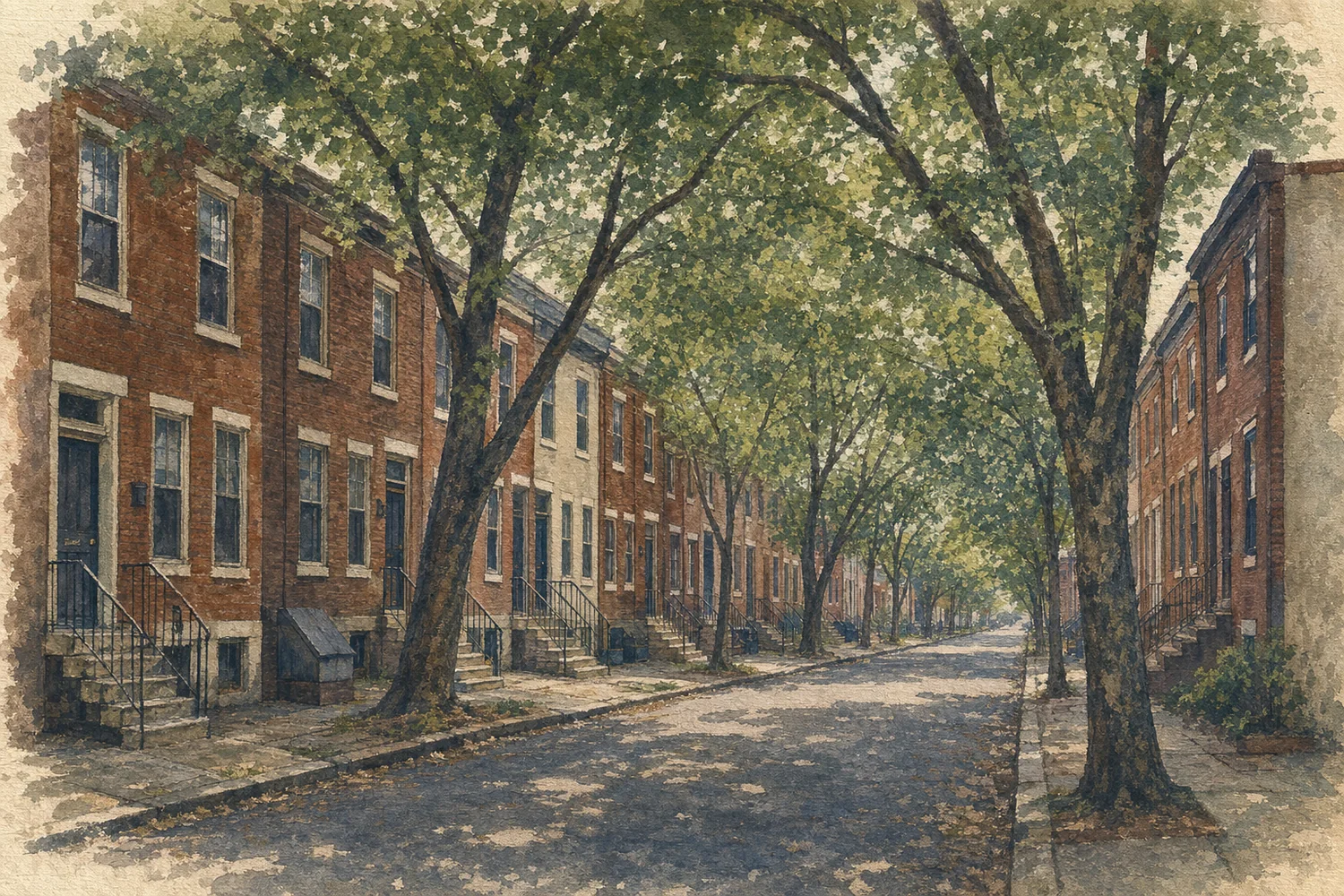
As you move deeper into the neighborhood, especially toward the interior blocks near 12th Street and around Hawthorne Park, the environment shifts. Streets feel more residential. You see more families, more dogs, more people using the park as part of their daily routine. The same neighborhood starts to feel calmer without losing its central location.
This difference is subtle on paper and obvious in real life. Two homes a few blocks apart can offer completely different day-to-day experiences. That is why locals rarely give general advice about Hawthorne without adding context. They will mention cross streets, proximity to the park, or distance from South Street because those details determine how the neighborhood actually feels.
For anyone considering living here, this is one of the most important realities to understand. You are not just choosing Hawthorne. You are choosing a specific version of Hawthorne based on your exact block.
Which version of Hawthorne you are choosing
You are not just choosing Hawthorne. You are choosing a specific version of it based on your exact block.
The northern edge
Closer to South StreetCloser to everything that makes that corridor busy: foot traffic, late-night movement, and weekend spillover that does not fully stop at the official boundary. More active on Friday and Saturday nights. The convenience is undeniable, but so is the noise.
The interior
Near 12th Street and Hawthorne ParkStreets feel more residential. More families, more dogs, more people using the park as part of their daily routine. The same neighborhood starts to feel calmer without losing its central location.
Bella Vista Hawthorne
The blended nameResidents blend the two names when talking to someone unfamiliar with South Philly, then tighten the definition again with another resident. The more precise someone gets with cross streets, the more you can assume they actually live there.
Hawthorne Park Is Not Just a Park. It Is the Neighborhood’s Proof Point
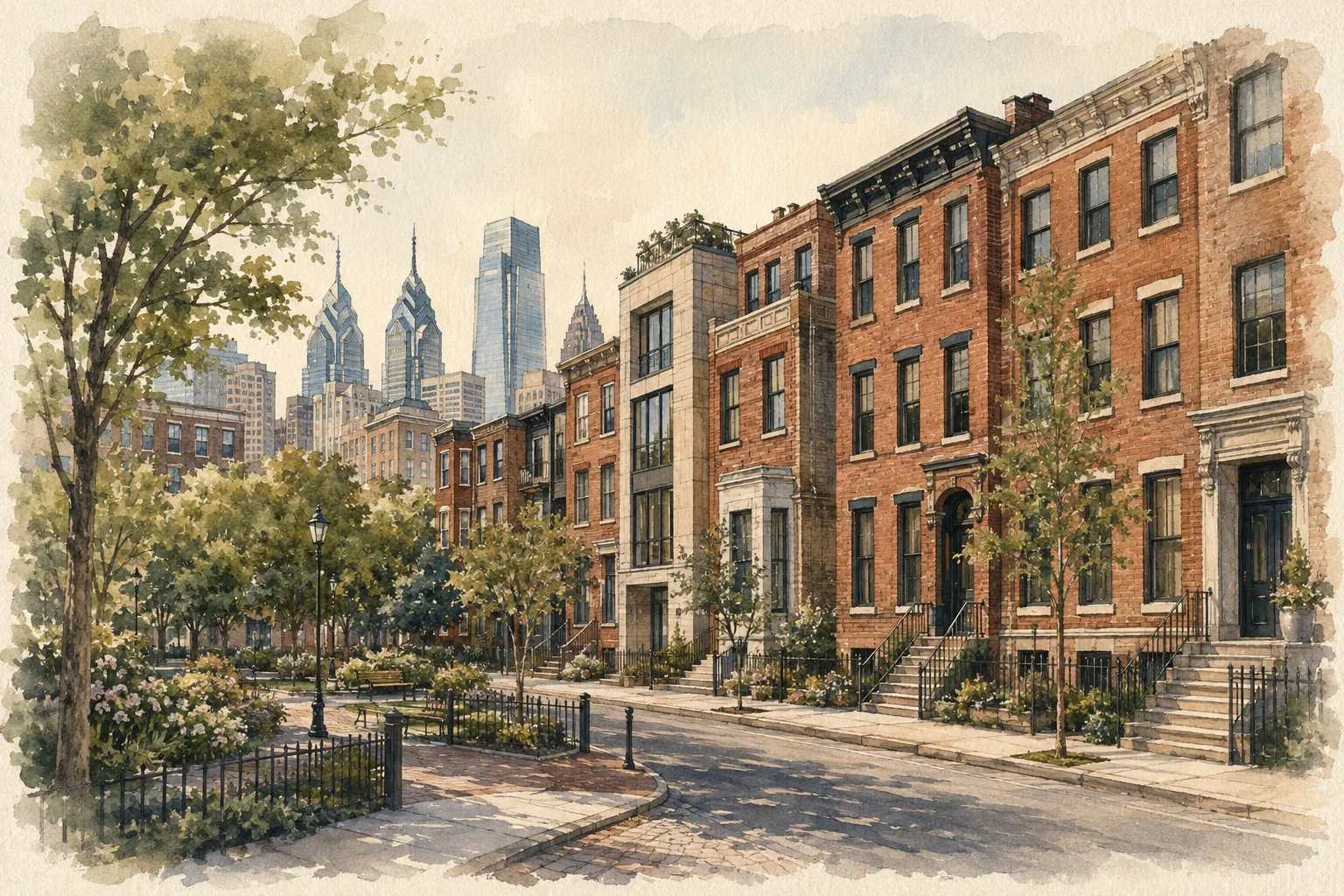
Hawthorne Park sits around 12th and Catharine and quietly defines the identity of the neighborhood. It is not the biggest park in Philadelphia and it is not designed to impress visitors. What it does instead is anchor daily life for the people who live nearby.
You see it in how often it comes up in conversations. People reference it not as an amenity but as part of their routine. It is where families spend time with their kids, where neighbors cross paths, and where community events create a sense of rhythm throughout the year. Movie nights, small performances, and seasonal gatherings give the park a steady presence without turning it into a crowded attraction.
Living near the park changes how Hawthorne feels. Blocks surrounding it tend to be quieter and more stable. There is a visible pattern of residents who prioritize proximity to this area because it adds something that is hard to quantify but easy to feel. It makes the neighborhood more livable on a daily basis.
The park also functions as a kind of shorthand among locals. When someone mentions being near it, it signals a certain type of experience within Hawthorne. It suggests a more residential environment, a stronger sense of community, and a slightly different pace compared to areas closer to South Street.
In a neighborhood where there are not many standout landmarks, Hawthorne Park becomes the one feature that consistently validates why people choose to live here. It is not about size or popularity. It is about how deeply it is woven into everyday life.
Monday Hawthorne Is Not Friday Hawthorne
One of the fastest ways to misunderstand Hawthorne is to experience it at only one point in the week. The neighborhood changes in ways that are subtle at first, then impossible to ignore once you notice the pattern.
On weekdays, especially Monday through Thursday, Hawthorne feels grounded. Mornings are quiet with people heading to work or walking dogs. Afternoons carry a steady rhythm of errands, school pickups, and short walks to nearby stores. Evenings settle into a calm that feels predictable. If you only saw the neighborhood during this window, you would describe it as consistently peaceful and residential.
By Friday night, the tone shifts. The proximity to South Street starts to show itself. Foot traffic increases. Voices carry further. You may hear groups moving through nearby blocks as the night progresses. It is not constant chaos, but it is enough to change how the neighborhood feels compared to earlier in the week.
Weekends amplify this difference. Saturday nights in particular bring a level of movement that reminds you how close you are to one of the busiest strips in the area. Sunday usually resets things, but even then, the contrast between weekday calm and weekend energy stays noticeable.
There is also a third version of Hawthorne that shows up during park events. Evenings with scheduled activities at Hawthorne Park create a localized sense of activity that feels communal rather than disruptive. You see more neighbors outside, more families gathered, and a different kind of energy that stays contained around the park.
Understanding Hawthorne means understanding timing. The same block can feel like two different places depending on the day and hour. Residents who enjoy living here tend to accept that rhythm rather than expect consistency.
Monday Hawthorne is not Friday Hawthorne
The guide describes Monday through Thursday as one weekday block, then names Friday, Saturday and Sunday individually.
The South Street Spillover Problem Locals Learn to Manage
Hawthorne’s location is its biggest advantage and one of its most persistent sources of friction. Being close to South Street means you are always a short walk away from restaurants, bars, and late-night activity. It also means that some of that activity does not stay contained.
The spillover is not constant, but it is predictable. Late at night, especially on weekends, groups drift away from South Street and pass through nearby blocks. Noise carries differently at those hours. Conversations get louder. Movement feels less controlled. Even if nothing directly happens on your street, you are aware of what is happening nearby.
Certain types of nights bring more of it. Warmer weather tends to increase foot traffic. Event-driven weekends or peak social seasons make the effect more noticeable. Some residents mention specific patterns tied to celebrations or group outings that tend to cluster around the same areas.
Locals do not frame this as a reason to avoid Hawthorne. Instead, they learn how to position themselves within it. Being a few blocks deeper into the neighborhood reduces how much of that spillover you feel. Choosing a street with less through traffic helps. Over time, residents understand which nights to expect more activity and adjust their routines around it.
This is one of the core trade-offs of living here. You gain immediate access to one of the city’s most active corridors, but you also accept that its edges extend further than the map suggests. People who stay in Hawthorne are usually the ones who find that balance acceptable.
Parking in Hawthorne Is Not a Small Annoyance. It Shapes Daily Life
Parking in Hawthorne is not something you deal with occasionally. It becomes part of your routine from the moment you move in. This is one of the few topics where there is almost no disagreement among residents. Finding a spot can be difficult, and planning around it becomes second nature.
The challenge comes from a combination of density and demand. Narrow streets, limited space, and a steady flow of residents and visitors all compete for the same curb spots. Even on a normal day, you may need to circle for a while or settle for parking a few blocks away from your home.
Certain areas offer slightly better chances. Streets bordering Hawthorne Park tend to have more consistent turnover. Some residents learn to check specific stretches first because they have a higher probability of opening up. Areas like 11th Street south of Bainbridge come up as part of these informal routines. These are not guarantees, but they are part of the local strategy.
There is also the option of paying for a spot. For many residents, this becomes a practical decision after dealing with the daily uncertainty of street parking.
One important detail is that you cannot rely on shared or public lots as a fallback. Spaces that look available are often full or inconsistent. Over time, residents stop treating them as part of their plan.
Parking shapes how people think about errands, arrivals, and even when they choose to leave their home. It is not just an inconvenience. It influences daily decisions in a way that outsiders often underestimate.
The Unwritten Rules of Living in Hawthorne
Hawthorne has a set of expectations that rarely get explained but are quickly learned by anyone who lives there. These are not official rules. They are patterns of behavior and understanding that define how the neighborhood functions.
One of the first is how people talk about going out. Residents do not typically frame Hawthorne itself as the place where they spend their nights. Instead, they use it as a base. Plans happen on South Street, in the Italian Market, or along nearby corridors. Hawthorne is where you return afterward. Treating it as a residential anchor rather than a destination aligns with how locals experience it.
Another rule is understanding what quiet actually means here. Quiet does not mean silent. It means manageable. It means that most nights are calm, even if some are not. Expecting complete stillness leads to frustration. Accepting a baseline level of city noise makes the neighborhood feel more consistent.
Language also signals whether someone is familiar with the area. Using outdated or overly formal names for parts of the neighborhood tends to stand out. Referring to places the way current residents do, especially when mentioning the park or nearby streets, reflects a more lived-in understanding.
There is also an unspoken awareness around location details. People who live here naturally reference cross streets, proximity to Hawthorne Park, or distance from South Street when describing their home. General descriptions are less useful because everyone knows how much those specifics matter.
Finally, there is a shared understanding that Hawthorne works best when you accept its balance. Residents who thrive here are the ones who lean into its walkability, use the park regularly, and build routines around the neighborhood’s rhythms. Trying to force it into a different kind of environment usually leads to disappointment.
Hawthorne’s Family-Friendly Reputation Is Real, but It Comes With Caveats
Hawthorne is often described as family-friendly, and that reputation holds up when you spend time in the neighborhood. You see it in the number of strollers on the sidewalks, kids playing in and around Hawthorne Park, and the general rhythm of people settling into routines that revolve around home, school, and nearby essentials. Compared to other parts of South Philly, there is a noticeable concentration of residents who are building long-term lives here rather than passing through.
The park plays a major role in reinforcing that identity. It gives families a consistent place to gather, and it creates a sense of familiarity among neighbors who see each other regularly. Over time, that repetition builds a quiet kind of community that feels stable and predictable in a way that many nearby neighborhoods do not.
At the same time, the family-friendly label comes with qualifiers that locals rarely ignore. Safety is usually described in relative terms. During the day and early evening, the neighborhood feels comfortable for most residents. As it gets later, especially closer to South Street, awareness becomes more important. This is not unique to Hawthorne, but the proximity to busier areas makes the contrast more noticeable.
There are also small, recurring issues that shape how families move through the neighborhood. Package theft comes up often enough that people develop habits around deliveries. Occasional reports of nearby incidents influence how residents think about certain blocks at night. None of these factors fully define the neighborhood, but they sit alongside the positive aspects rather than disappearing behind them.
What emerges is a balanced reality. Hawthorne supports a family-oriented lifestyle, but it does not remove the need to stay aware of your surroundings. Residents who are comfortable here tend to accept both sides at the same time.
The Before-and-After Story Still Shapes the Neighborhood
Hawthorne’s current identity sits on top of a very different past, and that history still shapes how people talk about the area today. Longtime residents remember when this part of South Philly looked and felt nothing like it does now. The presence of large public housing towers, often referred to as Hawthorne Square or the MLK Towers, defined the neighborhood for years before redevelopment changed the landscape.
The transformation that followed replaced those structures with a mix of housing and the creation of Hawthorne Park. This shift is one of the reasons the neighborhood now attracts families and professionals looking for a more residential environment within the city. The physical changes are easy to see, but the social and emotional impact is more complex.
For some residents, the redevelopment represents progress. It brought investment, improved public spaces, and a different kind of stability. For others, it represents displacement and a loss of what the neighborhood used to be. These perspectives exist at the same time, and they influence how people interpret the present version of Hawthorne.
You can still feel this divide in how people describe the neighborhood. Newer residents often focus on convenience, walkability, and quality of life. Longtime residents may frame the same changes in terms of what has been lost. Neither perspective fully replaces the other. They coexist, creating a layered understanding of what Hawthorne is.
This history also explains why certain names and references carry weight. When someone uses older terminology or references past structures, it signals a different relationship to the neighborhood. That context adds depth to conversations that might otherwise seem straightforward.
Gentrification in Hawthorne Is Not Abstract. It Shows Up in Taxes, Listings, and Tone
In Hawthorne, gentrification is not a distant concept or a topic reserved for broader city discussions. It appears in everyday details that residents deal with directly. Rising property taxes are one of the most immediate examples. Homeowners feel the impact as assessments increase, and conversations about affordability often start there.
Housing prices reinforce that shift. Listings in the area regularly reach levels that would have been difficult to imagine years ago. That reality changes who can move into the neighborhood. Some residents view this as a sign of growth and increasing demand. Others see it as a barrier that pushes longtime community members out.
There is also a noticeable tension in how people talk about value. Some describe Hawthorne as still being undervalued compared to nearby neighborhoods. Others question whether the cost aligns with what the area offers, especially when factoring in parking challenges and proximity to noise from South Street. This disagreement reflects a broader divide in how people interpret the neighborhood’s trajectory.
Development near Broad Street and Washington Avenue adds another layer. New construction and ongoing projects influence how residents think about the future of the area. For some, it signals continued improvement and investment. For others, it raises concerns about further displacement and changes to the neighborhood’s character.
These dynamics shape the tone of local conversations. Discussions about Hawthorne rarely stay purely positive or purely negative. Instead, they move between appreciation for what the neighborhood offers and concern about what it is becoming. Living here means engaging with both sides of that reality.
The Places That Quietly Hold Hawthorne Together
Hawthorne does not rely on major attractions to define itself. Instead, it is held together by a set of everyday places that residents return to repeatedly. These are not necessarily destinations for people coming from outside the neighborhood, but they are essential to the people who live here.
Hawthorne Park is the most visible example. It anchors daily routines and creates a shared space where residents interact naturally. Nearby, the Hawthorne Cultural Center adds another layer by hosting activities and programs that contribute to the neighborhood’s sense of identity. These spaces give Hawthorne a core that feels consistent even as the surrounding area changes.
Access to essential stores also plays a significant role. Being able to walk to Whole Foods, Acme, and the Italian Market shapes how residents structure their days. These are not occasional trips. They are part of a regular rhythm that reinforces the neighborhood’s convenience.
Transit access through the Broad Street Line further connects Hawthorne to the rest of the city. It allows residents to move beyond the neighborhood without relying entirely on a car, which becomes especially important given the parking challenges in the area.
There are also smaller, more personal anchors that carry emotional weight. Local businesses that have closed still come up in conversations because of the role they played in daily life. Their absence is felt not just as a change in options, but as a shift in the neighborhood’s texture.
Taken together, these places create a network that supports how Hawthorne functions. None of them dominate the neighborhood on their own. Instead, they work quietly in the background, shaping routines and reinforcing why people choose to stay.
The places that quietly hold it together
Hawthorne does not rely on major attractions. It is held together by everyday places residents return to.
Hawthorne Park
The most visible anchor. Where families spend time with their kids and neighbors cross paths. Movie nights, small performances and seasonal gatherings give it a steady presence without turning it into a crowded attraction.
Best for · The block-level shorthand — saying you live near it signals a whole kind of experience
Hawthorne Cultural Center
Adds another layer by hosting activities and programs that contribute to the neighborhood's sense of identity.
Whole Foods, Acme and the Italian Market
Not occasional trips. Being able to walk to all three is part of a regular rhythm that reinforces the neighborhood's convenience.
The Broad Street Line
Lets residents move beyond the neighborhood without relying entirely on a car, which matters given how hard parking is here.
Why Hawthornes Mattered More Here Than It Would Somewhere Else
In a neighborhood that does not rely on nightlife or major attractions to define itself, certain places carry more weight than they would in busier areas. Hawthornes was one of those places. It was not just another restaurant or bar; it filled a specific role that Hawthorne does not have many of. It has since closed, and this guide does not carry a verified closing date.
For many residents, it functioned as a reliable brunch spot, a casual place to meet neighbors, and a familiar setting that fit into everyday routines. Because Hawthorne itself is not where most people go out at night, the few places that do exist within the neighborhood take on added importance. They become part of the local identity rather than just options among many.
When a place like that disappears, the impact feels larger than expected. It is not just about losing a location to eat or drink. It is about losing a shared point of connection that helped define what it felt like to live here. In a neighborhood where most activity happens just outside its borders, internal anchors are limited. Each one matters more.
This is why the memory of Hawthornes continues to surface in conversations. It represents a version of the neighborhood where you did not always have to leave to find a social space. Hawthorne is primarily a place to live, with fewer built-in gathering spots than nearby areas.
What Newcomers Usually Get Wrong About Hawthorne
One of the most common misunderstandings is assuming that Hawthorne offers a consistent experience across the entire neighborhood. Newcomers often treat it as a single environment, expecting the same level of quiet, safety, and convenience on every block. In reality, the differences between locations just a few streets apart can change daily life in noticeable ways.
Another misconception is tying walkability to ease. Being able to walk to everything does not mean everything is easy. Parking remains difficult, noise varies depending on proximity to South Street, and certain routines require adjustment. Walkability provides access, but it does not remove friction.
There is also a tendency to assume that Hawthorne is simply an extension of Bella Vista. While the two areas are closely connected, residents distinguish between them in ways that matter. Blurring that distinction leads to expectations that do not always match reality, especially when it comes to block-level differences and neighborhood feel.
Newcomers also often underestimate the role of timing. Visiting during a quiet weekday afternoon can create an impression that does not hold on a busy weekend night. Without experiencing both sides, it is easy to form an incomplete view of the neighborhood.
Finally, many people assume that proximity to South Street is purely a benefit. While it adds convenience, it also introduces noise and movement that extend beyond its immediate boundaries. Understanding that dual effect is essential for setting realistic expectations.
The Real Local Trade-Off That Defines Hawthorne
Living in Hawthorne comes down to a set of trade-offs that residents weigh, sometimes without even realizing it. On one side, there is the convenience of being able to reach essential stores, transit, and major streets within minutes. There is also the presence of Hawthorne Park, which adds a layer of daily livability that is difficult to replicate elsewhere.
On the other side, there are consistent challenges that shape how people experience the neighborhood. Parking requires patience and planning. Weekend noise, especially closer to South Street, is part of the environment. Housing costs continue to rise, making entry into the neighborhood more difficult over time.
What makes Hawthorne work is not the absence of these issues, but the way they balance against what the neighborhood offers. Residents who stay tend to view the benefits as outweighing the drawbacks. They adjust their routines, learn the patterns, and find ways to make the environment work for them.
This balance is not universal. Some people find the challenges too disruptive or the costs too high. Others see the same factors and decide they are worth accepting in exchange for location and lifestyle. The neighborhood does not try to be everything. It offers a specific combination of convenience and compromise.
The real local trade-off
The neighborhood does not try to be everything. It offers a specific combination of convenience and compromise.
- Essential stores, transit and major streets within minutes on foot.
- Hawthorne Park, which adds a layer of daily livability that is difficult to replicate elsewhere.
- A block to come back to that still feels residential instead of chaotic.
- South Street, the Italian Market and nearby corridors as your night out, with Hawthorne as the base you return to.
- Parking that requires patience and planning, and shapes when you run errands or leave the house.
- Weekend noise, especially closer to South Street, as part of the environment.
- Housing costs that keep rising, making entry harder over time.
- Quiet that means manageable, not silent. Expecting complete stillness leads to frustration.
A Local Conclusion for Someone Considering Hawthorne
Hawthorne is best suited for people who understand that where you stand within the neighborhood matters as much as choosing the neighborhood itself. It rewards those who pay attention to block-level differences, proximity to the park, and distance from South Street.
It works well for people who value being able to walk to daily essentials and nearby destinations, while still having a place to return to that feels residential. It also suits those who are comfortable with variation. Weekdays and weekends feel different. Certain streets are calmer than others. Routines develop around these patterns rather than against them.
For someone considering Hawthorne, the most important step is experiencing it in multiple ways. Walk through it during the day. Spend time there in the evening. Notice how different areas feel depending on where you are standing. These details will tell you more than any general description.
In the end, Hawthorne is not defined by a single feature. It is defined by how its parts come together. The park, the walkability, the proximity to busier streets, and the everyday realities of living there all combine into a neighborhood that feels specific rather than generic. People who recognize and accept that specificity are the ones who tend to feel at home here.
Make it yours
Your Hawthorne household checklist
A short list to turn what you read into your own next steps.
Saved checks stay on this device when browser storage is available. This is a personal planning list, not a property inspection or professional assessment.
Sources & next steps
Useful advice should
show its working.
These resources support the reader tools above and help you check details for your own address, date, or plans.
- Philadelphia Parks & Recreation Finder
Find named public facilities and their contact information.
- SEPTA trip planner
Plan your date, direction and return journey; check service and accessibility details.
- Philadelphia Atlas
Look up an address and review available City property records.
The tools do not validate a universal family-fit claim or promise current business openings. Historical references remain separate from usable destinations.
Keep exploring