
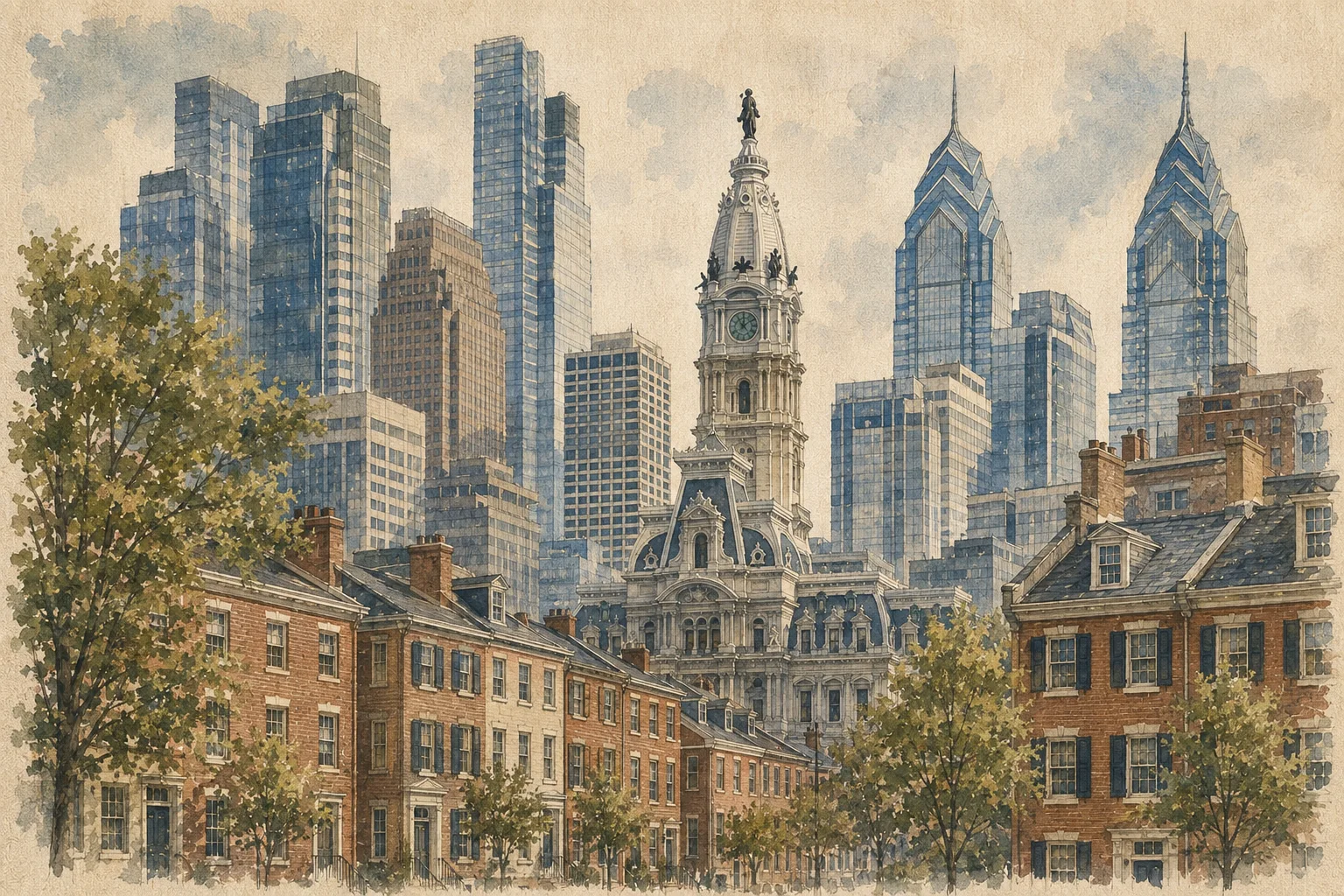
A little orientation
Plan an Italian Market shopping trip
Let the basket set the route.
Decide what you want to cook or carry home, then choose the vendors relevant to those purchases.
Check prices at the counter.
Compare the actual item, quantity and price unit for your visit rather than treating an undated price index as a budget.
Ask about each vendor’s arrangements.
Confirm payment, ordering and collection details directly; one market name does not mean every business operates in the same way.
A closer look
Make the market useful to your kitchen
Use South 9th Street and Carpenter Street as guide references, then follow confirmed vendor information.
Choose vendors for an actual meal.
Write a short shopping list, then use the market’s own directory to research the businesses that fit it. Confirm the vendors’ current details directly and leave an alternative for an ingredient, rather than assuming every listed item will be available.
A useful questionWhich meal or household need will your market purchases actually serve?
Source & next step ↗Compare like with like.
At each chosen vendor, check the item, quantity and price unit before deciding what to buy. Ask any ingredient, preparation or ordering questions directly; the market directory helps locate businesses but cannot establish the details of your particular purchase.
A useful questionWhat quantity and price unit are you comparing for the item you want?
Source & next step ↗Plan around the bags.
Choose transport and any loading arrangement before the basket gets heavy. If driving, check official parking information and the signs at the actual space; if taking transit, allow for your purchases and the final walk to your door.
A useful questionHow will you carry the full basket home without an improvised pickup?
Source & next step ↗The Italian Market is more than a place to shop. It is a living neighborhood ecosystem with its own rhythms, rules, and history. This guide is written to help you understand how the market actually works for the people who use it regularly. We focus on timing, etiquette, walking patterns, emotional history, cultural continuity, and the quiet details that shape the experience. If you follow this guide, you will shop with intention, move with confidence, and participate respectfully in a place that has fed this city for generations.
The Only Thing You Need to Understand Before Anything Else
If you walk the Italian Market like it is one single place, you will miss the entire point. The character of the street shifts at Carpenter Street so sharply that it feels like someone changed the station on a radio. North of Carpenter, the rhythm is slow and steady. Bread in the window, coffee being sipped at a lean, cheese counters doing quiet work, pastries leaving in boxes tied with string. South of Carpenter, everything becomes louder, quicker, more functional, more about feeding households and crews that need to eat now, not later.
Locals never describe the market as one thing. If someone from the neighborhood tells you to meet them in the market and does not specify where, they are always referring to the northern section between Fitzwater and Carpenter. If they say go down a little further, they mean keep walking south until the produce crates come into view. This unspoken geographic language is the first thing that separates someone who is just visiting from someone who moves comfortably here.
- South 9th Street
- Carpenter Street
- Passyunk
Schematic · not to scale
Learn the Real Map, Not the One on Your Phone
Sidewalk position is social communication here. If you are actually shopping, you walk close to the stalls. Your attention moves from bread to fruit to cheese to herbs. Your hands stay visible and your bag remains accessible. You will be bumped lightly by people who know where they are going and you accept that with no reaction.
If you are just passing through, you walk closer to the curb. This is known without being explained. The center lane is not for wandering. It is a working street lined with deliveries, hand trucks, restocking moves, and neighbors talking while doing real errands.
Hand-truck carriers come first. If you see a flat dolly or someone rolling a stack of crates, you step to the side immediately. There is no conversation about it. The market is a living system and you are moving inside it. Your job is simply to not become friction.
Once you feel the walkway pattern, everything else starts to make sense.
Timing is Everything
The Italian Market is not a place you visit randomly. It is a clock with rhythms that repeat every day, every week, and throughout the seasons. The difference between arriving at 9:15 in the morning versus 11:45 is the difference between a calm, confident stroll and a shoulder-to-shoulder push where every choice feels rushed.
Early morning between 6:45 and 9:00 is when the day opens. Bread is coming out. Trucks are unloading. Locals are doing low-conversation supply runs. This is not performance time. If you go during these hours, move with purpose and keep interactions short.
From 9:00 to about 10:30, the market is at its best. The air is still cool, goods are fresh, and the crowd is made up mostly of regulars, chefs, and neighborhood residents. This is when the market feels like a daily ritual rather than a spectacle.
Late morning into midday is when the workers, students, and weekend visitors start to blend together. The walkway becomes tighter. The lines get longer. Lunch crowds show up. The experience becomes social rather than meditative. If you come during this time, you need a route planned before arriving.
Saturdays between noon and mid-afternoon are a different reality entirely. That is the time for people who like noise and motion. If you find yourself overwhelmed by close contact or decision fatigue, avoid Saturday peak outright.
Weather also changes the emotional temperature of the market. In August heat, smells sit lower and the pace turns quick and direct. After rain, the market becomes quiet and reflective, and the deals improve because traffic is lighter. During the first real cold snap, vendors gather near metal drum fires for warmth and the walking lanes become narrower. These are the kinds of shifts you can only understand by watching the street breathe.
The Etiquette Code
Etiquette in the Italian Market is not polite small talk. It is awareness. Do not stop in the middle of the walkway to take photos. Step to the curb line. Do not handle every tomato to find the perfect one. Choose quickly, pay, move. After you place an order, you step aside immediately to let the next person forward. Your body language should always signal that you know this space works because everyone shares it.
Cash keeps the line moving here. Card transactions are accepted, but they slow the pace. If you want to participate in the market as locals do, carry bills in small denominations and keep them easily accessible.
The market responds to efficiency. The faster and cleaner your interactions are, the more welcomed you will feel. This is not about being rushed. It is about respecting the rhythm already in motion.
The North Market: Where Time Moves Slower
The northern stretch of the market between Fitzwater and Carpenter carries the memory of the old neighborhood most strongly. The sidewalks are a little tighter and the storefronts feel lived-in rather than recently styled. This is where you go when you want bread that tastes like someone has been feeding a starter for generations, pastries made for households rather than display shelves, and cheese counters where the person behind the counter understands the difference between sharp, salty, creamy, grassy, and aged just by looking at what is in your hand.
This part of the market is unhurried, but not leisurely. People are here on purpose. If someone is standing in line, they know exactly what they want. The pace is calm because everyone understands the flow. You do not browse here for the sake of browsing. You move from place to place with intention. If you are not sure what you want, watch two or three transactions first. The structure will reveal itself.
The north market is the place to start your day. Coffee here tastes like a morning that has belonged to this city for a long time. Bread is stacked in open windows where the steam is real and the crust has weight. Cheese shops hold their own world of texture and smell. This is the heart of the Italian Market as locals understand it.
The South Market: Where Function and Appetite Drive Everything
Once you cross Carpenter heading south, you can feel the shift immediately. The street becomes more open, louder, and busier. The produce stands are stacked high, and the vendors here move fast. Prices are lower, portions are built for feeding families, and the conversations are short and direct. This is not the place to stand still and think deeply about your next move. The pace is set by people who shop for entire households and restaurant kitchens.
This part of the market is where you find spice blends, fresh herbs in bunches large enough for soups and stews, bags of avocados that you will use the same day, and tortillas that feel warm from the stack. There are tacos, tortas, and grilled meats served without ceremony. The seating is improvised. The service is immediate. The flavor is the priority.
If the northern section carries memory, the southern section carries momentum. This is where the market feels alive in the present tense. If you want to understand what South Philadelphia eats in everyday life, start here.
Two markets, divided at Carpenter
Locals never describe the market as one thing.
The north market
Between Fitzwater and CarpenterSlow and steady — bread, cheese counters, pastries leaving in boxes tied with string.
The south market
South of CarpenterLouder and quicker. Prices are lower and portions are built for feeding families.
How to Eat Lunch Here Without Losing Your Mind
Lunch strategy in the Italian Market depends entirely on timing. If you arrive hungry between 11:30 and 1:30, you are stepping into the busiest window. If you do not have a plan, decision fatigue will hit fast. The key is to choose before you arrive.
For a simple walk-up meal, head south first. The taco stands and street grills move quickly and the food is ready in minutes. If you want something slow and deeply satisfying like a hoagie or roast pork, you need to commit to waiting a bit longer. In those cases, bring a drink or grab one at a nearby corner store and stay patient.
There is no shame in sitting on a curb, leaning against a brick wall, or eating while walking. That is normal here. Tables are limited and rarely empty. If you come with a group of more than two people, do not expect to sit together unless you are willing to be flexible and possibly stand to eat.
If the weather is nice, locals often carry their food two blocks east or west and find a stoop, a corner curb, or a low brick wall with shade. The market itself is not built for lingering. It is built for nourishment.
Festivals, Crowds, and How to Escape Them
The Italian Market Festival is loud, crowded, and full of movement. Families come out early. College students show up by afternoon. Street performers set up in any open gap. The air smells like grilled meat, pastries, fruit, and beer all at once. If you love sensory overload, these days are electric. If you need space to think while you eat, you will last about fifteen minutes before you need an exit strategy.
The smartest way to handle festival days is to move along 8th or 10th Street as your escape routes. Those side streets run parallel to the market and allow you to reset without leaving the area entirely. If you are overwhelmed, walk one block east or west, breathe, and return when ready.
If you want to watch rather than participate, stand near the fire drums in winter or near a corner awning in warmer seasons. You will see the full rhythm of the crowd without being pushed along with it.
Festival days are about observing how the market interacts with the rest of the city. Regulars move differently. Visitors treat every stall like a discovery. The most experienced market-goers know how to step in and out of the flow without losing their place.
The Real Price Index (So You’re Not Surprised)
The market does not have sticker shock if you come in with the right expectations. Prices shift slightly by vendor and season, but the general range holds steady.
Prices vary by vendor; check the posted menu or ask before ordering.
Carry cash. Plenty of stalls here move faster on bills than on a card, and a folded stack of ones and fives will take you further than a platinum card ever will.
How to Not Read as a Tourist
The Italian Market has its own social posture. Locals move through the street with intention and with minimal explanation. If you want to blend in, you change how you carry yourself before you change what you buy.
Bring one reusable tote. Not multiple shopping bags. One tote signals that you know how much you came here for and how long you intend to stay.
Do not narrate your selections. Silence is respect. The person behind the counter knows what they are doing. You are here to choose, pay, and keep moving. The conversation comes later if you become a regular.
Once you pick up your food, you never eat in the center walkway. Step to the curb, a stoop, or a side street. The walkway is for movement, not meals.
Bread is handled like something alive. Do not poke, squeeze, or fiddle. You choose with your eyes, ask for it, receive it carefully, and continue walking. The rhythm matters more than the words.
The Emotional Layer (Because This Place Has a Story)
The Italian Market is not just food stands and storefronts. It carries the memory of a neighborhood that worked with its hands. Butchers once sharpened knives on the sidewalk. Produce sellers competed by who could stack fruit higher without bruising it. Families lived above the shops they worked in.
Some of that is gone. Longtime butcher shops closed.
But the core has not disappeared. The bread is still real. The cheese counters still know their craft. The pastries are still made with technique rather than shortcuts. The lineage remains in the vendors who show up early and close late.
And the new wave is not erasing the old one. The Latino businesses in the southern half are just the next chapter of the exact same story: new arrivals bringing their food, their language, and their hustle to the same blocks. The market has always been a place where the newest Philadelphians shape what the rest of the city will eventually eat.
The One-Sentence Orientation Test
Locals navigate this area by language, not GPS.
If someone says South 9th, they are talking about this exact stretch.
If someone says the Market, they mean the northern section where the bakeries and cheese shops anchor the street.
If someone says go down a little further, they are telling you to walk south into the produce and taco zone.
If you can understand these three directions without asking for clarification, you are no longer a visitor.
Seasonality and Micro-Seasons
The Italian Market changes character throughout the year in ways that guide how locals shop and move.
Spring feels like a restart. Produce variety expands and the sidewalks gain more conversation. The return of outdoor seating at a few small cafes signals the shift. This is the season when mornings feel lively again and the lunch window is the most enjoyable time to visit.
Summer brings heat that sits low over the street. The air becomes heavier with the smell of fruit, cheese, and warm bread. People shop fast and with precision. Shade becomes valuable. You will notice locals carrying their tote in their non-sun-facing arm to reduce softening of bread or pastries.
In fall, produce colors deepen and the market slows into something steady and grounded. This is the season of comfortable pacing, where a Sunday morning here can feel like an entire ritual on its own.
Winter tightens the market into a smaller but more concentrated form. Vendors cluster with small heating setups and the sidewalks narrow. The best deals of the year often happen on cold, quiet weekdays. This is when regulars truly stand out because they know exactly who is open and when.
The market never really closes. It just changes shape. Understanding that shape is how you start to shop like you live here.
Seasonality and micro-seasons
The market never really closes. It just changes shape.
Produce variety expands and the sidewalks gain more conversation.
The move · The lunch window is the most enjoyable time to visit.
Heat sits low over the street, and shade becomes valuable.
The move · Carry the tote in your non-sun-facing arm so bread and pastries hold.
Produce colors deepen and the market slows into something steady.
The move · A Sunday morning here can feel like an entire ritual on its own.
Vendors cluster with small heating setups and the sidewalks narrow.
The move · Come on a cold, quiet weekday — the best deals of the year happen then.
Neighborhood Perimeter: Where to Walk Before and After
The Italian Market is not meant to be experienced in isolation. The surrounding blocks give it context.
If you walk north toward Christian and Bainbridge, the pace softens and you start to see neighbors walking dogs or heading to corner stores for everyday staples. This area is where people decompress after shopping.
Walking east gives you a direct view into residential life. Brick rowhomes, laundry lines, and stoops used as conversation spaces. This direction is quiet and grounding. It is where people reset before re-entering the market.
Walking west takes you toward Passyunk. That area has its own rhythm of restaurants, bars, and small specialty shops. If you want to sit and enjoy what you bought, you can usually find a low brick wall or a café table in this direction.
If you head south past Washington, be prepared for busy intersections and faster walking speeds. This is where the city’s daily work energy replaces the more intimate pace of the north side.
The market is the center, but the surrounding blocks are the exhale. Walking them gives you space to understand what the market means to the neighborhood rather than just what it sells.
The Respectful Exit Ritual
Leaving the Italian Market is part of the experience. Locals do not wander out abruptly. There is always a small closing gesture.
Bag tucked securely under one arm. Bread supported properly. Hands free so you can move easily. A slow step to the edge of the walkway. A short pause to look both ways before crossing 9th. This is not about drama. It is about acknowledging that you were part of something moving around you.
When you leave with intention, you signal that you understood you were not just shopping. You were participating. You respected the people who work here, the families who keep the lineage alive, the vendors who have learned the timing of the crowd like a second language.
A respectful exit completes the loop. You return to the neighborhood streets carrying not just food, but the rhythm of the market.
Make it yours
Your Italian Market shopping list
A short list to turn what you read into your own next steps.
Saved checks stay on this device when browser storage is available. This is a personal planning list, not a property inspection or professional assessment.
Sources & next steps
Useful advice should
show its working.
These resources support the reader tools above and help you check details for your own address, date, or plans.
- South 9th Street Italian Market
Start with the market’s own directory and event information.
- Philadelphia Parking Authority
Check official parking information; read the restrictions at the actual space.
The market directory supports vendor research. These tools do not supply current prices, stock or a universal shopping-day rule.