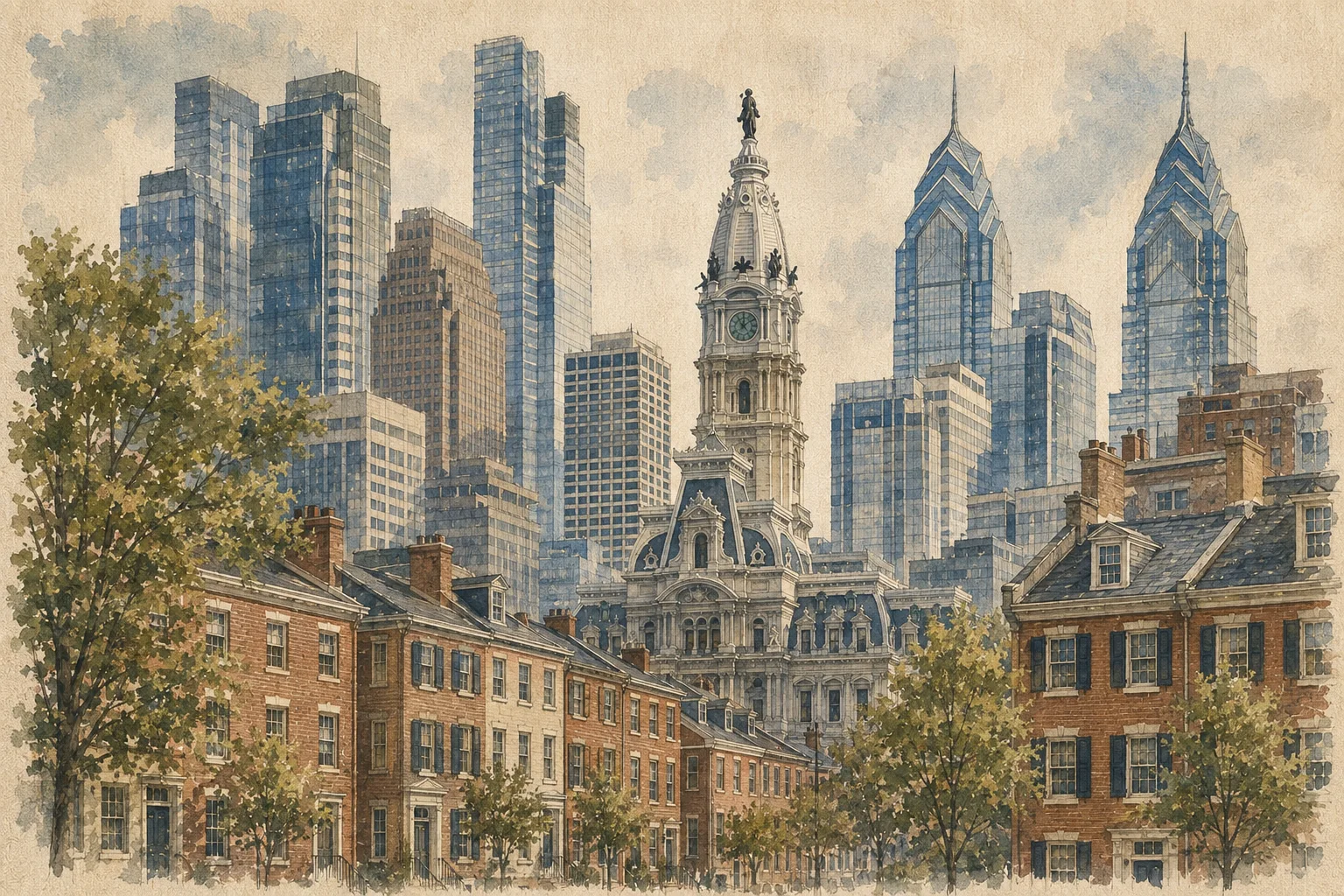
A little orientation
A Bella Vista visit built around your errands
Make a short food list.
Use the Italian Market, Sarcone’s or Angelo’s references as leads to check directly before deciding which stops belong in the visit.
Choose one park pause.
Research Palumbo or Cianfrani Park for the activity and access your group needs instead of assuming any nearby green space fits.
Keep the route manageable.
Plan between confirmed addresses and leave room to change the order rather than relying on a fixed local shopping ritual.
A closer look
A basket, a pause, a way home
These checks help you plan a modest outing around the places you actually want to use.
Confirm the vendor before the ritual.
Start with the Italian Market’s own directory and use the guide’s food names as research leads. Confirm individual ordering and payment arrangements directly, then choose stops based on what you want to buy rather than an assumed best shopping day.
A useful questionWhich vendors and ordering arrangements have you confirmed for this particular visit?
Source & next step ↗Choose between named parks.
Research Palumbo or Cianfrani Park through official facility information and identify the activity you want to plan. Ask about relevant access details before deciding how it fits between food stops, especially if children or a group are coming.
A useful questionWhat would your group need from a park pause between the food stops?
Source & next step ↗Connect the actual addresses.
Plan the journey between your confirmed destinations on or around the guide’s 9th and 10th Street references. Use the real addresses and your group’s walking needs, keeping the return with purchases in the plan rather than adding it afterward.
A useful questionHow will you carry your purchases through the rest of the outing?
Source & next step ↗Bella Vista is one of the most quietly beloved neighborhoods in Philadelphia. It is walkable, close-knit, and shaped by routines that have been carried through generations. The Italian Market sets its rhythm, the stoops hold its daily conversations, and the bocce courts anchor its sense of community. This guide looks at Bella Vista beyond its restaurants and rowhomes. This guide is meant to help you understand Bella Vista the way the people who live here do.
Quick Orientation (Where You Actually Are)
Bella Vista is one of those neighborhoods where maps and reality do not fully match. On paper, it sits just south of Center City, with easy access to South Street and Queen Village. In practice, people here navigate by feel, routine, and the rhythm of the Italian Market.
The heart of daily life runs along and around 9th Street. That is where the Market lives, where the sidewalks stay busy, and where the air shifts depending on time of day. If you stand along 9th, you are in the loud center. If you step even one or two blocks east or west toward 8th or 10th, the mood softens. Tree canopies appear. You start to hear dogs, children, and neighbors talking across stoops instead of cars idling for pickup orders.
Think of 10th Street as the quiet spine of the neighborhood. If 9th is the stage and main walkway, 10th is where residents move when they want to breathe easier or walk without weaving. Clinton Street offers the most picturesque walk for anyone who wants slower air and tall trees. 7th Street is the efficient north–south line when you just want to get somewhere.
Life here is not about distance. It is about choosing the right block at the right time.
Where you actually are
- 9th Street
- 10th Street
- Palumbo Park
- Cianfrani Park
Schematic · not to scale
The four streets that do the work
People here navigate by feel and routine, not by map. These are the lines they actually use.
9th Street
The stage and main walkwayWhere the Market lives, where the sidewalks stay busy, and where the air shifts depending on time of day. Stand along 9th and you are in the loud center.
10th Street
The quiet spineWhere residents move when they want to breathe easier or walk without weaving. In August it doubles as the shaded route.
Clinton Street
The picturesque walkTrees form a canopy and the rowhomes have strong architectural character. Early mornings are dog walks and short greetings.
7th Street
The efficient north–south lineBest flow when you want to move without stepping into Market foot traffic, and the route many residents use carrying groceries home.
The Vibe (The Human Atmosphere)
During weekday mornings, Bella Vista feels like a neighborhood that watches itself. Local shop owners open shutters. People walk their dogs. Parents do stroller loops between parks. Market vendors unload crates and hose down pavement. You hear languages mix. The pace is grounded and self-contained.
By Friday evening, especially once dinner service starts, Bella Vista shifts. People come in from outside the neighborhood. Some for dinner, some for pizza, some just to wander. The sidewalks near 9th get thick. Delivery drivers circle looking for a gap. You find yourself stepping between parked cars, bicycles, and strollers all sharing the same space.
Even in this busier mode, Bella Vista does not feel corporate or planned. It feels lived-in. The energy is a mix of long-established families, new residents who are still learning the internal etiquette, and small pockets of artists and remote workers who know exactly where to go and when to go to avoid the heavy footfall.
This is a place where you see the same faces multiple times a week, even if you never learn each other’s names.
The Italian Market (The Everyday Engine)
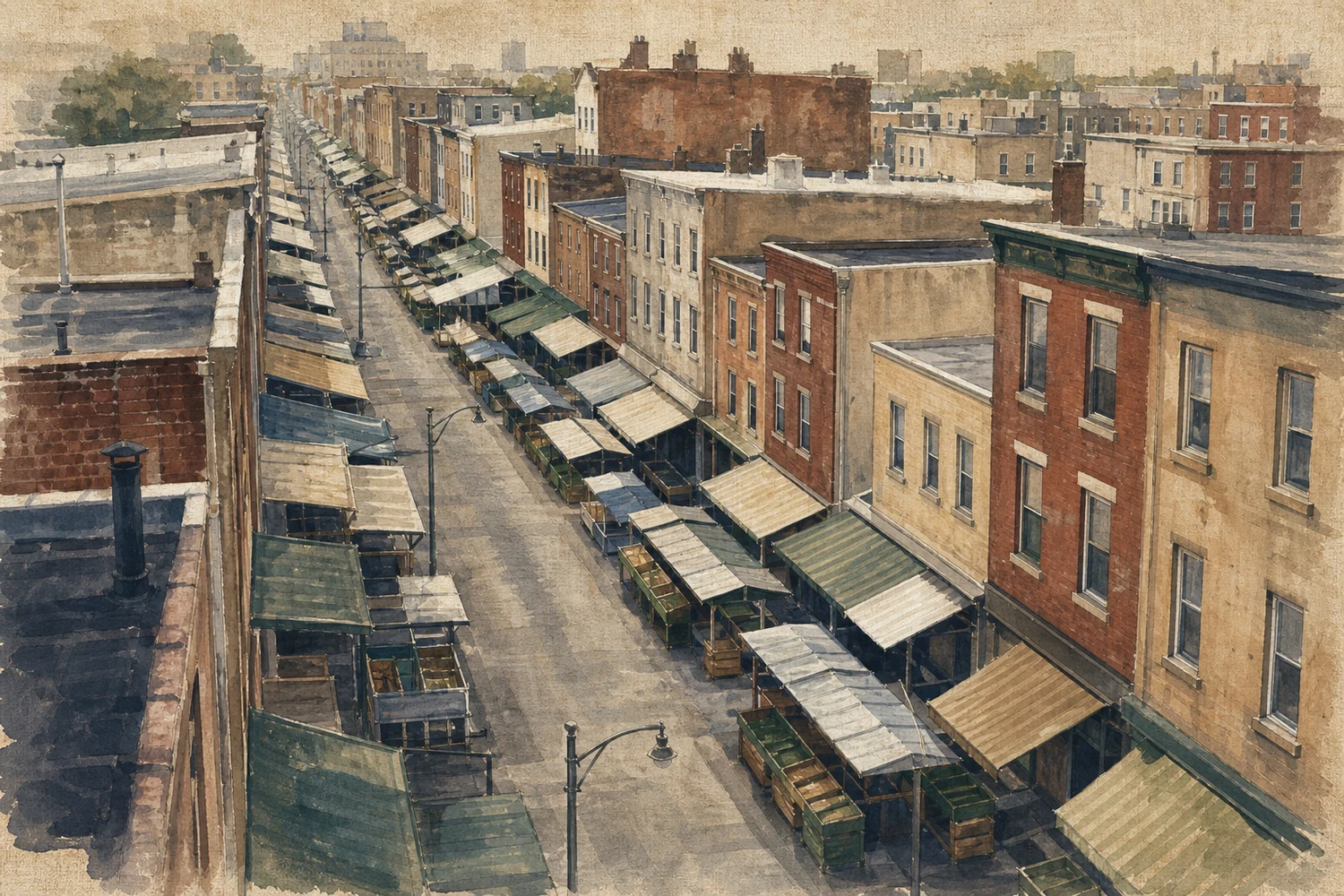
The Italian Market is not a landmark here. It is infrastructure. It is where the neighborhood’s meals start, where people casually greet each other, and where routines form. If you are shopping before 11am on a weekday, you are experiencing the Market the way residents do.
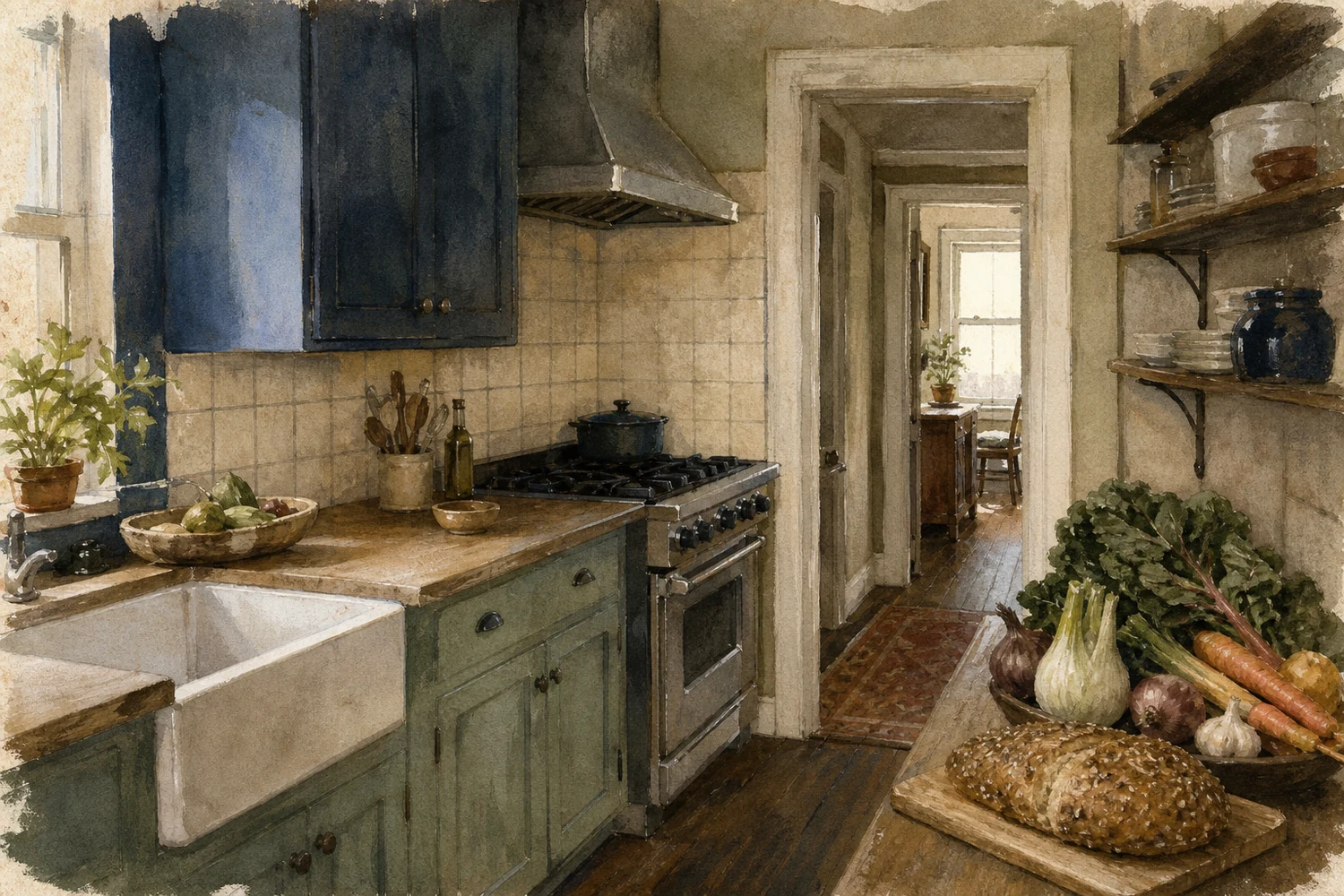
There are vendors that locals return to without thinking. A trusted cheese counter, a reliable seafood source, a bakery that feels like a non-negotiable part of the kitchen routine. The seeded loaf from Sarcone’s is not just bread. It is the baseline ingredient for sandwiches, breakfast plates, and Sunday dinner leftovers.
Families and older residents often know exactly which stalls have the best produce on a particular day. The Market is more alive earlier in the week, when deliveries are fresher and foot traffic is lighter. Weekends are workable, but you have to know how to move: keep your bags close, stay aware of curb lanes, and step aside when a vendor is wheeling out product.
This is not a place to browse slowly. It is a place to move with purpose and respect the small maneuvers that keep everything flowing.
Angelo’s Pizzeria (Love + Chaos)
Angelo’s is easily one of the most respected food spots in the neighborhood. The pizza and sandwiches are widely talked about and people come from across the city to get them. What matters from a resident perspective is the impact that popularity has on the surrounding blocks.
The intersection around 9th and Fitzwater can become congested very quickly. Cars idle. People cluster along sidewalks. Delivery scooters slide in and out of gaps. Parking enforcement is active around this corner.
Residents do not drive to Angelo’s. They walk. They approach from Christian or from 7th to avoid the thickest parts of the crowd. Many will pick up their food and carry it back home rather than attempt to eat right outside the shop. On busy nights the flow of people and vehicles on that corner can overwhelm even the most patient person.
The food is excellent. The experience around the location is something you learn to navigate with repetition and timing.
Parking in Bella Vista (How Locals Actually Handle It)
Parking is the part of Bella Vista that teaches you patience. The layout of the neighborhood is historic, not designed around modern car volume. If you treat parking like a find-and-grab activity, you will end up circling blocks and arguing with your steering wheel. Locals treat parking here like a routine with rules.
If you live here, you rely on your permit zone. Learning exactly which blocks fall inside your permit zone matters more than any map app, so check the posted signs and the current PPA permit map for your exact block. The border lines are not intuitive. One side of a street may be permit protected while the opposite side is two-hour parking. Residents memorize curb signs the same way they memorize grocery lists. Outsiders who do not read the signage closely get ticketed by PPA. The enforcement is not gentle.
If you are visiting, the most realistic approach is to park a few blocks away and walk in. People who live here avoid circling near 9th Street during peak times. Fridays and Saturdays between late afternoon and late evening are the most challenging. Residents adapt by planning errands early in the day and keeping the car in a spot once they find it.
The neighborhood rewards those who walk. Once you understand that, the stress decreases significantly.
Walking Routes (Which Streets to Use and When)
Bella Vista has a micro-grid of ideal walking routes depending on the time of day and your purpose.
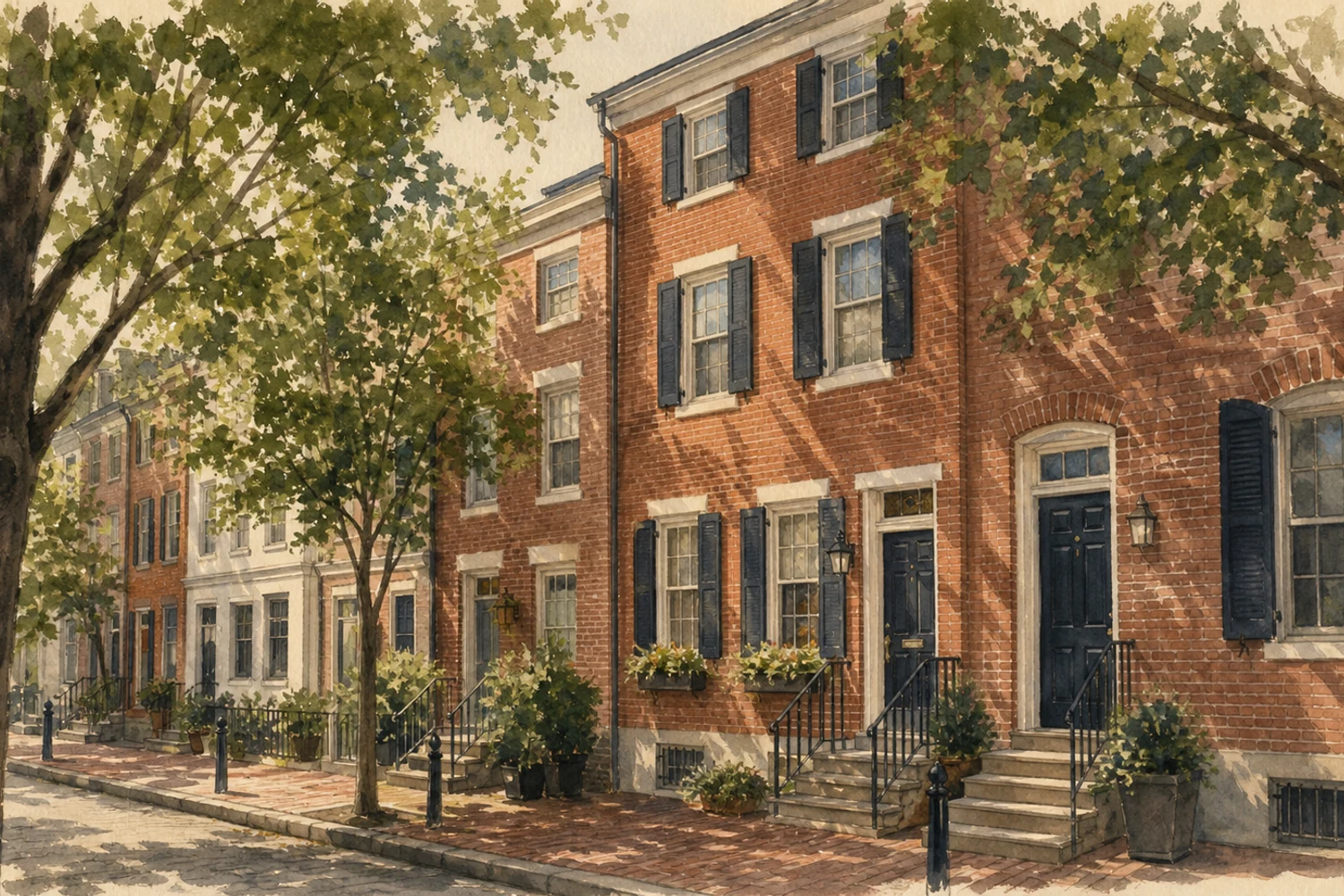
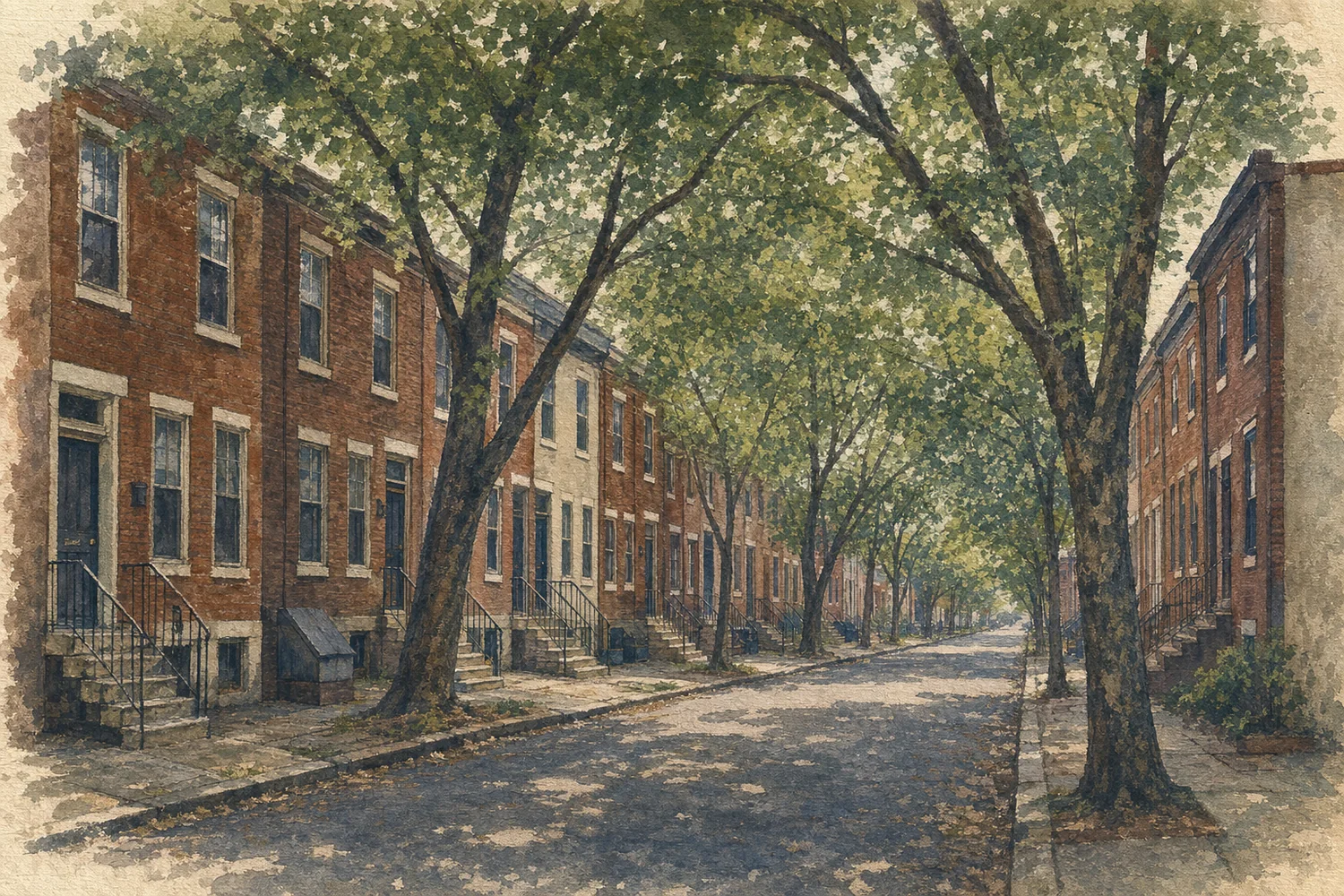
If you want a quiet walk, Clinton Street is the default choice. Trees form a canopy and the rowhomes have strong architectural character. In the early morning, people walk dogs and exchange short greetings. This street feels lived-in and gentle.
If you are trying to move north or south efficiently without stepping into Market foot traffic, 7th Street has the best flow. It avoids the heaviest cluster points around 9th and Fitzwater. It is also the route many residents use when carrying groceries home.
If you need to cross the Market, do it decisively. Walk with awareness for vendor carts, delivery hand-trucks, and people who stop abruptly when choosing produce. Right-of-way here is unstated but understood. People carrying crates or pushing carts have priority. Locals step aside naturally. It is rhythm, not rules.
Evening walks shift the mood. South Street can be loud. If you want a calm night walk, stay between 10th and 7th and avoid the major east–west cut-throughs when crowds are heavier.
Walking here is easy when you attune to the neighborhood’s pace.
Where You Actually Hang Out (Parks, Stoops, Third Places)
Social life in Bella Vista does not revolve around bars or scheduled outings. It happens in small pockets of public and semi-public life.
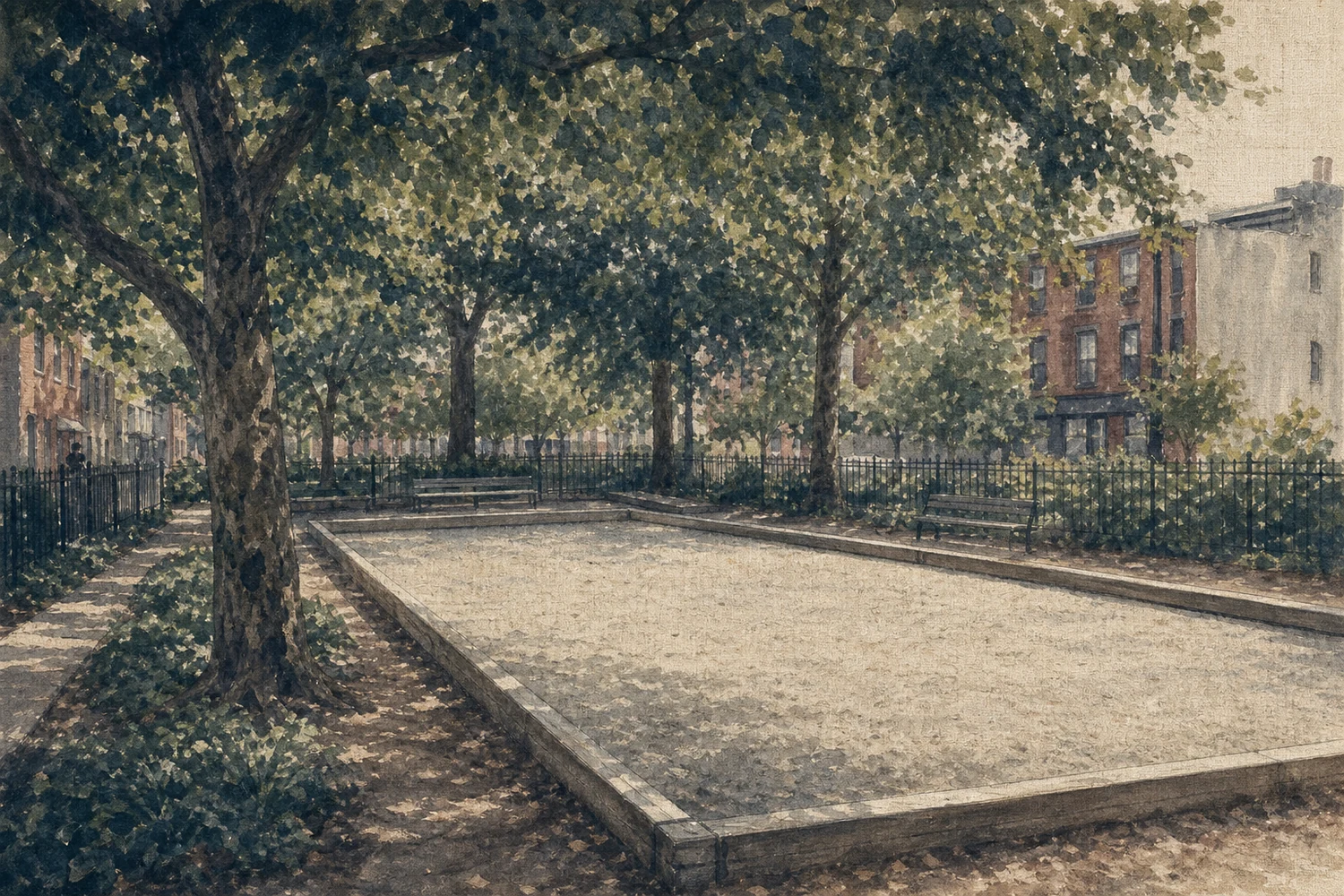
Palumbo Park is the main shared yard of the neighborhood. Daytime is families, dogs, and occasional soccer scrimmages. Late afternoon is pickup bocce at the courts on 10th and Carpenter. These games are casual, but they are not random. Regulars show up at similar times, bringing chairs and coolers. Participation is open, but there is a rhythm to approaching and joining. Watch one session before stepping in.
Cianfrani Park functions as a quieter pocket, especially on weekday mornings. People sit with coffee and let time pass a bit slower.
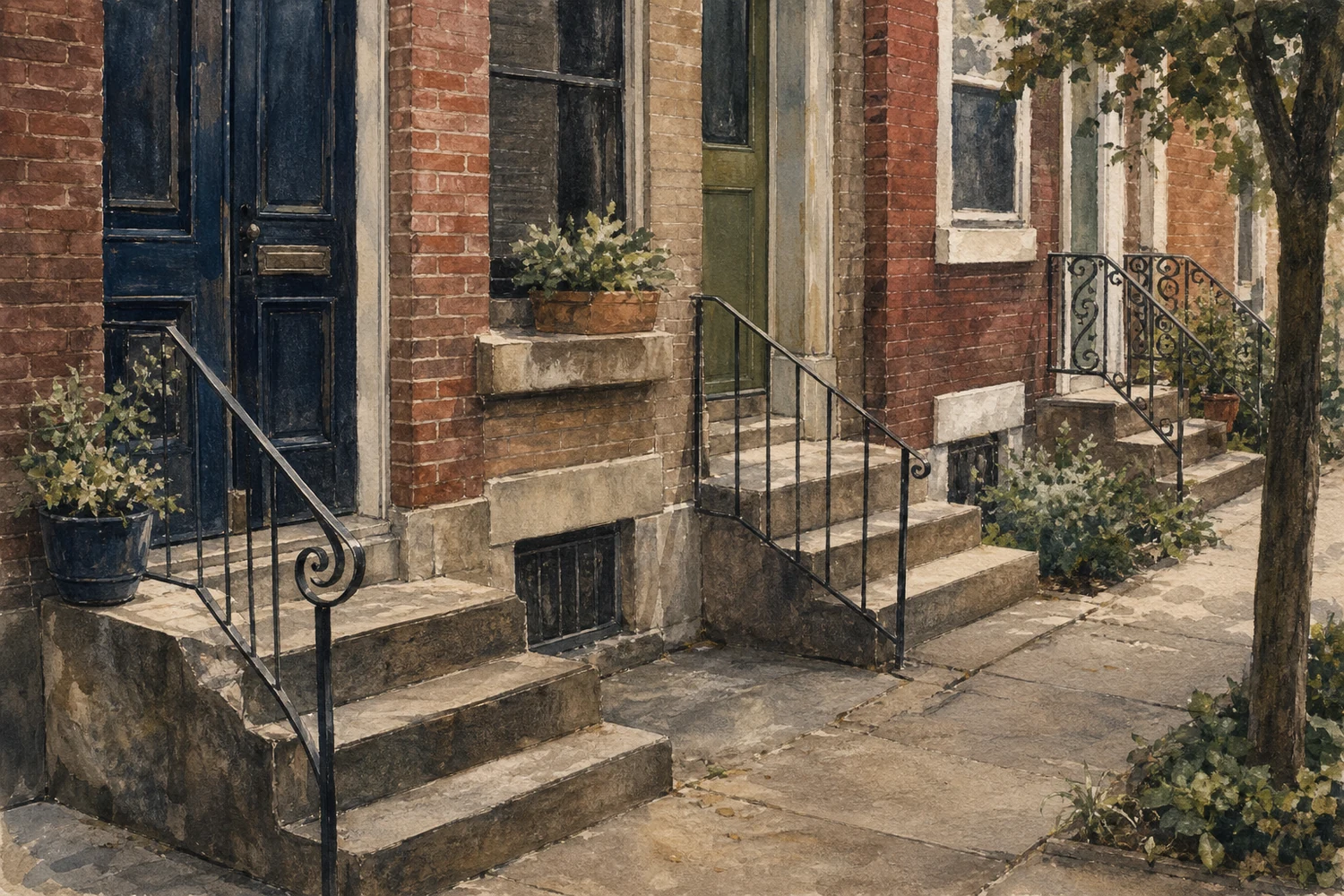
Stoops are another kind of social territory here. You will see neighbors who talk across steps without ever making plans. This is where small updates are exchanged: weather, market deals, neighborhood gossip, upcoming clean-ups. The stoop is as important as any café.
People meet each other by seeing each other repeatedly, not by introductions. That is how connection works here.
The everyday places
The Market, the bakery, the corner everyone routes around, and the two parks that hold the social life.
The Italian Market
Not a landmark here — infrastructure. Shop before 11am on a weekday and you get it the way residents do. It is more alive earlier in the week, when deliveries are fresher and foot traffic is lighter.
Best for · produce, early in the week
Sarcone's
The seeded loaf is the default starting point for sandwiches across the neighborhood. Trying to substitute another bakery is one of the small choices that signals unfamiliarity.
Best for · the baseline ingredient
Angelo's Pizzeria
One of the most respected food spots here, and people come from across the city. Residents walk, approaching from Christian or from 7th. On busy nights the flow of people and vehicles on that corner can overwhelm even the most patient person.
Best for · a walk-up, carried home
Palumbo Park
Daytime is families, dogs, and occasional soccer scrimmages. The main piece of common ground in the neighborhood.
Best for · a daytime loop
The bocce courts
Late-afternoon pickup games. Regulars show up at similar times with chairs and coolers. Participation is open, but there is a rhythm to joining — watch one session before stepping in.
Best for · a slow way in
Cianfrani Park
Best on weekday mornings, when people sit with coffee and let time pass a bit slower.
Best for · a weekday morning coffee
Eating in Bella Vista (How to Do It Right Without Getting Overwhelmed)
Bella Vista is dense with restaurants, bakeries, and specialty food shops. Doing it well means understanding timing and context.
Weekday lunches are calmer and show the neighborhood’s real character. This is when you get the best service, the cleanest counter experience, and the clearest sense of who actually lives here. Weekend brunches draw people from outside Bella Vista, especially on nice-weather days, so locals tend to adjust either by going early or skipping brunch entirely.
Dinner strategy depends on the type of place. For small dining rooms, early seating is the move. Many restaurants here operate with limited space and once they fill, the wait can feel long because the dining pace is relaxed. It is not about turning tables quickly. Nightlife here is understated. If you want a late drink, you are likely heading to a bar that feels more like a neighborhood living room than a scene.
Grocery patterns matter too. Produce comes from the Market. Bread from Sarcone’s. Specialty items are found by walking slowly and watching what experienced shoppers pick up.
Bella Vista rewards the person who learns each vendor’s rhythm and each restaurant’s best hours. If you adapt instead of forcing your schedule onto the neighborhood, the food experience becomes effortless and deeply satisfying.
The unspoken etiquette
The body calls these small gestures the thing that holds the neighborhood together. They are not written anywhere else.
- Greeting someone who is sweeping their sidewalk.
- Stepping aside for anyone carrying groceries in from the Market.
- Bringing trash and recycling out on schedule.
- Sitting on your stoop for ten minutes in the early evening.
- Blocking the sidewalk in front of a stoop.
- Noise after dark on residential blocks.
- Moving trash cans out of convenience.
- Substituting another bakery for Sarcone's seeded loaf.
When Bella Vista Changes (Seasonal, Daily, and Micro-Timing Shifts)
Bella Vista is not the same neighborhood all day or all year. The atmosphere changes with time, weather, and season.
Spring Saturdays are lively. The Market expands into the sidewalks and shoppers move slowly, taking time to choose produce and flowers. There is an open-air rhythm that signals the warm season has arrived. Fall weekends have a similar feeling, but with more sweaters and hot drinks.
Summer evenings have their own texture. People sit on stoops later. Windows stay open. Conversations drift from block to block. The air feels warm and familiar. Late July mornings are slower, especially after heatwave nights.
Winter brings a different pace. The Market is still active, but quieter. People move deliberately from store to store. The neighborhood feels more interior and reflective.
Weekdays and weekends have distinct tones. Weekdays show the real everyday life of Bella Vista. Weekends introduce visitors and energy from outside the neighborhood. Knowing the difference helps you choose your pace.
Safety, Awareness, and Night Movement Patterns
Bella Vista is generally considered safe, but like any urban neighborhood, awareness matters. Safety here is less about threat and more about understanding flow.
The Italian Market area has the most foot traffic and occasional congestion. During daylight hours, it feels open and active. At night, some blocks are quieter, especially when shops close and delivery trucks are gone. Walking with purpose and presence is the norm. Most residents choose well-lit routes after dark, typically sticking to familiar cross-streets like 7th, 8th, and Christian.
Package theft does happen, especially when deliveries are left in plain sight. Locals handle this by coordinating deliveries when someone is home, using secure drop-offs, or having neighbors hold items. This is more about being practical than fearful.
Noise is the more frequent concern than safety. Weekends near heavier foot traffic corridors can run loud late into the night. Residents who prefer quiet evenings choose blocks that sit one or two streets away from the Market activity.
Bella Vista works best when you stay aware of your surroundings, not because of danger, but because the neighborhood operates on shared courtesy and spatial awareness.
How to Become a Neighbor (Not Just Someone Who Lives Here)
Becoming part of Bella Vista takes consistency. You do not need to perform community involvement. You just need to show up regularly in the same spaces.
Stop by the same produce vendor instead of rotating every time. Say hello when you see familiar faces at Cianfrani or Palumbo Park. Join a clean-up day once. You do not have to lead anything. Just show you care enough to contribute. Repeat attendance is noticed.
If you have a stoop, use it. Sitting outside for even ten minutes in the early evening signals presence and openness. Many neighborhood friendships start this way.
Respect the established rhythms. Do not move trash cans out of convenience. Do not play music loudly on residential blocks at night. Bring your trash and recycling out on schedule. These are small signals of belonging.
Most of becoming a local is built through repetition, observance, and small gestures. Over time, the neighborhood remembers you. That is how Bella Vista folds you in.
The Three Protected Things
There are a few parts of Bella Vista that have meaning beyond preference. They are not trends, not amenities, not optional. They are signals of belonging.
The bocce courts at 10th and Carpenter function as a quiet center of gravity. Whether you play or just watch, you show respect by understanding that the game has history here. People who have played for years do not advertise it. The game teaches observation first. Joining happens slowly and naturally.
Sarcone’s seeded loaf is not just bread. It is the default starting point for sandwiches across the neighborhood. Trying to substitute another bakery is one of those small choices that signals unfamiliarity. Knowing when to walk in, how to wait, and which variation to choose comes with repetition.
Early morning Market hours are the closest thing to seeing Bella Vista’s core self. Before the day gets crowded, before visitors show up, the Market is calm. Vendors stock crates, neighbors buy produce, and conversations are shorter and quieter. If you want to understand the neighborhood’s real rhythm, watch it at 8:30 in the morning, not noon.
These are not rules written anywhere. They are shared understandings. Respect them, and the neighborhood opens more easily.
Micro-Seasons and Annual Rhythm
Time of year changes what Bella Vista feels like, and residents adjust without thinking. Living well here means knowing what shifts and responding accordingly.
| Time | What Changes | How Residents Adapt |
|---|---|---|
| April to May | Market crowd returns | Park further away and shop earlier in the day |
| Late June to August | Stoop culture peaks | Windows stay open and conversations carry later into the evening |
| August Nights | Heat collects on rooftops and brick | Fans run through the night and shaded walking routes like 10th become standard |
| September | Ideal bocce weather | Courts fill late afternoons and parks feel lively again |
| Thanksgiving to New Year | Market activity spikes with holiday cooking | Grocery trips happen before 9 a.m. to avoid the rush |
| January to February | Quietest months | Best time to meet neighbors in a slow, unforced way |
The neighborhood does not stay the same. It moves with weather, daylight, and shared habits. Learning these shifts helps you sync with everyone else instead of working against the grain.
The annual rhythm
The body's own micro-seasons table: what changes, and how residents adapt to it.
Market crowd returns.
The move · Park further away and shop earlier in the day.
Stoop culture peaks.
The move · Windows stay open and conversations carry later into the evening.
Heat collects on rooftops and brick.
The move · Fans run through the night and shaded walking routes like 10th become standard.
Ideal bocce weather.
The move · Courts fill late afternoons and parks feel lively again.
Market activity spikes with holiday cooking.
The move · Grocery trips happen before 9 a.m. to avoid the rush.
The quietest months.
The move · Best time to meet neighbors in a slow, unforced way.
Local Glossary (How People Actually Talk Here)
This is how Bella Vista communicates itself. Some of these words look simple when written out but the meaning changes based on how and when they are used.
The Market: Refers to the Italian Market. No one says the full name in conversation. If someone says they are going to the Market, they mean 9th Street.
22 Tag: This is not just a parking permit. It is shorthand for knowing where you belong and where you can reasonably expect to park.
Stoop culture: The practice of sitting on your front steps to talk, watch the block, and form relationships without planning anything.
Bocce: A game, but also a social entry point. You participate by showing up consistently, not by asking to be included.
BYO: Bring your own wine or beer. Many restaurants are designed around this and it changes pacing and mood of meals.
jawn: A flexible placeholder word. The meaning depends entirely on tone and context. Used casually and confidently.
Knowing these terms is not about vocabulary. It is about understanding the social function behind them.
Settling In (The Adjustment That Makes Bella Vista Feel Like Yours)
Living in Bella Vista becomes easier the moment you stop trying to organize the neighborhood around your schedule and instead begin moving with the rhythms already in place. The people who feel at home here are not the ones who learn every restaurant menu, but the ones who learn which streets to walk at different times of day. The Market teaches its own timing. The parks teach their own social patterns. The stoops teach how to say hello without making it complicated.
Start by choosing one route you walk often. Let that be your anchor. Pick one vendor at the Market and return to them regularly. You do not need to introduce yourself. Familiarity happens on its own. If someone recognizes you once, that recognition will repeat the next time.
Sit outside sometimes, even if only for a few minutes. Let people see you. Let the neighborhood remember your face before your name. Step aside when someone is carrying something heavy. Sweep your sidewalk without being asked. Keep noise low on weeknights, especially on narrow blocks where sound carries easily. These are small gestures, but here, small gestures are how people know you respect the place.
At some point, without noticing exactly when, you stop navigating Bella Vista and begin moving through it with ease. You know which bakery line moves faster. You know where to stand in the Market so you are not in the way. You know which blocks stay loud and which blocks stay calm. You know where you can always find parking at night, even if it is a few streets over.
That is when Bella Vista stops being a neighborhood you live in and becomes one you belong to.
You find yourself saying hello to people before you remember how you know them. You recognize the early morning deliveries. You hear the difference between weekday quiet and weekend energy. You understand the neighborhood as a set of conversations that never need to be spoken directly.
Belonging here does not happen all at once. It happens slowly, through repetition, observation, and steady presence.
And one day, you will walk down 9th Street in the early morning and realize you are no longer watching Bella Vista.
You are part of it.
Make it yours
Your Bella Vista outing notes
A short list to turn what you read into your own next steps.
Saved checks stay on this device when browser storage is available. This is a personal planning list, not a property inspection or professional assessment.
Sources & next steps
Useful advice should
show its working.
These resources support the reader tools above and help you check details for your own address, date, or plans.
- South 9th Street Italian Market
Start with the market’s own directory and event information.
- Philadelphia Parks & Recreation Finder
Find named public facilities and their contact information.
- SEPTA trip planner
Plan your date, direction and return journey; check service and accessibility details.
These tools avoid the guide’s disputed Clinton Street route and social-etiquette claims. Individual vendor information still needs direct confirmation.
Keep exploring