
A little orientation
Make Spruce Hill part of a real week
Choose a park activity
Check the activity and entrance you need rather than treating every Clark Park visit as the same outing.
Test the whole journey
Include the walk beyond Baltimore Avenue and the return trip in your commute comparison.
Ask before altering details
Check a property's historic status and the relevant City guidance before planning exterior changes.
A closer look
Choose a Spruce Hill question
Use the guide's places as starting points for a visit or a more focused home conversation.
Make a modest park plan
Find Clark Park through the City's facility information and identify the part you intend to visit. If a game, program, or organized activity matters to your trip, contact its organizer before building the rest of the day around it.
A useful questionWhich part of Clark Park fits the outing I want?
Source & next step ↗Check the journey from your doorway
Use your prospective Spruce Hill address in SEPTA's planner and compare the route to a regular destination. Include the walk to the boarding point and the trip home so the avenue's convenience is tested against your actual week.
A useful questionHow does this route work at my usual finishing time?
Source & next step ↗Identify the decision before the repair
If a Spruce Hill home raises questions about windows, doors, or other exterior details, start with the City's historic-property guidance. Establish the property's status and ask which review applies before treating a cosmetic change as a simple purchase.
A useful questionWhich property details need review before I plan changes?
Source & next step ↗At Hometress, we spend a lot of time in Spruce Hill homes, talking to residents, moving through blocks at different hours, and seeing how people actually live here day to day. This guide is built from that lived reality. It is not about rankings or selling points. It is about how Spruce Hill really works, what locals adjust to without thinking, and why so many people who move here end up staying longer than they planned.
If you are considering Spruce Hill, this guide is meant to help you understand the neighborhood the way residents do, not the way listings describe it.
Spruce Hill Is Not a Label. It Is a Border You Learn to Navigate
Spruce Hill does not behave like a single neighborhood with a single personality. It behaves like a line you cross without realizing it, and then slowly learn to read. People who move here expecting a clean definition of West Philly usually struggle at first, not because the area is hostile, but because it requires attention. Direction matters. Timing matters. The way a block feels at noon can be unrecognizable by early evening in winter, even if the address never changes.
Locals do not describe Spruce Hill as simply safe or unsafe. They talk about sides, edges, and pockets. The conversation almost always starts with orientation rather than statistics. East feels different from west. Being closer to Clark Park feels different from being three or four blocks away. You start hearing phrases that sound vague until you live here long enough to decode them. Clark Park side. Further west. That stretch. Those quiet blocks. None of this shows up on a map, but it governs daily decisions.
This is why Spruce Hill attracts people who like complexity more than certainty. The neighborhood rewards people who notice patterns and adjust, not people who expect the same experience everywhere. Once you understand that Spruce Hill is a border you read rather than a place you label, the rest of the neighborhood starts to make sense.
Where Spruce Hill sits
- Clark Park
- Baltimore Avenue
Schematic · not to scale
The Invisible Map Locals Carry in Their Heads
Spruce Hill looks continuous on Google Maps, but locals carry a different map entirely. It is built from lighting, foot traffic, routine, and proximity to Clark Park rather than street names alone. Two blocks can feel worlds apart depending on how many people are around and whether there is movement or stillness.
Clark Park functions as the primary reference point. Being near it is shorthand for a certain baseline of activity, visibility, and comfort. The closer you are, the more the neighborhood feels watched and lived in. As you move farther away, especially westward, the environment becomes quieter. Quiet is not automatically bad, but it demands more awareness, particularly after dark.
This invisible map is not static. It shifts with the seasons. In summer, when it stays light later and Clark Park spills into the evening, the neighborhood feels larger and more forgiving. In winter, when darkness comes early, the map tightens. Routes shorten. People stick closer to familiar paths. Understanding Spruce Hill means understanding that the neighborhood redraws itself depending on the hour and the month.
The invisible map locals carry
None of this shows up on a map, but it governs daily decisions.
Clark Park side
The reference pointBeing near it is shorthand for a certain baseline of activity, visibility and comfort. The closer you are, the more the neighborhood feels watched and lived in.
Further west
Away from the parkThe environment gets quieter as you move away. Quiet is not automatically bad, but it demands more awareness, particularly after dark.
Baltimore Avenue
The backboneWhere errands blend into meals and casual plans form without effort. Even when the park shifts moods with the seasons, the avenue stays steady.
Why Safety Is Always a Debate and Rarely a Surprise
Safety in Spruce Hill is not a single conversation. It is an ongoing argument layered on top of lived routines. Some people insist concerns are overstated. Others insist they are underreported. Both positions coexist because they are rooted in different experiences, different blocks, and different habits.
What matters more than the argument is how residents actually behave. People here plan around seasons. The first month after large student move-ins brings a noticeable shift in awareness. Winter evenings, when darkness arrives before most people are done with work, change the way streets feel. These are not abstract fears. They are patterns that repeat often enough to shape behavior.
Lighting and foot traffic matter more than labels. A block with steady movement and open sightlines feels fine even late. A block that is dim and empty raises caution even during hours that seem reasonable to outsiders. This is why residents talk about routes rather than destinations. The goal is not to avoid the neighborhood, but to move through it intelligently.
There is also a quiet skepticism toward official crime dashboards. People rely more on alerts, neighborhood chatter, and personal observation than on aggregated maps. That does not create panic. It creates practical habits. Do not leave anything visible in a car. Do not assume a quiet block is safer just because it looks residential. Adjust your routine when seasons change. This is not fear-driven living. It is local literacy.
Clark Park Runs the Neighborhood More Than Any Street Does
Clark Park is not just a green space. It is the operating system that sets the rhythm of Spruce Hill. The neighborhood feels different depending on what the park is doing at any given moment. When the park is active, the surrounding blocks feel active. When it quiets down, the neighborhood contracts.
Saturday mornings are the clearest example. Between late morning and early afternoon, the park becomes a social engine. People arrive not just to buy produce, but to see neighbors, linger, and orient their weekend. Streets around the park carry more movement. Time slows slightly. The neighborhood feels open and communal in a way it does not on a Tuesday.
Clark Park also has micro-locations that locals use as navigation. The chess area. The open fields. The places where dogs gather. These are not landmarks in a guidebook sense, but they are how people explain where they will be or where to meet. Events like summer performances and outdoor movies extend the park’s influence into the evening, creating nights that feel shared rather than isolated.
At night, the tone shifts. The park is still central, but awareness increases. Patrol presence becomes noticeable. People pass through more deliberately. This day to night contrast is one of the clearest lessons Spruce Hill teaches newcomers. The same place can be welcoming, playful, and social in the afternoon, then require more intention after dark. Learning that rhythm is part of learning the neighborhood itself.
The Calendar You Do Not See Until You Live Here
Spruce Hill runs on a quiet internal calendar that has little to do with official seasons and everything to do with routines. The neighborhood feels most open in late spring and summer, when Clark Park becomes a daily extension of people’s living rooms. Evenings stretch longer, movement increases, and the mental map residents use expands outward. People take longer routes home because they can. Familiar faces appear more often without planning.
Certain weekends act as anchors. The large spring fair that takes over Clark Park each year is not just an event but a signal that the neighborhood has shifted into its outward-facing mode. Families, longtime residents, and newcomers all occupy the same space for a full afternoon. The same thing happens again in fall, when Halloween traditions bring children and parents into the streets and the park in a way that briefly resets social boundaries.
Then there is winter. Darkness arrives earlier, and the neighborhood contracts. Routes shorten. People linger less. Streets that felt ordinary in July feel more exposed in January, even if nothing has technically changed. Longtime residents adjust automatically, while newcomers often notice only after a few uncomfortable walks. This seasonal tightening and loosening is one of the most important rhythms to understand if you plan to stay.
Baltimore Avenue Is Where Daily Life Actually Happens
Baltimore Avenue does not announce itself as a destination, but it quietly carries most of the daily convenience that makes Spruce Hill livable. This is where errands blend into meals and casual plans form without effort. People talk about the neighborhood in relation to Clark Park, but they live it along Baltimore Avenue.
Food is the most obvious layer. The stretch supports everything from quick weekday meals to places people default to when friends visit. Certain spots get referenced casually, without explanation, which is how you know they matter. Happy hour here means familiarity, not novelty. Eating out rarely requires a decision-making process. You just go.
What makes the avenue important is not just the food, but the way it reduces friction. You can walk, eat, run into someone you know, and still be home quickly. This is also where the neighborhood feels most consistent across time. Even when the park shifts moods with the seasons, Baltimore Avenue remains steady. It is the backbone that keeps daily life predictable even when the rest of the neighborhood feels in flux.
The Space Equation That Pulls People West
Many people arrive in Spruce Hill after doing mental math that has nothing to do with aesthetics and everything to do with space. The comparison often starts with Center City or Rittenhouse, where location prestige comes at the cost of room to live. In Spruce Hill, the trade feels obvious once you see it in person.
Apartments are larger. Houses are deeper. Storage exists. Porches matter. People talk about gaining entire extra rooms for the same rent they once paid for far less. This is not framed as a compromise. It is framed as an upgrade that required leaving a zip code rather than lowering expectations.
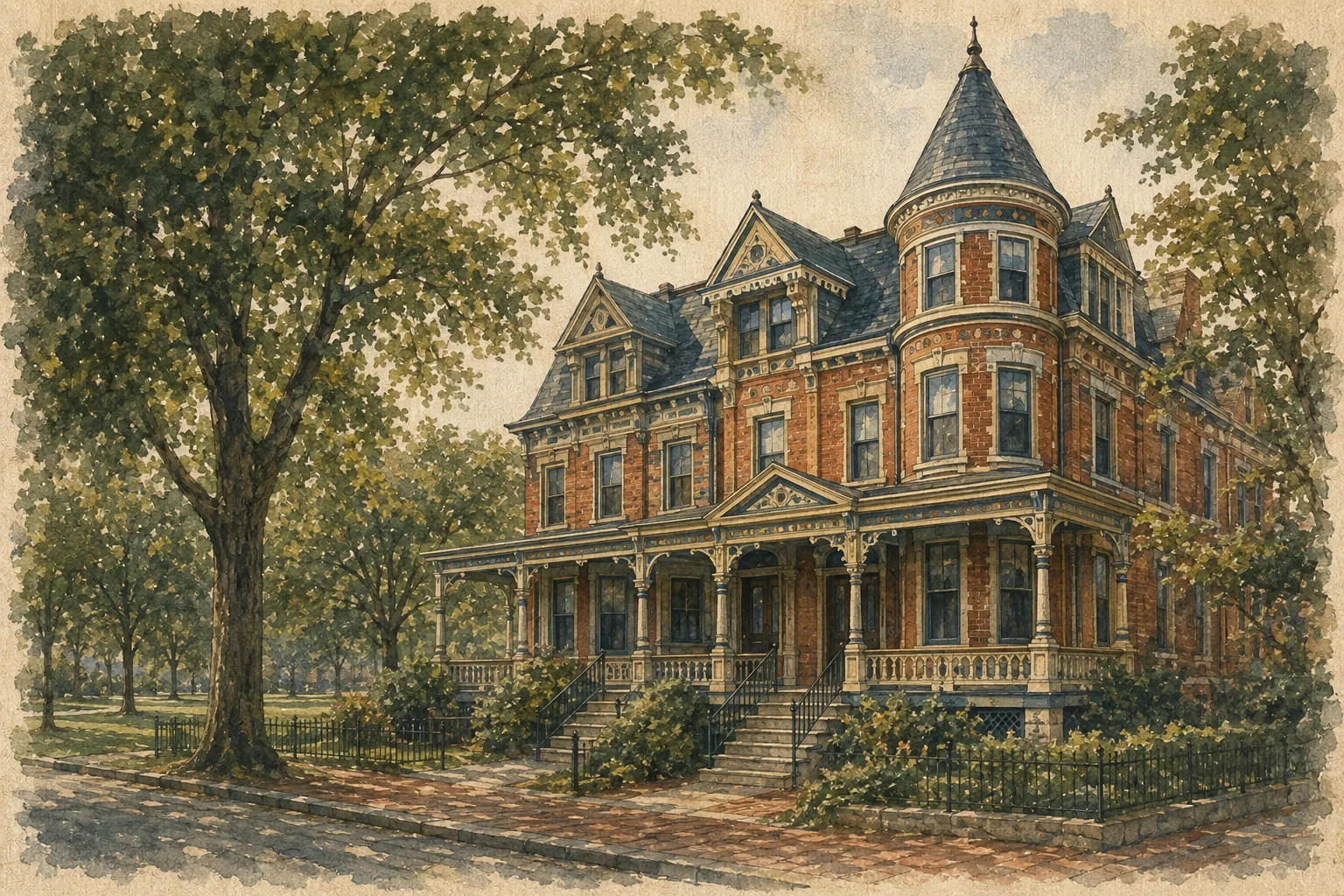
The architecture reinforces this feeling. Victorian homes here are not treated as historical curiosities but as functional living spaces that still work for modern life. Even at higher price points, the value proposition is tied to scale and character rather than luxury finishes. Living here often feels like choosing comfort and longevity over status, and most people who make that choice sound relieved once they settle in.
What pulls people here, and what you adjust to
Spruce Hill is not judged as good or bad. It is judged as working or not.
- Apartments are larger, houses are deeper, storage exists, porches matter
- Victorian homes treated as functional living spaces, not historical curiosities
- You can walk, eat, run into someone you know, and still be home quickly
- Clark Park sets the rhythm, and Saturday mornings turn it into a social engine
- In winter the map tightens: routes shorten and people stick to familiar paths
- A quiet residential block is approached with more intention after dark
- Anything visible inside a vehicle is assumed to be temporary
- Familiar local businesses closing, which people read as the ground shifting
The Quiet Tension Between Preservation and Change
Spruce Hill carries a tension that is easy to miss if you focus only on its beauty. The neighborhood is proud of its historic fabric, but that pride is not universally interpreted the same way. Preservation feels protective to some and restrictive to others, and both sides are rooted in lived experience rather than abstract policy.
Historic designation conversations surface periodically and then recede, but the underlying unease remains. Some residents see preservation as the only thing preventing the neighborhood from losing what makes it special. Others worry that it freezes the area in a way that limits adaptation and access. This debate rarely plays out loudly on the street, but it informs how people talk about development, renovations, and who gets to stay.
You can feel this tension in smaller ways as well. The closure of familiar local businesses carries emotional weight because it feels like evidence that the neighborhood is shifting beneath people’s feet. Change is not inherently unwelcome here, but it is watched carefully. Spruce Hill values continuity, and any transformation is measured against what it replaces rather than what it promises.
What People Here Defend Without Announcing It
Spruce Hill residents rarely say outright what they are protective of, but their behavior makes it clear. Clark Park traditions sit at the top of that list. Events, routines, and even informal gatherings are treated as shared property, not attractions. People get uncomfortable when these things are reduced to marketing language or treated like disposable programming. The park is not something to be optimized. It is something to be maintained and respected.
There is also a quiet guardianship over smaller green spaces that most visitors overlook. The bird sanctuary tucked into the neighborhood is one example. It is talked about as something you discover rather than something you promote. Locals will mention it in passing, but rarely explain where it is or how to find it. That subtle withholding is intentional. It keeps the space calm and preserves the feeling that not everything here needs to be surfaced.
Small businesses fall into the same protected category. When a long-running shop closes, the reaction is not loud anger but a collective sense of loss. People talk about it as if a familiar neighbor moved away. These closures sharpen awareness of change and reinforce why residents pay attention to what replaces what. Protection here is quiet, but it is constant.
The Rules Nobody Explains Because Everyone Follows Them
Living in Spruce Hill comes with a set of expectations that are rarely spelled out. You learn them by watching how people move and listening to how advice is given. One of the first lessons involves cars. Anything visible inside a vehicle is assumed to be temporary. People act accordingly without discussion.
Another rule involves movement at night. Residents do not avoid the neighborhood, but they choose their paths carefully. Well-lit streets with steady foot traffic are favored, especially in winter. Quiet residential blocks are not automatically unsafe, but they are approached with more intention after dark. This is not fear. It is habit.
Timing also matters more than newcomers expect. Saturday mornings feel open and communal. Early winter evenings feel compressed. Routes that feel fine one week might feel different the next as daylight shifts. Longtime residents adjust without thinking, which is why these rules are rarely articulated. They are learned through repetition, not instruction.
The Internal Scorecard Locals Use Without Realizing It
Spruce Hill is not judged by a single metric. Residents evaluate it using a set of internal measures that develop over time. Distance to Clark Park is one of the most important. Being close does not just mean access to green space. It signals visibility, activity, and a certain baseline comfort that people value.
Lighting and movement rank just as high. Streets are assessed by how they feel at specific hours, not by reputation alone. A block that works in summer might score lower in winter. This seasonal adjustment is part of the neighborhood’s mental math.
Daily convenience is another measure. Easy walks to Baltimore Avenue, reliable transit access, and the ability to live without constant planning all factor into how people feel about their location. Finally, there is an emotional metric that is harder to quantify. Does the neighborhood feel lived in rather than managed. Does it still reward attention and care.
When these elements align, people describe Spruce Hill as one of the best places they have lived. When one of them slips, they notice immediately. This internal scorecard explains why opinions here are nuanced rather than absolute. Spruce Hill is not judged as good or bad. It is judged as working or not, based on a set of standards locals rarely articulate but always apply.
Make it yours
Carry these questions into Spruce Hill
A short list to turn what you read into your own next steps.
Saved checks stay on this device when browser storage is available. This is a personal planning list, not a property inspection or professional assessment.
Sources & next steps
Useful advice should
show its working.
These resources support the reader tools above and help you check details for your own address, date, or plans.
- Find a playground or recreation center
City facility listings provide locations and contacts for checking programs and access.
- SEPTA trip planner
Compare transit journeys using your actual stops, date, and departure time.
- Work on a historic property
City guidance identifies the review process for work affecting a historic property.
These are planning prompts, not firsthand neighborhood reporting. Historic review depends on the property and proposed work; the guide does not establish either.