
A little orientation
Try Cedar Park at your own pace
Separate the park from the label
Check the particular facility or green space you mean, including its entrance and current use.
Test Baltimore Avenue travel
Plan a trip from your actual starting point instead of relying on an unnamed trolley or a broad travel estimate.
Ask about nearby work
Use an address lookup to turn visible construction into specific questions before making a housing decision.
A closer look
Choose your Cedar Park test
Pick a question to carry along Baltimore Avenue and the surrounding blocks.
Plan a journey beyond the avenue
Enter the home or intersection you are considering in SEPTA's planner, then add your usual destination. Compare the walk to the stop and the return journey; a useful corridor still needs to connect with your particular schedule.
A useful questionWhere would I board, and how would I come home?
Source & next step ↗Choose the space you mean
Look up Cedar Park and any other nearby facility you want to visit using the City's listings. Confirm the entrance and activity you need, especially when a general park recommendation is being used to plan children's play or dog time.
A useful questionDoes this particular space support the visit I have planned?
Source & next step ↗Ask what the work means
Look up the exact Cedar Park property and any adjacent construction address in the City's tools. Use the records to ask about access, expected work, and shared boundaries, then keep those answers separate from what the listing promises.
A useful questionWhat nearby work should I understand before choosing this home?
Source & next step ↗Cedar Park is one of those Philadelphia neighborhoods that only makes sense once you stop looking at it as a single place and start understanding it as a collection of rhythms, blocks, and unspoken rules. From how the trolley quietly shapes weekday life to why two streets can feel completely different after dark, this guide breaks down Cedar Park the way locals experience it day to day. You will learn how people really navigate safety, transit, parks, food, development debates, and community dynamics without relying on glossy descriptions or generic neighborhood summaries. This guide reflects what long-time residents know instinctively but rarely spell out. It is written to help you move through Cedar Park with confidence, awareness, and realistic expectations, whether you are new to the area or deciding if it truly fits your lifestyle.
What Cedar Park Is and What It Isn’t
Cedar Park is not a marketing label, a rebrand, or a softer name for something else. It is a specific slice of West Philly with boundaries that locals take seriously, even if Google Maps blurs them. If someone calls it Southwest Cedar Park, you immediately know they did not learn the neighborhood from living in it. Around here, you are either in Cedar Park or you are not, and people are quietly protective of that distinction because it signals whether you understand how the area actually works.
What Cedar Park is, first and foremost, is a transit-based neighborhood. Life here assumes you will walk, ride the trolley, or plan your day around both. A car can exist, but it is not the organizing principle. The area also carries a strong sense of internal pride. Many residents describe it as one of the more cohesive pockets of West Philly, not because everything is perfect, but because people recognize each other, share information, and argue about the same issues year after year.
What it is not is uniformly calm, uniformly clean, or uniformly safe. Cedar Park changes fast depending on the block, the time of day, and even the day of the week. It is not the kind of place where you can apply one rule and expect it to hold everywhere. People who enjoy Cedar Park tend to be comfortable with contradiction. You can love the walkability and still complain endlessly about trash. You can feel at ease during the day and plan very differently at night. That tension is not a flaw. It is the baseline reality.
Baltimore Avenue sits at the center of how locals talk about the neighborhood. It is not just a commercial strip but a measuring stick. When people say Cedar Park is improving, they usually mean Baltimore Avenue feels stronger than it used to. When people worry about change, they also point to Baltimore Avenue. Understanding that relationship is key to understanding the neighborhood itself.
Where Cedar Park sits
- Baltimore Avenue
- The trolley
- Cedar Park Cafe
Schematic · not to scale
Why Two Blocks Change Everything Here
Cedar Park is a neighborhood where distance means less than direction. Two blocks can separate calm from noise, tidy from chaotic, relaxed from frustrating. Interior residential streets tend to feel quieter and more predictable, while main arteries change the experience entirely. Living just off a busy corridor can feel very different from living directly on it, even if the address looks close on a map.
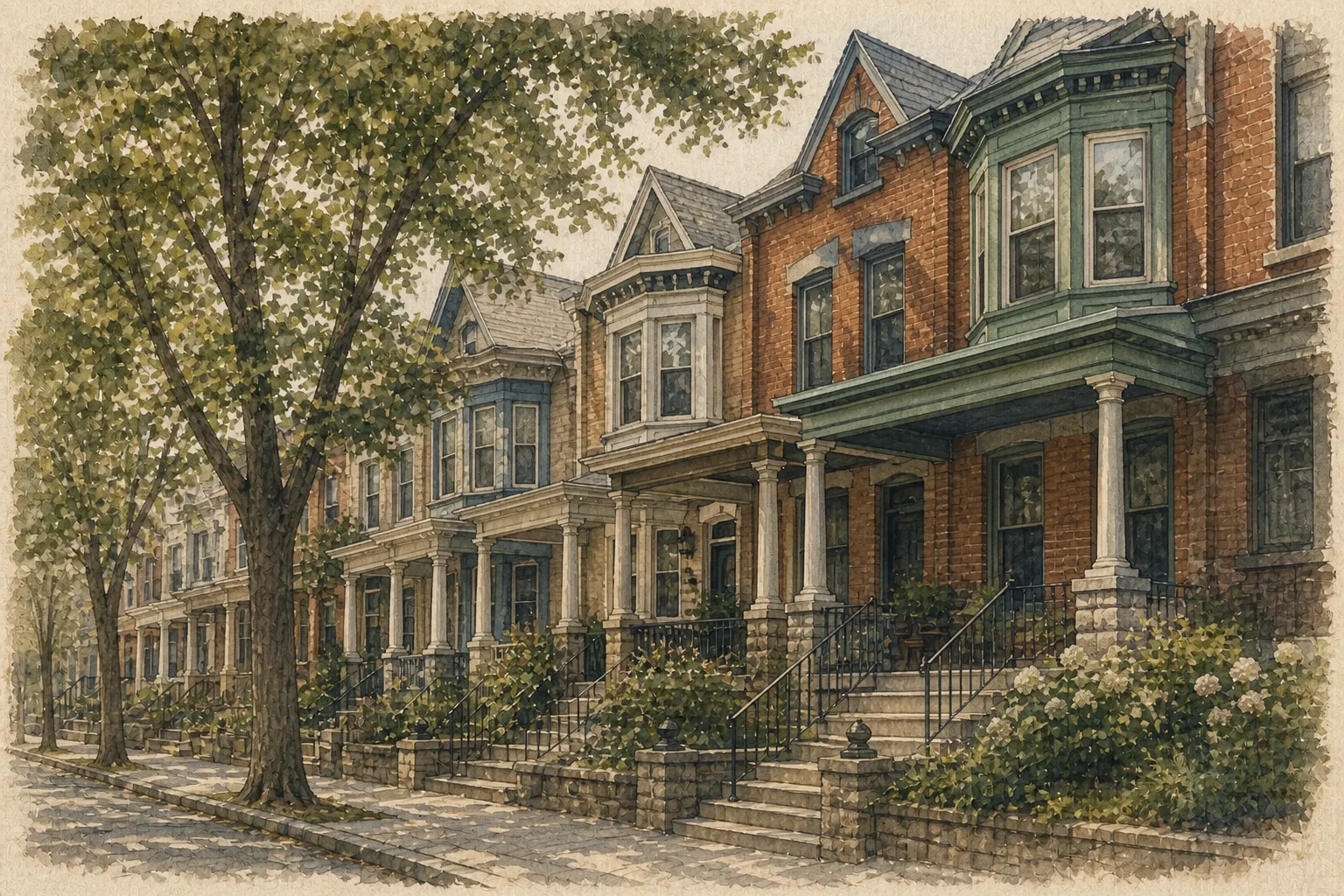
Main streets carry more traffic, more noise, and more unpredictability. That is especially true along the busier north south routes, where commercial activity and transit overlap. Interior blocks, by contrast, often feel almost suburban in comparison, with porches, trees, and a slower rhythm. Locals learn quickly that choosing a place to live is less about being near a landmark and more about which side of the street you end up on.
Baltimore Avenue operates as its own ecosystem. The stretch through Cedar Park is lined with cafes, shops, record stores, and bike spots that residents use as reference points rather than destinations. People describe their location in relation to these places, not because they go every day, but because those names orient you. South of Baltimore Avenue, the feel shifts again, and certain development fights have made specific intersections emotionally charged in ways outsiders would never guess.
Some corners carry long memories. A former industrial site near the southern edge of the neighborhood has been the center of housing disputes for years, and residents still talk about it as if the argument happened yesterday. Other intersections are known quietly for quality of life perks, like a semi private dog area that regulars treat as an open secret. This is why advice in Cedar Park always comes with a pause. Before answering a question, locals usually want to know exactly where you mean.
Distance means less than direction
Two blocks can separate calm from noise. Before answering a question, locals want to know exactly where you mean.
Interior residential streets
Off the corridorsQuieter and more predictable — porches, trees, a slower rhythm, almost suburban by comparison. Living just off a busy corridor feels very different from living directly on it, even when the addresses look close on a map.
The main arteries
The busier north-south routesMore traffic, more noise, more unpredictability, especially where commercial activity and transit overlap. Choosing a place to live here is less about being near a landmark and more about which side of the street you end up on.
Baltimore Avenue
Its own ecosystemLined with cafes, shops, record stores and bike spots that residents use as reference points rather than destinations. People describe their location in relation to these places, not because they go every day, but because the names orient you.
South of Baltimore Avenue
The charged edgeThe feel shifts again, and development fights have made specific intersections emotionally charged in ways outsiders would never guess. A former industrial site near the southern edge has been the center of housing disputes for years.
How the Trolley Actually Shapes Your Week
The trolley is not a nice feature of Cedar Park. It is the backbone. Most daily routines here are built around the assumption that you will be using it, especially during the workweek. In the mornings, the system runs frequently enough that missing one is rarely a crisis. People plan their departures with a flexible buffer, knowing another car is likely to arrive shortly after.
This rhythm creates a specific kind of patience. Residents do not expect perfection from transit, but they expect reliability through repetition. When delays happen, they adjust rather than panic. Over time, you learn which stops feel calmer, which platforms crowd quickly, and how weather subtly changes the experience. Weekday mornings are different from weekends, and locals internalize that difference without thinking about it.
There are also moments when the system forces adjustments. Periodic tunnel work disrupts normal patterns, and people who live here talk about those periods as if they are seasons of their own. Routes change, timing stretches, and conversations about alternate plans resurface. Knowing when these disruptions happen, and planning around them, is part of being settled here.
At night, transit decisions become more situational. The trolley itself is not usually the concern. The walk on either end matters more. Many residents change their habits after a certain hour, opting for rides instead of walking even short distances. That choice is not driven by panic but by experience. The trolley shapes not just how you move, but when you decide movement is worth it.
Safe Isn’t a Yes or No Question Here
Safety in Cedar Park is not discussed in absolutes. Locals rarely say the neighborhood is unsafe, but they also rarely claim it is worry free.
During the day, many residents feel comfortable walking, running errands, and spending time outside. Parents bring children to the park, neighbors linger on porches, and the area feels social and lived in. That daytime experience is real and consistent enough that people trust it. It is also why blanket warnings about West Philly tend to be dismissed by those who actually live here.
Cedar Park vs Angry Park
The park at the center of Cedar Park holds two identities at once, and locals switch between them depending on the day, the time, and the crowd. When things are calm, it feels like the social heart of the neighborhood. Families let kids run around, neighbors recognize each other, and the space fills with the kind of low level interaction that makes people feel anchored. In warmer months, the park becomes a gathering point, with music drifting through the air and small performances that draw people who were not planning to stay long but end up lingering.
At other times, the mood shifts. Quiet stretches, busy stretches, a crowd that turns over — the same open space reads differently from one visit to the next. That is where the alternate nickname comes from. It is not meant as a joke so much as a shorthand. Locals use it to communicate that the park is not one thing all the time, and that reading the room matters.
People who know the park well make quiet assessments before settling in. They notice who is already there, how loud the atmosphere feels, and whether the energy is relaxed or tense. These judgments happen quickly and instinctively. On good days, the park reinforces why people choose to live nearby. On off days, it reminds them to stay flexible. Both versions exist, and pretending otherwise usually marks someone as unfamiliar with how the neighborhood actually works.
Where Dogs Improve Life and Where They Don’t
Dogs play a noticeable role in daily life around Cedar Park. For many residents, having access to green space and a semi private dog area nearby is a genuine quality of life upgrade. Regulars form loose routines, learn which times feel calmer, and treat certain spots as informal gathering places. When things go well, dogs become a social connector, giving neighbors an easy reason to talk and recognize one another.
Dogs improve life here when everyone follows the same unwritten rules. When they do not, the conflict can linger longer than anyone wants.
Where Locals Actually Go and Why
Baltimore Avenue is where locals point when asked how Cedar Park has changed, but they rarely frame it as a checklist of destinations. Instead, they talk about it as a reference line. The presence of cafes, bike shops, record stores, and long standing food spots signals that the neighborhood supports daily life rather than just occasional outings. People use these places to orient themselves, even if they are not regulars at all of them.
What matters more than any single business is how the strip feels as a whole. Residents notice when storefronts change hands, when window designs shift, and when new spots feel louder or more closed off than what came before. These details feed into ongoing conversations about what belongs on Baltimore Avenue and what does not. The debates are not abstract. They are tied to memories of what used to be there and expectations about what should come next.
Locals also judge places by how they fit into routines. A shop that feels welcoming during the day but disruptive at night will be discussed differently than one that blends into the existing rhythm. The value of Baltimore Avenue is not just in variety but in continuity. It works because it feels usable, familiar, and embedded in the neighborhood rather than imposed on it.
Why Everyone Goes Anyway
Cedar Park Cafe sits at the intersection of convenience, habit, and contradiction. Almost everyone in the area has been there, often more than once, even if they complain about it. The location makes it an easy default, especially for breakfast or brunch, and the familiarity keeps people coming back. Over time, it becomes part of the background of neighborhood life.
That does not mean everyone agrees about it. Opinions run in both directions, and regulars have their own routines for how and when they go.
Either way, the cafe remains busy. For many residents, the comfort of a familiar spot outweighs whatever they would change about it. It is a place where you see neighbors, recognize faces, and settle into a routine. That combination of predictability and imperfection is part of why it endures. In Cedar Park, places do not have to be flawless to matter. They just have to be woven into everyday life.
The two places locals actually name
In Cedar Park, places do not have to be flawless to matter. They just have to be woven into everyday life.
Cedar Park Cafe
Almost everyone in the area has been there, often more than once, even if they complain about it. Opinions run in both directions, and regulars have their own routines for how and when they go.
Best for · An easy default where you recognize faces
The semi-private dog area
An open secret regulars treat as a genuine upgrade. Loose routines form around it, people learn which times feel calmer, and dogs become a social connector that gives neighbors an easy reason to talk.
Why Development Is the Longest Argument Here
Development is not a background issue in Cedar Park. It is a recurring argument that resurfaces whenever a new proposal appears, often tied to the same few intersections. Residents carry long memories of past fights, and those memories shape how new projects are received before details are even discussed. The emotional weight comes less from buildings themselves and more from the process. Years can pass, plans can change, and frustration accumulates on all sides.
One site in particular has become shorthand for how strange and drawn out these battles can get. What started as a proposal for higher density housing eventually collapsed into something far more limited, not because of a lack of interest, but because of sustained opposition framed around parking, traffic, and neighborhood character. Over time, the conflict took on a life of its own, turning into a symbol of how hard it can be to build anything here, even when many residents support the idea in principle.
Another long running dispute near the southern edge of the neighborhood revolves around a former industrial property. Supporters see it as an opportunity to replace blight with housing that fits an urban corridor. Opponents see it as an intrusion that threatens green space and daily routines. The result has been delay after delay, lawsuits, and a sense that a small number of voices can hold up outcomes for years. For people who live nearby, development is not abstract policy. It is a slow, exhausting presence that shapes how they think about the future of the neighborhood.
Cedar Park Neighbors Isn’t Optional
Living in Cedar Park without paying attention to Cedar Park Neighbors is like trying to navigate without checking the weather. The organization functions as both an official community association and an informal information network. It is where development updates surface, where neighborhood statements are issued, and where residents learn what is coming next, whether they agree with it or not.
Beyond formal announcements, the surrounding online spaces act as a real time operations center. Issues involving dogs, construction, and events circulate quickly. People share updates, ask for context, and sometimes vent. Participation does not always mean posting. Many residents simply read, absorbing patterns and learning which topics reliably turn heated.
Understanding Cedar Park means understanding this layer of communication. Decisions are influenced here, alliances form here, and conflicts spill over here. Ignoring it does not make it go away. It just leaves you reacting late, without the context everyone else already has.
Things Nobody Tells You Directly
People rarely tell you outright that Cedar Park runs on unwritten rules, but they follow them carefully. Naming matters. Using the wrong label for the neighborhood signals instantly that you are new or disconnected. Timing matters even more. The same route that feels fine in the afternoon may be avoided later without explanation.
Quiet is not evenly distributed. Living near a main road changes the experience in ways listings do not mention. Parks are not consistent spaces. Their mood shifts with the crowd and the hour, and locals adjust accordingly without making a big deal out of it. When problems arise, one report is rarely enough. Persistence, not optimism, is what usually leads to results.
Food routines come with their own expectations. If a place is known to be busy on weekends, locals accept that and plan for it. They also know when to ask questions before ordering, especially at spots where assumptions can lead to small but irritating surprises. None of this is written down, but everyone who stays long enough learns it.
Who Cedar Park Is Actually For
Cedar Park works best for people who are comfortable with nuance. It suits those who like walking and transit, who pay attention to their surroundings, and who do not expect the neighborhood to behave the same way at all times. People who thrive here tend to appreciate community without needing uniformity. They can enjoy a lively afternoon and adapt their plans at night without resentment.
It can be frustrating for those who want predictability above all else. Block level differences, long development debates, and inconsistent experiences at familiar places wear on people who expect clean lines and quick resolutions. Cedar Park does not offer that. What it offers instead is texture. Daily life here is layered, sometimes contradictory, and shaped by habits rather than promises.
For residents who accept that tradeoff, Cedar Park becomes easier over time. The routines settle in, the patterns make sense, and the frustrations feel manageable. It is not a neighborhood that reveals itself all at once. It rewards attention, patience, and a willingness to learn things that no map will ever tell you.
Who Cedar Park is actually for
It rewards attention, patience, and a willingness to learn things no map will ever tell you.
- You are comfortable with nuance and do not expect the neighborhood to behave the same way at all times.
- You like walking and transit, and you pay attention to your surroundings.
- You appreciate community without needing uniformity.
- You can enjoy a lively afternoon and adapt your plans at night without resentment.
- You want predictability above all else and expect clean lines and quick resolutions.
- Block-level differences wear on you.
- Long development debates that stretch across years exhaust you.
- Inconsistent experiences at familiar places bother you.
Make it yours
Take a useful Cedar Park walk
A short list to turn what you read into your own next steps.
Saved checks stay on this device when browser storage is available. This is a personal planning list, not a property inspection or professional assessment.
Sources & next steps
Useful advice should
show its working.
These resources support the reader tools above and help you check details for your own address, date, or plans.
- SEPTA trip planner
Compare transit journeys using your actual stops, date, and departure time.
- Find a playground or recreation center
City facility listings provide locations and contacts for checking programs and access.
- City property and zoning lookup
Opens the City's address-based zoning and permit tools.
The tools identify specific stops, facilities, and addresses. Informal park names, pet access, construction schedules, and current business details need direct confirmation.