
A little orientation
Get your bearings in Grays Ferry
Find the entrance
Plot your route to a named river or park entrance, including the crossings between it and your front door.
Read the property record
Use the exact address to examine permits and prepare questions about work you notice during a viewing.
Try an ordinary journey
Test a weekday trip with the departure time, bags, and transfers you would actually manage.
A closer look
Choose a starting point
Pick the part of Grays Ferry you want to understand before your next visit.
Find the walk you can repeat
Choose the park or river destination you mean, then locate its entrance through the City's facility information. Trace the walk from your prospective address, noting crossings and an alternative way home before setting out.
A useful questionWhich entrance connects best with my actual front door?
Source & next step ↗Turn visible work into questions
Look up the Grays Ferry address in the City's property tools before your viewing. Compare the permit record with visible construction, then ask the owner which work is finished, still underway, or outside the unit.
A useful questionWhat work remains, and how will it affect my home?
Source & next step ↗Test both ends of your commute
Enter your Grays Ferry starting point and regular destination in SEPTA's planner. Compare the outward and return trips on a workday, including the walk to the stop; save a second option for days your schedule changes.
A useful questionDoes the return trip work when my workday finishes?
Source & next step ↗Grays Ferry is a neighborhood of contrasts. Some blocks feature newly renovated homes with roof decks and modern finishes, while just a few streets away you may find vacant lots, older houses that need attention, and sidewalks that tell a different story about the pace of change.
This guide was created to capture the details that longtime residents understand but that outsiders rarely hear about. From the way neighbors judge whether a block is improving to the parks, food spots, and community groups that keep people connected, this is a hyper-local look at what daily life in Grays Ferry actually feels like.
The Local Reality Check: Understanding What Grays Ferry Is
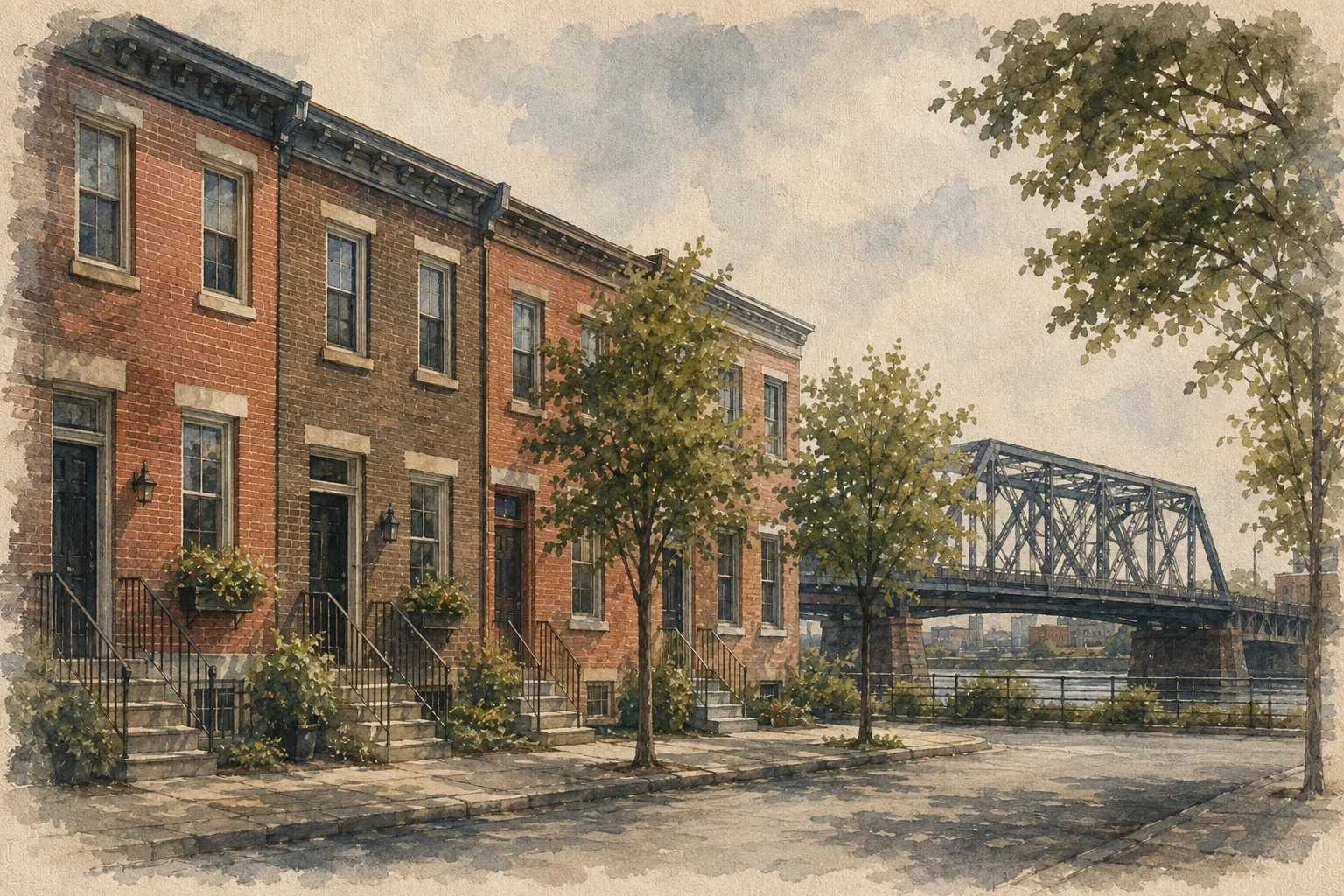
Grays Ferry is one of those Philadelphia neighborhoods that confuses people the first time they walk through it. At a glance, parts of it look calm. Rowhomes line the streets in tidy rows. Some blocks have newly built houses with rooftop decks and small driveways. There are sidewalks shaded by trees and stretches where the architecture feels almost suburban compared with denser parts of South Philadelphia.
Then you spend a little more time there.
What longtime residents understand quickly is that the neighborhood operates on layers. The physical appearance of a block does not always match the daily experience of living on it. Streets that look quiet in the middle of the day can feel completely different later at night. A house with a new roof deck might sit next to a vacant lot filled with dumped furniture. A clean corner might be two blocks away from an intersection known for sirens and police activity.
People who actually live in Grays Ferry tend to describe it in practical terms rather than marketing language. The neighborhood offers clear advantages. Housing costs are lower than nearby Center City areas. Street parking is easier than in most of South Philadelphia. Access to Interstate 76 is extremely convenient, which matters for commuters who drive out of the city. The Schuylkill River Trail and nearby parks are also within reach.
At the same time, daily life includes frustrations that show up repeatedly in local conversations. Trash is a constant complaint. Traffic patterns can overwhelm narrow streets. Some blocks feel calm while others feel tense depending on the time of day. Safety is something residents think about in practical ways rather than abstract statistics.
Understanding Grays Ferry starts with accepting that the neighborhood is not one simple story. It is a place where improvements and problems exist side by side. Locals do not usually pretend otherwise. Instead they learn the rhythms of their blocks, the routes that work best for getting around, and the small signals that tell you whether a street is functioning well or struggling.
For someone new to the area, that local awareness becomes the difference between simply visiting Grays Ferry and actually understanding how it works.
Where Grays Ferry sits
- Grays Ferry Avenue
- Grays Ferry Crescent Park
- Schuylkill River Trail
- Interstate 76
Schematic · not to scale
The Geography That Actually Defines Grays Ferry
One of the first things residents explain to newcomers is that Grays Ferry cannot be understood as a single uniform neighborhood. The experience changes depending on exactly where you are standing.
The eastern edge of the neighborhood sits closer to the Schuylkill River and the trail system that runs along it. Blocks near the river and the park areas tend to feel quieter. Cyclists pass through on the river trail. Dog walkers use the paths around the park. Newer homes and recent construction appear more frequently in this part of the neighborhood, including houses with rooftop decks and updated façades.
Because of the trail access and the open green spaces, this area attracts people who value outdoor activity. It also tends to feel less crowded during the day compared with deeper interior blocks.
Move further into the neighborhood, however, and the atmosphere shifts. The interior streets of Grays Ferry carry a different reputation among residents. These blocks are more likely to show the neighborhood’s ongoing struggles. People talk about illegal dumping happening in vacant spaces, houses that have not been maintained for years, and the sound of sirens that passes through regularly.
The difference is not dramatic in the sense of a clear dividing line. Instead it happens gradually. A few blocks can change the way a street feels. Residents often emphasize that learning the neighborhood means paying attention to those small geographic shifts.
This block level awareness shapes everyday decisions. It influences where people walk their dogs, which routes they take to the highway, and which streets they recommend to friends who are considering moving nearby.
For someone unfamiliar with Grays Ferry, the lesson is simple. The neighborhood label alone does not tell the full story. The specific block matters.
The geography that actually defines it
Not a dividing line — a gradual shift. A few blocks can change the way a street feels.
The eastern edge
Closer to the Schuylkill and the trailBlocks near the river and the park areas tend to feel quieter. Cyclists pass through on the river trail, dog walkers use the paths, and newer homes with rooftop decks and updated façades appear more often here.
The interior streets
Deeper into the neighborhoodThe atmosphere shifts. Residents talk about illegal dumping in vacant spaces, houses that have not been maintained for years, and sirens passing through regularly.
The Issue Locals Mention More Than Anything: Trash and Dumping
Across nearly every local conversation about Grays Ferry, one topic surfaces more than any other. Trash.
Residents talk about it constantly because it is the issue that affects daily life in the most visible way. Sidewalks sometimes collect garbage that sits longer than it should. Vacant lots become unofficial dumping spots where people leave mattresses, broken furniture, construction debris, and household waste. The problem does not appear on every block, but it appears often enough that many residents consider it part of the neighborhood’s ongoing struggle.
What makes the situation especially frustrating is how specific some of the complaints are. Dog owners mention the sidewalks being scattered with chicken wing bones that pose a risk to pets during walks. People describe encountering discarded sofas or beds left beside empty properties. These details might sound small, but they shape the everyday experience of walking through the neighborhood.
Certain locations have become symbols of the dumping problem. One example residents frequently bring up is the former Zion Hill Memorial site, where dumping has occurred close to newly built houses with rooftop decks and modern designs. For many locals, this contrast represents the strange dual nature of Grays Ferry. Development continues in parts of the neighborhood, yet the same block can struggle with neglected spaces that attract trash.
Residents often express the feeling that dumping happens faster than cleanup can keep up. Even when the city eventually removes debris, new piles can appear days or weeks later.
This ongoing cycle affects how people judge the health of a block. When locals talk about whether a street feels like it is improving, one of the first things they notice is whether trash and dumping are under control.
Clean sidewalks and maintained lots signal progress. Piles of debris suggest the opposite.
Parks, Trails, and the Dog Walker Reality
Despite the challenges residents mention, Grays Ferry has access to one of the more scenic recreational spaces in the area. Grays Ferry Crescent Park stretches along the Schuylkill River and connects with the larger trail network that runs through Philadelphia.
The park offers a surprising amount of open space compared with the surrounding neighborhood. There are walking paths, grassy areas, and places where people fish along the riverbank. Cyclists pass through regularly because the park connects to the Schuylkill River Trail, which is one of the city’s major biking routes.
A skatepark sits under Interstate 76 nearby, adding another layer of activity that attracts skaters from different parts of the city. Laurier Park and nearby dog friendly areas also provide space where residents can take their pets outdoors.
At the same time, the park reflects some of the same issues that appear elsewhere in the neighborhood. Dog owners frequently mention encountering unleashed dogs along the trails. Others complain about pet waste not being cleaned up even though trash cans are available nearby.
Broken glass occasionally appears on paths or in grassy areas, which forces dog walkers to watch the ground carefully during walks. The presence of trash can also show up in corners of the park where debris collects after busy weekends.
Even with those frustrations, many residents still appreciate the park because it provides something the surrounding blocks cannot easily offer. Open space along the river is rare in South Philadelphia, and the Crescent gives people a place to walk, bike, and get out of the rowhouse grid for a while.
For locals, the park is both a valuable amenity and a reminder of the neighborhood’s ongoing contradictions. It is a place where you can enjoy a quiet river view while still noticing the everyday issues that shape life in Grays Ferry.
Transportation: The Convenience and the Chaos
Transportation in Grays Ferry is one of the clearest examples of the neighborhood’s contradictions. The location is extremely convenient if you look at a map. Interstate 76 is only minutes away, which makes it easy for residents who commute out of the city or travel frequently by car. Street parking is also noticeably easier than in many nearby neighborhoods. On many blocks it is still possible to find a legal spot without circling for long periods.
That convenience changes once traffic enters the picture.
Several streets around the neighborhood become extremely congested during weekday mornings. Grays Ferry Avenue and nearby connectors that lead toward the South Street Bridge or Washington Avenue carry a heavy flow of vehicles during rush hour. Drivers trying to reach the highway often funnel through narrow residential streets that were never designed for that volume of traffic.
Residents regularly describe the same pattern. Early in the morning the neighborhood feels like a commuter corridor. Cars move quickly through certain stretches and drivers who are running late often accelerate through intersections or residential blocks. What looks calm in the middle of the day can feel very different during the weekday morning rush.
Because of this, longtime residents tend to rely on a few practical workarounds. One common strategy is to avoid driving toward Center City altogether. Instead of fighting congestion and searching for parking downtown, many people use SEPTA buses or bike routes that connect to the river trail. SEPTA bus service through the neighborhood is one of the small details that locals mention when explaining how they get around without dealing with the worst traffic patterns.
Cycling has also become more common in recent years. The Schuylkill River Trail provides a relatively direct path toward Center City, which makes biking a viable alternative to driving through congested streets.
For newcomers, the key lesson is timing. Driving through Grays Ferry during the middle of the day can feel manageable and even convenient. Attempting the same routes during weekday rush hour can feel completely different.
The Development Fight Everyone Is Talking About
In recent years, one topic has dominated neighborhood conversations more than any other development issue. The proposed parking garage connected to the Children’s Hospital of Philadelphia.
The project is planned for a site at 3000 Grays Ferry Avenue, an area that already experiences heavy traffic because of its proximity to hospital campuses, highway ramps, and major roadways. The plan would introduce a large parking structure intended to support hospital staff and visitors.
For many residents, the proposal triggered immediate concern.
Opponents argue that adding hundreds of new parking spaces will increase vehicle traffic on streets that already struggle during rush hour. They also worry about air quality. Grays Ferry has a history of environmental stress related to industrial activity.
Another detail frequently mentioned is the presence of a playground across from the proposed site. Neighbors who oppose the project believe that placing a large parking structure near an area used by children raises serious health concerns.
Supporters of the project see the situation differently. The hospital system draws employees and families from across the region. For people traveling long distances with sick children, parking can be extremely difficult to find near medical facilities. Some argue that the garage would provide a practical solution for hospital operations and for families already dealing with stressful circumstances.
The debate has become one of the most visible examples of the tension between neighborhood concerns and citywide institutions. Public meetings, protests, and community discussions around the project have drawn attention to larger questions about development, traffic, and environmental responsibility.
Regardless of where residents fall in the debate, the project has already changed the conversation about how Grays Ferry should evolve in the future.
Environmental Burdens and Industrial History
Many of the environmental concerns raised by residents are tied to the neighborhood’s industrial past. Grays Ferry sits near areas that historically hosted heavy industry, including the refinery complex that once operated along the river. Explosions, pollution, and long-term environmental impacts from that facility remain part of the neighborhood’s collective memory.
When residents discuss new development projects, those experiences often shape their reactions.
People frequently bring up concerns about air quality and long-term health risks. Asthma rates in parts of South Philadelphia have been discussed for years, and residents sometimes describe their community as one that has already carried more than its share of environmental burden.
More recent incidents have reinforced those concerns. For example, a steam leak at a nearby energy facility once produced a constant high pitched noise that lasted for days. Residents reported hearing it inside their homes, even with televisions running. Situations like that remind people that industrial infrastructure still surrounds the neighborhood.
Because of this history, many residents approach new construction proposals with skepticism. Promises about minimal environmental impact often feel abstract compared with decades of lived experience.
In local discussions, environmental issues are rarely separated from questions about race and class. Some community members argue that neighborhoods like Grays Ferry end up hosting projects that wealthier areas would resist more successfully.
Whether people focus on air quality, traffic emissions, or industrial hazards, the underlying message tends to be the same. Residents want assurance that new development will not add another layer of stress to a neighborhood that has already faced significant environmental challenges.
The Neighborhood’s Toughest Moments
Grays Ferry has experienced periods of violence that have deeply affected residents.
Those periods reinforce the complicated way residents talk about safety. Many people in Grays Ferry emphasize that the neighborhood contains strong relationships between neighbors and a sense of familiarity among long term residents. At the same time, incidents of violence can shake that sense of stability and remind people how quickly situations can escalate.
Community organizations often play an important role after these events. Local groups coordinate support, organize meetings, and sometimes help with cleanup efforts or youth programming that resumes once the immediate crisis passes.
The response to difficult moments often highlights another side of Grays Ferry that outsiders rarely see. Residents know one another well enough that tragedies rarely feel distant. When something happens on a block, the people affected are often neighbors, relatives, or longtime acquaintances.
This closeness can make difficult events feel more painful, but it also strengthens the sense of community that keeps many residents invested in the neighborhood despite its challenges.
Community Groups and Local Organizing
One of the reasons Grays Ferry continues to function despite its challenges is the strength of local organizing. Residents often rely on neighborhood groups and community networks to respond to problems faster than city systems alone can.
The Grays Ferry Community Council is one of the most visible organizations in the area. The group helps coordinate neighborhood meetings, cleanup efforts, and community alerts. Residents often learn about upcoming events, safety concerns, and city notices through the council’s communication channels. In practice, the council acts as a hub where neighbors can share information quickly.
Another important organization is the Young Chances Foundation located near 27th and Tasker. The center runs youth programs, community activities, and summer camps that serve children in the neighborhood. For many families, the organization provides one of the few structured spaces focused on youth development in the immediate area.
When difficult events occur in the neighborhood, groups like Young Chances often become gathering points for residents who want to help or support one another.
Activist organizations also play a role in shaping local conversations. Groups such as Philly Thrive have organized around environmental concerns, illegal dumping, and development projects that residents believe could harm the community. Their efforts have helped bring citywide attention to issues that might otherwise remain local frustrations.
What makes organizing in Grays Ferry unique is how informal networks often work alongside formal organizations. Residents frequently stay connected through group text threads, neighborhood pages, and word of mouth. When a cleanup is planned or a meeting is scheduled, information spreads quickly through these networks.
This kind of communication allows neighbors to coordinate responses to issues ranging from dumping to community events. It also reinforces the sense that many residents feel personally responsible for improving the neighborhood.
The Places Locals Still Recommend
Although discussions about Grays Ferry often focus on problems, there are still places that residents consistently speak about in positive terms. These businesses and gathering spots help anchor everyday life in the neighborhood.
Grace Tavern is one of the establishments that appears frequently in local conversations. The bar has built a reputation for casual food, a selection of local beers, and a relaxed neighborhood atmosphere. Residents often mention it as a reliable place to meet friends or unwind after work.
Another spot that receives attention from locals is Griddle and Rice. The small restaurant has gained a following for its sandwiches, particularly a menu item known as the Gobbler. Food enthusiasts sometimes describe it as one of the neighborhood’s hidden finds.
Gray Ferry Deli is also mentioned by residents who want a quick and dependable lunch option. Customers appreciate the straightforward service and convenience of grabbing food without leaving the neighborhood.
These places stand out partly because positive mentions of businesses are less common than discussions about neighborhood challenges. When residents recommend a spot, it usually means the location has built trust through consistent service or a welcoming atmosphere.
Small businesses like these become everyday meeting points where neighbors interact and where the neighborhood feels more like a community than a collection of streets.
The places locals still recommend
Positive mentions of businesses are less common here than discussions of neighborhood challenges, so a recommendation means the place earned it.
Grace Tavern
Built a reputation for casual food, a selection of local beers and a relaxed atmosphere. The reliable place to meet friends or unwind after work.
Best for · Meeting friends after work
Griddle and Rice
A small restaurant with a following for its sandwiches, particularly the one known as the Gobbler. Food enthusiasts describe it as one of the neighborhood's hidden finds.
Best for · The Gobbler
Gray Ferry Deli
Straightforward service and the convenience of grabbing food without leaving the neighborhood.
The Unwritten Rules of Living in Grays Ferry
People who have lived in Grays Ferry for a while tend to share a set of informal rules with newcomers. These guidelines are rarely written down, but they appear repeatedly in conversations among residents.
One of the most common pieces of advice is to visit a potential apartment or house both during the day and at night before deciding to move in. The atmosphere on some blocks can change depending on the time, and residents believe it is important to understand the full rhythm of a street.
Learning the specific block where you live is also considered essential. Conditions can vary within just a few streets, so familiarity with the immediate surroundings becomes more valuable than general neighborhood descriptions.
Dog owners often warn newcomers to pay attention to the sidewalks during walks. Broken glass, trash, and discarded food can appear unexpectedly. Staying aware of what is on the ground helps prevent injuries to pets.
Driving habits are another subject that locals discuss frequently. Many residents avoid driving toward Center City during peak hours and rely on public transit or cycling instead. This approach reduces time spent in traffic and eliminates the frustration of searching for parking.
Late night awareness is also part of everyday life. Residents learn which routes feel comfortable after dark and which ones they prefer to avoid.
These unwritten rules are not meant to discourage people from living in the neighborhood. Instead they reflect the practical knowledge that residents develop through experience.
What Locals Use to Judge the Neighborhood
People who live in Grays Ferry tend to measure the condition of the neighborhood using simple everyday indicators. These signs often carry more meaning than real estate listings or development announcements.
Clean sidewalks are one of the first things residents notice. When trash and debris remain under control, people often interpret it as a sign that a block is improving. When dumping begins to accumulate, it sends the opposite signal.
Vacant lots also serve as indicators. Residents pay close attention to whether these spaces are maintained or whether they begin to collect discarded items.
Parks and public spaces provide another reference point. If areas like Grays Ferry Crescent remain usable and maintained, residents feel that the neighborhood is moving in a positive direction. When these spaces become neglected, it affects how people perceive the surrounding blocks.
Traffic patterns also influence how locals judge their environment. Streets that remain manageable during rush hour tend to feel more livable than corridors that become overwhelmed with speeding vehicles.
Finally, residents pay attention to how neighbors respond when problems arise. Cleanup efforts, community meetings, and local organizing often signal whether people feel invested in the area.
These everyday observations form the lens through which residents evaluate the neighborhood. For many people living in Grays Ferry, the real measure of progress is not found in headlines or development proposals. It appears in the small details of daily life that shape how a block feels from one week to the next.
The advantages and the frustrations
Residents describe the neighborhood in practical terms rather than marketing language. Both lists are theirs.
- Housing costs lower than nearby Center City areas.
- Street parking easier than in most of South Philadelphia.
- Interstate 76 minutes away, which matters if you commute out of the city.
- The Schuylkill River Trail and nearby parks within reach.
- Trash — the issue that surfaces more than any other in local conversation.
- Traffic patterns that can overwhelm narrow streets, especially during the weekday morning rush.
- Blocks that feel calm while others feel tense depending on the time of day.
- Dumping that happens faster than cleanup can keep up with.
Make it yours
Bring these five questions
A short list to turn what you read into your own next steps.
Saved checks stay on this device when browser storage is available. This is a personal planning list, not a property inspection or professional assessment.
Sources & next steps
Useful advice should
show its working.
These resources support the reader tools above and help you check details for your own address, date, or plans.
- Find a playground or recreation center
City facility listings provide locations and contacts for checking programs and access.
- City property and zoning lookup
Opens the City's address-based zoning and permit tools.
- SEPTA trip planner
Compare transit journeys using your actual stops, date, and departure time.
These tools use an address and a named destination rather than treating the riverfront as one continuous entrance. They do not establish current construction completion or neighborhood safety.