A little orientation
A closer look at your Point Breeze address
Look past a renovation label.
Ask what work was done and what records or warranties are available rather than assuming a fresh finish settles property condition.
Confirm the route you need.
Use current transit information from the exact address instead of carrying forward an old bus number or a neighborhood shortcut.
Check the market before the visit.
Treat the guide’s Community Market reference as a lead to verify with its organizer, not a confirmed weekly appointment.
A closer look
Property questions with practical follow-through
Use Point Breeze Avenue and the guide’s local businesses as orientation while checking your own housing and travel needs.
Ask what is behind the finish.
Look up the property in Atlas and ask the owner about recent work, available records and outstanding maintenance. Bring unclear details to an appropriate professional; the guide’s discussion of new homes and renovations cannot establish the quality of an individual property.
A useful questionWhat records and unanswered questions sit behind this home’s visible finishes?
Source & next step ↗Check the route as it runs now.
Choose a confirmed destination along Point Breeze Avenue or elsewhere and plan the whole journey from the proposed home. Use the current route and return information in SEPTA’s planner rather than assuming a bus reference in the guide remains correct.
A useful questionWhich current service and connection support the journey you need to repeat?
Source & next step ↗Give the concern a next step.
For a non-emergency City issue seen during a visit, use Philly311 to find the appropriate request channel. Record the actual location and observations, keeping the reference separate from questions that belong with a property owner or a qualified building professional.
A useful questionWho handles this particular issue, and what information do they need from you?
Source & next step ↗Point Breeze is a neighborhood that cannot be understood through listings, crime maps, or Facebook groups. It has its own pace, its own unwritten rules, and a block-by-block personality that changes with the time of day and the season. It is a place where neighbors look out for each other and where small businesses and markets shape the rhythm of daily life. This guide reflects what actually matters when you live here: the intersections that define comfort, the hidden convenience of the area, the social etiquette that keeps things smooth, and the quiet value of community over storefront amenities.
What Point Breeze Actually Is (Not the Google Maps Version)
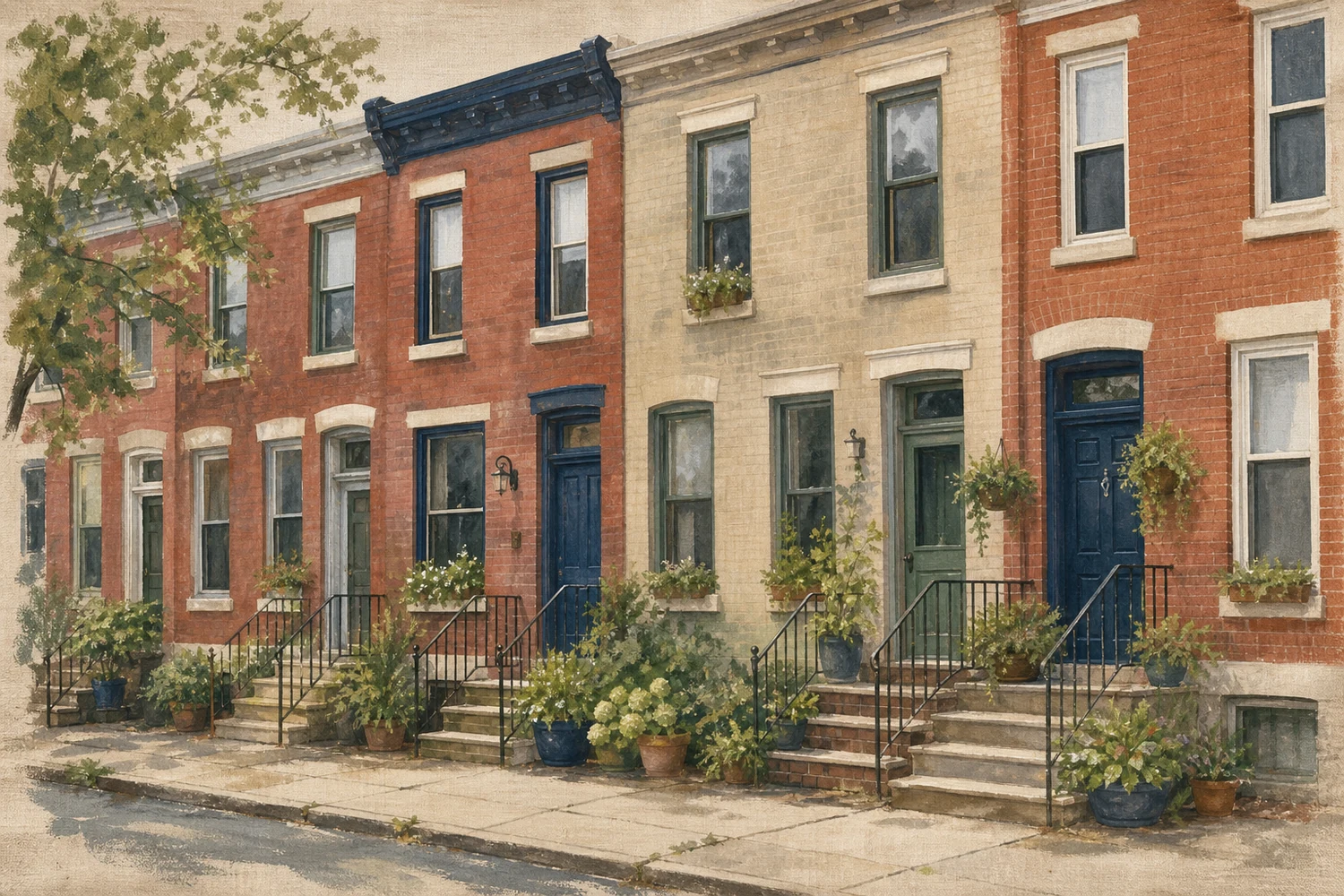
Point Breeze looks simple on a map, but the lived version is a patchwork of four distinct pockets that only make sense once you start walking the streets. Locals do not talk about Point Breeze as a single neighborhood. They talk about which block feels safe to walk after midnight, which corner has reliable foot traffic, which side street has more families outside during the summer, and which direction you should head toward when you want groceries. Google Maps shows a rectangle. Residents experience a maze where one block can feel peaceful and the next can feel tense or oddly empty. The neighborhood functions like a crossroads for several versions of South Philly personality, from long-time porch culture to quieter clusters of new construction.
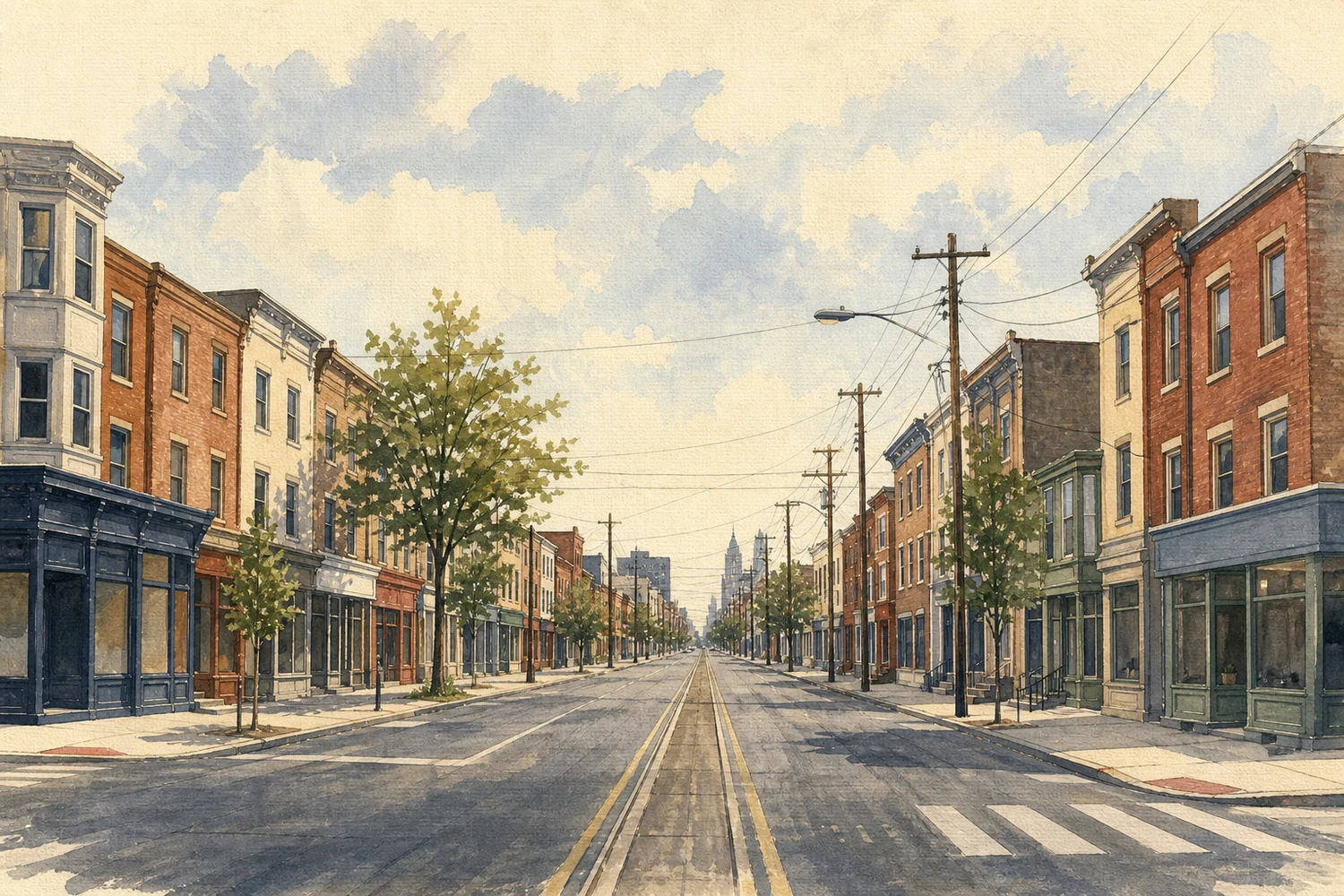
The center of this culture is Point Breeze Avenue, which locals treat as more than a commercial strip. It divides lifestyles. One side leans toward newer homes and convenience. The other side becomes quieter, looser, and unpredictable depending on time of day. The avenue carries corner stores, small restaurants, daily routines, and an unspoken code about when to linger and when to keep moving. Real estate agents might point to development momentum, but the lived reality is that this road shapes how people interact, where they shop, and which direction they feel comfortable walking after dark.
Across the neighborhood, four quadrants shape experience. Northern Point Breeze behaves more like an extension of Graduate Hospital. Streets feel closer to downtown, development is denser, and residents lean on proximity to transit and Center City. Eastern Point Breeze sits along Broad Street and benefits from easy transportation, giving it a slightly more active character. Western Point Breeze fluctuates the most, with blocks that feel quiet and blocks that feel isolated depending on weather, time, and who is hanging outside. Southern Point Breeze is sparser, quieter, and slower, with long stretches where there is not much foot traffic and very few reasons to walk at night unless you are heading somewhere specific.
Even within these quadrants, hyper-local strips matter. Residents talk about the Latona Belt as a calmer stretch where you can expect a quieter daily rhythm. They also reference the Tasker and Morris triangle as a place where more foot traffic mixes with polarizing opinions about safety, noise, and daily activity. These microzones cannot be understood from a map or a quick drive through the area. Point Breeze can only be understood by walking it on different days, at different times, and in different seasons. A new resident who stays on one street for a rental tour will not understand the actual vibe until they try to walk home at night or step out on a hot summer afternoon.
Where Point Breeze sits
- Point Breeze Avenue
- Broad Street
- WOW Mart
Schematic · not to scale
The four pockets
Locals do not talk about Point Breeze as a single neighborhood. Google Maps shows a rectangle; residents experience a patchwork of four distinct pockets.
Northern Point Breeze
Toward Graduate HospitalBehaves more like an extension of Graduate Hospital. Streets feel closer to downtown, development is denser, and residents lean on proximity to transit and Center City.
Eastern Point Breeze
Along Broad StreetBenefits from easy transportation, which gives it a slightly more active character.
Western Point Breeze
The deeper west sideFluctuates the most. Blocks that feel quiet and blocks that feel isolated, depending on weather, time, and who is hanging outside.
Southern Point Breeze
The lower stretchesSparser, quieter and slower, with long stretches where there is not much foot traffic.
The Latona Belt
A hyper-local stripA calmer stretch where you can expect a quieter daily rhythm — the corridor parents tend to prefer, where daily routines feel steady and predictable.
The Micro-Rhythms of Daily Life
Time-of-Day Behavior
Living in Point Breeze means learning the timing of the streets. Mornings feel calm as commuters head out, construction crews start working, and kids walk to school along specific routes. Daytime errands are predictable, and most people feel comfortable walking to grab food or hop on transit. Things shift slowly in the evening as household routines return. Porch lights come on, neighbors hang out, and groups gather near corner stores to socialize. The streets do not follow a simple safe or unsafe pattern, but they do follow crowd behavior. The presence of people makes a street feel comfortable, and emptiness can make some blocks feel tense even without any direct threat.
Late nights follow their own rules. Tuesday at midnight can feel surprisingly quiet and easy to navigate, while Saturday after midnight can feel loud, unsettled, and unpredictable. The difference is not about crime reports as much as the vibe created by gatherings, music, parties, and people moving between houses or lingering on certain corners. Some residents choose to bike instead of walk during these hours because momentum feels safer than being on foot on the wrong street at the wrong time.
Street lighting patterns also affect where people feel comfortable walking. Some blocks feel open and visible. Others have weaker lighting that makes a route feel like a gamble after certain hours.
Weekday-to-Weekend Shift
Weekdays in Point Breeze revolve around work and family. The streets are filled with people heading to transit, construction trucks filling narrow roads, parents escorting kids, and familiar faces stopping at corner stores. The vibe is functional and predictable. Evenings are relaxed, and despite porch gatherings or background noise, the rhythm stays familiar and routine.
Weekends bring a noticeable change. With more social activity and more people outside late at night, the tone can shift quickly. Loud music, conversations late into the night, and occasional police presence around certain intersections make weekend nights feel more intense. This is not constant danger but a mix of energy, unpredictability, and unclear boundaries between celebration and disruption. Between 10 p.m. and 2 a.m., some intersections can feel lively but uncomfortable to walk through alone, especially deeper west or south where businesses thin out and sidewalks grow quiet.
Micro-Seasons
Point Breeze behaves differently depending on the season. Summer draws out block gatherings, outdoor cooking, louder music, and more kids running around. It also brings debates about neighborhood tension and reported gunfire incidents, which spike during warm months across the city. Heat amplifies smells, street noise, and the pace of movement. Winter changes everything. Fewer people linger outside. Streets can feel emptier, especially at night, and parking becomes more frustrating due to snow piles and space saving. A quiet block in summer feels social and neighborly. The same block in winter can feel deserted and slightly eerie.
In spring, the sound of construction returns with force. Trucks crowd streets, new builds go up quickly, and noise becomes part of the daily soundtrack. Warm weekends also bring back quads and motorbikes weaving through traffic, especially along the avenue. Fall stabilizes the mood. Foot traffic increases near the community market, weather is comfortable, and the overall vibe feels calmer and more balanced. Residents often describe fall as the easiest time to judge the true personality of a block.
The micro-seasons
Point Breeze behaves differently depending on the season — and each season has its own piece of local advice.
Block gatherings, outdoor cooking, louder music and more kids running around. Heat amplifies smells, street noise and the pace of movement.
The move · Step out on a hot summer afternoon before you commit. A rental tour will not show you this version of the block.
The mood stabilizes. Foot traffic increases near the community market, the weather is comfortable, and the overall vibe feels calmer and more balanced.
The move · Judge a block in fall — residents describe it as the easiest time to see its true personality.
Fewer people linger outside. Streets can feel emptier, especially at night, and parking gets more frustrating with snow piles and space saving.
The move · Read the street by who is present, not by what the buildings look like. A quiet block can feel tense because there are no witnesses.
The sound of construction returns with force. Trucks crowd the streets, new builds go up quickly, and noise becomes part of the daily soundtrack.
The move · If you park here, pick blocks with easier parking patterns and avoid streets crowded with construction.
The Point Breeze Fit Test
Who Thrives Here
Point Breeze works best for people who prioritize space over amenities. Many residents live here because they want more room without paying Center City or Fishtown prices. They value having a roof deck, extra bedrooms, or a backyard more than being surrounded by coffee shops and restaurants. It also attracts remote workers who do not need to walk to a gym or office. Individuals who like a quieter home base but still want quick access to downtown will find this a good match.
People who thrive here are comfortable with a city neighborhood that requires awareness. They know how to read the streets, adapt their routes, and rely on community interactions rather than expecting polished commercial experiences. Low-key personalities who appreciate neighbor interactions without needing nightlife or trendy business density tend to enjoy the pace of Point Breeze. The ideal resident sees the neighborhood as a peaceful spot connected to the city, not a self-contained entertainment district.
Who Struggles Here
This is not the right fit for someone looking for a lively social scene, walkable fitness centers, big supermarkets, or a lineup of trendy spots. Residents who depend on walkability for daily essentials can feel frustrated unless they are close to Broad Street or have a reliable transit routine. Drivers who hate hunting for parking or fear constant ticketing will struggle the most. Point Breeze demands tolerance for two-hour parking limits, unpredictable late-night ticket enforcement, and tight residential parking squeezed by construction vehicles.
People who expect consistency from block to block can feel unsettled by how one corner feels friendly and the next feels isolating. Anyone who wants a neighborhood that behaves like Fishtown, Passyunk, or the Gayborhood will not find that here. Point Breeze requires patience, adaptation, and acceptance that convenience is not guaranteed. Those who cannot handle unpredictability will feel out of alignment with the neighborhood.
The Point Breeze fit test
The guide's own answer: it works best for people who prioritize space over amenities.
- People who prioritize space over amenities — a roof deck, extra bedrooms or a backyard over being surrounded by coffee shops.
- Remote workers who do not need to walk to a gym or office.
- Anyone who wants a quieter home base with quick access to downtown.
- People comfortable with a city neighborhood that requires awareness, who know how to read the streets and adapt their routes.
- Low-key personalities who appreciate neighbor interactions without needing nightlife.
- Anyone looking for a lively social scene, walkable fitness centers or big supermarkets.
- People who depend on walkability for daily essentials, unless they are close to Broad Street.
- Drivers who hate hunting for parking or fear constant ticketing.
- Anyone who expects consistency from block to block.
- Anyone who wants a neighborhood that behaves like Fishtown, Passyunk or the Gayborhood.
Hyper-Local Survival Guide: Movement, Parking, Safety
Getting Around Without a Car
Residents without cars rely heavily on a few reliable routes. The 7 bus is the backbone for north and south travel, providing consistent access to Center City and key destinations. The 29 bus runs east and west, but riders know to allow extra time due to unpredictable scheduling. Many locals ride bikes because it eliminates dependence on transit delays and reduces concerns about walking alone at certain hours. Biking feels safer than walking late at night on quieter blocks because it lets you move through less crowded areas without stopping.
Walking corridors vary in comfort depending on lighting, activity, and proximity to Broad Street. Streets with consistent foot traffic and corner stores often feel more approachable in the evening. Some deeper west or south routes that are quiet during the day can feel tense at night because there are fewer reasons for anyone else to be outside. The best walking routes at night tend to move toward Broad Street or follow paths with active storefronts rather than empty residential blocks.
Block-by-Block Archetypes
20th and Tasker
People who live nearby describe a predictable rhythm. Mornings fill with commuters and school activity, afternoons feel ordinary, and evenings are calm unless a crowd lingers at a nearby store. The lighting is decent, which makes nighttime walks feel manageable. Foot traffic keeps it from feeling abandoned, yet most businesses close early, leaving the street active but not lively.
22nd and Tasker
This is the crossroads where debates about Point Breeze get the loudest. Some praise the convenience of being near stores and bus routes. Others criticize the lack of amenities for the amount of foot traffic the area attracts. The corner brings together people from different parts of Point Breeze and creates a mix of porch gatherings, store visits, music, and debates. You notice the culture clash between long-timers, new arrivals, and people only passing through.
22nd and Morris
This intersection operates as a social gateway for the west side of the neighborhood. It has bright lights, familiar routines, and one of the strongest street-level personalities in Point Breeze. Neighbors watch who comes and goes. People stop to chat. Groups gather at convenience stores, and the tone can shift from friendly to territorial depending on the time of day and who is present. This corner often becomes the focus of online debates, especially when a video or an issue from the area spreads through local Facebook groups. It is a street stage where opinions and assumptions about Point Breeze take shape.
21st and Dickinson
The lighting is hit or miss, and foot traffic fluctuates. During the day, the block can feel like any other residential street. At night, the lack of activity makes it feel disconnected.
18th and Reed
This corner feels the most transitional in a positive way. It attracts commuters because of its proximity to bus routes and its connection to parts of East Passyunk and Graduate Hospital. It has a calmer attitude and fewer large gatherings near storefronts. The sidewalks stay busy in the morning and early evening. Families walking to school, workers grabbing coffee, and steady transit access make it a popular choice among residents.
WOW Mart Corridor (Morris and Tasker)
The small stretch near WOW Mart behaves like the neighborhood’s unofficial welcome center. Residents of all ages pass through the area. Some stop for groceries or snacks. Others simply hang around to catch up with familiar faces. This cluster of activity keeps the street feeling alive long after other blocks have emptied out. It is not a restaurant district or a nightlife area, but it functions as a social anchor. People watch out for each other there, and that creates a sense of informal community security. You learn more about Point Breeze from watching how people interact at WOW Mart than from reading any real estate listing.
Food, Value, and Underrated Spots
What PB Residents Actually Eat
Point Breeze does not thrive on high-end dining or trendy food culture. Daily meals rely on breakfast plates from local diners, quick takeout from corner spots, and affordable comfort food. The neighborhood favors wings, tacos, sandwiches, and pizza over crafted cocktails and specialty cuisine. Point Breakfast Restaurant is considered a go-to morning stop, and local delis fill in where supermarkets fall short. Corner stores are often the main source of prepared food when people do not want to cook. They serve as casual kitchens more than retail spaces. Residents do not need big-name eateries when small storefronts deliver flavor and value.
Iconic Businesses
Several food spots hold strong mindshare in Point Breeze simply because they show up in daily life. WOW Mart is both a supply hub and a cultural checkpoint. Point Breakfast Restaurant is a local favorite for affordable morning meals. A cluster of pizza wing and taco shops, such as Rosario’s and Uncle Tomy’s, serve as dependable solutions for quick dinners. Residents might not claim these spots are the best in Philly, but they are steady, reasonably priced, and part of the local routine. Even nearby places like Loco Pez and Café y Chocolate influence how Point Breeze residents eat because they are close enough to walk or bike to when someone wants something slightly more curated.
Market Life
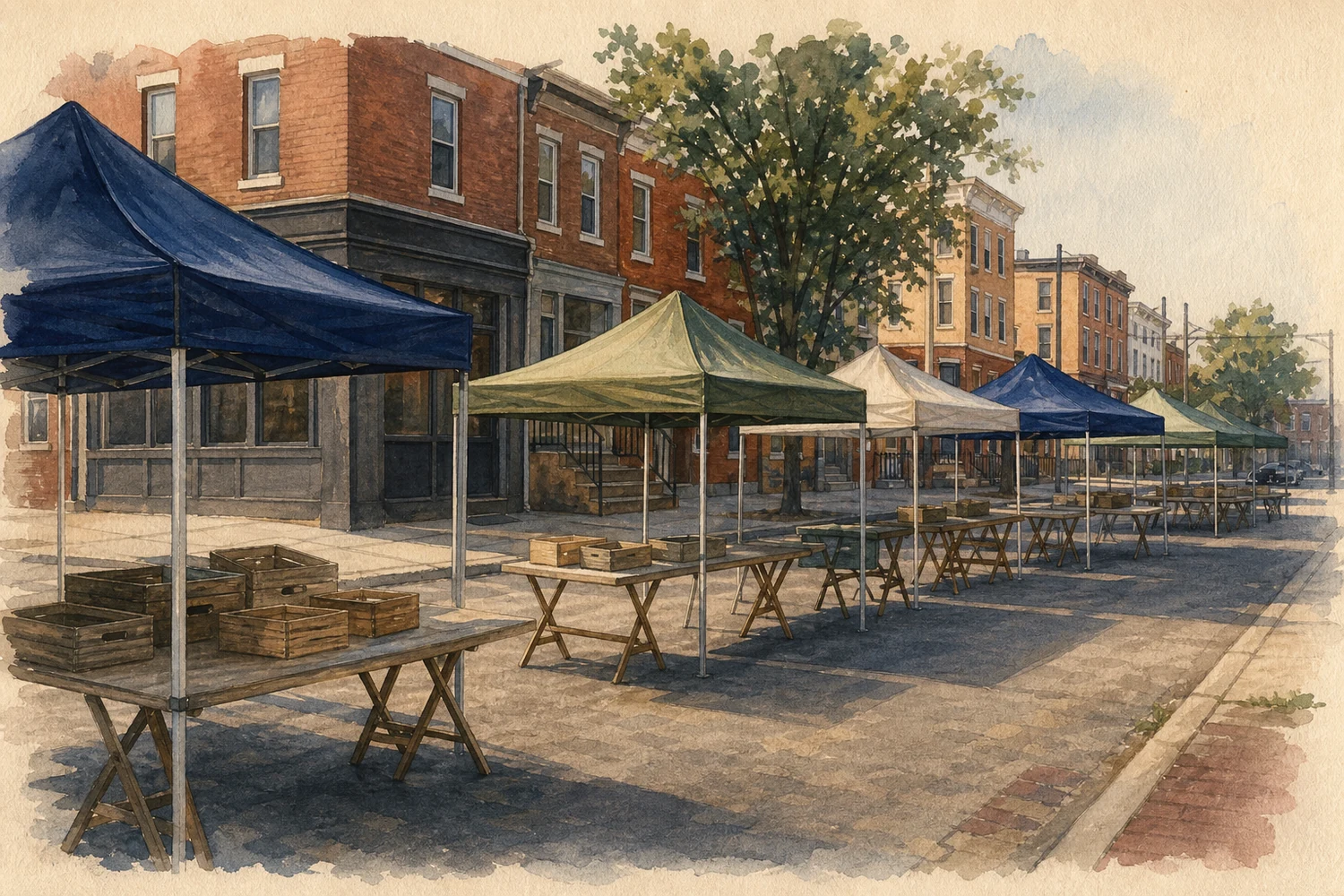
The Point Breeze Community Market at Point Breeze Avenue and Reed Street turns the neighborhood into a gathering spot once a week. Every Thursday afternoon and evening, the area fills with vendors, neighbors, and people browsing without any rush. The market season shapes how residents shop, socialize, and treat dinner on those days. It highlights the neighborhood’s practical identity. People do not come to show off. They come to eat, talk, and support familiar faces. The market feels like a weekly reset, reminding everyone that Point Breeze lives through community interaction rather than fancy commercial development.
What residents actually eat
Not high-end dining. Breakfast plates, quick takeout from corner spots, and affordable comfort food.
Point Breakfast Restaurant
The go-to morning stop, and a local favorite for affordable morning meals.
Best for · A breakfast plate
WOW Mart
Both a supply hub and a cultural checkpoint. Residents of all ages pass through — some stop for groceries or snacks, others hang around to catch up with familiar faces. It keeps the street feeling alive long after other blocks have emptied out.
Best for · Understanding the neighborhood
Rosario’s
One of the dependable solutions for a quick dinner. Not claimed to be the best in Philly — steady, reasonably priced, and part of the local routine.
Uncle Tomy’s
The same role: a reliable, reasonably priced stop that shows up in daily life rather than on a list.
Point Breeze Community Market
Every Thursday afternoon and evening the area fills with vendors, neighbors and people browsing without any rush. A weekly reset — people come to eat, talk and support familiar faces.
Best for · Thursday afternoon
Real Estate and Lifestyle Trade-Offs
Why People Move Here
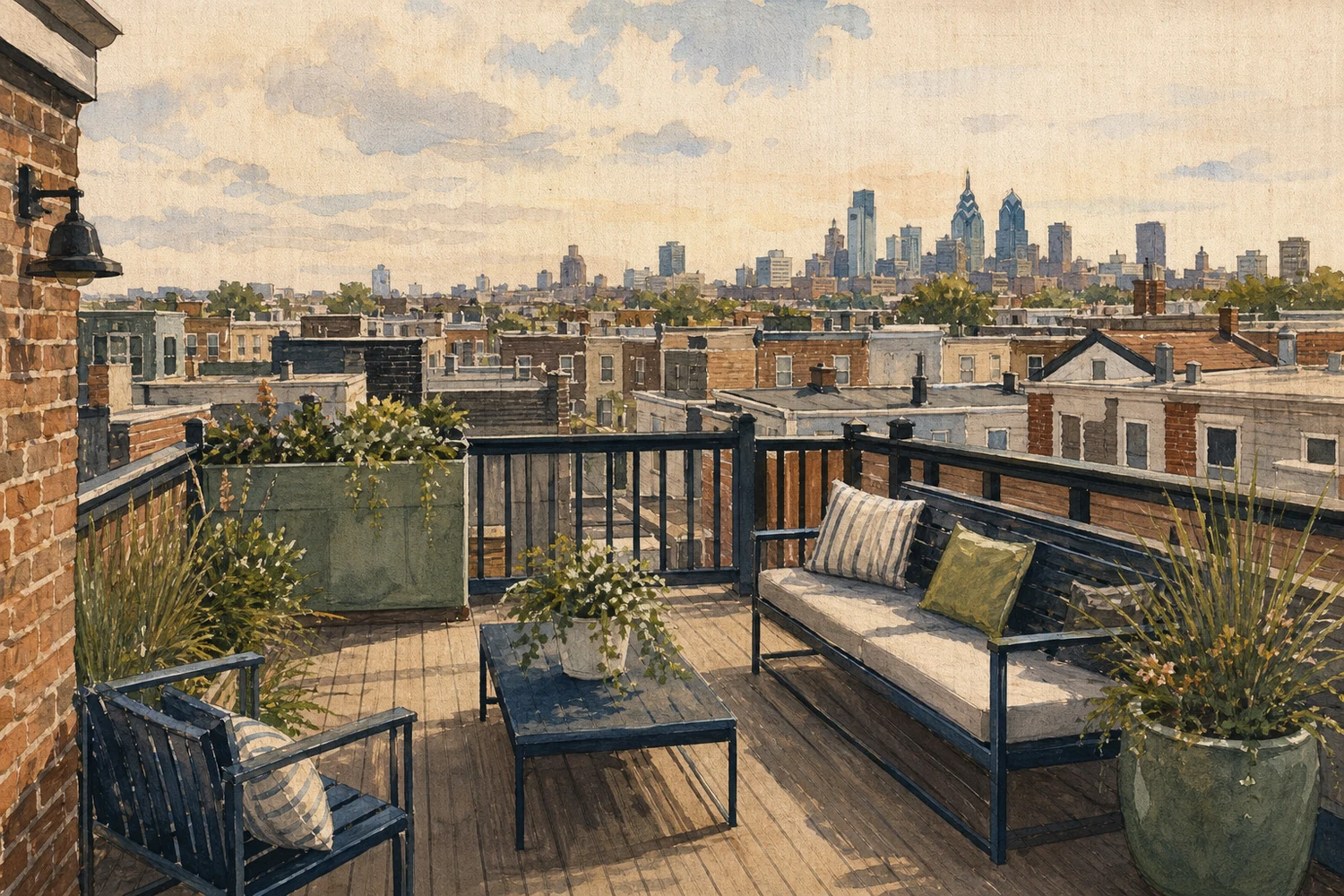
The neighborhood attracts people looking for more room without leaving the city. Roof decks, new construction, and spacious homes draw interest from buyers and renters who cannot justify paying higher prices in Graduate Hospital or trendier parts of South Philly. Many residents choose Point Breeze because they want quiet evenings, walkable access to downtown, and a residential feel that still connects to city life. It offers a practical balance between affordability and location.
Why People Leave
Living in Point Breeze demands patience. Parking challenges wear people down, especially when the Philadelphia Parking Authority enforces late at night. Some residents grow tired of navigating unpredictable blocks or reacting to online negativity about the neighborhood. Others feel frustrated by the lack of large grocery stores, gyms, or walkable amenities. Construction noise and constant development can also push people to seek calmer, more stable residential areas. The decision to leave rarely comes from a single issue. It comes from slow accumulation.
What You Actually Get for Your Money
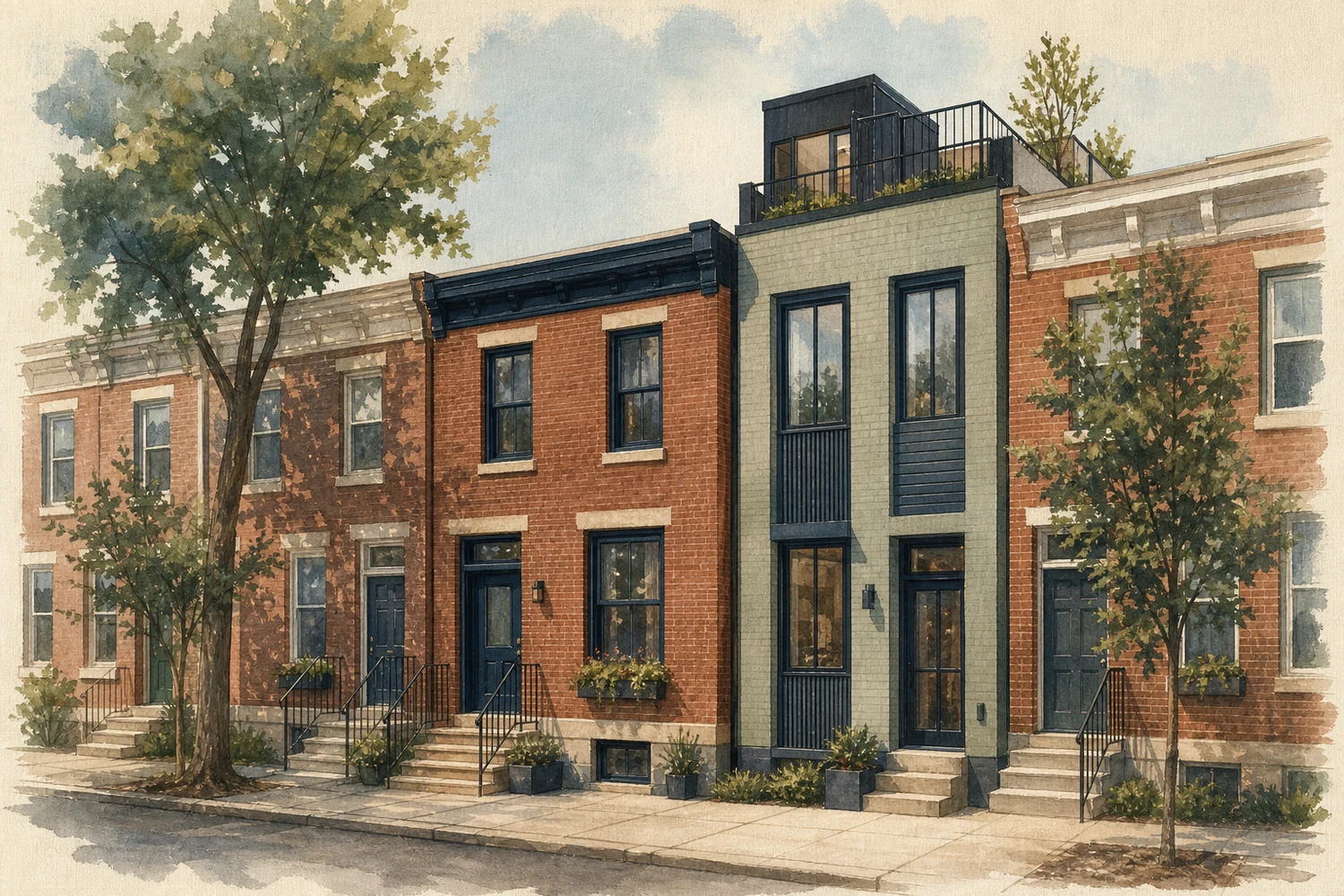
Real estate options range from renovated rowhomes to expensive new builds approaching luxury pricing. New construction can offer skyline views, modern layouts, and more space, but those streets may lack long-standing community ties. Older blocks near friendly residents and corner stores deliver cultural value that money cannot measure. Buyers who care more about lifestyle than fixtures may do better on streets with established neighbor relationships. People who want amenities inside their home more than they want community outside it might lean toward newer builds. The perfect match depends on whether someone prioritizes space or social environment.
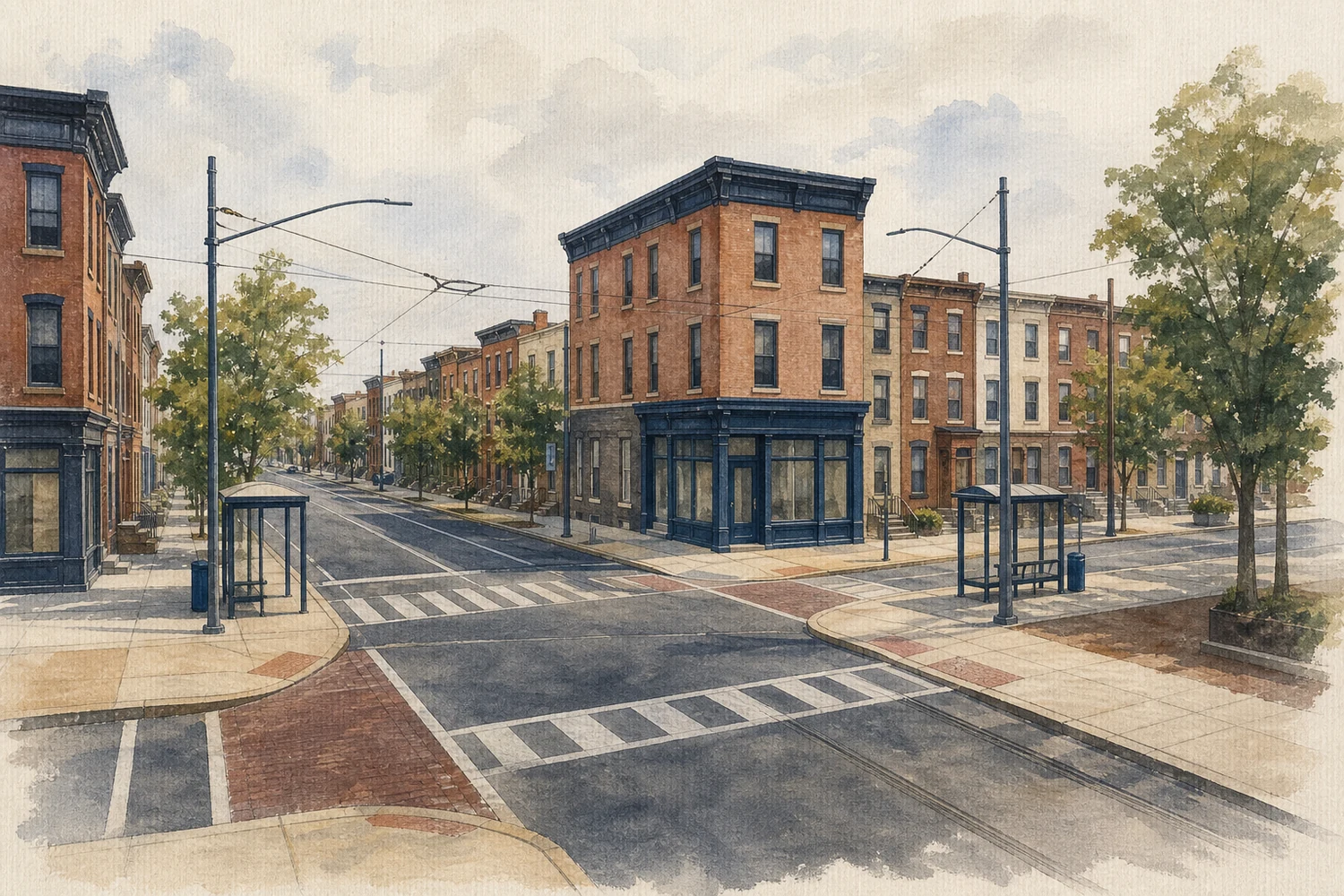
The Online Drama vs. Reality Gap
Point Breeze has an online identity that hardly resembles everyday life. Much of it plays out in local social media groups, where a photo of dog waste, a comment about noisy gatherings, or a complaint about a block party can turn into a full debate about gentrification and who really belongs in the neighborhood.
Online spaces exaggerate conflict. Small annoyances turn into symbolic battles about culture and change. Someone posts about a car window shattered overnight and suddenly the entire neighborhood seems unsafe to anyone reading the thread. In person, neighbors hold calmer attitudes. Most long-timers describe Point Breeze as ordinary, imperfect, sometimes frustrating, and mostly fine. The internet compresses scattered experiences into an all-or-nothing narrative. People who do not interact face to face end up fighting over ideas instead of talking about solutions.
Daily interactions usually contradict the anxiety portrayed online. Neighbors share food, watch each other’s packages, and chat while waiting at corner stores. People help each other move trash cans, clear a snowy sidewalk, or keep an eye on a car. These moments never go viral, yet they define the pace of the neighborhood far more than online conflict. The safest approach to understanding Point Breeze is to treat the internet as exaggerated background noise. The real version of the neighborhood is found on porches, markets, block corners, and slow conversations with the people who have been here long enough to know what actually matters.
The PB Code: Unspoken Rules Only Residents Know
Point Breeze teaches you unwritten rules the longer you live there. Certain corners feel comfortable to cross early in the evening, but you might choose a different path later at night if the block is quiet or if the lighting does not feel supportive. It is not about fear. It is about maintenance of awareness. Locals keep valuables out of sight in their vehicles.
Porch culture governs social behavior. You greet people when you pass them, especially if their door is open and they are sitting outside. A small acknowledgment matters. You do not stare too long. You do not perform friendliness. A nod is enough. The most important skill is to read the street by who is present, not by what the buildings look like. People create safety more than architecture does. A quiet block can feel tense because there are no witnesses. A busy block near a store can feel safe because there are eyes and conversation. The trick is not to judge by how polished a street looks but by how alive it feels.
Residents learn that a busy intersection does not automatically signal danger, and a quiet one does not automatically signal safety. The measure of comfort comes from patterns of use. Who walks here. Who lingers. Who knows each other. The real code of Point Breeze is to watch for community presence, not cosmetic presentation. If a street has people who recognize one another, it is easier to feel secure. The neighborhood rewards awareness and participation more than aesthetic judgment. You do not need to fit in immediately. You only need to show respect and pay attention.
Choosing a Block: Decision Matrix for Buyers and Renters
Choosing where to live in Point Breeze is not a matter of picking a zip code or choosing a direction on the compass. The best match is found by combining someone’s safety comfort level, mobility style, and housing budget. A car owner will have a very different experience compared to someone who bikes everywhere. Families may prioritize access to bus routes or calmer streets near schools. First-time renters may want a pocket with predictable foot traffic during the evening. Point Breeze can either feel convenient or inconvenient depending on how someone moves through the city.
Car owners should pick blocks with easier parking patterns and avoid streets crowded with construction or heavy enforcement zones. Living near storefront clusters may help them avoid late-night ticket risk since activity increases visibility. Cyclists do well in areas that connect quickly to Broad Street or to east-west corridors without long, dark stretches. Parents may prefer quieter corridors like the Latona Belt, where daily routines feel steady and predictable. First-time renters benefit from corners near active bus routes or small businesses where movement continues throughout the day. Remote workers often prefer areas with calmer daytime streets and less noise from construction or gatherings.
Below is a simple checklist to score any block before signing a lease or buying a home:
- Does the street have consistent lighting at night
- Do people regularly walk or gather nearby
- Are there corner stores or markets within a quick walk
- Does activity continue past the early evening
- Is parking stable or unpredictable
- Is there a reliable transit path within a few blocks
Show all 7
- Does the street feel lively during the day and calm enough at night
Someone who answers more yes than no will likely feel aligned with the block. Point Breeze rewards residents who choose a street that matches their lifestyle rather than chasing a wider reputation. The neighborhood is not a single identity. It is a collection of micro-patterns. Those who learn to map their routines to those patterns find a comfortable and practical life here.
Make it yours
Your Point Breeze viewing checklist
A short list to turn what you read into your own next steps.
Saved checks stay on this device when browser storage is available. This is a personal planning list, not a property inspection or professional assessment.
Sources & next steps
Useful advice should
show its working.
These resources support the reader tools above and help you check details for your own address, date, or plans.
- Philadelphia Atlas
Look up an address and review available City property records.
- SEPTA trip planner
Plan your date, direction and return journey; check service and accessibility details.
- Philly311
Find the appropriate channel for a non-emergency City service request.
These tools do not certify renovation quality, a market schedule or block-level comfort. Public records are a starting point for informed questions.
Keep exploring