
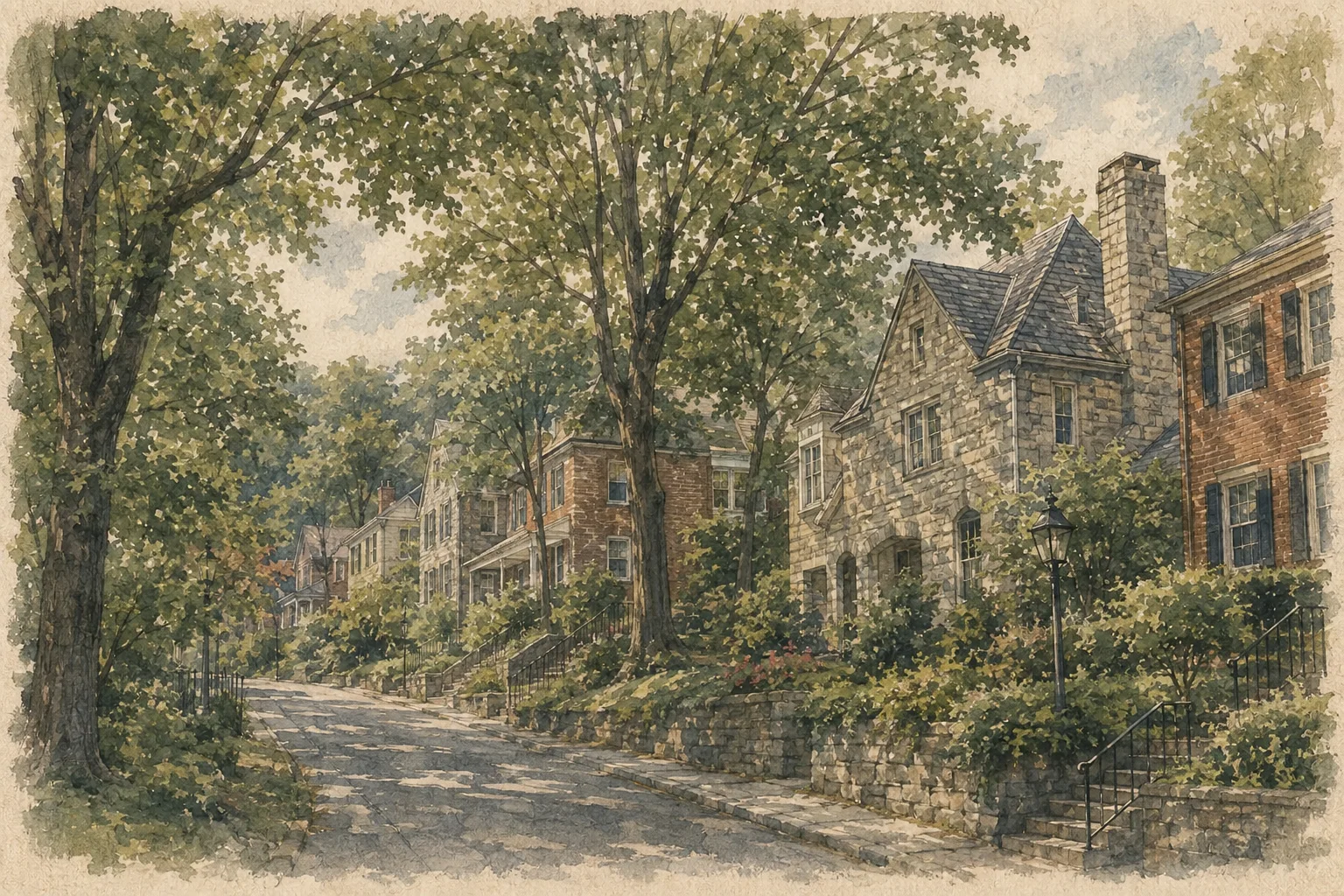
A little orientation
Test the two kinds of walking in Andorra
Separate errands from leisure
Test a grocery journey independently from a park walk; one does not establish the convenience of the other.
Use your actual departure time
Compare transit at the times you would travel rather than relying on a broad car-or-transit description.
Ask about the particular home
Compare the unit's condition and access directly instead of treating a development name as a quality guarantee.
A closer look
Which Andorra journey matters most?
Choose an everyday task, then build a realistic route around it.
Bring the errand back home
Choose the current shop you would use in Andorra and confirm its location with the operator. Plan the return journey in SEPTA's tool, paying attention to walking sections and what you would carry after an ordinary grocery shop.
A useful questionHow would I get these bags home in poor weather?
Source & next step ↗Make the entrance part of the plan
Start with Friends of Wissahickon's visit information and choose the entrance you mean to use from Andorra. Plan a short route and its return before adding distance; check current conditions rather than assuming a nearby green area offers convenient access.
A useful questionWhere does my walk actually enter and leave the park?
Source & next step ↗Look at the unit behind the name
Search the exact Andorra address in the City's property tools and bring building-specific questions to a viewing. Compare entrances, maintenance contacts, and available storage, then ask which facilities or services are actually included with the unit under consideration.
A useful questionWhich amenities and responsibilities belong to this particular unit?
Source & next step ↗When we service homes in Upper Roxborough and Andorra, the difference is noticeable before you even step inside. Streets feel more residential. There is more space between homes. Clients talk about dog walks, school schedules, and park access far more than they talk about restaurants or late nights. The rhythm here is slower, and for many people, that is exactly the point.
This guide is built from real local patterns, not surface-level descriptions. It breaks down what daily life actually feels like in Andorra, how traffic and timing shape your routine, and why small details like where you live off Ridge, Henry, or Cathedral Road can change your experience completely. If you are considering moving here, or trying to understand why people choose this part of Philadelphia, this is the version that reflects how locals actually live.
Why Andorra Feels Different From the Rest of Philly
Andorra feels different from the rest of Philadelphia in a way that becomes obvious before anyone even explains it to you. The streets are quieter. The houses sit farther apart. The rhythm is slower. You see more driveways, more dog walkers, more tree cover, and more people heading toward the park than people spilling out of bars. In a city where many neighborhoods are judged by how busy, loud, or packed they feel, Andorra stands out because people keep using words like quiet, safe, suburban, and sleepy as compliments. They do not mean that the neighborhood lacks life. They mean it feels protected from the kind of noise and friction that define so many other parts of the city.
That is why Andorra has such a specific reputation inside Roxborough. People often describe it as the quietest part of Philly, and even when that sounds exaggerated on paper, the feeling behind it is easy to understand once you picture where you are. This is Upper Roxborough / Andorra, the part of the neighborhood where daily life leans toward routine and comfort. The local landmarks that matter most are not cocktail bars, music venues, or packed restaurant rows. They are the shopping center, the library, the park, the roads you learn to avoid at certain hours, and the familiar residential blocks where the pace of life feels settled rather than restless.
That slower pace is one reason Andorra inspires such loyalty. For families, dog owners, and anyone tired of living in a part of the city that always feels switched on, the area offers something rare. You can still say you live in Philadelphia while feeling like you stepped into a more suburban version of it. You are close enough to the rest of the city to reach it, but far enough into the northwest edge that home feels quieter, greener, and less compressed. That suburb-inside-the-city balance is one of the main reasons people stay.
At the same time, Andorra is not universally romanticized. The same qualities that make it appealing to one person can make it feel dull to someone else. What one resident calls peaceful, another might call boring. What one person sees as calm, another reads as dead. That tension runs through almost every honest conversation about the area. If you want bars on every block, dense restaurant choices, and the feeling that something is always happening right outside your door, Andorra can feel too sleepy. If you want safety, breathing room, and a neighborhood where the loudest part of your evening might be a few cars heading home, that same sleepiness starts to look like one of its biggest strengths.
The best way to understand Andorra is to stop measuring it against Center City, Fishtown, or South Philly standards and see it for what locals actually value. It is park-adjacent, family-friendly, and deeply shaped by the idea that home should feel restful. People here do not usually defend the neighborhood by pretending it offers everything. They defend it by being honest about the tradeoff. You may drive more. You may go elsewhere for nightlife. You may have to work around traffic patterns that outsiders do not anticipate. But in exchange, you get one of the few corners of Philadelphia where the city starts to feel less like constant motion and more like a place to exhale.
Where Andorra sits
- Andorra Shopping Center
- Andorra Meadow
- Ridge Avenue
- Cathedral Road
Schematic · not to scale
Where Andorra Actually Is and How Locals Define It
One of the easiest ways to sound unfamiliar with this part of Philadelphia is to talk about Roxborough as if it all feels the same. Locals do not experience it that way. They break it down into smaller pieces, and Andorra is one of the most distinct. Outsiders often flatten everything into Roxborough because that is the broader neighborhood label they recognize, but people who know the area use more precise terms. They say Upper Roxborough / Andorra when they want to signal the quieter, greener, more suburban-feeling part. They say deep Rox when they are talking about being farther out, more residential, and more dependent on a car. They talk about the Ridge strip when they mean the noisier, more commercial corridor where traffic, schools, and errands all pile into the same space.
That local distinction matters because advice changes depending on where you are standing. Someone living closer to Main Street or nearer the Wissahickon side of the broader Roxborough area is having a different experience from someone farther up in Andorra near Cathedral Road. A place off Henry can feel more removed from walkable bars and shops than a place closer to the busier commercial parts of Roxborough. Someone who says they live in Andorra is often signaling more than a mailing address. They are telling you they live in the upper, quieter section where single houses, driveways, and neighborhood routines matter more than commercial density.
This is why Upper Roxborough / Andorra shows up so often in local language. It is not just a technical description. It is a way of identifying a very specific atmosphere within a larger area. Central Roxborough feels more connected to the busier neighborhood core. The Ridge strip feels more commercial, more congested, and in some spots more chaotic. Andorra feels more tucked away. The same general zip code can still produce very different daily patterns depending on whether you are near Ridge, off Henry, closer to Cathedral Road, or farther toward the livelier edges near Main Street and Wissahickon.
Even the word Wissahickon can trip people up if they do not know the local shorthand. Sometimes people mean Wissahickon the neighborhood. Other times they mean the Wiss, which is local shorthand for the park and trail system that shapes life in this whole northwest section of the city. If someone says they are heading to the Wiss, they are usually not talking about a neighborhood boundary. They mean the park, the trails, the green space, the outdoor part of local life that residents treat almost like shared backyard territory.
That is why Andorra works best when you understand it as a micro-neighborhood identity rather than a loose corner of Roxborough. People here often talk like they are drawing a mental map that Google Maps does not fully capture. They know which area feels calmer, which roads carry more stress, which blocks feel removed from the commercial drag, and which parts are closer to the social or restaurant life people associate with the rest of Roxborough and nearby Manayunk. If you ignore those distinctions, you miss one of the most important truths about the area. In Andorra, a few minutes of distance can change the lifestyle completely.
All of Roxborough does not feel the same
The names locals actually use, and what each one signals.
Upper Roxborough / Andorra
The quiet partWhat people say when they want to signal the quieter, greener, more suburban-feeling part — where single houses, driveways and neighborhood routines matter more than commercial density.
Deep Rox
Farther outFarther out, more residential, and more dependent on a car. Residential calm often increases at the same time that spontaneous access decreases.
The Ridge strip
The commercial corridorNoisier and more commercial, where traffic, schools and errands all pile into the same space. More congested, and in some spots more chaotic.
Off Henry
Away from the shopsCan feel more removed from walkable bars and shops than a place closer to the busier commercial parts of Roxborough.
What Daily Life in Andorra Actually Feels Like
Daily life in Andorra is not built around excitement. It is built around ease, repetition, and familiarity. That is part of why people like it so much. A normal week here tends to revolve around practical routines that feel stable. You walk the dog. You run errands at the shopping center. You stop by the library. You head toward the park. You drive when you need to, but when you come home, the neighborhood settles back into itself. That everyday rhythm matters more in Andorra than entertainment density ever could.
The social atmosphere feels low-key and neighborly. This is the kind of place where people often describe the area as close-knit, community-driven, and friendly without sounding like they are trying to sell you on a fantasy. The details that come up again and again are simple ones. People know each other. They recognize familiar faces. They describe the neighborhood as easy to learn. They talk about the comfort of seeing the same dog walkers, the same family routines, the same park-bound traffic, and the same residential patterns that make the area feel settled. Andorra does not really depend on novelty. Its appeal comes from consistency.
The built environment reinforces that feeling. Upper Roxborough / Andorra has more of the physical cues that people associate with suburban life than many other neighborhoods in Philadelphia. There are more single houses, more driveways, more yards, more tree-lined stretches, and more visual breathing room between one home and the next. That changes how the neighborhood feels on foot and from behind the wheel. Even people who criticize the lack of nightlife or the need to drive almost everywhere still tend to describe the area first in terms of safety, peace, and residential calm. Those are not afterthoughts. They are the main event.
What stands out most is how little of Andorra’s identity depends on performing city energy. In some neighborhoods, it feels important to be near where the action is. In Andorra, the value comes from not always being in the middle of it. The neighborhood gives people room to build routines that are quieter and more domestic. Someone who loves that will describe the area as peaceful. Someone who wants more density and activity will probably call it sleepy. Both are observing the same reality from different angles.
That is why Andorra tends to work best for people who care about how a neighborhood feels on an ordinary Tuesday, not just how it looks on a Saturday night. The best version of life here is not based on big destination moments. It is based on whether the neighborhood supports the smaller pieces of life well. Can you get through your errands without stress. Can you walk the dog somewhere pleasant. Can you get a little more space, a little more quiet, and a little less friction at the end of the day. In Andorra, those are the questions that matter most.
The Best Part of Living Here: Parks, Green Space, and the “Backyard” Effect
If you ask people what makes Andorra worth the tradeoffs, the answer keeps circling back to the same thing. It is the greenery. It is the park access. It is the feeling that one of the most valuable parts of the neighborhood is not a commercial corridor or a nightlife scene, but the fact that the Wissahickon and Fairmount Park system feel woven into daily life. Locals do not talk about the park like it is a special outing that happens once in a while. They talk about it the way people talk about something that lives right next to them. In practice, many residents treat the park as part of their backyard.
That backyard effect changes the entire emotional tone of the neighborhood. The park gives Andorra a kind of visual and psychological buffer that many Philadelphia neighborhoods do not have. It creates a sense of space. It softens the edges of daily life. It gives dog owners, walkers, families, and anyone who needs a break from pavement a place to fold into their routines. For some people, this is the single strongest argument for living here. They can accept the driving, the limited nightlife, and the traffic headaches because they get a version of city life that includes real access to woods, trails, meadow views, and quieter outdoor movement.
Andorra Meadow is part of that identity too. It may not be famous across the city, but within the local experience it helps reinforce the idea that this section of the neighborhood sits closer to the calmer, more scenic side of northwest Philadelphia. People who know the area well do not just talk about living near green space in abstract terms. They talk about favorite areas of the park. They refer to the Wiss with the kind of shorthand that only happens when something becomes part of your normal life rather than a destination. Even the language residents use suggests habit and attachment. They are not saying they occasionally visit a park. They are saying the park is right there.
Dog culture fits naturally into that landscape. Andorra has the kind of setup dog owners notice immediately. There are regular walking routes, abundant green space, and enough local familiarity that walking the same loops starts to feel like part of the social life of the neighborhood. Some residents even talk about off-leash-friendly local knowledge in the sort of half-spoken way that suggests there are spots locals know but do not over-explain to outsiders. That is another sign of how deeply the park is embedded in neighborhood life. It is not just public land. It is part of the local rhythm.
For many longtime residents, this green setting is also one of the biggest emotional reasons they stay loyal to Andorra. The roads can be frustrating. The shopping options are practical rather than exciting. The nightlife is limited. But the calm produced by the park-side environment is hard to replace. People who love Andorra often sound like they are defending more than a neighborhood. They are defending a very particular version of Philadelphia where the city opens up, gets quieter, and gives you a little more room to breathe.
The Tradeoff Nobody Hides: Traffic, Driving, and Why Timing Matters
Nobody gives an honest description of Andorra without eventually talking about traffic. It is one of the few complaints that appears across almost every kind of source, and it is usually described with real frustration rather than mild inconvenience. The issue is not just that you need a car here. Most residents already accept that. The issue is that the roads feeding daily life in this part of Roxborough can feel very different depending on the time of day, the school schedule, and which corridor you are trying to use. A route that seems fine to an outsider at one hour can be a huge pain though at another.
Rush hour on Green Lane comes up so often because it is one of the clearest examples of how timing shapes life in Andorra. Locals mention it not as a theoretical annoyance, but as a repeated lived problem. The same goes for Ridge Ave, which carries a lot of the broader neighborhood’s congestion, school-related traffic, and commercial stress. When people say Andorra offers a suburb-inside-the-city lifestyle, the hidden footnote is that you still have to move through these roads to get where you need to go. The peace of your residential block does not cancel out the frustration of the main routes.
Morning and evening rush hour are especially important because they change the feel of the neighborhood in very practical ways. Residents repeatedly point out that the commute can seem perfectly reasonable when traffic is light, then become annoying enough to shape your day once the roads fill in. That split explains why people sometimes describe the commute as pleasant and other times make it sound brutal. Both descriptions are true. The neighborhood rewards people who learn its timing.
School hours complicate things even more. Certain spots around Ridge pick up a more chaotic feel during drop-off and pickup windows, and locals clearly build their behavior around that knowledge. This is why hyper-local advice matters more than generic neighborhood summaries. It is not enough to know that a road gets busy. You need to know when, where, and why. In Andorra, that level of detail affects whether a quick errand stays quick or turns into a headache.
Residents cope by developing workarounds. They avoid Green Lane during rush hour when possible. They use alternate streets when they know a main corridor will be clogged. They time their stops more carefully. They choose when to go out based on whether they feel like dealing with the traffic burden. These are not dramatic survival tactics. They are the kind of small, repeated behaviors that define whether daily life feels manageable in this part of the city.
What is notable is that even people who complain about traffic often still conclude that Andorra is worth it. That says a lot about the neighborhood’s value system. The roads may be one of the area’s most consistent frustrations, but the quiet, safety, and greenery are strong enough that many residents are willing to absorb that cost. The frustration is real. The loyalty is real too.
The Most Local Warning: The Wawa on Ridge Is Not Just the Wawa on Ridge
One of the best examples of true neighborhood knowledge in Andorra is the way people talk about the Wawa on Ridge. To an outsider, it sounds like a completely ordinary reference point. It is just a convenience store on a commercial road. But locals call it out for a reason. They are not warning you away from it all the time. They are telling you that the experience of that specific spot changes depending on when you show up.
During school hours, especially around drop-off and pickup timing, the area near that Wawa can feel much more chaotic than the rest of Andorra’s quiet image would suggest. The issue is not simply that there are more cars. It is the whole atmosphere that shifts. Traffic stacks up differently. Movement gets more crowded and less predictable. A place that seems like a routine stop becomes one of those local nodes where timing suddenly matters more than the destination itself. People who know the neighborhood do not need a long explanation. They already understand that some places operate on their own clock.
That is why this warning feels so useful. It captures something bigger about life in Andorra. A lot of the neighborhood’s most important knowledge is not about whether a place is good or bad in general. It is about whether you are hitting it at the right moment. The Wawa on Ridge is the clearest example because it looks harmless on the map. Nothing about it signals that it becomes a local frustration point under the wrong conditions. You only learn that through experience, or by listening to people who already have it.
It also shows why generic neighborhood guides tend to miss what actually matters. A broad write-up might tell you Andorra is quiet, family-friendly, and suburban-feeling, and all of that would be true. But that would not prepare you for how specific daily life can get once roads, schools, errands, and local traffic patterns enter the picture. In a neighborhood like this, ordinary places do not behave the same way all day. The road network and daily schedule quietly reorganize them.
So if you want one piece of practical, local-level advice that captures the whole Andorra mindset, it is this: never judge a place here without considering the hour. The Wawa on Ridge is not just the Wawa on Ridge. It is a reminder that the most useful neighborhood knowledge is often about timing, not branding.
Is Andorra Walkable? Yes for One Kind of Life, No for Another
Walkability in Andorra depends entirely on what kind of life you are trying to live. If your idea of a walkable neighborhood means quiet residential streets, dog walks, easy access to green space, and the ability to fold a library stop or a simple errand into your routine, then Andorra can absolutely feel walkable. If your idea of walkability means stepping outside and having bars, restaurants, late-night food, and dense commercial activity within a few blocks, then Andorra will feel limited almost immediately.
That is why people seem to contradict each other when they describe the area. They are often using the same word to mean different things. In Andorra, walkability usually refers to a calmer, more residential version of the concept. You can walk the neighborhood. You can walk the dog. You can head toward the park. Depending on where you live, you may be able to walk to the library or to practical errands around the shopping center. The streets themselves often feel more comfortable for everyday walking than many busier parts of Philadelphia because the neighborhood is quieter, greener, and less compressed.
What Andorra does not offer is the kind of walkability people associate with Center City, South Philly, or Fishtown. You are not stepping into a neighborhood where every block is lined with social options. You are not likely to feel surrounded by places to linger into the evening without planning ahead. Even people who genuinely love the area tend to admit that if you want bars on every block, you will be disappointed. That is one of the clearest dividing lines in how people judge the neighborhood.
The phrase you will still be in your car for most things comes up so often because it captures the difference between local comfort and broader convenience. A pleasant walking environment does not erase the fact that many residents still drive for nightlife, bigger restaurant choices, or activities beyond the immediate routine geography of the neighborhood. That is especially true the farther out into Upper Roxborough / Andorra you go. In deep Rox, residential calm often increases at the same time that spontaneous access decreases.
For the right person, that tradeoff feels perfectly fair. A resident who values peace, parks, and a more settled daily rhythm may find Andorra walkable enough in all the ways that matter. A resident who wants denser city energy will almost certainly define walkability differently and come away frustrated. So the honest answer is yes, Andorra is walkable for a very specific kind of life. It just is not the kind of life that most people picture when they talk about Philadelphia neighborhoods with strong street energy.
Andorra for Families, Dog Owners, and People Who Want Calm
Andorra makes the most sense for people who are actively looking for a quieter version of Philadelphia life. Families are one of the clearest examples. The neighborhood’s reputation for safety, park access, and residential calm comes up so consistently that it shapes almost every honest recommendation about who should live here. If your priorities include peaceful streets, a more settled environment, and a daily routine that feels less chaotic than many other city neighborhoods, Andorra starts to look like a very strong fit.
Dog owners are another obvious match. The neighborhood’s rhythm and layout seem especially comfortable for people whose days include regular walks, green space, and park-side routines. It is not just that there are places to walk. It is that the whole area feels structured around the kind of lower-intensity movement that dog owners notice right away. Residents talk about seeing people walking dogs constantly, using the park as part of normal life, and having access to greener surroundings that make ordinary routines feel less cramped. That combination gives the neighborhood a practical appeal that goes well beyond aesthetics.
Andorra also works well for people who work from home or simply want their home environment to feel calm once the day ends. In a neighborhood where quiet is one of the main emotional selling points, the absence of constant street activity becomes a feature rather than a drawback. Someone who needs a lot of external stimulation may find that too subdued. Someone who wants a home base that feels steady, quiet, and detached from city noise will likely see it as one of the area’s biggest strengths.
The neighborhood is also a good fit for residents who do not need nightlife outside their door. That does not mean people here never go out. It means they are comfortable with the idea that going out often requires intention. They are willing to drive, rideshare, or plan around traffic because what they want from home is different. They are not looking for a block that stays active late into the night. They are looking for a neighborhood that feels livable on an ordinary weekday.
That last point matters most. Andorra tends to attract people who are willing to exchange spontaneity for peace. They know they will probably drive more. They know they will not have bars on every block. They know the traffic can be frustrating. But if what they really want is safety, greenery, and a calmer daily rhythm, those costs often feel manageable. In that sense, Andorra is not trying to be for everyone. It is very good at serving a particular kind of resident.
Andorra for Young Professionals: When It Works and When It Doesn’t
Andorra can work for young professionals, but only if the lifestyle match is real. The neighborhood tends to appeal to younger residents who want quiet, value a safer and greener home base, and do not mind planning around driving or rideshares when they want more activity. For someone who spends the workweek wanting peace and only heads into busier parts of the city selectively, Andorra can feel like a relief. It offers breathing room that is harder to find in more nightlife-driven neighborhoods.
That is why some younger residents end up loving the tradeoff. They see the calmer residential feel as a benefit, not a compromise. They like coming home to a quieter part of the city. They appreciate the park access, the lower-intensity streets, and the sense that home is not wrapped in constant noise. If their version of city life is more about selective access than total immersion, Andorra can make a surprising amount of sense.
The neighborhood becomes a much harder sell if what you want is dense city energy built into your daily life. If you prefer neighborhoods where restaurant choices are stacked close together, nightlife feels spontaneous, and going out does not require thought, Andorra will probably start to feel too removed. This is where the boring or dead language comes from. It is not that nothing exists here. It is that the texture of the neighborhood does not support the kind of impulsive, highly social urban life some young professionals want.
That difference shows up clearly in how people talk about proximity. Residents who are happy in Andorra often describe getting to other places as manageable. Residents who are less happy tend to focus on the friction. The same drive or rideshare can feel perfectly reasonable to one person and exhausting to another. A lot depends on whether you see home as your main comfort zone or as a launch point into the rest of the city. In Andorra, that distinction matters.
So for young professionals, the neighborhood really comes down to preference rather than age. If you want peace, greenery, and a more residential home base, it can work very well. If you want nightlife density, restaurant variety, and the feeling that city life starts the second you walk out your door, it probably will not. And the honesty of that split is one of the reasons Andorra feels more credible than neighborhoods that try to market themselves as a perfect fit for everyone.
The Local Landmarks That Actually Matter
The landmarks that matter in Andorra are not the kind you build a tourist itinerary around. They are the kind that organize actual neighborhood life. People use them to orient themselves, to explain where they live, to describe what kind of daily rhythm they have, and to signal whether they really know the area. If you want to understand Andorra as a lived neighborhood instead of a vague section of northwest Philadelphia, these are the places that matter.
Andorra Shopping Center is one of the biggest. It comes up over and over because it functions as a practical center of gravity for the area. It is not glamorous, and that is exactly the point. Residents use it, refer to it, and notice changes there immediately because it is tied to everyday life. The Andorra Library, also known as the Andorra Branch, matters for similar reasons. It is one of those institutions that tells you what kind of neighborhood this is. A library inside the shopping center says a lot about the way civic life and ordinary errands overlap here.
The Wawa on Ridge matters in a more cautionary way. It is one of the most specific examples of how local knowledge works in Andorra. It is not important because it is special in itself. It is important because residents use it as a marker for timing, congestion, and school-related chaos. That makes it one of the most useful orientation points in the neighborhood, even if it would look completely ordinary to someone passing through.
Andorra Point, or what some locals think of as the Cathedral Rd apartments, is another meaningful reference point. It helps people place themselves within the quieter residential side of the area and shows up often enough in neighborhood conversation to function as a real landmark rather than just a private address. The Andorra Laundromat belongs in the same category. It is not a destination, but it is part of the everyday service map that matters to people who actually live here.
Then there is Andorra Meadow and the broader park access around it. This is the landmark that explains the emotional side of the neighborhood. The shopping center, library, Wawa, apartments, and laundromat explain the routine. The meadow and nearby park system explain why so many people feel attached to the place. Together, these landmarks tell a much more honest story about Andorra than any list of attractions ever could. They are practical, local, and deeply tied to how residents actually move through life here.
The local landmarks that actually matter
Not a tourist itinerary. The places residents use to explain where they live.
Andorra Shopping Center
Not glamorous, and that is exactly the point. Where commerce, neighborhood infrastructure and local observation all meet. Residents notice changes there immediately because it is tied to everyday life.
Best for · Errands
The Andorra Library
A library inside the shopping center says a lot about the way civic life and ordinary errands overlap here. Tied to reading programs, community events and family routines.
Best for · A stop on the loop
The Wawa on Ridge
Ordinary on the map, and residents use it as a marker for timing, congestion and school-related chaos. During drop-off and pickup the whole atmosphere shifts.
Best for · Off-peak only
Andorra Meadow
The landmark that explains the emotional side of the neighborhood, and why so many people feel attached to the place. Part of the park-side identity locals call the Wiss.
Best for · A dog walk
The Tomato Shack
One of the stronger local names in the broader Andorra orbit. It holds its place because it is known and dependable rather than flashy.
Best for · A safe bet
The Andorra Shopping Center: Why It Matters More Than It Looks
The Andorra Shopping Center matters because it functions as something larger than a simple retail cluster. In a neighborhood defined by routine, errands, local familiarity, and a strong attachment to practical daily life, the shopping center becomes one of the few places where different parts of Andorra overlap. It is where commerce, neighborhood infrastructure, and local observation all meet. That is why it appears so often in conversations about the area, even though it would not look particularly memorable to an outsider.
Part of its importance comes from the fact that the library is inside it. That detail changes the meaning of the space. It is not just somewhere to pick something up and leave. It is also a place tied to reading programs, community events, neighborhood habit, and family routines. In Andorra, the fact that a library and a shopping center are so closely linked says a lot about the area’s personality. The center of local life is practical, useful, and woven into everyday movement rather than built around spectacle.
The car wash is another good example of how this place works in neighborhood consciousness. On paper, a car wash is a minor business inside a small commercial node. In practice, it became a local reference point important enough that residents noticed when something seemed to be happening to it. That kind of reaction only happens when a place has become part of the neighborhood’s mental map. People were not discussing it because it was iconic in a citywide sense. They were discussing it because it was familiar enough to make change feel personal.
The same goes for concerns around redevelopment and the Giant supermarket project. Once the shopping center starts changing, people do not treat that as neutral background activity. They watch it. They question it. That tells you the shopping center has moved beyond pure convenience in the local imagination. It has become one of the places where residents read broader neighborhood change. A new project there is not just a new project. It can feel like a signal about what Andorra is becoming.
That is why locals track this place so closely. The shopping center sits at the intersection of utility and identity. It is where you go for ordinary reasons, but it is also one of the clearest indicators of whether the neighborhood still feels familiar to the people who live there. In a place like Andorra, that kind of familiarity matters. It shapes how residents judge change, how they define the neighborhood, and how they explain daily life to other people.
Renting in Andorra: What Apartment Life Looks Like
If you are renting in Andorra, one of the main housing references you will hear about is Andorra Point, sometimes described more casually as the Cathedral Rd apartments. It is one of the clearest apartment-based landmarks in the neighborhood, which matters because Andorra is more often described through houses, driveways, and suburban-feeling residential blocks than through large renter-heavy zones. When people mention apartment living in this part of Roxborough, Andorra Point usually enters the conversation quickly because it gives renters one of the most visible ways to access the neighborhood’s quieter setting.
That quiet-location appeal is a real part of the draw. The same qualities that make Andorra attractive to homeowners also shape the apartment experience. Residents looking at this area are often interested in calmer surroundings, easier access to green space, and a home base that feels more residential than hectic. For someone who wants a quieter pocket of Philadelphia without jumping fully into suburban life outside the city, that setup can be appealing. The location fits the broader Andorra identity of safety, routine, and lower-intensity daily life.
There is also at least one concrete pricing snapshot in the neighborhood conversation, with one-bedroom and two-bedroom apartment listings in the roughly 710 to 918 square foot range starting around $1,465. That number should be treated as a point-in-time reference rather than a permanent market truth, but it is still useful because it places Andorra within a more grounded, practical housing discussion. It gives a better sense of how the area is positioned for renters who want a quieter environment without stepping into a luxury-only category.
The complex is presented through the familiar language of comfort, settled living, and good location. Read recent resident reviews of any specific building before you sign, rather than relying on the branding.
For renters, that means Andorra apartment life should be understood with the same realism that applies to the neighborhood overall. The location delivers on quiet, residential feel, and access to the slower-paced side of Roxborough. But quiet surroundings do not automatically guarantee smooth property management. Anyone considering apartment life here should pay attention to both sides of the picture. The neighborhood itself may be one of the biggest strengths of renting in Andorra, while the building experience may require more scrutiny than the branding suggests.
Food, Errands, and Everyday Convenience
Andorra is not where people go to chase the most exciting food scene in Philadelphia. It is where people live when they want the practical side of daily life to work. That is an important distinction because it says a lot about what residents actually value. The food options around the neighborhood tend to be described less in terms of destination dining and more in terms of reliability, convenience, and familiarity. People are not usually talking about the area as if it is a culinary draw. They are talking about what is nearby, what is useful, and what fits into ordinary routine.
That does not mean the food situation is weak. It means the standards are different. The Tomato Shack is one of the stronger local names that comes up in the broader Andorra orbit, and it seems to hold its place because it is known and dependable rather than flashy. That pattern fits the neighborhood well. Nearby dining is more about safe bets and solid options than about trend-driven restaurant culture. Residents seem content with that because the area’s identity is rooted in livability, not performance.
Fast-casual and service-oriented convenience also matter a lot here. The neighborhood’s everyday ecosystem includes the kinds of places people actually use repeatedly, whether that means grabbing something quick, handling errands, going to the laundromat, stopping by the library, or taking care of practical needs like dentistry. The shopping center is central to this because it concentrates so much of the neighborhood’s functional life in one place. That may not sound glamorous, but it is one of the most honest reflections of how Andorra works.
This is part of why places like the Andorra Laundromat and Andorra Family Dentistry matter more in a real neighborhood guide than a long list of restaurants would. They tell you how the neighborhood supports ordinary life. In a place like Andorra, that support system often matters more to residents than whether there is a buzzy dining scene nearby. The same goes for the library and the small but important commercial anchors that make routine feel manageable. These are the places that make the area livable on a weekday.
For someone deciding whether Andorra fits their lifestyle, that practicality can either feel reassuring or underwhelming. If you want a neighborhood built around trendier restaurant density, you will probably feel the limits quickly. If what you want is a place where errands make sense, the local services are usable, and food options are solid enough to support everyday life without much friction, Andorra does that well. It is a neighborhood where convenience tends to matter more than hype.
The Unwritten Rules of Living in Andorra
The first unwritten rule of living in Andorra is that you should never judge a route without considering the time of day. This is one of the clearest forms of local knowledge in the neighborhood. A road that looks simple on the map can feel totally different during rush hour, around school drop-off, or near pickup time. People who know Andorra do not think about roads in a static way. They think about them in terms of timing, bottlenecks, and whether a quick stop will still feel quick at that particular hour.
The second rule is that all of Roxborough does not feel the same. Locals make this distinction constantly, and newcomers who flatten everything into one neighborhood usually misunderstand what they are getting. Upper Roxborough / Andorra, deep Rox, the Ridge strip, and areas off Henry all carry different assumptions about walkability, traffic, and day-to-day feel. Someone who knows the area well is always thinking in sub-sections rather than broad labels.
Another important rule is to stop expecting nightlife without driving. People here are not confused about what the neighborhood offers. If they want denser bars, more spontaneous dinner options, or a stronger social scene, they know they are likely heading elsewhere. That is why many longtime residents are so direct about the tradeoff. You live here because you want what Andorra does well, not because you think it will behave like a nightlife neighborhood.
Walkability follows the same local logic. In Andorra, walkable does not mean what it means in Center City. It does not mean a block-by-block stream of restaurants, coffee shops, bars, and urban activity. It usually means pleasant residential walking, practical routines, dog walks, park access, and depending on where you live, an easier connection to errands or the library. Anyone using a Center City definition here is going to misread the neighborhood almost immediately.
It also helps to know that proximity to Ridge, Henry, Cathedral, and Main Street changes the way advice works. These are not interchangeable points on a map. They shape how much traffic you deal with, how many errands feel close, how removed your block feels from commercial activity, and how much effort it takes to get where you want to go. Locals understand those differences instinctively, which is why their recommendations often sound so specific.
The park should also be treated as part of neighborhood life rather than some optional weekend bonus. People in Andorra do not just mention the Wiss and Fairmount Park because they are nearby. They build routines around them. That outdoor access shapes how the neighborhood feels and how residents use their time. Finally, it is worth understanding that locals are often very friendly, but they are also somewhat territorial about the identity of the neighborhood. They care about what Andorra is called, how it is grouped, and whether someone understands that it is more than just a generic piece of Roxborough. That protectiveness is part of the local culture.
What Longtime Residents Are Protective About
Longtime residents in Andorra seem especially protective of the quiet because it is one of the hardest neighborhood qualities to recover once it changes. The calm feel of the area is not treated like a small perk. It is one of the main reasons people identify so strongly with this part of Roxborough in the first place. When they notice more traffic, new development, or shifts in familiar commercial spaces, the concern often comes back to the same underlying fear that the neighborhood could lose the slower, less pressured atmosphere that makes it feel different from the rest of the city.
Green space and park access carry that same emotional weight. The neighborhood’s relationship to the Wiss and Fairmount Park is not casual. Residents often talk about these spaces as if they are built into the identity of the area, almost like shared territory rather than separate attractions. That helps explain why people feel such a strong attachment to Andorra Meadow, to regular walking routes, and to the daily presence of greenery in neighborhood life. The park-side setting gives Andorra much of its emotional value, so longtime residents naturally become protective of anything that seems to threaten or diminish that experience.
They are also protective of the neighborhood’s slower pace. In many parts of the city, speed, density, and constant activity are treated as signs of energy. In Andorra, the slower rhythm is part of what people cherish. The area is not supposed to feel restless. It is supposed to feel settled. That makes residents especially aware of anything that introduces more congestion, noise, or a stronger sense of churn into everyday life.
The familiar commercial anchors matter too, even if outsiders might overlook them. The Andorra Shopping Center, the library, the car wash, the Wawa on Ridge, and other everyday landmarks become symbolic because they represent continuity. Residents notice when these places change because they are not just businesses in the abstract. They are part of the neighborhood’s routine structure. A small shift in one of those anchors can feel more significant than it would in a place with a faster, more anonymous commercial culture.
Most of all, longtime residents seem protective of the idea that Andorra is more than just Roxborough in a generic sense. They want the distinction to matter. They care about the fact that this area feels different from Central Roxborough, from the Ridge strip, and from other nearby parts of northwest Philadelphia. That protectiveness is not just about labels. It is about preserving a very specific local identity built on quiet streets, green surroundings, and a way of living that many residents feel is worth defending.
What Newcomers Usually Get Wrong
One of the biggest mistakes newcomers make is assuming all of Roxborough feels the same. On a map, the neighborhood can look simple enough. In practice, the experience changes a lot depending on whether you are in Upper Roxborough / Andorra, closer to the Ridge strip, off Henry, or farther toward Main Street and the Wissahickon side. People who fail to notice those differences often end up with expectations that do not match the exact part of the neighborhood they chose.
Another common mistake is underestimating car dependence. People sometimes hear that Andorra is in Philadelphia and assume that means a more typical city rhythm of constant proximity and spontaneous movement. Then they arrive and realize how often driving still shapes the day. Even residents who love the area are blunt about this. You can have quiet and calm here, but those things often come with more time in the car and more awareness of traffic than some newcomers expect.
People also tend to misunderstand what quiet means. Some interpret the neighborhood’s sleepy feel as proof that nothing is happening. Others arrive thinking quiet will automatically feel dull. In reality, Andorra’s calm works very well for certain lifestyles and very poorly for others. The problem usually comes when someone assumes there is only one correct interpretation. For people who want peace, routine, and green space, the neighborhood’s quiet can feel like a major upgrade. For people who want daily city buzz, the same environment can feel too flat.
Traffic warnings are another thing outsiders often dismiss until they live with them. It is easy to hear a complaint about Green Lane or Ridge Ave and assume locals are exaggerating. Timing matters a lot here, and local frustration usually comes from repetition rather than drama. The roads do not need to be catastrophic all the time to affect the feel of everyday life. They only need to be annoying enough, often enough, to shape routine decisions.
Newcomers also tend to miss how central timing is to the neighborhood overall. The Wawa on Ridge is a perfect example. What looks like an ordinary stop can feel very different depending on school schedules and traffic conditions. That kind of local knowledge does not appear in broad neighborhood summaries, but it changes how residents move through daily life. If you do not learn the timing, you do not really know the area yet.
Finally, people often overlook how important the shopping center and the park are to real neighborhood life. Outsiders may search for attractions or high-profile destinations and come away underwhelmed. Locals are paying attention to different things. They care about the practical center of gravity around the shopping center and the emotional center of gravity around the park. If you miss those two anchors, you miss most of what Andorra actually is.
Who Will Love Andorra and Who Won’t
Who will love Andorra, and who won't
Both columns are the legacy guide's own closing section, kept in its words.
- People who want safety, quiet and green space to shape how home feels
- Families, dog owners and remote workers who want the park in everyday life
- Anyone who cares more about routine quality than nightlife access
- People who are comfortable driving and accept the tradeoff early
- Anyone who wants restaurants and bars within easy walking distance
- People who get frustrated by traffic tradeoffs quickly
- Anyone who needs fast, frictionless access to Center City all the time
- People who define walkability through nightlife and commercial density
Make it yours
Try Andorra with an ordinary errand
A short list to turn what you read into your own next steps.
Saved checks stay on this device when browser storage is available. This is a personal planning list, not a property inspection or professional assessment.
Sources & next steps
Useful advice should
show its working.
These resources support the reader tools above and help you check details for your own address, date, or plans.
- SEPTA trip planner
Compare transit journeys using your actual stops, date, and departure time.
- Friends of Wissahickon visit planner
The park steward's starting point for maps, access, and visiting information.
- City property and zoning lookup
Opens the City's address-based zoning and permit tools.
These are personal route and viewing checks. They do not establish current rents, development amenities, or a safety rating for Andorra.