
A little orientation
Test the Somerton week you have in mind
Count the full commute.
Include the trip to the station or stop and the journey home, rather than judging the move by one rail segment.
Plan for a different day.
Check how your essential trips work when your normal car or schedule is unavailable, and keep a practical alternative.
Ask about the household work.
Discuss the actual home’s outdoor space, parking and maintenance arrangements instead of assuming a residential setting means fewer responsibilities.
A closer look
Work, home and time outside
Use Byberry Road and Boyle Playground as guide references, then confirm the actual places and connections you need.
Compare the entire working day.
Plan from the proposed home to your workplace for the actual arrival time you need. Check the return separately, including a later departure, and use current station and line names from SEPTA rather than carrying forward an old route description.
A useful questionWhat happens to your complete commute if you leave work later than usual?
Source & next step ↗Ask about the space you would manage.
Review the actual property address, then ask the owner about outdoor upkeep, parking access and maintenance responsibility. Compare the work and written terms alongside the space on offer, keeping any unresolved question visible before making a housing decision.
A useful questionWhich responsibilities come with the extra space you are considering?
Source & next step ↗Find a practical Boyle visit.
Look up Boyle Playground in the City’s facility finder and contact the relevant team about the activity you want. Confirm access and participation arrangements, then connect the visit to your real travel plan rather than assuming proximity settles convenience.
A useful questionWhich activity and travel arrangement would make Boyle useful to your household?
Source & next step ↗From the way traffic on Roosevelt Boulevard dictates your schedule, to the reliance on driving for even simple errands, to the slower pace of life centered around parks and family routines, Somerton is not a typical city experience. It feels more like a suburban pocket within Philadelphia, where neighbors value privacy, familiarity, and predictability over constant activity.
At the same time, the neighborhood is evolving. Longtime residents notice changes in cleanliness and community dynamics, while newer residents are learning how to navigate local patterns, online neighborhood culture, and the small details that define daily life here. Understanding these realities is the key to knowing whether Somerton is the right fit for you.
This guide breaks down what living in Somerton actually feels like, based on real local experiences, so you can make a more informed decision about your next move.
Somerton Feels Like a Suburb With a Philadelphia Address
When people first hear that Somerton is part of Philadelphia, they usually picture something closer to Center City or South Philly. What they experience instead feels completely different. Somerton sits in the Far Northeast, and the reality on the ground feels much more like a suburban neighborhood than a typical part of the city.
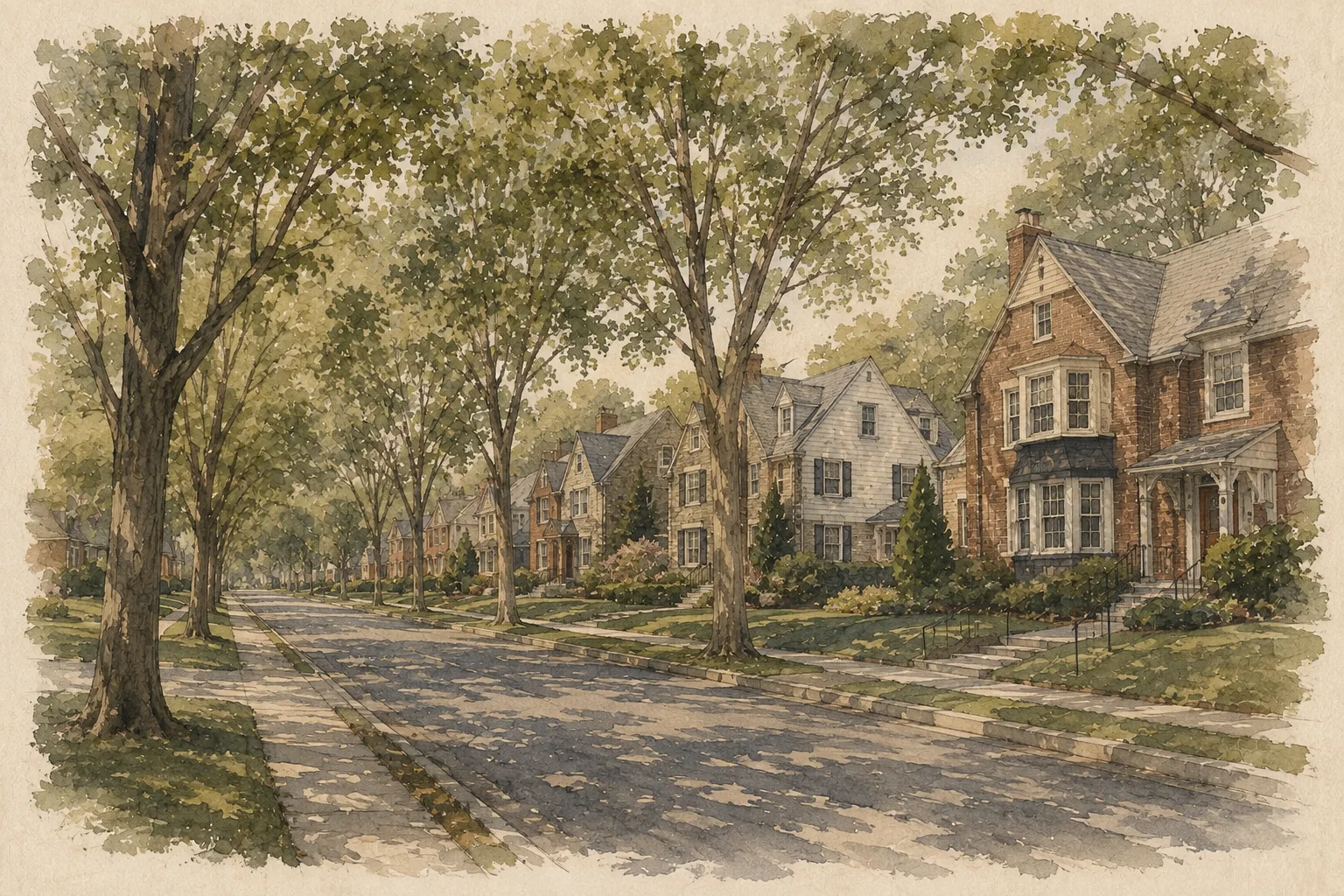
The streets are quiet, especially at night. Homes are spaced out more than what most people associate with Philadelphia. There are fewer rowhomes packed together and more detached or semi-detached houses built decades ago. Many of the properties date back to the mid-20th century, and that contributes to the feeling that time moves a little slower here compared to the rest of the city.
One of the first things you notice is how safe it feels relative to other neighborhoods. People walk at night without constantly looking over their shoulder. It is not unusual to see residents taking evening walks just to clear their head after work. That sense of calm is one of the biggest reasons families choose to stay here long term.
But the trade-off becomes clear quickly. You are not stepping outside into cafes, bars, or busy streets. Instead, most daily errands happen along stretches of commercial areas filled with strip malls, grocery stores, and chain restaurants. If you are expecting the kind of walkable energy that defines most of Philadelphia, Somerton will feel disconnected.
Locals understand this distinction immediately. They do not describe Somerton as part of the city experience. They describe it as a quieter alternative inside city limits. That difference shapes everything from how people spend their evenings to how they plan their weekends. Living here means you are choosing distance from the chaos, but also distance from the convenience and culture that come with it.
Even the language people use reflects this separation. You will hear references to the Far Northeast or simply the Northeast, as if it is its own region rather than just another part of Philadelphia. Within Somerton itself, names like Olde Somerton carry a sense of identity that only makes sense once you have spent time here. These are the small details that signal you are no longer thinking like an outsider.
Where Somerton sits
- Roosevelt Boulevard
- Byberry Road
- Boyle Playground
- West Trenton line
Schematic · not to scale
The Quiet Lifestyle That Comes With Living in Somerton
Once you settle into Somerton, your daily routine starts to revolve around a much slower pace of life. This is not a neighborhood where people are constantly going out, exploring new restaurants, or staying out late. Most nights end early, and that is by design.
For many residents, evenings look the same. After work, people head home, have dinner, maybe watch something on television, and wind down. It is not uncommon for the neighborhood to feel almost still by late evening. That rhythm appeals to people who are tired of noise, traffic, and constant activity. It also feels limiting if you are used to a more active environment.
Social life tends to center around a few consistent outlets. Parks and playgrounds are where families spend time, especially on weekends. Boyle Playground acts as a gathering point for many residents. It is where kids play, where sports practices happen, and where you start recognizing familiar faces. If you have children, your routine often becomes tied to these spaces.
Youth sports are another major part of life here. Organizations like the local youth association become more than just recreational programs. They are a way for families to connect, build relationships, and give their kids something to do in a neighborhood that does not offer many other options. For parents with multiple children, these programs become part of the weekly structure.
The lifestyle works best for people who are comfortable staying close to home. If you expect a variety of entertainment options nearby, you will feel the gap quickly. There are restaurants, but many are casual or part of larger chains. There are parks, but they become repetitive over time. The neighborhood does not constantly offer something new.
This is where the main trade-off becomes clear. Somerton gives you quiet and stability, but it asks you to give up spontaneity. You are not stepping outside into something happening. You are creating your own routine within a calm, predictable environment. For some, that is exactly the point. For others, it becomes the reason they eventually leave.
The Road That Shapes Your Entire Routine in Somerton
There is one factor that determines whether you enjoy living in Somerton or not, and it has nothing to do with your house or your street. It is how you deal with Roosevelt Boulevard.
This road runs through the Northeast and becomes a daily reality for anyone commuting out of Somerton. On paper, it looks like a direct connection to the rest of the city. In practice, it becomes one of the most stressful parts of living here.
Traffic is heavy, but it is not just the volume that frustrates people. It is the behavior on the road. Drivers are aggressive, impatient, and often unpredictable. Even routine trips can turn into long, draining drives depending on the time of day. For commuters heading toward Center City or Temple, this is not an occasional inconvenience. It is something they deal with almost every single day.
Over time, that stress builds. What starts as an annoying commute can become something that affects your mood before you even get to work. People talk about how exhausting it feels to deal with the same traffic patterns repeatedly. It is not unusual for residents to rethink their jobs, schedules, or even where they live based on how often they have to use this road.
Roosevelt Boulevard also carries a reputation beyond just congestion. Many locals associate it with dangerous driving conditions. Speeding, sudden lane changes, and disregard for traffic rules create an environment that feels unpredictable. That perception makes the commute feel heavier than just time lost. It feels like something you have to mentally prepare for.
The important thing to understand is that this road is not just a route. It becomes part of your daily life. It shapes when you leave the house, how you plan your day, and how much energy you have left when you get home. People who are new to the area often underestimate this. Locals know that your experience of Somerton is closely tied to how often you are dealing with the Boulevard.
The Smart Way to Commute That Locals Figure Out Quickly
After spending enough time dealing with traffic, most people in Somerton start looking for alternatives. The ones who stay long term usually arrive at the same conclusion. Driving is not always the best option.
This is where regional rail becomes important. The West Trenton line runs through the Northeast and provides a direct connection toward Center City and Temple. For many residents, it becomes the most reliable way to avoid the daily stress of driving.
Using the train changes the entire experience of commuting. Instead of dealing with aggressive drivers and unpredictable traffic, you have a consistent route and a more controlled schedule. The trip can still take time, but it feels less exhausting. For people commuting regularly, that difference matters.
There is also a practical advantage. Parking and navigating busy areas near destinations like Temple can be just as stressful as the drive itself. Taking the train removes that part of the experience completely. You are not searching for parking or worrying about your car while you are at work.
Because of this, using regional rail is often seen as the smarter move. It is one of those things that long-time residents recommend to newcomers once they realize how difficult driving can be. It is not always convenient depending on where you live in Somerton, but when it works, it becomes the preferred option.
There is one concern that comes up when people rely on this system. Some residents worry about potential service changes or cuts in the future. That uncertainty makes some people hesitant to depend on it fully. Even so, for many, the train remains the best way to avoid the most frustrating part of living in the area.
Understanding this balance is part of adapting to Somerton. You learn which days to drive, when to avoid certain routes, and when it is worth taking the train instead. These small decisions make a significant difference in how manageable daily life feels.
The Street-Level Details That Shape Everyday Life in Somerton
At a glance, Somerton feels simple. Quiet streets, residential blocks, and steady routines. But once you start living here, the experience becomes much more specific. It is not just about the neighborhood. It is about the exact street you are on, the intersections you pass every day, and the patterns you learn over time.
Certain areas feel completely calm while others carry more traffic than you would expect. Roads near major connectors like Byberry Road or Roosevelt Boulevard tend to see heavier movement, especially during school hours and commuting times. If you live near one of these corridors, your experience will be very different from someone tucked deeper into a residential block.
Intersections are another part of daily life that outsiders rarely think about. Some turns that look simple on a map can become frustrating depending on the time of day. School traffic in particular creates pockets of congestion that are predictable if you live there, but surprising if you do not. Locals adjust their routes without thinking about it. They know which turns to avoid and which roads flow better depending on the hour.
There is also a pattern of small frustrations that build up over time. Drivers blocking intersections, ignoring signs, or pushing through traffic becomes part of the routine. These are not dramatic issues, but they shape how people move around the neighborhood. You start timing your errands differently. You avoid certain stretches at specific hours. You learn the rhythm without anyone needing to explain it.
Snow is another example of how local conditions affect daily life. After a storm, some streets are cleared quickly while others take days to catch up. Residents notice which areas get attention first and which ones are left behind. That affects everything from commuting to parking, especially in a neighborhood where driving is already a necessity.
These details are not visible when you first arrive. They only become clear after you spend time here. Over time, you realize that living in Somerton is not just about the neighborhood as a whole. It is about understanding the specific patterns that make your daily routine easier or harder.
The exact street matters more than the neighborhood
Once you live here it stops being about Somerton and starts being about the corridor you sit on.
Near the connectors
Byberry Road · Roosevelt BoulevardHeavier movement, especially during school hours and commuting times. School traffic creates pockets of congestion that are predictable if you live there and surprising if you do not.
Deeper into the residential blocks
Off the corridorsQuiet streets and steady routines. Homes are spaced out more than most people associate with Philadelphia — fewer rowhomes packed together, more detached and semi-detached houses built decades ago.
Olde Somerton
The name locals useOne of the names inside Somerton that carries a sense of identity which only makes sense once you have spent time here. Using it signals you are no longer thinking like an outsider.
Why Somerton Feels Safe Most of the Time
One of the strongest reasons people choose Somerton is the sense of safety. Compared to other parts of Philadelphia, the neighborhood feels calm, stable, and predictable. That perception is consistent across different sources and experiences. It is one of the few things that almost everyone agrees on.
People walk at night without constant concern. Neighbors recognize each other, even if they are not close friends. There is a general feeling that you can go about your day without worrying about serious issues. For families, this is a major factor. It allows children to play outside, walk to nearby parks, and participate in community activities with less stress.
The structure of the neighborhood contributes to this feeling. Residential streets are quieter, with less foot traffic from outside areas. There are fewer nightlife spots or late-night destinations that bring crowds into the neighborhood. Everything about the environment supports a more controlled, low-activity setting.
However, this sense of safety does not mean that nothing ever goes wrong. The concerns that do exist are usually smaller in scale but still important. Issues like litter, vandalism, or neglected spaces come up more often in certain pockets. These are not city-wide problems, but they affect how people perceive specific areas.
Playgrounds and public spaces are where these concerns become more visible. When equipment is broken or trash is left behind, it changes how families use those areas. Parents pay attention to these details because they affect where their children can spend time comfortably.
There are also moments when larger concerns surface, especially around traffic. Busy roads and aggressive driving create situations that feel unsafe even if they are not tied to crime. For many residents, safety is not just about crime rates. It is about how comfortable you feel moving through your environment.
The overall reality is that Somerton maintains a reputation for being one of the safer parts of Philadelphia. At the same time, the experience is not identical on every block. Understanding where things feel more secure and where they do not is part of becoming familiar with the neighborhood.
How Locals Describe the Neighborhood Changing Over Time
If you talk to people who have lived in Somerton for years, one theme comes up repeatedly. The neighborhood is still good, but it does not feel exactly the same as it used to.
Older residents often describe a time when everything felt cleaner and more consistent. Streets were better maintained, public spaces were in better condition, and there were fewer signs of neglect. That contrast becomes more noticeable when comparing the past to the present.
In recent years, some areas have seen an increase in litter, graffiti, and general wear. These changes are not uniform across the entire neighborhood, but they are visible enough that people talk about them. It is not a dramatic decline, but it is a shift that longtime residents notice.
This is where perception becomes important. For someone new to Somerton, the neighborhood may still feel clean and well-kept compared to other parts of the city. For someone who has lived here for decades, even small changes stand out. What once felt consistently maintained now feels uneven depending on the block or location.
Public spaces are often the first places where these changes are noticed. Playgrounds, sidewalks, and shared areas show signs of wear faster than residential streets. When equipment breaks or trash is left behind, it affects how people use those spaces. It also contributes to the feeling that things are slipping, even if the overall neighborhood remains stable.
There is also a broader sense of change tied to the Northeast as a whole. Demographics, community dynamics, and expectations have evolved over time. Some people see this as positive, while others focus on what has been lost. These perspectives exist at the same time, and they shape how residents talk about the neighborhood.
The important detail is that this conversation is ongoing. Somerton is not seen as a declining neighborhood in a dramatic sense. It is seen as a place that is changing, and not everyone agrees on whether those changes are good or bad.
What Daily Family Life Actually Looks Like in Somerton
For families, Somerton offers a very specific type of lifestyle. It is structured, predictable, and centered around a small number of consistent activities.
Parks and playgrounds play a major role in daily routines. Boyle Playground stands out as one of the main gathering points in the neighborhood. It is where children play, where sports practices happen, and where parents interact with each other. Over time, these spaces become part of a family’s weekly rhythm.
Youth sports are another key part of life here. Local organizations provide opportunities for children to stay active, and many families rely on them as a regular outlet. Practices, games, and events create a sense of community that might not be as visible in other parts of the neighborhood. For households with multiple children, these programs become a major part of their schedule.
Outside of these structured activities, daily life is relatively simple. Families spend time at home, visit nearby stores, or take short drives to nearby areas for errands. There are not many entertainment options within walking distance, so planning becomes part of the routine. Even small outings often involve getting in the car.
The environment supports a more controlled lifestyle. Streets are quieter, and there is less constant activity compared to other parts of the city. For parents, this creates a sense of stability. Children can play outside or spend time in familiar spaces without the same level of concern found in busier areas.
At the same time, there are limitations. If you are looking for a wide range of activities, you will not find them within the neighborhood itself. Families often travel outside Somerton for dining, events, or entertainment. That extra effort becomes part of living here.
Over time, residents adapt to this balance. They build routines around the places that matter most, like parks, schools, and community programs. These become the anchors of daily life. Understanding this structure is key to understanding why many families stay in Somerton for years, even if it lacks the variety found elsewhere.
The Cultural Identity That Defines Somerton
Somerton does not have the kind of cultural identity that is immediately obvious to outsiders. It is not a neighborhood known for nightlife, arts, or a central destination that draws people in. Instead, its identity is built through smaller, everyday experiences that only become clear after living there.
Food is one of the strongest parts of that identity. While the commercial landscape is dominated by strip malls and familiar chains, there is a layer beneath that reflects the neighborhood’s history. Over the years, Somerton and the surrounding Northeast have become home to a large immigrant population, particularly from Eastern Europe and Central Asia. This influence shows up in local restaurants and grocery stores that you would not expect if you only looked at the area from a distance.
These spots are not always highly advertised or located in trendy areas. Many are tucked into plazas or side streets, and finding them often comes from word of mouth. For residents, discovering these places becomes part of understanding the neighborhood. It is one of the few aspects of Somerton that feels unique rather than generic.
Beyond food, community identity is shaped by familiarity. People tend to stay in the area for long periods, and that creates a sense of recognition. You see the same faces at stores, parks, and local events. Over time, even casual interactions build into a feeling that you are part of something consistent.
There is also a subtle divide in how people view the neighborhood. Some residents take pride in its quiet, stable nature. Others see it as lacking character or energy. Both perspectives exist at the same time, and they influence how people describe Somerton to outsiders.
The identity of the neighborhood is not defined by a single feature. It is defined by a combination of routine, familiarity, and small discoveries. It may not stand out immediately, but for those who live there, it becomes recognizable in ways that are difficult to explain from the outside.
How Online Conversations Shape Real Life in Somerton
If you want to understand the social dynamics of Somerton, you have to look beyond the streets and into the online spaces where residents interact. Local Facebook groups play a significant role in how information spreads and how people communicate with each other.
These groups are often presented as community hubs where neighbors share updates, ask for help, or post about local events. In practice, they also become places where frustrations surface quickly. Everyday issues like parking, noise, or neighborhood changes can turn into extended debates that involve large numbers of people.
The tone in these spaces can shift rapidly. A simple post about a minor issue can lead to arguments, criticism, or strong opinions from people who may not even know each other personally. Over time, this creates a reputation for these groups as places where complaints are common and discussions can become intense.
There is also a perception that some residents take these platforms too seriously. Disagreements can become personal, and repeated conflicts can shape how people view the neighborhood as a whole. For newcomers, these groups can feel overwhelming or overly negative, even if daily life in Somerton is much calmer.
At the same time, these platforms serve a real purpose. They allow residents to stay informed, share concerns, and help each other when needed. Lost pets, local alerts, and community updates all pass through these channels. The challenge is balancing useful information with the volume of complaints and opinions.
Understanding this layer of the community is important because it reflects how people feel about where they live. The conversations may be more intense than real-life interactions, but they reveal underlying concerns, priorities, and tensions that shape the neighborhood.
The Ongoing Debate About What Somerton Should Become
Somerton is not just a place where people live quietly. It is also a place where there are ongoing disagreements about what the neighborhood should be in the future.
One of the biggest divides centers on change versus stability. Some residents want to maintain the quiet, suburban feel that defines the area. Others believe that improvements, development, and better infrastructure are necessary for the neighborhood to keep up with the rest of the city.
Transportation is one of the most visible examples of this divide. Proposals to improve transit or make major changes to roads often lead to strong reactions. Some people support these changes because they see the benefits in reducing traffic and improving safety. Others resist them because they worry about increased congestion, disruption, or losing the character of the neighborhood.
These debates are not limited to transportation. They extend to development, housing, and community planning. New construction, demographic changes, and shifts in the local economy all contribute to the conversation. People who have lived in Somerton for decades often have a different perspective from those who have moved in more recently.
There is also a broader tension related to identity. Somerton sits in a part of the city that is sometimes viewed differently from the rest of Philadelphia. Discussions about politics, demographics, and community values can become part of local conversations, even if they are not directly tied to everyday life.
The key point is that these disagreements are ongoing. There is no single direction that everyone agrees on. Instead, Somerton exists in a balance between preserving what it has always been and adapting to new conditions. That tension shapes many of the decisions and conversations that happen in the neighborhood.
The Everyday Habits That Define Local Life
Living in Somerton comes with a set of habits that are rarely written down but quickly learned by anyone who stays long enough. These are the patterns that make daily life smoother and help you avoid unnecessary frustration.
One of the most important habits is understanding when and where to drive. Timing matters more than it might seem at first. Certain routes become difficult during peak hours, and locals adjust their schedules to avoid them. Over time, you develop an instinct for which roads to take and which ones to skip depending on the time of day.
Another common pattern is relying on a car for almost everything. Walking is possible in some areas, but it is not the primary way people get around. Planning errands usually involves multiple stops, and knowing how to group those trips efficiently becomes part of your routine.
There is also an unspoken expectation around how people interact with each other. The neighborhood is friendly, but it is not overly social. Neighbors are helpful when needed, whether that means assisting with small tasks or keeping an eye on things, but most people respect personal space and keep to themselves.
Online behavior has its own set of unwritten rules as well. Posting in local groups requires a certain awareness of how quickly conversations can escalate. People learn to choose their words carefully or avoid certain topics altogether to prevent unnecessary conflict.
Seasonal habits also play a role. After snowstorms, residents adjust to delays in street clearing and plan accordingly. During warmer months, parks and outdoor spaces become more active, especially for families with children. These patterns repeat every year and become part of the rhythm of living in the area.
None of these habits are obvious at first. They develop over time as you learn how the neighborhood works. Once you understand them, daily life becomes much easier to manage.
The seasonal habits that repeat every year
The body names two: what snow does to the streets, and what warm weather does to the parks.
Some streets are cleared quickly while others take days to catch up. Residents notice which areas get attention first and which are left behind, and it affects commuting and parking in a place where driving is already a necessity.
The move · Expect delays in street clearing and plan accordingly.
Parks and outdoor spaces become more active, especially for families with children.
The move · Build the week around Boyle Playground, where kids play, sports practices happen, and you start recognizing familiar faces.
Why Some People Stay in Somerton for Years While Others Move On
At the end of the day, living in Somerton comes down to how well you align with what the neighborhood offers. For some people, it fits perfectly. For others, it becomes a temporary stop.
The biggest reason people stay is the sense of stability. Somerton offers a quieter environment compared to most of Philadelphia. It provides a place where daily life feels predictable, where neighbors are familiar, and where the pace is manageable. For families, this can be exactly what they are looking for.
Safety also plays a major role. The overall feeling of security, combined with quieter streets and a more controlled environment, makes it appealing for long-term living. Many residents value being able to go about their routine without constant concern.
At the same time, the reasons people leave are just as consistent. The lack of variety, the reliance on driving, and the distance from more active parts of the city can become limiting. Over time, some residents feel that they are missing out on opportunities, experiences, or convenience.
The commute is often a deciding factor. Dealing with traffic on a regular basis can wear people down, especially if their work requires frequent travel into busier parts of the city. For some, this becomes the tipping point that leads them to consider other neighborhoods.
There is also a difference in expectations. People who come to Somerton looking for a quieter, more suburban lifestyle are more likely to stay. Those who expect a traditional city experience often realize that the neighborhood does not match what they are looking for.
In the end, Somerton is not a place that tries to be everything. It offers a specific type of living environment. If that environment matches what you need, it can be a place you stay for years. If it does not, the limitations become clear over time, and moving on becomes the next step.
Why some stay for years and others move on
It comes down to how well you align with what the neighborhood offers.
- Daily life feels predictable, neighbors are familiar, and the pace is manageable.
- People walk at night without constantly looking over their shoulder.
- Parking, space and quiet streets support a controlled, low-activity setting for families.
- Regional rail on the West Trenton line removes the drive, the parking search, and the worry about your car while you are at work.
- Roosevelt Boulevard turns routine trips into long, draining drives, and the stress builds over time.
- You are not stepping outside into cafes, bars or busy streets — errands mean strip malls and chain restaurants.
- Almost everything requires a car, and even small outings involve getting in it.
- Longtime residents notice more litter, graffiti and general wear than there used to be.
- Local Facebook groups turn minor issues into extended debates that can feel overwhelming or overly negative.
Make it yours
Your Somerton week check
A short list to turn what you read into your own next steps.
Saved checks stay on this device when browser storage is available. This is a personal planning list, not a property inspection or professional assessment.
Sources & next steps
Useful advice should
show its working.
These resources support the reader tools above and help you check details for your own address, date, or plans.
- SEPTA trip planner
Plan your date, direction and return journey; check service and accessibility details.
- Philadelphia Atlas
Look up an address and review available City property records.
- Philadelphia Parks & Recreation Finder
Find named public facilities and their contact information.
These tools do not promise a commute time or identify a rail line from memory. Current SEPTA information should guide the actual journey.