
A little orientation
Test a Bustleton routine before choosing a home
Include the errands.
A commute is only part of the week; check groceries, appointments and other repeat trips from the same address.
Ask about the home’s upkeep.
Discuss outdoor space, parking arrangements and maintenance responsibilities with the owner rather than assuming a larger-looking home is simpler to manage.
Use address-based school information.
Find the relevant District instructions and ask about your child’s situation instead of relying on a broad family-fit description.
A closer look
Three checks for a household move
Use the same checklist for every home on your shortlist.
Try a day without the car.
Choose an essential trip from a proposed address near the guide’s Bustleton Avenue or Red Lion Road references. Plan it by transit as well as your preferred method, including the return, so you understand the alternative before needing it.
A useful questionWhich essential errand could you complete if your usual transport were unavailable?
Source & next step ↗Find out what you would maintain.
Look up the address in Atlas and prepare questions about the building and any outdoor areas. Ask who is responsible for repairs, access and upkeep, then compare the written responsibilities alongside the features that first attracted you.
A useful questionWhat upkeep responsibilities are included with this home, and who handles repairs?
Source & next step ↗Check the child and address together.
Use District enrollment resources for the actual address and your child’s relevant grade or situation. Keep any unresolved school question on a separate follow-up list instead of using the neighborhood’s quietness or house style as an answer.
A useful questionWhat does the District need to confirm for your household’s school decision?
Source & next step ↗Bustleton has a distinct rhythm. Streets are quieter, homes are more spacious, and routines tend to be steady. You are not moving here for nightlife or walkability. You are moving here because life feels manageable, your environment stays consistent, and your space actually feels like a place to settle in.
At the same time, Bustleton is not just about quiet living. The food scene along Bustleton Avenue has quietly become one of the most diverse in the city, with hidden spots that locals return to again and again. It is a neighborhood where you learn which streets to avoid at certain times, which restaurants are worth the wait, and which small details define daily life.
This guide describes the neighborhood in plain terms. If you are considering moving to Bustleton or just want to understand what it is really like to live here, this will give you a clear picture of what to expect.
Bustleton, Philadelphia: A Quiet Corner That Feels More Suburban Than City
If you drop into Bustleton expecting the energy of Center City or even Fishtown, you are going to feel like you landed somewhere else entirely. This part of Northeast Philly operates on a completely different rhythm. Streets stay calm, neighbors keep to themselves, and most days pass without anything memorable happening. For many people, that is exactly the point.
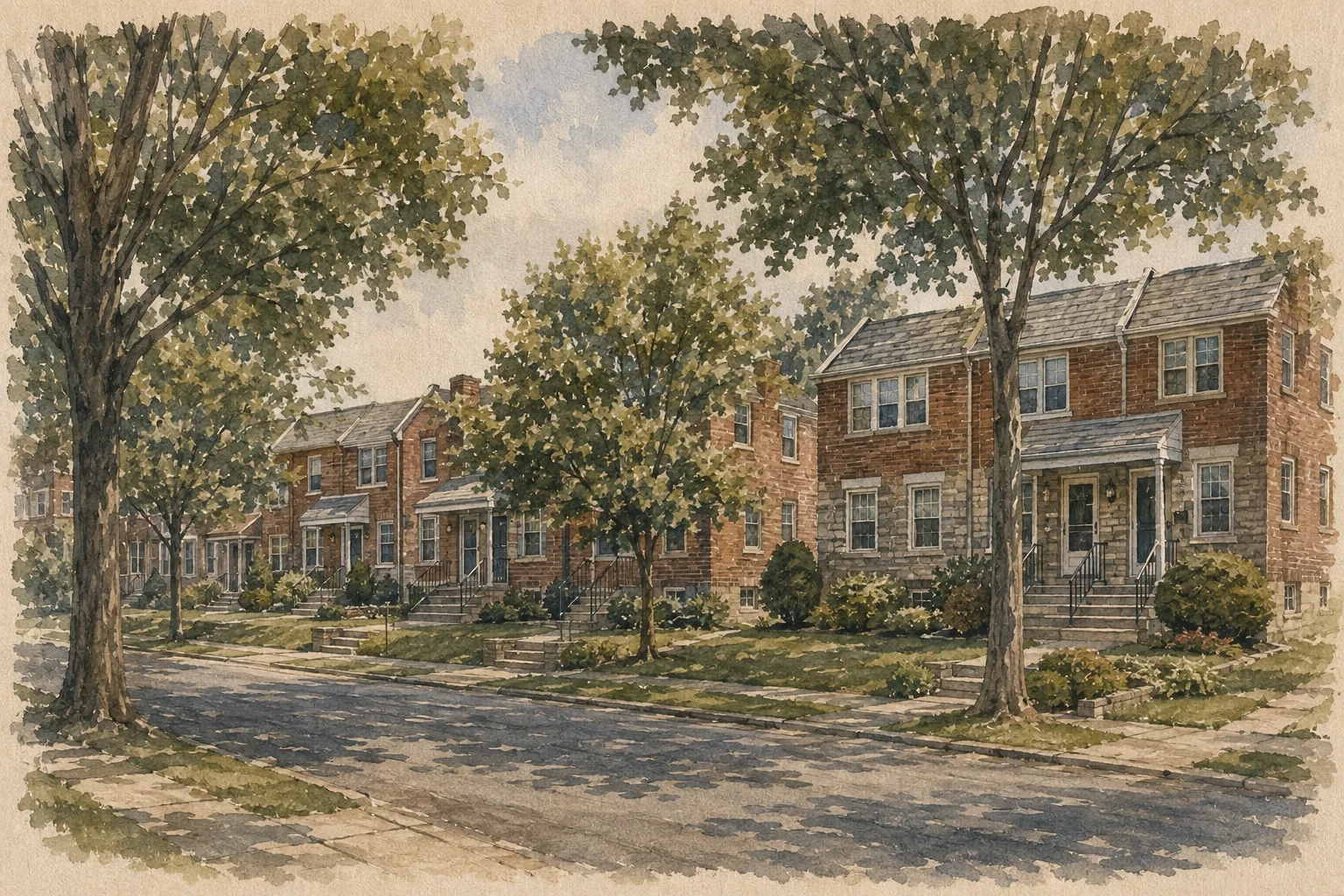
Bustleton feels like a suburban pocket placed inside city limits. You get tree-lined residential blocks, driveways, and a level of quiet that is hard to find elsewhere in Philadelphia, but you are still within a short drive of everything. Center City is roughly twenty minutes away if traffic cooperates, and the suburbs are just as close in the opposite direction. That positioning is a huge part of the appeal. You are not isolated, but you are removed enough to avoid most of the noise and chaos.
That same calm environment is also where the tradeoff begins. Bustleton is not designed for constant activity. There are no busy nightlife corridors, no heavy foot traffic, and not much to do if you are under twenty-one or looking for something spontaneous late at night. The neighborhood works best for people who value predictability, routine, and space over entertainment and walkability.
For the people who choose Bustleton, that tradeoff is worth it. You are not here for excitement. You are here because life runs smoothly, your street stays quiet, and your day-to-day routine feels manageable.
Where Bustleton sits
- Bustleton Avenue
- Castor Avenue
- Red Lion Road
Schematic · not to scale
Safe Enough to Relax, But Not Enough to Forget Your Locks
One of the most consistent things you will hear about Bustleton is that it feels safe. Walking around during the day or even at night does not carry the same tension that people associate with other parts of Philadelphia. Families are comfortable, neighbors recognize each other, and there is a general sense that nothing major is going to happen on your block.
But there is a second layer to that feeling that only shows up once you actually live here.
People feel safe, but they are not careless. Locking your doors is automatic. Checking your car before going inside is routine. Security cameras are everywhere, even on blocks that seem completely quiet. The mindset is not fear, but awareness. The expectation is that you probably will not have an issue, but you still take precautions just in case.
That shift comes from the kind of incidents that circulate locally. Break-ins, attempted burglaries, and car-related crimes do not dominate daily life, but they happen just enough that everyone hears about them. When something occurs, it spreads quickly through neighborhood groups and conversations, and people adjust their behavior accordingly. You start to hear reminders to lock your doors or keep an eye on your property, even from people who still describe the area as safe.
There is also an undercurrent in how people talk about crime. Some residents attribute incidents to outsiders coming into the neighborhood, while others push back on that idea and point out that not everything can be blamed on someone else. That tension does not always surface directly, but it shapes how people interpret what is happening around them.
The reality is simple. Bustleton is one of the calmer parts of Philadelphia, but it is still part of the city. You can relax here, but you do not ignore common sense.
Why Your Exact Block in Bustleton Changes Everything
One of the biggest mistakes people make when they look at Bustleton is assuming the entire neighborhood feels the same. On a map, it is a single area. In real life, your experience can change dramatically depending on exactly where you live.
If you are on a quieter residential street, the neighborhood feels almost suburban. You will see people walking dogs, kids riding bikes, and neighbors who have been on the same block for years. Traffic is minimal, noise is low, and the pace of life is slow. These are the streets that define Bustleton’s reputation.
Move closer to the main roads, and the atmosphere shifts.
Bustleton Avenue, Castor Avenue, and Red Lion Road are where most of the activity concentrates. These corridors bring traffic, noise, and a completely different kind of energy. You deal with heavier congestion, more aggressive driving, and a steady flow of people passing through rather than staying in the neighborhood. For some residents, these roads are convenient because everything is nearby. For others, they are the source of daily frustration.
That divide creates two versions of Bustleton. One is calm and residential. The other is busy and unpredictable. The difference can be as simple as being a few blocks away from a main road.
Locals understand this instinctively. When people talk about Bustleton, they often mean their specific pocket of it, not the entire neighborhood. Choosing where you live here is less about the neighborhood name and more about the exact street you end up on.
Your exact block changes everything
The guide is blunt that this is not one neighborhood. The difference can be a few blocks.
The quieter residential streets
Off the main roadsAlmost suburban. People walking dogs, kids riding bikes, neighbors who have been on the same block for years. Traffic is minimal and the pace is slow. These are the streets that define Bustleton's reputation.
The main corridors
Bustleton Ave · Castor Ave · Red Lion RdWhere most of the activity concentrates: heavier congestion, more aggressive driving, and a steady flow of people passing through rather than staying. Convenient for some residents, a daily frustration for others.
Living Here Means Driving Everywhere
Bustleton is not a place where you casually walk to everything you need. The neighborhood is built around driving, and your daily routine will reflect that almost immediately.
Most errands, whether it is grocery shopping, grabbing food, or running to the bank, involve getting in the car. The advantage is that almost everything you need is close by. Major roads like Route 1 and I-95 make it easy to reach other parts of the city or head into the suburbs without much planning. You can cover a lot of ground quickly, which is one of the main reasons people choose this area.
Public transportation exists, but it is not the backbone of daily life. Buses and regional rail lines are available, and you can get where you need to go if you plan it out, but most residents treat transit as a backup rather than their primary option. The neighborhood simply does not operate at the density or layout where relying on transit feels natural.
That shapes how people experience Bustleton. You are not bumping into neighbors on the sidewalk or discovering new places by walking around. Your world is defined by where you decide to drive. Convenience comes from access to roads, not proximity by foot.
If you are used to living somewhere walkable, this adjustment stands out immediately. If you are used to suburban living, it feels completely normal.
The Reality of Driving in Bustleton: Traffic, Speed Humps, and Constant Adjustments
Driving is central to life in Bustleton, but it is not always smooth.
Traffic is a constant presence, especially on the main roads. During busy times, Bustleton Avenue and nearby corridors can slow down significantly, and what should be a short drive can turn into a stop-and-go crawl. Even outside of rush hour, congestion never fully disappears. It is one of those things residents accept as part of the routine.
The biggest source of debate, though, is not just traffic. It is how the roads are managed.
Along Bustleton Avenue, speed humps have been installed at regular intervals. In theory, they are meant to slow drivers down and improve safety. In practice, they have become one of the most talked-about issues in the area. Some residents appreciate the effort to reduce speeding, especially in areas with more foot traffic. Others feel that the spacing forces drivers into a constant cycle of braking and accelerating, which can make traffic feel even more chaotic.
That tension is part of a larger conversation happening across Northeast Philadelphia. Road changes, including bike lanes and traffic calming measures on nearby corridors like Castor Avenue, have created strong opinions on both sides. Some people focus on safety statistics and the need to reduce accidents, while others are frustrated by what they see as increased congestion and spillover traffic onto side streets.
On top of that, driving behavior itself can be unpredictable. Weekend nights bring a different energy, with reports of aggressive driving and modified cars speeding through the area. Even on normal days, tailgating and impatience are common enough that locals learn to anticipate them.
You also start to hear the kind of humor that comes from dealing with it regularly. Jokes about making your car look erratic so people stop tailgating are not meant to be taken literally, but they reflect how stressful driving can feel at times.
In Bustleton, driving is not just transportation. It is something you have to learn, adapt to, and navigate carefully every day.
Where Locals Actually Eat in Bustleton and What You Need to Know Before You Go
The way people eat in Bustleton is different from more central neighborhoods. You are not wandering from place to place. You are driving to a specific spot because you already know what you are getting.
Some places gain attention through social media. Spots like Vanilla Cafe draw people in with visually appealing pastries that spread quickly online. People make the trip expecting something worth the hype, and in many cases, they leave satisfied. Places like Benny the Bums have built a following through the same kind of visibility, where presentation and atmosphere play a bigger role.
But the core of the Bustleton food scene is not built on trends. It is built on places that locals return to over and over again.
Uzbekistan Restaurant is one of the most talked-about examples. It is known for large portions and dishes that are not easy to find elsewhere in the city. What makes it unique is not just the food, but how people approach it. Groups often go together, sit down, and let the kitchen decide the flow of the meal. It becomes less about ordering individual plates and more about being served a sequence of dishes.
There are also patterns that only show up if you spend time here. A common routine involves combining experiences, like spending time at a nearby Russian spa and then heading out for a heavy meal afterward. That pairing is something locals understand without needing to explain it.
Other habits are more practical. Markets like NetCost are part of weekly routines, especially for prepared foods like soups that people pick up in containers to take home. Halal and gyro spots become part of a rotation, with people returning every week or two because the food is consistent and convenient.
New restaurants also play a role in shaping the neighborhood. When a place closes and something new opens in its place, locals pay attention. They compare the new spot to what used to be there, and opinions form quickly. A restaurant is not just judged on its own. It is measured against what the neighborhood already knows.
Where locals actually eat
The four spots the legacy guide names along the Bustleton Avenue corridor.
Uzbekistan Restaurant
Known for large portions and dishes that are not easy to find elsewhere in the city.
Best for · Going as a group and letting the kitchen decide the flow of the meal
Vanilla Cafe
Draws people in with visually appealing pastries that spread quickly online. In many cases they leave satisfied.
Best for · A trip made on the strength of the photos
Benny the Bums
Built a following through the same kind of visibility, where presentation and atmosphere play a bigger role.
NetCost
Part of weekly routines, especially for prepared foods like soups people pick up in containers to take home.
Best for · The weekly shop, not a meal out
The Truth About Bustleton’s Food Scene
The food is often the reason people come back.
People come back for the food. That is the defining characteristic of the Bustleton food scene.
Over time you build your own list of spots here, the ones that match your preferences.
What Daily Life Feels Like: Quiet, Predictable, and Community-Focused
Bustleton does not have a loud or highly visible community culture, but it does have a consistent one.
Most interactions between neighbors are practical rather than social. People help each other when needed, whether it is shoveling snow, keeping an eye on a house, or offering a quick favor. There is a sense that people look out for each other, even if they are not constantly interacting.
The neighborhood is strongly family-oriented. You see that in how people talk about safety, schools, and daily routines. The goal is stability. Parents want a place where their kids can grow up without dealing with the constant activity found in more central areas of the city.
At the same time, the pace of life is slow. There are no major events happening every weekend. Most days follow a predictable pattern. For some people, that is exactly what they are looking for. For others, it can feel limiting.
Happiness here tends to come from consistency rather than excitement. You know what your day is going to look like, and that reliability becomes part of the appeal.
How Locals Actually Communicate: Inside Bustleton’s Facebook and Nextdoor Culture
To understand what is really happening in Bustleton, you have to look at how people communicate online. Neighborhood groups on platforms like Facebook and Nextdoor are where most local conversations take place.
The overall tone can feel overwhelming if you are not used to it. A large portion of posts focus on problems. Parking disputes, package theft, suspicious activity, and general complaints come up frequently. It can give the impression that the neighborhood is more chaotic than it actually is.
There is also a strong presence of arguments and tension in these spaces. Discussions can escalate quickly, and people are often more direct online than they would be in person. That dynamic has led many residents to treat these groups carefully.
At the same time, these platforms serve a practical purpose. They are where people go for recommendations, updates, and information that is difficult to find elsewhere. If you need a contractor, want to know about a local issue, or are trying to locate a lost pet, these groups are one of the fastest ways to get answers.
There are also lighter moments that stand out. Posts about local wildlife, especially sightings of a neighborhood fox, create a shared point of interest that cuts through the usual complaints.
Over time, most residents develop the same approach. They stay in these groups for the useful information but avoid getting pulled into the discussions. It becomes a tool rather than a community space, and knowing how to use it is part of living in Bustleton.
Raising a Family in Bustleton: What Parents Actually Think About Schools and Stability
For many people, Bustleton is a long-term decision rather than a short-term move. Families choose the neighborhood because it offers a level of consistency that is harder to find in other parts of Philadelphia. Streets are quieter, neighbors tend to stay for years, and daily life follows a predictable rhythm that works well for raising children.
Schools are part of that equation, but the conversation around them is not simple. There are elementary schools in the area that have historically had solid reputations, and they are often part of why families move here in the first place. At the same time, there is a recurring sense that things are not as strong as they used to be. Some longtime residents point out that schools they once trusted are slipping, even if they are still considered among the better options in the public system.
There are also fewer strong high school options within the immediate area, which leads many families to start thinking ahead early. Some look into alternative options, while others stay because the overall environment still feels safer and more stable than many alternatives.
Incidents involving schools tend to have a strong impact on how people talk about education here. Stories about fights, vandalism, or disruptions spread quickly and can shape perception even if they are not constant. When something involves younger students, the reaction is especially strong, and it reinforces concerns about long-term quality.
Despite those concerns, families stay. The combination of a quieter environment, a sense of safety, and a stable day-to-day routine often outweighs the uncertainty around schools. Bustleton may not offer a perfect system, but for many residents, it offers a manageable one.
The Cost of Quiet: Housing Prices and What You Get in Return
Bustleton is not the cheapest part of Northeast Philadelphia, and housing prices are one of the more common complaints among residents. Whether you are looking at single-family homes or apartment complexes, the cost can feel higher than expected for an area that does not have the same level of walkability or entertainment as other parts of the city.
But people are not paying for nightlife or convenience in the traditional sense. They are paying for space, quiet, and a level of stability that is harder to find closer to the center of Philadelphia.
Most homes come with features that feel more suburban than urban. You will find driveways, yards, and wider streets compared to denser parts of the city. That physical space plays a big role in how people justify the cost. It is not just about the house itself, but about the environment around it.
There is also a financial comparison that comes up frequently. For some buyers, Bustleton offers a way to get a suburban-style lifestyle without taking on the higher taxes associated with living outside the city. That balance makes the area appealing to people who want more room without fully leaving Philadelphia.
Apartments are also part of the landscape, which adds flexibility for renters. The mix of housing types means you will find both longtime homeowners and residents who are newer to the area, all sharing the same basic priorities.
In the end, the value of Bustleton is not measured by amenities or trends. It is measured by how comfortable your daily life feels. For the people who choose it, that comfort is worth the price.
Then vs Now: How Bustleton Has Quietly Changed Over Time
Bustleton today is not the same neighborhood it was a decade or two ago, and longtime residents are quick to point out the differences.
One of the most noticeable changes is the shift in demographics. The area that was once dominated by Greek and Jewish families has become much more diverse, with growing communities from South Asia and other parts of the world. That shift has brought new businesses, new restaurants, and a different overall feel to the neighborhood.
The food scene is the most visible example of this change. What used to be a fairly standard mix of local spots has expanded into a wide range of international options. Many residents see this as a major improvement, especially those who appreciate the variety and authenticity that has developed over time.
At the same time, not all changes are viewed positively. Some residents feel that schools are not as strong as they once were, and there is a perception that crime, while still relatively low, is becoming more noticeable. These concerns often come from people who have lived in the area for many years and are comparing it to an earlier version of the neighborhood.
This creates a tension between nostalgia and progress. Newer residents tend to focus on what Bustleton offers now, especially the convenience and diversity. Longtime residents are more likely to compare it to what it used to be.
Both perspectives exist at the same time, and understanding that balance is key to understanding Bustleton itself.
What Locals Argue About: The Issues That Divide the Neighborhood
Bustleton is not a place with constant visible conflict, but there are specific topics that consistently spark strong opinions.
One of the most talked-about issues is traffic management, especially the installation of speed humps along Bustleton Avenue. Some residents see these changes as necessary for safety, particularly in areas where speeding has been a problem. Others feel that they create more issues than they solve, forcing drivers into constant braking and accelerating and making congestion worse.
That debate connects to a larger conversation happening across Northeast Philadelphia. Changes to roads like Castor Avenue, including lane reductions and bike lanes, have led to disagreements about how the area should be managed. Some residents focus on safety statistics and reducing accidents, while others are concerned about how these changes affect their daily commute and the flow of traffic through side streets.
There are also smaller, more localized concerns that still generate strong reactions. Proposals for new businesses, such as a medical marijuana dispensary, have led to pushback from residents who worry about how those changes might affect the character of the neighborhood.
Even civic engagement can be a point of frustration. Some residents feel that local leadership is not as active or responsive as it should be, which adds to the sense that decisions are being made without enough input from the community.
These debates do not define daily life in Bustleton, but they shape how people think about the future of the neighborhood.
The Details You Only Notice After Living Here for a While
There are certain things about Bustleton that you will not understand just by visiting. They only become obvious after you have spent enough time here to notice the patterns.
One of the most talked-about examples is the neighborhood fox. People mention seeing it as if it were part of the community. It shows up often enough to become a shared reference point, something that connects residents in a way that is both small and surprisingly meaningful.
Wildlife is part of everyday life in other ways as well. Deer occasionally wander through residential areas, and while they can be interesting to watch, they are also known for damaging plants and gardens. It is the kind of issue that feels more suburban than urban, but it is very real here.
Then there are the small mysteries and ongoing stories that circulate locally. Incidents involving graffiti on cars, sometimes marked with the same social media handle, have led to speculation about whether they are connected or random. These stories do not always have clear answers, but they become part of the neighborhood conversation.
Even specific locations can take on meaning over time. Intersections, parking lots, and familiar businesses become reference points for local stories, whether it is where something happened or where someone noticed something unusual.
These details do not show up on a map, but they shape how people experience Bustleton. They are the kind of things you only start to recognize after you have lived here long enough to feel like part of the neighborhood.
The Rules Nobody Explains Until You Live Here
Bustleton has a rhythm that people learn over time, and most of it is never written down. You pick it up by watching how others move through the neighborhood and adjusting your habits to match.
The first rule is simple. Even though the area feels safe, you do not leave things unlocked. Locking your car and your house becomes automatic. Many residents also install cameras, not because something has happened to them, but because it is what everyone else is doing. It is a quiet form of preparation rather than a reaction.
Driving comes with its own set of expectations. You learn quickly which roads to avoid during peak hours and which ones can get unpredictable. Bustleton Avenue, Castor Avenue, and Red Lion Road require patience, especially during busy times. If you live here long enough, you start timing your trips around traffic instead of fighting it.
Food comes with a different kind of rule. You do not expect perfect service everywhere. If a place consistently delivers good food, you accept the rest and adjust your expectations. Regulars know where to go, what to order, and when to avoid the rush.
Online spaces require a similar approach. Neighborhood groups can be useful, but they are not where most people go to have conversations. They are tools for information. You check them for updates, recommendations, or alerts, then move on. Engaging too much often leads to unnecessary frustration.
The most important rule, though, is understanding that not all of Bustleton is the same. Choosing the right block matters more than anything else. Two streets that look similar on a map can feel completely different in daily life. Residents who stay long term usually find a pocket that works for them and settle into it.
Is Bustleton the Right Fit for You
Bustleton works well for a specific kind of lifestyle, and it is important to understand what that is before deciding if it is the right place to live.
It is a strong fit for people who want quiet and predictability. Families, homeowners, and anyone looking for a stable environment tend to do well here. If you prefer having space, driving to where you need to go, and living in a neighborhood where things rarely change, Bustleton offers exactly that.
It is also a good fit for people who enjoy exploring food. The variety along Bustleton Avenue is one of the neighborhood’s strongest advantages, especially for those who are willing to try different cuisines and return to the places that stand out.
At the same time, it is not ideal for everyone. If you want a walkable neighborhood where you can step outside and find things to do, you will likely feel limited. If nightlife, entertainment, or constant activity are important, this is not the environment that provides it.
It can also be challenging if you rely heavily on public transportation. While options exist, the area is designed around driving, and daily life is much easier with a car.
Bustleton is not trying to be everything. It offers a specific kind of lifestyle, and it works best for people who are looking for exactly that.
Is Bustleton the right fit?
The guide's own answer, which turns on what you want from a neighborhood rather than on the neighborhood itself.
- You want quiet and predictability — families, homeowners, anyone after a stable environment.
- You prefer space, and driving to where you need to go.
- You like a neighborhood where things rarely change.
- You enjoy exploring food, and will keep returning to the places that stand out.
- You want a walkable neighborhood where you step outside and find things to do.
- Nightlife, entertainment, or constant activity matter to you.
- You rely heavily on public transportation — the area is designed around driving.
- You are under twenty-one or looking for something spontaneous late at night.
What It Really Feels Like to Live in Bustleton
When you step back and look at everything together, Bustleton is defined by consistency more than anything else.
Life here is predictable. Your street stays relatively quiet. Your routines stay the same. You know how long it takes to get where you need to go, and you know what to expect when you get there. That stability is the main reason people stay.
There are frustrations. Traffic can slow you down, service at certain restaurants can be inconsistent, and small incidents can make people more cautious than they used to be. But those issues rarely take over daily life. They exist alongside everything else rather than defining it.
What stands out most is how many residents describe feeling more comfortable here than they have in other parts of the city. The neighborhood may not be exciting, but it is dependable. For many people, that matters more.
Bustleton is not a place you visit to explore. It is a place you choose because it makes everyday life easier to manage. Once you understand that, the neighborhood makes a lot more sense.
Make it yours
Your Bustleton home comparison
A short list to turn what you read into your own next steps.
Saved checks stay on this device when browser storage is available. This is a personal planning list, not a property inspection or professional assessment.
Sources & next steps
Useful advice should
show its working.
These resources support the reader tools above and help you check details for your own address, date, or plans.
- SEPTA trip planner
Plan your date, direction and return journey; check service and accessibility details.
- Philadelphia Atlas
Look up an address and review available City property records.
- School District enrollment tools
Find the address-based school lookup and current enrollment instructions.
This is a practical household comparison, not a claim about neighborhood safety, school quality or the current status of every named business.