A little orientation
Compare the Oak Lane address that matters to you
Keep the address in view.
An East or West Oak Lane label is a starting point; the actual home and its connections deserve separate attention.
Test the Fern Rock connection.
If your plan involves Fern Rock, compare the full trip there and onward rather than counting only the train journey.
Choose an ordinary errand.
Research the shop or library you would repeat most often, including the journey home with whatever you need to carry.
A closer look
Compare routines rather than reputations
Try these checks for each candidate address using the same destinations and travel times.
Include the trip to Fern Rock.
Plan from the home to your final destination, including any connection through Fern Rock. Compare the same departure and return times for each address so a shorter rail segment does not hide a longer walk or transfer.
A useful questionHow does the complete journey compare for the homes you are considering?
Source & next step ↗Ask what this building requires.
Use Atlas to review the actual address before a viewing. Then ask about heating, outdoor upkeep, shared access and any recent work, rather than assuming the guide’s East and West descriptions tell you how a particular home operates.
A useful questionWhich upkeep and access responsibilities would come with this particular home?
Source & next step ↗Find the branch that fits.
Search the Free Library directory from the address you are considering, then check the relevant branch’s current services and access information. Choose based on the program and journey you need, rather than assuming the closest name offers everything.
A useful questionWhich branch and service fit your actual journey and household needs?
Source & next step ↗Oak Lane is one of Philadelphia’s most misunderstood residential neighborhoods, and the only way to understand it properly is to think block by block. From the quieter detached homes of East Oak Lane to the more mixed and active corridors in West Oak Lane, the experience changes quickly depending on where you stand. At Hometress, we study neighborhoods the same way residents experience them, by looking at daily routines, transit access, local businesses, noise patterns, and the unwritten rules people follow. Oak Lane stands out for its suburban feel inside the city, strong homeowner presence, proximity to Fern Rock, and a practical lifestyle built around convenience rather than nightlife. It is a neighborhood that rewards familiarity, where knowing which blocks are calm, which corridors are busier, and how the rhythm changes by time of day makes all the difference.
Oak Lane Isn’t Just One Thing
Oak Lane is one of those Philadelphia neighborhoods that people often think they understand before they have ever really spent time in it. From the outside, it can get lumped into a broad North Philly label that misses what daily life here actually feels like. On the ground, Oak Lane is quieter, greener, and more residential than many newcomers expect. The streets can feel surprisingly calm, the houses often sit with more breathing room than you find in denser parts of the city, and there is a strong sense that many people here are not just passing through. They own their homes, know their blocks, and care deeply about how the neighborhood is perceived.
That said, the biggest mistake anyone can make is talking about Oak Lane like it is one single experience. Locals do not think of it that way, and once you pay attention, you see why. People naturally break the neighborhood into East Oak Lane, West Oak Lane, and the busier edge areas closer to Ogontz, Chelten, Olney, and Fern Rock. Those distinctions shape how residents talk about noise, safety, convenience, housing, and everyday life. A person describing a leafy residential stretch deeper into East Oak Lane is often talking about a very different reality from someone discussing a more active corridor near the neighborhood’s busier borders.
That is what makes Oak Lane so interesting and so easy to misunderstand. It can feel like a suburban pocket tucked inside Philadelphia, but that feeling is not evenly distributed. It depends on which side you are on, how close you are to the major corridors, and what time of day you are moving through the neighborhood. A calm block with detached homes and well-kept lawns can be only a few minutes away from a stretch that feels noisier, more crowded, and more visibly tied to the harder parts of city life.
A useful Oak Lane guide has to reflect that reality. It cannot rely on broad reputation or a single headline about the area. It has to work block by block, corridor by corridor, because that is how people who actually know Oak Lane talk about it. If you want the real version of this neighborhood, you have to understand the internal map.
Where Oak Lane Actually Is and Why People Argue About It
Part of what makes Oak Lane hard to explain is that it sits in a part of Philadelphia where neighborhood identities overlap, blur, and sometimes clash. Oak Lane is tied closely to Fern Rock, Ogontz, Olney, Chelten, Logan, and the outer edges of Northwest-adjacent neighborhoods like Mt. Airy. Depending on where you stand, the neighborhood can feel connected to several different mental maps of the city at once. To outsiders, that can make it seem vague. To locals, those distinctions matter a lot.
Fern Rock is one of the clearest orientation points because it gives Oak Lane a practical kind of gravity. It is not just a transit hub. It is part of how people understand the neighborhood’s daily usefulness. Ogontz and Olney matter for a different reason. They often mark the point where Oak Lane starts to feel busier, less tucked away, and more exposed to the heavier foot traffic and street energy that shape local perceptions. Chelten comes up in a similar way, especially when people are describing the edges where the residential calm begins to thin out. Logan also enters the conversation because neighborhood lines in this part of Philadelphia are not always discussed in neat official terms. People use what is nearby, what they grew up calling it, and what kind of block they are standing on.
That is why the argument over what Oak Lane is never really goes away. Some people place it firmly in North Philly and leave it at that. Others push back hard on that label because they feel it invites the wrong assumptions. They point to the housing stock, the yards, the detached homes, and the level of homeownership as proof that Oak Lane functions differently from the version of North Philly many outsiders imagine. In that sense, Oak Lane often gets treated as its own category, or at least as a neighborhood that sits on the edge of several Philadelphia identities without fully fitting the stereotype of any one of them.
Residents care about that distinction because local labels in Philadelphia are never just geographic. They carry social meaning. To call a place North Philly can shape how people think about safety, investment, housing quality, and daily life before they have even visited. In Oak Lane, that shorthand often feels too blunt. People who know the neighborhood well tend to resist it because Oak Lane has a stronger homeowner culture, more residential stability, and a more spacious built environment than many people expect from that label.
In practical terms, Oak Lane sits in a transition zone between different versions of Philadelphia. It is connected enough to the city to stay fully urban, but residential enough to feel set apart from the neighborhoods people usually name first in conversations about North Philly. That in-between status is part of what makes it appealing and part of what makes it hard to define.
Where Oak Lane sits
Contested on purpose: some place it firmly in North Philly and leave it at that. Others push back hard on that label.
- Fern Rock
- Ogontz
- Chelten
- H Mart
Schematic · not to scale
East Oak Lane vs. West Oak Lane: The Difference That Changes Everything
If you only learn one thing about Oak Lane before spending time here, it should be this: East Oak Lane and West Oak Lane are not interchangeable. Locals talk about them differently because they experience them differently. That split is not a technical detail. It affects how people judge the neighborhood, where they would choose to live, what they say about safety, and how they explain Oak Lane to outsiders.
East Oak Lane is usually the side people describe with the most pride. It carries the strongest version of the neighborhood’s quiet, historic, and almost suburban image. This is where the conversations about detached houses, larger yards, and a calmer residential feel become most convincing. East Oak Lane often gets described as undervalued because it offers a type of housing and neighborhood character that feels rare inside Philadelphia, especially in a predominantly Black homeowner area. The streets here fit the image many residents want others to understand when they talk about Oak Lane at its best.
West Oak Lane has a different tone. It still has a strong residential identity, and many people clearly care deeply about it, but the language around it tends to include more caution. It comes up more often in discussions about crime, noise, visible street activity, and the sense that certain stretches feel busier or less settled. The complaints are not always dramatic, but they are persistent. People are more likely to mention hearing gunshots, struggling with street parking, or dealing with louder corridors when they are talking about West Oak Lane. Even when residents defend it, they often do so with more qualifications.
That difference shapes practical advice. In East Oak Lane, the emphasis tends to fall on housing quality, block stability, and the sense that the neighborhood feels more peaceful than outsiders expect. In West Oak Lane, the advice becomes more tactical. People pay more attention to what block you are on, how close you are to the busier edges, and whether you are moving through the area by day or at night. Even convenience gets framed differently. A useful location in West Oak Lane can still come with more warnings attached to it than a similarly useful location on the East side.
Local shorthand reflects these internal distinctions too. West Oak Lane is sometimes folded into the broader local idea of Uptown, which gives it a different social texture than what you would get from reading a map label alone. You also see the spelling West Oaklane in community spaces, which may seem minor but signals a very local way of naming the place. Those small language habits matter because they show how residents organize the neighborhood in everyday life, not just in formal boundaries.
Once you understand the East and West split, Oak Lane starts to make more sense. Without that distinction, the neighborhood can sound contradictory. With it, the contradictions become more readable. People are often describing different parts of the same neighborhood, and their opinions line up more than they first appear to.
East Oak Lane vs. West Oak Lane
If you only learn one thing about Oak Lane before spending time here, it should be that these two are not interchangeable.
East Oak Lane
The quiet, historic sideThe side people describe with the most pride: detached houses, larger yards, a calmer residential feel. Often called undervalued because it offers a type of housing and neighborhood character that feels rare inside Philadelphia, especially in a predominantly Black homeowner area.
West Oak Lane
More mixed, busier edgesStill a strong residential identity and people who care deeply about it, but the busier corridors are closer and more noticeable. Advice here becomes tactical — which block you are on, how close you are to the edges, and whether you are moving through by day or at night.
The edge corridors
Ogontz · Olney · CheltenNot just points on a map. They act like edge zones where Oak Lane starts to feel more exposed: traffic gets heavier, foot activity becomes more noticeable, and the quieter residential identity begins to compete with a more uneven street environment.
Why Oak Lane Feels Like the Suburbs Inside Philadelphia
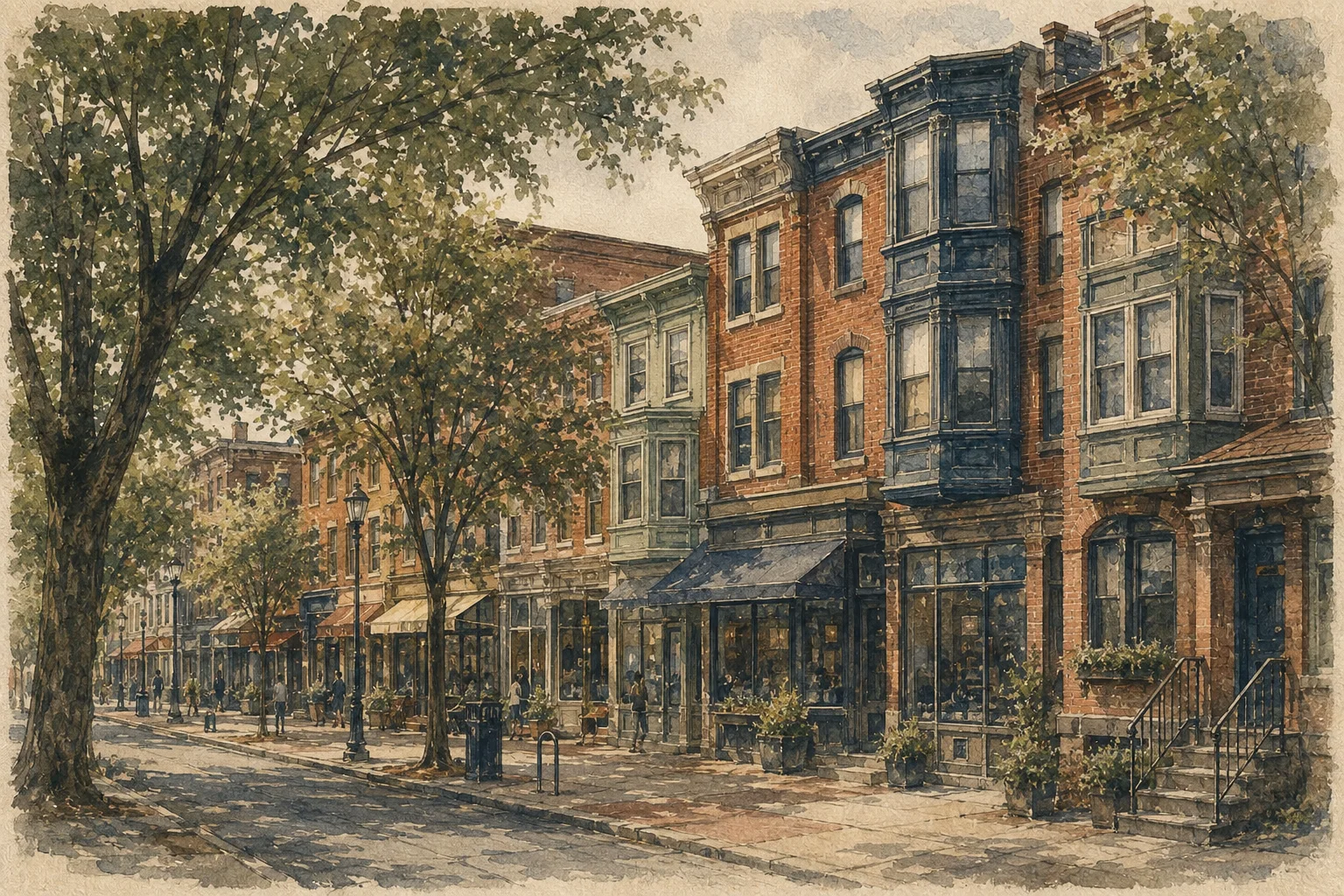
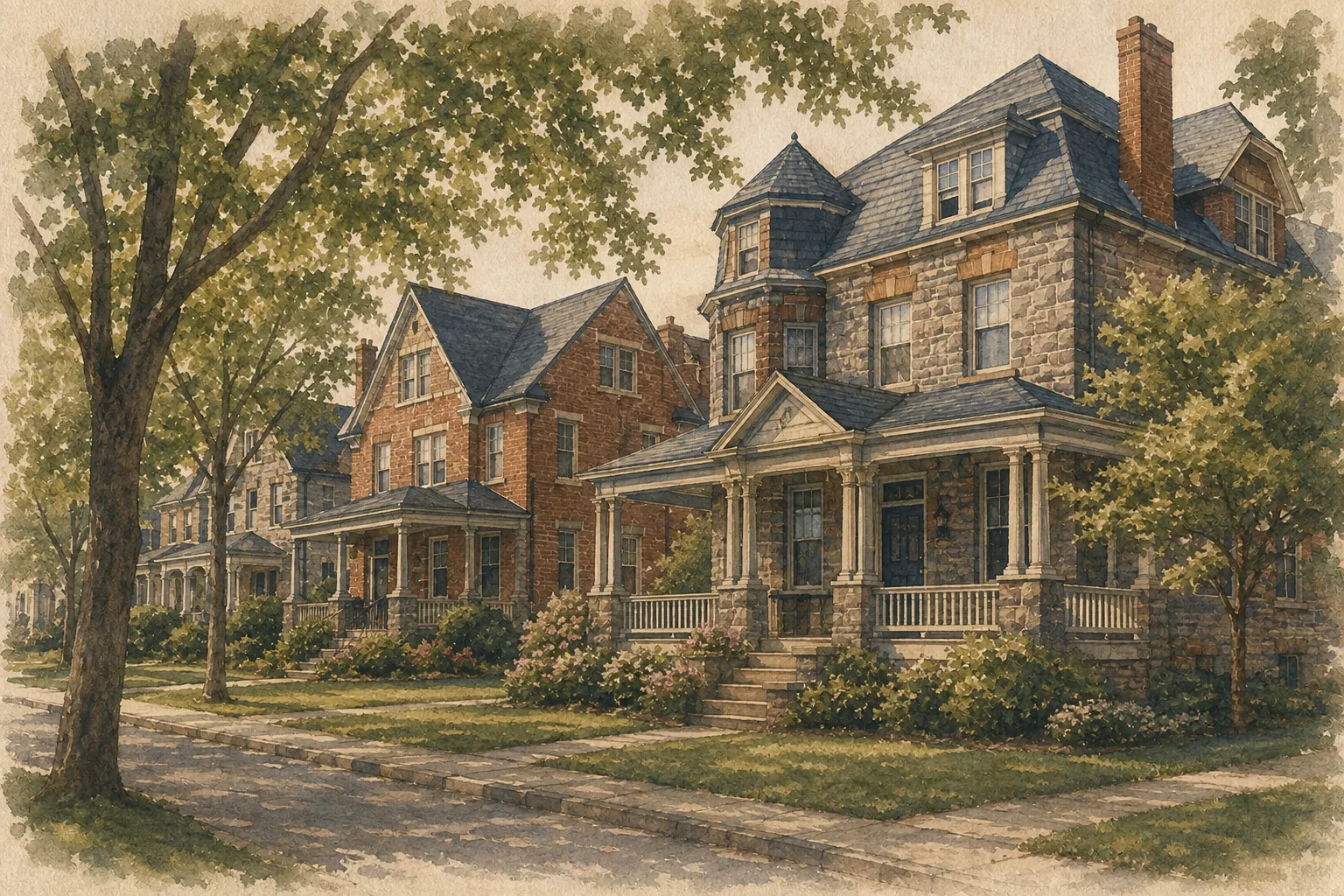
One of the reasons Oak Lane stands out is that it gives people a kind of residential experience they do not always expect to find within city limits. In many parts of Philadelphia, the visual rhythm is tighter, denser, and more compressed. Oak Lane slows that feeling down. The houses often sit with more space around them. The blocks can feel broader and greener. Mature trees, older architecture, detached homes, and visible yards all work together to create a neighborhood that feels calmer and less crowded than many other parts of the city.
That physical character shapes the emotional experience of living here. Residents often talk about Oak Lane in terms that have less to do with trendiness and more to do with comfort. There is pride in the appearance of the homes, pride in the way certain blocks are kept, and pride in the fact that the neighborhood still supports a strong sense of permanence. You can feel that in the way people talk about homeowner culture here. Oak Lane is not usually described as fast-moving or heavily transient. It is described as rooted.
That rooted feeling is a major part of why the neighborhood gets called suburban-in-the-city so often. The phrase fits because Oak Lane offers many of the things people associate with suburban life, but without giving up the access and city infrastructure that make Philadelphia practical. You can have more house, more yard, and a quieter residential environment while still staying connected to transit, nearby commercial corridors, and the larger city around you. For many residents, that combination is the neighborhood’s defining strength.
East Oak Lane especially draws comparisons to places like Chestnut Hill and West Mt. Airy because of that blend of greenery, housing style, and residential dignity. The comparison is not about copying those neighborhoods exactly. It is about recognizing that East Oak Lane offers a similar feeling of spaciousness and architectural character in a place that is often left out of those conversations. That comparison also reflects a deeper kind of pride. Residents are saying Oak Lane deserves to be understood on the level of its actual housing and block character, not reduced to a generic reputation.
The suburban feeling also changes how daily life works. It is easier to imagine staying in, maintaining your home, chatting with neighbors, or building a long-term routine in a place like this than in a neighborhood that is louder and more constantly in motion. Oak Lane does not feel like a place built around turnover. It feels like a place built around staying, and that shapes the atmosphere more than any single amenity ever could.
The Blocks Matter More Than the ZIP Code
Oak Lane makes the most sense once you stop thinking in broad neighborhood labels and start thinking like a local. People here tend to read the area in layers. They know that a neighborhood name can only tell you so much. What matters more is whether you are on a deeper residential block or closer to one of the busier corridors that change the mood of the area almost immediately.
That is why Ogontz, Olney, and Chelten come up so often. These are not just points on a map. They act like edge zones where Oak Lane starts to feel more exposed. Traffic gets heavier, foot activity becomes more noticeable, and the quieter residential identity that defines the neighborhood at its best begins to compete with a more uneven street environment. Locals understand these edges almost instinctively. They know which blocks feel tucked away and which ones feel like they belong to a different version of the same neighborhood.
You can be on one block lined with well-kept homes, mature trees, and a quiet residential rhythm, then be only a few minutes away from a stretch that feels noticeably louder and less settled. To an outsider, those places may all register as the same neighborhood. To someone who knows Oak Lane, they are not the same at all. The quality of a block can affect whether people describe the area as peaceful, manageable, noisy, or caution-heavy.
This block-first mindset also explains why locals often sound more nuanced than outsiders. They are not being evasive when they say it depends. In Oak Lane, it really does depend. It depends on which side of the neighborhood you mean, which corridor you are near, and how deep into the residential grid you are. That is the real local map, and it is much more useful than anything a ZIP code can tell you.
What Daily Life in Oak Lane Actually Feels Like
Daily life in Oak Lane is shaped less by spectacle and more by routine. On its calmer blocks, mornings feel residential in the most grounded sense of the word. You notice maintained homes, people heading out for work, families moving through ordinary schedules, and the kind of street rhythm that comes from long-term residents rather than constant turnover. It is a neighborhood where the daily mood often comes from who lives there and how they care for their block, not from a stream of people coming in for entertainment or nightlife.
That block-level familiarity shows up in the way people describe their neighbors. There is a recurring sense that residents know each other enough to create a real neighborhood feeling, even if that feeling is stronger on some blocks than others. People talk about friendly neighbors, helpful interactions, and a quieter social style that fits the overall tone of the area. It does not feel anonymous in the way some busier parts of the city can feel anonymous. Even where there is caution, there is also a sense that people are paying attention.
The everyday usefulness of Oak Lane matters just as much as its appearance. This is not a neighborhood that announces itself through a long list of destination restaurants or trendy stops. It works more like a place built around living. People run errands, rely on practical businesses, make use of transit, and trade local recommendations for services that matter in a home-centered area. Fern Rock is part of that daily-life logic. H Mart is part of it too. So are the smaller patterns that do not make a glossy neighborhood guide, like asking around for a good landscaper or knowing which route feels smarter after dark.
That is also why Oak Lane feels more like a place to live than a place to visit. Its strengths are not flashy. They show up in housing, routine, convenience, and the comfort of a block that feels settled. For many residents, that is the point. The tradeoff is that one of the most repeated local complaints is that there is not much to do. People who want a neighborhood packed with nightlife, destination dining, or a constant social buzz may find Oak Lane too quiet or too limited. People who want room, a stronger residential identity, and a sense of everyday stability often see that same quietness as part of the appeal.
In that way, daily life in Oak Lane feels practical before anything else. It is not trying to entertain you all the time. It is trying to function. For the people who fit the neighborhood well, that is exactly what makes it work.
Fern Rock, H Mart, and the Local Convenience Network
One of the biggest reasons Oak Lane works for many residents is how connected it feels without losing its residential calm. Fern Rock plays a central role in that balance. For people who live here, Fern Rock is more than a transit station. It is part of the everyday logic that makes the neighborhood practical. Being close to regional rail, subway service, and multiple bus routes changes how far Oak Lane feels from the rest of Philadelphia. Even though the neighborhood looks quieter and more removed on the surface, Fern Rock keeps it plugged into the city in a way that matters for daily life.
Transit access shapes how residents think about location within Oak Lane itself. A deeper residential block can still feel convenient if Fern Rock is within easy reach. That makes it possible to live on a quieter street without feeling isolated. People often weigh that tradeoff when describing why they chose Oak Lane. You can have more space and a calmer environment, but still move efficiently toward Center City, Northeast Philadelphia, or other parts of the region. That flexibility adds value that does not always show up on a map.
H Mart fills a different but equally important role. It is one of the most consistently praised local anchors in conversations about Oak Lane. Residents mention it not just for groceries, but as part of the neighborhood’s identity. The Korean commercial strip around it adds cultural texture and practical convenience at the same time. It is one of the few places nearby that people describe with genuine enthusiasm. The food options, specialty items, and overall atmosphere give Oak Lane a small but meaningful pocket of activity that feels distinct from the rest of the area.
Together, Fern Rock and H Mart help explain why Oak Lane is often described as quiet but still connected. You can live on a calm residential block, rely on nearby transit, and still access a commercial strip that feels lively and useful. That combination shows up repeatedly in how locals defend the neighborhood. They point to these anchors as proof that Oak Lane is not cut off. It simply operates on a slower, more residential rhythm while staying linked to the city around it.
Food, Businesses, and the Places People Actually Mention
Oak Lane does not function as a dining destination, and residents rarely pretend that it does. When people talk about food here, the conversation is usually short and specific. Relish comes up as one of the few restaurants that gets consistent praise. Its presence matters less because of sheer popularity and more because it stands out in a neighborhood where dining options are limited. The fact that one restaurant gets mentioned repeatedly says a lot about how commercial life works here.
H Mart and the surrounding Korean food options carry more weight overall. They give Oak Lane a recognizable food identity, even if it is concentrated in a small area. For many residents, that strip provides enough variety to cover everyday needs without turning the neighborhood into a nightlife zone. It also reinforces the idea that Oak Lane is practical first. You can get what you need, but you are not coming here for a full evening of hopping between restaurants.
Most of the businesses that matter in Oak Lane fall into that practical category. Pharmacies, small markets, service providers, and everyday storefronts shape the commercial landscape more than trend-driven spots. People talk about running errands, grabbing groceries, and relying on local services. The neighborhood supports daily life rather than entertainment. That difference shows up in the way residents describe the area. They do not usually list a long roster of must-visit places. They describe convenience.
The Oak Lane Diner still carries emotional weight even though it is no longer operating in the way people remember. It functions as a memory anchor for longtime residents. People reference it when talking about how the neighborhood used to feel, or when discussing redevelopment and change. Its presence in conversation is less about eating there now and more about what it represented. It was a familiar meeting point and a symbol of a quieter, older version of Oak Lane.
All of this reinforces a consistent theme. Oak Lane’s commercial life is steady but not flashy. It supports routine rather than drawing crowds. That is why residents often describe the neighborhood as more practical than exciting. For people who want daily convenience and a calmer atmosphere, that works. For people looking for constant activity, it can feel limited.
The places people actually mention
Oak Lane does not function as a dining destination, and residents rarely pretend that it does. The conversation is short and specific.
H Mart
Mentioned not just for groceries but as part of the neighborhood's identity. The Korean commercial strip around it adds cultural texture and practical convenience at once — one of the few places nearby that people describe with genuine enthusiasm.
Best for · the one pocket of activity that feels distinct
Relish
One of the few restaurants that gets consistent praise. Its presence matters less because of sheer popularity and more because it stands out in a neighborhood where dining options are limited.
The Oak Lane Diner
No longer operating in the way people remember. It survives in conversation as a familiar meeting point and a symbol of a quieter, older version of Oak Lane, and it comes up whenever redevelopment does.
Is Oak Lane Safe? The Honest, Block-by-Block Answer
Safety in Oak Lane cannot be reduced to a simple yes or no. The most accurate answer depends on where you are, how you move through the neighborhood, and what time of day you are talking about. Residents describe the area in layered terms. Deeper residential streets often feel calmer, more predictable, and less exposed to the kinds of activity that make people uneasy. At the same time, certain corridors and edges of the neighborhood come up more often in cautionary conversations.
West Oak Lane tends to appear more frequently in discussions about crime, noise, and visible street activity. That does not mean every block feels unsafe. It means residents are more likely to talk about being alert, paying attention to surroundings, and choosing routes carefully. Areas closer to Olney, Ogontz, and other busier stretches also receive more warnings. These locations carry heavier foot traffic and a more mixed street environment, which changes how people evaluate them.
The neighborhood is not typically described as chaotic or constantly dangerous. Many residents emphasize that daily life on their block feels quiet and manageable. At the same time, they acknowledge real concerns. Gunshots, drug activity, and occasional violence are part of the conversation. People discuss them with a tone that suggests familiarity rather than surprise. It is something they factor into how they move around, not something they ignore.
Understanding the difference between background caution and active danger is important here. Background caution means locking cars, staying aware at night, and avoiding certain routes when they feel less comfortable. Active danger refers to specific incidents or blocks where problems are more concentrated. Locals tend to separate those two ideas. They do not treat the entire neighborhood as risky, but they also do not pretend the concerns are imaginary.
The result is a safety picture that depends heavily on context. A quiet residential block in East Oak Lane can feel very different from a busier stretch in West Oak Lane. The same street can feel routine during the day and more uncertain late at night. Residents navigate that reality by learning the neighborhood’s patterns and adjusting accordingly.
The Unwritten Rules Locals Follow
People who live in Oak Lane often develop a quiet set of habits that guide how they move through the neighborhood. These habits rarely get formalized, but they show up repeatedly in everyday advice. One of the most common rules is simple. Do not leave anything visible in your car. This comes up often enough that it functions as a baseline expectation. It reflects the understanding that petty theft can happen, especially in areas with more foot traffic.
Routes also change depending on the time of day. A path that feels comfortable in the afternoon may feel less appealing late in the evening. Residents adjust without making a big deal of it. They choose brighter streets, stick closer to familiar blocks, or rely on transit rather than walking through busier corridors after dark. Fern Rock plays a role in this logic. Some people prefer heading toward transit instead of moving through certain stretches at night, especially if those areas are known for more activity.
Quiet blocks become especially valuable because locals know which streets hold that calmer rhythm after sunset. That knowledge builds over time. It is not always written down, but it shapes behavior. People learn which intersections feel busier, which areas tend to draw more noise, and which parts of the neighborhood settle down earlier in the evening. Those patterns influence daily decisions in subtle ways.
The key idea is that residents move strategically. They do not wander randomly. They choose parking spots carefully, think about how they will walk home, and rely on familiarity with the neighborhood’s layout. None of this suggests constant fear. It reflects a practical understanding of how to live comfortably in a place where conditions vary block by block. After a few months, these habits become second nature.
When Oak Lane Feels Different: Time of Day, Season, and Street Rhythm
Oak Lane does not feel the same throughout the day. In the morning and early afternoon, the neighborhood often feels calm and residential. People leave for work, run errands, and move through familiar routines. The quieter blocks reinforce the suburban-in-the-city impression, with maintained homes and a steady pace of activity. During these hours, the differences between East and West Oak Lane are less pronounced. Most of the area feels stable.
As evening approaches, the mood can shift depending on location. Busier corridors draw more activity, and the contrast between quieter residential blocks and louder stretches becomes more noticeable. Some streets remain calm, while others pick up noise from traffic, gatherings, or general street life. Residents who know the neighborhood well adjust their habits during this period. They become more selective about routes and more aware of surroundings.
Summer tends to amplify these differences. Warmer weather brings more people outdoors, which can increase noise and late-night activity. Concerns about hearing gunshots or dealing with loitering come up more frequently in discussions about this time of year. None of this applies uniformly across Oak Lane. It depends heavily on which block you are on. Still, the seasonal shift is part of how residents understand the neighborhood’s rhythm.
Older residents sometimes compare current conditions to earlier decades, which adds another layer to the conversation. They remember quieter nights, fewer disturbances, and a stronger sense of uniform calm across the area. These comparisons do not always mean the neighborhood has deteriorated everywhere. They highlight how certain patterns have changed over time. The nostalgia often surfaces when people are discussing evening noise, street activity, or the sense that Oak Lane once felt more uniformly quiet.
These temporal differences reinforce the idea that Oak Lane is uneven in both space and time. A block that feels peaceful in the morning can feel more active at night. A street that is calm in winter may become louder in summer. Residents understand these rhythms and adapt accordingly.
The Crime, Drug, and Corridor Reality Locals Do Not Sugarcoat
Conversations about Oak Lane often include a straightforward acknowledgment of crime and drug activity, particularly in parts of West Oak Lane and areas near Olney. These discussions are usually grounded in observation rather than exaggeration. People describe seeing open-air dealing, increased loitering, or a concentration of activity near certain corners. The tone tends to sound tired rather than alarmed. It reflects ongoing frustration rather than sudden shock.
Specific corridors come up repeatedly because they concentrate these issues more than the deeper residential blocks. Areas closer to major commercial stretches attract more foot traffic and more visible street activity. That does not automatically make them dangerous, but it changes how residents interpret them. A quiet street lined with detached homes feels different from a mixed-use corridor with constant movement. Locals recognize that difference and talk about it openly.
The frustration surrounding these issues often centers on persistence. Residents express concern that certain problems recur despite attention and enforcement. They notice the same corners becoming focal points and the same patterns returning over time. This repetition shapes the neighborhood’s reputation more than any single incident. It also influences how people move around, especially after dark.
Locals tend to distinguish between chronic nuisance and serious danger. Chronic nuisance includes loud gatherings, visible dealing, or petty theft. Serious danger refers to isolated but real acts of violence, including shootings that occur in specific locations. The distinction matters because it affects how people evaluate risk. A block with occasional nuisance may still feel livable. A block associated with repeated violence carries a different weight in conversation.
By talking about these realities without exaggeration, residents create a more accurate picture of Oak Lane. They acknowledge that the neighborhood has problems, particularly in certain corridors, while still recognizing that many blocks remain stable and residential. This balance reflects how people who actually live here experience the area.
Why So Many Residents Still Defend Oak Lane
Despite the recurring conversations about crime, noise, and uneven corridors, many residents defend Oak Lane strongly. That loyalty usually comes from a mix of homeownership, stability, and pride in what the neighborhood offers that outsiders often overlook. A large share of the area is made up of people who own their homes and have lived there for years. That creates a different relationship to place. Residents are not just evaluating Oak Lane as a temporary stop. They see it as part of their long term identity.
The housing itself plays a major role in that pride. Detached houses, stone twins, and homes with visible yards create a physical environment that feels distinct within Philadelphia. For many residents, especially in East Oak Lane, this kind of housing in a predominantly African American neighborhood carries deep significance. It represents stability, ownership, and the ability to build generational roots. That aspect of Oak Lane comes up repeatedly when people push back against negative assumptions.
Historical pride also shapes how residents talk about the neighborhood. Oak Lane has a long residential history and a sense of continuity that people value. Longtime homeowners often emphasize how the neighborhood has maintained its identity even as surrounding areas have changed. That continuity becomes part of the argument when outsiders reduce Oak Lane to crime headlines or broad North Philly stereotypes. Residents feel that those descriptions ignore the blocks where families have lived for decades.
Diversity and everyday family life reinforce that sense of place. Oak Lane includes a mix of backgrounds, age groups, and household types, but the common thread is a residential rhythm built around routine. People focus on schools, home maintenance, commuting, and neighborhood familiarity. Fern Rock access, local businesses, and practical convenience support that lifestyle. These elements make Oak Lane feel functional and grounded rather than transitional.
That is why residents often react defensively when the neighborhood is described in simplified terms. From their perspective, the headlines capture only part of the story. They see quiet streets, maintained homes, and long standing community ties that do not appear in quick summaries. Defending Oak Lane becomes a way of defending the lived experience of the blocks that outsiders rarely see.
The Old Oak Lane Story: Nostalgia, Loss, and What Has Changed
Ask longtime residents about Oak Lane and the conversation often shifts toward memory. Many describe a version of the neighborhood that felt quieter, more predictable, and more uniformly calm across all blocks. They recall evenings when the streets settled earlier, when fewer corridors felt busy, and when familiar businesses anchored daily life. These memories do not always match the present, but they shape how people evaluate change.
Memory groups and neighborhood discussions often revolve around vanished landmarks, older storefronts, and small details that once defined the area. People debate where certain businesses stood, how blocks looked decades ago, and which corners used to feel different. These conversations are less about exact accuracy and more about preserving a shared understanding of what Oak Lane represented. They reinforce the idea that the neighborhood had a distinct identity long before current debates about safety and development.
The Oak Lane Diner stands out as one of the most powerful symbols in those discussions. It functioned as a familiar gathering point and a marker of continuity. Even after its closure and redevelopment plans, residents still refer to it as part of the neighborhood’s story. The diner represents more than a restaurant. It represents the version of Oak Lane that many people remember as slower, more cohesive, and less complicated.
At the same time, nostalgia does not fully define the present. Today’s Oak Lane still retains much of its residential character, but it exists alongside new pressures and changing patterns. Busier corridors, redevelopment, and shifting demographics all influence how the neighborhood feels. Residents who remember the older version often compare it to current conditions, especially when discussing evening noise or street activity. Those comparisons create a layered identity that blends pride with concern.
This mix of memory and change helps explain Oak Lane’s emotional tone. The neighborhood is not frozen in time, but it is also not disconnected from its past. Understanding Oak Lane requires recognizing both. The older version still shapes how people talk about the neighborhood, even as they navigate its present reality.
Buying or Renting in Oak Lane: Who the Neighborhood Makes Sense For
Oak Lane tends to appeal most to people who prioritize space, residential calm, and long term stability. Buyers looking for detached homes, yards, or larger layouts often see value here that is harder to find elsewhere in Philadelphia. Families who want quieter streets and a more traditional neighborhood environment also gravitate toward Oak Lane. The presence of homeowners, familiar neighbors, and predictable routines supports that kind of lifestyle.
Transit users often find the neighborhood practical as well. Proximity to Fern Rock allows residents to live on calmer blocks without sacrificing connectivity. That combination works especially well for commuters who want more house but still need reliable access to the rest of the city. The ability to balance quiet residential life with mobility becomes one of Oak Lane’s strongest advantages.
The neighborhood may not suit everyone. People who want nightlife, dense clusters of restaurants, or a highly polished urban environment may find Oak Lane too quiet. Commercial activity is limited and spread out. Entertainment options are modest. Those who prefer a constant social scene or walkable dining district may feel constrained. Oak Lane prioritizes routine over excitement.
East Oak Lane and West Oak Lane may appeal to different types of residents. Buyers seeking the calmest blocks and the strongest detached-home feel often lean toward East Oak Lane. Those who are comfortable with a more mixed environment and want slightly more activity nearby may still consider West Oak Lane. In both cases, block selection matters. Two homes only a few streets apart can offer very different experiences.
Ultimately, Oak Lane’s value depends on expectations. For someone seeking space, stability, and a residential atmosphere, it can feel like a strong fit. For someone expecting a lively urban hub, it may feel limited. The neighborhood rewards people who prioritize everyday livability over constant activity.
Who the neighborhood makes sense for
Oak Lane's value depends on expectations. It rewards people who prioritize everyday livability over constant activity.
- People who prioritize space, residential calm, and long term stability.
- Buyers looking for detached homes, yards, or larger layouts — value that is harder to find elsewhere in Philadelphia.
- Families who want quieter streets and a more traditional neighborhood environment.
- Transit users: proximity to Fern Rock lets you live on a calmer block without sacrificing connectivity.
- People who want nightlife, dense clusters of restaurants, or a highly polished urban environment.
- Anyone who needs a walkable dining district; commercial activity is limited and spread out.
- Anyone expecting a constant social scene — the most repeated local complaint is that there is not much to do.
- Anyone unwilling to choose by block. Two homes only a few streets apart can offer very different experiences.
East Oak Lane or West Oak Lane: Which One Fits You Better?
Choosing between East Oak Lane and West Oak Lane comes down to what kind of residential experience you want. East Oak Lane tends to attract people who prioritize calm blocks, detached houses, and a more consistent suburban-in-the-city feel. Streets here often emphasize greenery, homeownership, and a quieter rhythm. For buyers who value stability and long term roots, East Oak Lane often aligns with those priorities.
West Oak Lane offers a more mixed environment. It still provides residential housing and community ties, but the neighborhood’s busier corridors are closer and more noticeable. Some residents appreciate the added activity and proximity to commercial stretches. Others weigh the tradeoff more carefully. West Oak Lane can work well for people comfortable navigating a slightly more uneven landscape while still benefiting from Oak Lane’s overall residential character.
Even within each side, block selection remains critical. A quieter street in West Oak Lane may feel closer to East Oak Lane’s calm. A busier edge of East Oak Lane may resemble the activity associated with the West side. Residents who know the area emphasize looking at individual blocks rather than relying solely on the East or West label. The best fit often comes from understanding those micro differences.
The central lesson remains consistent. Oak Lane is not defined only by which side you choose. It is defined by how well you match your expectations to a specific part of the neighborhood. East Oak Lane leans toward quieter residential charm. West Oak Lane leans toward a more active but still livable environment. Both can work, but the decision depends on how you want to experience the neighborhood day to day.
Oak Lane Is a Neighborhood You Learn, Not Just Judge
Oak Lane rewards people who take the time to understand its internal map. The neighborhood’s strengths and frustrations both exist, but they rarely appear in the same place at the same time. Quiet residential blocks, detached homes, and strong homeowner pride define much of the area. Busier corridors, visible street activity, and occasional crime shape other parts. The full picture only becomes clear when you look at Oak Lane with precision.
Residents who know the neighborhood block by block tend to describe it differently from outsiders. They talk about where the calm streets are, which routes feel better at night, and how proximity to Fern Rock changes daily life. They understand the difference between background caution and real trouble spots. They also recognize the value of space, stability, and community ties that draw people to Oak Lane in the first place.
For newcomers, the key is to move beyond broad labels. Oak Lane is not easily summarized by reputation alone. It has a residential identity that rewards familiarity. Once you understand the difference between East and West, the role of major corridors, and the importance of specific blocks, the neighborhood starts to make sense.
In the end, Oak Lane is one of those Philadelphia neighborhoods that reveals itself gradually. Its appeal comes from quiet streets, practical convenience, and a strong sense of place. Its challenges come from uneven edges and changing patterns. People who learn the neighborhood on its own terms often find a balance that works.
Make it yours
Your Oak Lane comparison notes
A short list to turn what you read into your own next steps.
Saved checks stay on this device when browser storage is available. This is a personal planning list, not a property inspection or professional assessment.
Sources & next steps
Useful advice should
show its working.
These resources support the reader tools above and help you check details for your own address, date, or plans.
- SEPTA trip planner
Plan your date, direction and return journey; check service and accessibility details.
- Philadelphia Atlas
Look up an address and review available City property records.
- Free Library locations
Find a branch, its services and current access notices.
The tools compare individual addresses. They do not endorse a restaurant’s current status or turn East and West Oak Lane into safety rankings.
Keep exploring