
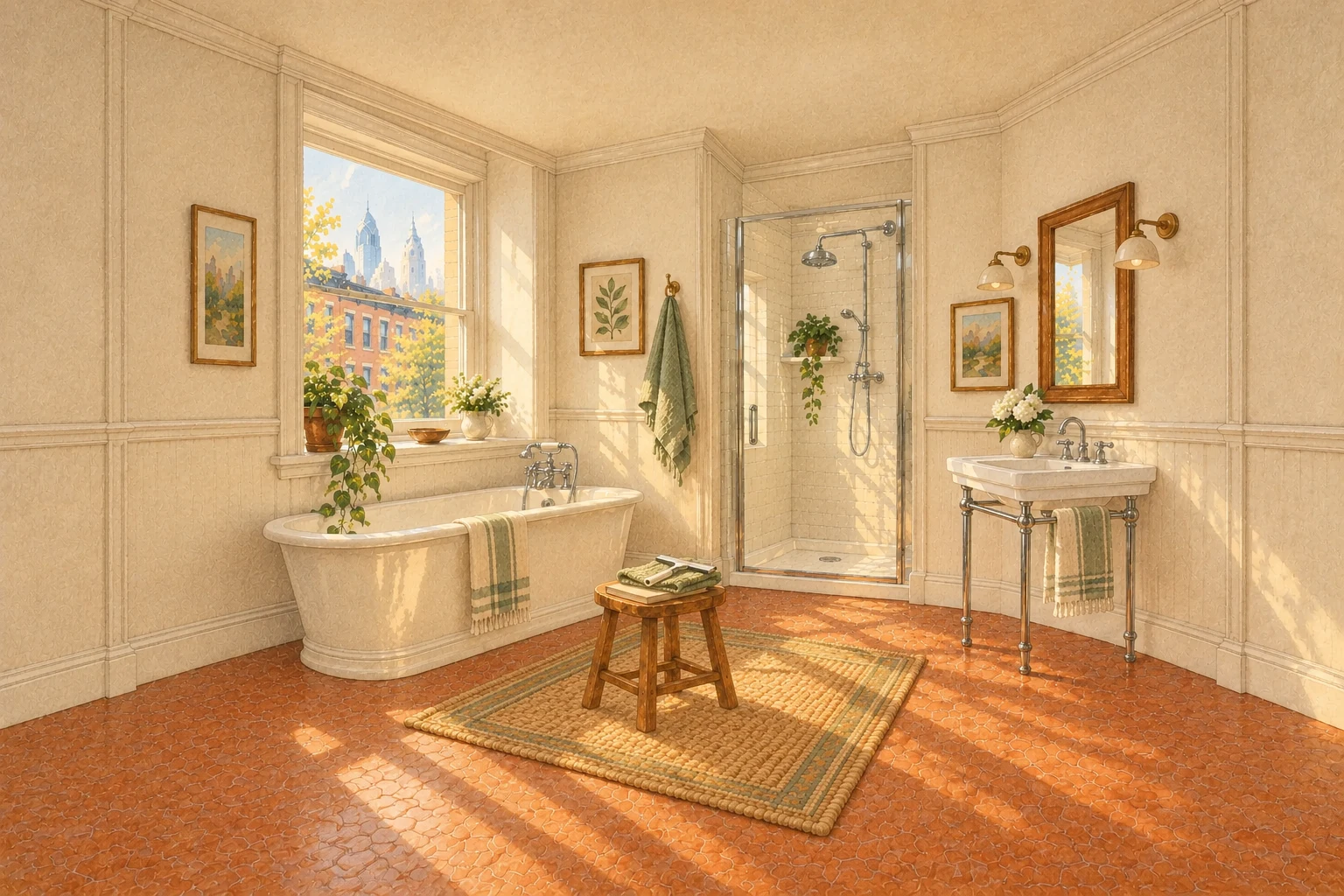
A bathroom is one room, not one cleaning surface. The tub, shower base, door glass and faucet can have different care instructions, even when they share a maker. In Kohler’s 2014 care guide, an enameled cast-iron bath allows sparing abrasive cleaner for a rare stubborn stain. An acrylic bath says no abrasive cleaners. Neither instruction tells you what to put on the door frame.
For an independent cleaner preparing for a Philadelphia visit, the useful question is not “Which bathroom cleaner is strongest?” It is “What is this surface, and which care document covers it?” This guide compares Kohler documents, not every brand or finish. It is document research, not hands-on testing, a product endorsement or a Hometress cleaning method.
The short answer
- Confirm the maker, material and finish separately for the tub, shower base, glass and metal. One confirmed fixture does not identify the rest.
- A cleaner allowed on enameled cast iron is not automatically allowed on acrylic, a coated glass door or a faucet.
- Use the installed product’s own instructions. The dated comparison below helps you ask the right question; it does not authorize a method for an unidentified bathroom.
- Keep abrasion, disinfecting and any extra glass-door work as separate decisions. A routine wipe does not prove that all three were completed.
What the published task actually names
Hometress’s Standard bathroom list says “Clean Showerhead, Faucets, and Handles” and “Wipe Down Shower Curtain, Rod and Rings”. Deep adds “Deeply Scrub & Disinfect Bathtub / Showerhead”. Move and Dream Home carry the Deep line. Read the published tasks by cleaning tier rather than treating the word “bathroom” as an unlimited scope.
No task in those published lists explicitly names shower-door glass. That observation is about the lists, not a claim that every other Hometress page uses identical wording. If a client asks about a glass door, clarify the requested work before choosing a method. A care guide describes a product’s care; it does not add that work to a booking.
The first-job cleaning kit guide connects equipment with checklist tasks. This guide addresses the next decision: which of that equipment may touch each confirmed surface? It covers material compatibility, not a disinfectant recipe or contact time. Finishing a permitted routine clean alone does not establish that the checklist’s disinfecting step is complete.
One bathroom, eight care boundaries
The table summarizes the KOHLER Care and Cleaning Guide, Form 14-1597-0414, © 2014, hosted by Home Depot. Page numbers below are the guide’s printed pages. This is an older document, not newly issued guidance. Its product-brand lists are not reproduced as current shopping recommendations. Read the complete instructions for the installed product before acting.
| Confirmed Kohler surface | Care described in the 2014 guide | Boundary not to cross | Page |
|---|---|---|---|
| Acrylic or ExoCrylic bath; acrylic shower base | Wipe after each use with a soft cloth. The shower-base section says to choose from its approved products and apply as directed. | No abrasive cleaners. Avoid aerosols on the surface. No restoring wax where someone walks or stands. | 25, 31 |
| Enameled cast-iron bath or shower base | Rinse thoroughly and wipe dry with a soft cloth after each use. Abrasive cleaners only sparingly, if needed for rare stubborn stains. | No steel wool, wire brushes or abrasive sponge pads. The Safeguard slip-resistant surface has its own product list; do not treat it as the same finish. | 26, 30 |
| Lithocast bath | Wipe after each use with a soft cloth; select from its approved products and apply as directed. | No abrasive cleaners. Avoid aerosols on the bath surface. | 27 |
| Ordinary shower-door glass | Wipe dry after use; squeegee after showering. The general door section also describes an occasional wipe with diluted mild detergent. | No bristle brushes, sharp instruments, abrasive sponges or abrasive cleaners on the glass panels or anodized aluminum. | 29 |
| CleanCoat shower-door glass | The separate CleanCoat section says soft cloth and water, or a squeegee. | Do not substitute the ordinary-door cleaner list for this separate instruction. The same brush, sharp-instrument and abrasive exclusions appear here. | 29 |
| Shower-door metal | Read the metal restrictions alongside the glass instructions. The guide says not to let cleaners soak. | No cleaners containing abrasives, ammonia, bleach, acids, waxes, alcohol or solvents. | 29 |
| Chrome or Vibrant PVD bathroom faucet finish | Rinse thoroughly, use a soft cloth to dry, and use a damp sponge with an approved cleaning product for the surface. | The finish section says never to use cleaners containing ammonia, bleach or acid. This is not a rule for every faucet material. | 13 |
| Vitreous china faucet | Rinse thoroughly and wipe dry. A soft abrasive cleaner may be used when necessary. | Strong abrasive cleaners scratch and dull Kohler vitreous china. This faucet permission does not transfer to a chrome faucet or acrylic tub. | 13 |
The difference between an abrasive cleaner and an abrasive tool matters. The cast-iron section’s limited cleaner permission does not erase its ban on abrasive sponge pads. Likewise, permission for the glass does not erase a restriction on the metal beside it. The guide’s general page 5 directions call for an inconspicuous-area test, immediate rinsing after cleaner, rinsing and drying overspray, and no soaking.
What the current maker pages confirm—and leave unresolved
The documents were read October 30, 2026. Kohler’s US cleaning hub was blocked when checked, so it could not establish current US instructions here. Three live Kohler Asia Pacific care pages were readable. They are regional pages with no update date shown, not confirmation that every US model follows the same directions.
- The Baths & Whirlpools page separately tells acrylic and Lithocast owners “Do not use abrasive cleaners.” The acrylic section also says not to wax areas where someone walks or stands. Restoration is a separate section, not a routine-cleaning step.
- The Shower Bases page repeats the acrylic no-abrasive rule. Its cast-iron section specifically permits a soft nylon brush on the receptor’s Safeguard slip-resistant surface, despite the page’s general no-brush instruction. It also warns that cream-based cleaners may build up and reduce friction there. That named-surface exception is not permission to brush an unidentified shower floor.
- The Faucets & Fittings page says “Do not use cleaners containing ammonia, bleach or acid” for chrome and Vibrant PVD finishes, while allowing soft abrasive cleaners when necessary on vitreous china. The finish remains part of the answer.
The regional bath page also has an awkwardly labeled opening section: it sits under Baths & Whirlpools but is headed “Vitreous China Faucets and Finishes.” This guide does not silently relabel that section as cast iron or use it to update the dated cast-iron bath instructions. When a document’s heading or scope is unclear, obtain the model’s own care instructions rather than joining fragments into a new method.
The 2014 acrylic-bath section describes polishing compound and paste wax for dull or scratched baths. This guide does not teach that restoration procedure. Its clear limit is “Do not use restoring wax on areas where you walk or stand.” A cleaner reading a restoration paragraph has not thereby added restoration to the visit.
When the material is unconfirmed
Ask for the product name, model and care sheet. Record the tub, shower base, door glass or coating, door metal and faucet finish separately. This guide supplies no visual or touch test for identifying them. “White tub” and “silver faucet” describe appearance, not a confirmed material or coating.
As a suggested personal approach, not a Hometress requirement, leave abrasive treatment, stronger stain treatment and restoration unresolved until the surface and instructions are confirmed. Even “soft cloth and mild cleaner” is not a universal method for every unknown coating, repair or existing damage. Agree a limited routine clean only when the applicable care instructions support it; otherwise note the unanswered question.
For local water context, the Philadelphia water and cleaning guide addresses the supply side. A water report still does not identify a faucet finish or grant permission to use scale remover on it.
Two fictional visits
These examples are invented to show the decision. They are not customer stories or tested results.
A Deep visit with an unidentified tub
The client cannot name the tub material. You write “tub material unconfirmed” and ask for its care sheet rather than choosing the cast-iron exception. Suppose the client then supplies the installed product’s instructions allowing a soft-cloth routine clean. You agree that limited work, record the method and leave stronger treatment unresolved. Without that confirmation, this table alone does not authorize a cleaning method. Do not record the full scrub-and-disinfect task as completed merely because the tub was wiped.
“Could you do the glass door too?”
The request is separate from the list’s shower-curtain line. Suppose the care sheet confirms a Kohler CleanCoat door matching the guide’s water-and-soft-cloth instruction. You and the client agree that limited wipe, not scale removal or restoration. You check the metal instructions separately and do not bring a bristle brush or abrasive pad to the glass. The note records the extra work agreed, the confirmed coating, the instruction used and any deposits left unresolved—not a promise that every mark came off.
Leave a surface-specific note
A useful personal record has five parts: surface and location; maker, model, material and finish confirmed; document and date read; method agreed and used; work still unresolved. “CleanCoat door: water and soft-cloth wipe agreed; deposits not treated” says more than “bathroom done.” This is a suggested note format, not a claim about an app feature or a Hometress reporting rule.
If this surface-by-surface approach matches how you work, apply to join Hometress. It is free to join.