
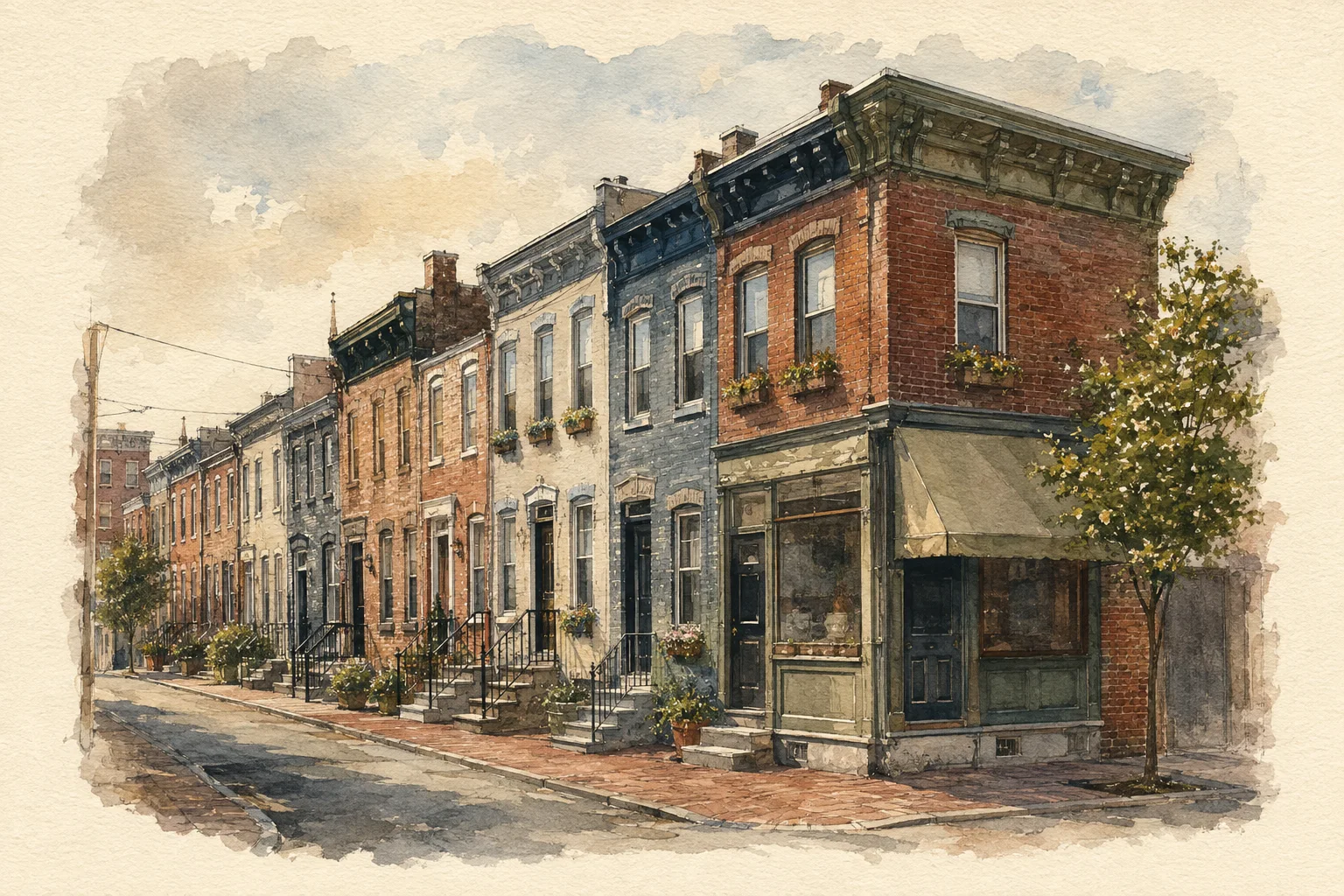
A little orientation
Look at the Dickinson Narrows address in front of you
Use the address for school questions.
Check the District’s own lookup and enrollment instructions rather than assuming a neighborhood label assigns every child to the same school.
Plan a real park visit.
Research Dickinson Square Park for the activity and access you need, then connect it to the home’s actual doorway.
Check the daily connection.
Use the guide’s 7th Street and BOK references only where they serve your route; compare complete journeys rather than neighborhood impressions.
A closer look
A household plan in three parts
Use the same questions at each candidate address so your comparison stays useful.
Start with the child and address.
Use District enrollment resources to look up the specific home and the information relevant to your child’s grade. Follow up with the District about any unclear result rather than treating the guide’s school discussion as an assignment or quality judgment.
A useful questionWhat school details still need confirmation for this address and your child?
Source & next step ↗Check the visit you would make.
Find Dickinson Square Park through the City’s facility information and ask about the activity or access your household needs. Then decide whether the journey from the actual address fits your routine, instead of assuming park proximity alone settles convenience.
A useful questionWhat would make Dickinson Square Park usable for your particular household?
Source & next step ↗Test the trip beyond the neighborhood.
Plan the journey to your real work or errand destination from the proposed home. Use 7th Street or BOK as guide references only when relevant, and compare both directions with the carrying and access needs of your day.
A useful questionWhich complete journey matters more than the neighborhood label on the listing?
Source & next step ↗Dickinson Narrows is a neighborhood where everyday life is shaped by the details that rarely make it into real estate listings. The park acts like a front yard for the entire community, local corner stores function as support systems, and neighbors build relationships through small habits like cleaning sidewalks together or watching each other’s cars. The same streets that fill with kids and dog walkers in the morning can feel unpredictable late at night. The Narrows is not a polished version of South Philly. It is lived-in, raw, and full of personality.
First, Learn the Map Locals Actually Use
Most newcomers only see Dickinson Narrows as a rectangle between two busy streets, but the people who live here break it down into smaller territories. The neighborhood’s legal name on maps is Dickinson Narrows, but many residents shorten it to The Narrows when talking casually. Others, especially long-timers, refer to it with a bit of playful roughness as Dickenson Arrows. Each version hints at how personal the area feels. On paper it is just another slice of South Philly, but in practice it works more like several small villages sharing the same grid. What side you live on changes your life more than any formal boundary.
Instead of borders written by the city, locals describe everything by landmarks. The park side means the blocks closest to Dickinson Square Park, where the pace is calmer and foot traffic is family heavy. The 7th side has a sharper edge, a place where people keep a closer eye on their car and do not linger at night. The Passyunk edge points you toward the row of restaurants and coffee shops to the west, which shapes how residents choose weekend plans, while the triple blocks describe old-school stretches where entire families and longtime neighbors fill multiple houses in a row. These explanations matter because they hint at how the social rules shift every few blocks.
Within this neighborhood are micro-zones that dictate your daily rhythm. The Park Zone wraps around Dickinson Square Park and draws dog walkers, parents, and anyone who wants morning peace. The 3rd to 5th Streets Zone feels more residential and settled, with less turnover and quieter evenings. The 5th and Snyder Zone sits in transition, not calm enough to feel suburban but not rowdy enough to feel unsafe, a middle ground between families, newcomers, and renters. The personality of each zone can be felt simply by walking one block too far.
Directions in The Narrows are rarely given using street numbers alone. People navigate by what you are near. They mention being by the park, behind Mexico Lindo, across from the Beer Store, close to Tamalex, next to the Coin Op Laundry on 7th, or down the street from Khmer Market. Even distance is expressed through lifestyle. Someone might say they live fifteen minutes from BOK, meaning they can walk to a building that hosts events, fitness classes, and rooftop gatherings. If you live here long enough, you learn to stop reading the street grid and start reading the clues instead.
Where The Narrows sits
Locals describe everything by landmarks rather than borders written by the city.
- Dickinson Square Park
- Passyunk
- 7th Street
- BOK
Schematic · not to scale
The Neighborhood by the Clock: When the Narrows Changes Personality
From sunrise to late night, The Narrows behaves like multiple neighborhoods sharing the same pavement. Mornings are slow and reserved, especially around Dickinson Square Park. Dog owners gather near 5th and Cross before most commuters leave their homes. The quiet reveals which blocks handle their own trash because Monday pickups are unreliable. Sometimes bins sit untouched for days while neighbors quietly take turns sweeping the sidewalk. Early risers also know that Tuesday mornings offer the best chance to grab a parking spot before anyone else moves their car. Those who sleep in miss their opportunity.
In the afternoons, the sidewalks wake up with corner stores, wholesalers, and food vendors working at full speed. Khmer Market fills with locals buying ingredients in bulk. The Giant Aquarium sells pet fish to both families and wholesalers. Some stores trade candy and cigarettes by the case. The streets feel most productive, but strangely, many Tuesday afternoons slip into an unusually slow rhythm. Realtors and social media creators choose these hours to tour the streets and film listings because the neighborhood looks calm, even polished in the right light.
Evenings bring the biggest shift in personality. The 47 and 57 bus lines return residents from Center City, and anyone with a car starts driving in slow loops hoping to land a workable parking spot. Some people walk toward Passyunk for dinner, while others gather by the park to sit outside or grill in their rowhome patios. When warm weather settles in, the park patio lifestyle becomes a fixture. People perch on small balconies or pull out folding chairs in tiny backyards, eating outside until the sun disappears. These moments are the reward that help residents tolerate the rougher parts of daily life.
Night is when newcomers understand why locals warn them about certain streets. After ten, different blocks feel unpredictable. The same spot that was calm at sunset may become loud an hour later. Some stretches grow restless, especially on weekends. Some residents who feel comfortable walking during daylight choose to stay inside once the shouting begins. Late noise ranges from arguments to fireworks and occasional street activity that most people prefer to watch through a window instead of engaging with. The Narrows is not a quiet neighborhood. It is a neighborhood with very specific hours of peace.
Micro-seasons add another layer. Winter storms trigger intense parking battles, with chairs and bins appearing like defensive markers. Saving a spot becomes a full-time ritual. Summer amplifies everything. With windows open, park life feels alive but so do the 4 a.m. sounds from the street. People rarely need an alarm clock when the neighborhood makes one for them.
Micro-Zones: Block-by-Block Personalities
The Park Zone offers a neighborhood fantasy that actually matches reality on most days. Families, older residents, and young buyers share the same sidewalks. The park hosts small events, informal weekend markets, and a constant rotation of kids on scooters, dogs tugging at leashes, and neighbors chatting on benches. The homes near the park feel distinct. Some look like small cottage-style rowhomes, often with gardens, patios, or stylish renovations. Prices in this zone run in the higher bracket of local listings, reflecting the trade-off between park access and relative calm. Although occasional noise drifts through, this area feels most predictable to newcomers who want an easier adjustment.
The 3rd to 5th Streets Zone carries a quieter tone. Triple block culture thrives here, where multiple generations or long-term neighbors live only a few doors away from each other. The daily pace is slower, and unwritten rules carry more weight. People know where trash cans should sit, which sidewalks are safe for kids to play on, and who to call when something feels off. It is a place where you learn names, not just addresses. Families who want The Narrows without the edge often start here because the nights settle earlier and strangers stand out faster.
Moving toward 5th and Snyder, the tone changes again. New businesses and cafes begin to appear, hinting at a neighborhood being reshaped by outside interest. Some call this strip safe enough, while others call it unpredictable if you walk it at the wrong hour. Renovated homes sit beside older ones, and some are subsidized or rented to long-term tenants. The result is a block-by-block contrast that only makes sense if you walk it, not if you read about it. People here learn to read the air rather than the statistics. One street might feel like the future, and the next might feel stuck in the past.
Toward the east, proximity to Passyunk affects daily life, even if residents rarely mention it directly. Restaurants, coffee shops, and nightlife nearby make it easy to enjoy a weekend without leaving the neighborhood. People also brag, intentionally or not, about living fifteen minutes from BOK, which provides classes, events, and rooftop views that pull people out of their houses. Walkability to the riverfront also matters, especially on warm days when families want space without the sensory overload of busier blocks. This side feels more connected to the city’s lifestyle perks while still carrying the grit that defines The Narrows.
Block-by-block personalities
Within the neighborhood are micro-zones that dictate your daily rhythm. Three of them; the map locals carry is longer.
The Park Zone
Wrapped around Dickinson Square ParkDraws dog walkers, parents, and anyone who wants morning peace. Small cottage-style rowhomes, often with gardens, patios or stylish renovations. Prices run in the higher bracket of local listings, and it feels most predictable to newcomers.
3rd to 5th Streets
Deeper residentialQuieter and settled, with less turnover and earlier nights. Triple block culture thrives here — multiple generations a few doors apart. It is a place where you learn names, not just addresses.
5th and Snyder
In transitionNew businesses and cafes appear beside older and subsidized homes. Not calm enough to feel suburban, not rowdy enough to feel unsafe — a middle ground between families, newcomers and renters that only makes sense if you walk it.
Parking: The Narrows’ Core Religion
Parking in The Narrows is less a chore and more a daily ritual that shapes how residents schedule their errands, their work hours, and even their bedtime. The streets are narrow, the houses have no driveways, and many people own cars they do not actually want to depend on. One-sided residential parking and the ratio of homes to available spaces make it common to circle the same blocks for twenty minutes or more. If someone finds a spot even a few blocks away from their house, they often keep the car there for days, avoiding short trips that could cost them hours of searching later.
Spot-saving is treated like territorial negotiation. Chairs, traffic cones, and plastic bins serve as markers that claim a parking space as if it were private property. Some residents respect these signals without question because they know how desperate parking becomes at night or after snow. Others ignore them if the spot looks vacated too long, but they do so at their own risk. The reaction can range from awkward stares to direct confrontation, and the consequences are not always verbal. Locals decide how bold to be based on the block they are dealing with, the time of day, and whether they plan to keep parking here long-term.
The real fear is not losing time. It is losing the condition of your car. Many residents choose to park farther away on calmer blocks even if it means walking the distance at night. Those who own cars often purchase cameras or pay more for insurance. Owning a vehicle here is not simply transportation. It is a calculated risk that influences where you shop, when you drive, and how late you stay out.
Survival requires a strategy. Tuesday mornings tend to be the best time to find a spot, partly because more people move their cars after Monday trash pickup. Evenings and weekends bring the fiercest battles, especially when events happen nearby or when the weather turns warm. Some newcomers eventually accept that life is easier if they commit to using the bus for daily errands and only use the car on weekends. Others move within the neighborhood to streets where parking is slightly less miserable. Over time, residents do not just learn how to park here. They learn how to live here with a car they barely use.
Safety, Crime, and The Nighttime Narrows
Conversation about safety in The Narrows almost always splits into two camps. One side points to renovated houses, strollers around the park, and a visible police presence and insists the area feels far better than it did a decade ago. The other side points to specific corners, specific times, and specific incidents and argues that anyone calling it safe is ignoring what still happens after dark. Both views can be true depending on where you stand and when you are out. Midday near Dickinson Square Park, the neighborhood feels manageable and often friendly, with kids, dog walkers, and people sitting on benches. Late at night the same streets can feel sharper and less predictable, especially on weekends.
Most locals adapt rather than constantly panic. Many adopt their own private curfew, not because they believe disaster is guaranteed after a certain hour but because they know the odds of something unpleasant go up. Staying inside after a personal cutoff time becomes routine for some households. Some blocks organize watch groups, either formally or through loose networks of neighbors who message each other when fireworks start, when someone seems to be checking car handles, or when shouting escalates. Calling the police can become a regular part of life, which shapes how residents feel about response times and effectiveness. Lifelong city residents often view all of this as frustrating but familiar. People who move from quieter suburbs or smaller towns tend to experience a much steeper adjustment and are more likely to describe the neighborhood as chaotic or scary.
The real divide is not just about crime statistics. It is about tolerance and expectations. Someone who has lived in Philadelphia for years might see The Narrows as rough around the edges but workable if you understand its patterns. Someone used to silent cul-de-sacs might experience the same night as a full crisis. This is why safety conversations online become so heated. Everyone is describing the same place, but not everyone is living the same version of it.
Houses, Money, and the Cost of Belonging
Housing in The Narrows looks familiar to South Philly at first glance, but the details reveal a neighborhood in transition. Most homes are two or three story brick rowhouses, many attached in long lines that make the blocks feel tight and intimate. Near the park, some blocks have smaller houses with cottage-like proportions and creative façades, sometimes with planters, painted doors, or small front gardens. Renovations often highlight hardwood floors, exposed brick, built-in shelves, and compact but well designed kitchens. Some rehabs add metal staircases, roof decks, or slim side yards that turn leftover space into tiny patios. These touches show up constantly in listings and social media posts because they offer a modern lifestyle inside a historic shell.
Prices tell the story of how quickly the area has changed. A house that once needed work sold for a fraction of what a finished two bedroom rowhome on a good block lists for now, and larger or more polished properties go higher still. On the rental side, updated two bedroom units, particularly near the park or closer to Passyunk, ask well above a plain one bedroom. Buyers tend to be a mix of young professionals seeking more space than they can afford in trendier neighborhoods, small families hoping to balance price and access, and investor landlords betting on long term appreciation.
The purchase price is not the only cost. Property tax bills surprise some owners, who feel the amount does not match the condition of their streets or the consistency of their services. Residential parking permits from the parking authority add another recurring fee, and for some households that fee exists purely so they can fight in the same nightly parking wars everyone else does. These layers of cost turn homeownership into a heavier commitment. People find themselves paying significantly more for a place that still struggles with trash collection, uneven sidewalks, and visible drug activity.
Inside the community, gentrification is not a theory. It is visible in renovated façades, new listings, and the contrast between glossy real estate photos and unfiltered online complaints. Long term residents talk about slow improvements in lighting, housing stock, and business activity, but they also talk about longtime neighbors moving out and rising rents pushing families into more distant areas. Newer residents are sometimes surprised to discover that the charming cottage near the park still comes with fireworks aimed down the block and late night shouting a few streets away. Social media often shows only the best version of The Narrows: warm evenings on patios, bright kitchens, renovated bathrooms, and flattering shots of the park. Residents on Reddit, X, or review sites fill in the missing half of the picture with detailed experiences that rarely appear in glossy posts.
The one figure this guide puts a number on
Parking is the cost the body actually measures.
Food, Corner Stores, and Everyday Errands
One of the strongest arguments in favor of The Narrows is the food. The network of Hispanic and Southeast Asian restaurants and takeout spots gives residents a wide range of choices within walking distance. Along and around 7th Street and nearby blocks, you can find Mexican places such as Mexico Lindo and Tamalex, along with small shops that serve dishes you will not see on chain restaurant menus. A simple corner cheesesteak stand or small grill might become part of a resident’s weekly routine because it delivers a reliable meal at a reasonable price. New S & D Coffee Shop and similar cafés provide caffeine and a place to sit that feels distinctly local rather than branded. Many of these places remain hidden to casual visitors, and residents often discover them through neighbors, delivery apps, or just paying attention as they walk.
Corner stores and wholesalers are the backbone of daily life. These small shops sell milk, bread, cigarettes, snacks, and incidentals, but they also serve as informal news centers. People catch up on neighborhood gossip, hear about upcoming cleanups or events, and trade practical advice while waiting to pay. On 7th Street, wholesalers such as Khmer Market and the Giant Aquarium create a distinctive economic layer. The Giant Aquarium supplies pet fish and equipment, while other shops deal in bulk candy, cigarettes, and other goods, often serving both local residents and smaller regional buyers. The presence of these businesses is not just about convenience. It signals the immigrant backbone of the neighborhood and the ways families make a living beyond traditional retail.
Coffee and pastry habits often pull residents toward Passyunk. A typical morning for some people involves leaving their house in The Narrows, cutting through the quieter blocks, and grabbing coffee from a Passyunk café before commuting or heading home to work. The contrast is noticeable. Passyunk feels more polished and curated, with outdoor seating, string lights, and carefully styled storefronts. The Narrows, by comparison, feels rawer and less managed. For many residents, this contrast is actually appealing. They can step into the more refined environment when they want it, then return to blocks that feel less performative and more lived in, even if those blocks require more patience.
Running errands in The Narrows is not a chore people do only on weekends. It is woven into their movements through the day. The same walk might involve grabbing a sandwich, dropping off laundry at the Coin Op on 7th, picking up fish food at the aquarium wholesaler, and then cutting through the park on the way home. This is not a neighborhood where giant supermarkets dominate. It is a place where small stores, carts, and specialized shops handle most of your needs if you are willing to move around on foot and learn which door does what.
Food, corner stores, and everyday errands
One of the strongest arguments in favor of The Narrows is the food.
Mexico Lindo
One of the Mexican places along and around 7th Street that residents navigate by — people give directions as "behind Mexico Lindo" rather than by street number.
Tamalex
The other name in the same cluster, and another orientation point in everyday speech. Small shops here serve dishes you will not see on chain restaurant menus.
Khmer Market
Fills with locals buying ingredients in bulk. On 7th Street the wholesalers create a distinctive economic layer, signalling the immigrant backbone of the neighborhood.
The Giant Aquarium
Sells pet fish to both families and wholesalers, serving local residents and smaller regional buyers alike. An errand run here folds into the same walk as a sandwich and the laundry.
New S & D Coffee Shop
Caffeine and a place to sit that feels distinctly local rather than branded. Many of these places remain hidden to casual visitors.
Raising Kids Here: Schools, Parks and Unwritten Limits
Parents in The Narrows make decisions with one school name in mind. Kirkbride is the default neighborhood school, and school choice shapes nearly every conversation about raising kids here. Even parents who love the community will quietly plan alternatives before their children reach enrollment age. Common workarounds include applying to charters, choosing parochial schools, or navigating out-of-catchment admissions through lotteries or waitlists. For many households, these backups are treated as part of the cost of living in the area. Moving here without a plan for schooling is considered risky, especially for long term residents who want to stay through elementary years.
Parks play a much larger role in family life than most newcomers expect. Dickinson Square Park is used like a shared backyard, and parents rely on it for playtime, socializing, and community breaks. During the day, the park feels like one of the most stable environments in the neighborhood, especially between early morning and late afternoon. The same cannot always be said for nearby corners at night. A block that feels perfectly comfortable for walking to school at eight in the morning can feel tense at ten at night. Parents learn specific routes that stay busy during daytime hours and avoid stretches of 7th Street after dark, not because danger is guaranteed but because the tone changes without warning. Children in these households grow up learning the difference between safe times and safe places.
Noise affects family life more directly than crime in many homes. Late night shouting, fireworks, and loud groups do not always indicate danger, but they do interrupt sleep. Parents take small but targeted measures to protect quiet hours. Sound machines are common. Bedrooms for children are often placed toward the back of the house or on quieter sides of the block. Some families prefer rowhomes that face the park even if they cost more because the noise at night can be easier to predict. These strategies get passed along casually, often during playground conversations or while walking home with other families. They are not written rules, but they are shared knowledge that parents quickly absorb.
In this neighborhood, raising kids is less about finding perfection and more about managing trade-offs. Families who thrive here tend to value walkability, diversity, the park, and strong neighbor networks. They accept that schooling will take effort and that quiet nights cannot be guaranteed. The Narrows can support family life, but only for those willing to adapt to its rhythms.
How to Actually Live Here: Unwritten Rules and Micro-Hacks
Life in The Narrows runs on rules no one writes down. Parking etiquette is the clearest example. Chairs, cones, and bins marking a space are treated as a claim, and whether to respect them depends on the hour, the block, and your appetite for confrontation. Many residents choose to park farther away, even if a space is closer, simply to avoid risk. For some households, the smartest strategy is not to move the car at all, especially on weeknights and weekends. Leaving it parked for several days and relying on transit becomes a way of protecting both time and sanity.
Noise expectations are just as nuanced. Music on a warm evening does not bother most people, and gatherings that spill outside on weekends are usually tolerated if they end at a reasonable hour. What brings police calls faster are fireworks shot toward the street, public arguments, or groups creating sustained disruption. Complaining loudly at a neighbor rarely helps. Approaching someone before conflict builds is more effective, especially if you already greet them casually during the day. Confrontation without a relationship can turn a short annoyance into a long term feud, and feuds on small blocks have a way of outlasting leases.
Trash and sidewalks follow their own social system. Bins are expected to stay in specific places, and blocks often monitor dumping or oversized bags. Residents who never join cleanups or who leave trash out too early get noticed quickly. Participating in at least one block cleanup or taking initiative after a missed pickup earns informal goodwill. It signals that you are invested in the street, not just renting space on it.
Public transit becomes easier once you think like a local. The 47 bus is the lifeline for anyone traveling north or south quickly, especially during daytime hours. The 57 is useful east and west and tends to feel calmer near park-side blocks than near 7th Street at night. Many residents find that the neighborhood becomes more enjoyable once they stop treating transit as a backup plan and start using it as their default. It removes parking stress and expands how far you can go without gambling your spot.
Social navigation relies on knowing who not to engage. Dog owners tend to form their own community, corner store regulars build familiarity through quick visits, and some people are best acknowledged with a nod and no conversation. The key is learning when interaction builds connection and when walking with purpose avoids trouble. Living here means recognizing that friendliness has different levels, and choosing the right one for each situation.
Is The Narrows For You? Scenario-Based Guidance
A car-dependent commuter will either adapt or feel crushed by the daily scramble. Planning around parking becomes part of the routine. Driving a few blocks after work turns into a slow hunt for an open space. Commuters who tolerate frustration and are willing to leave their car parked for long stretches might manage, especially in areas closer to the park or west of 5th Street. Those who expect convenience should reconsider unless they are ready to rely heavily on transit.
For a food-obsessed young professional, The Narrows offers a lifestyle that nearly makes up for its rough edges. Exceptional restaurants are scattered through the area, and access to Passyunk expands options even more. You gain diversity in cuisine, grab-and-go snacks, and coffee within walking distance. In exchange, you live with noise, trash issues, and unpredictable nights. The best fit for this lifestyle is near the park or along calmer sections west of 5th, where the trade-offs feel more balanced.
Young families can thrive, but only with preparation. The park provides excellent outdoor space and a built-in community, and the close-knit nature of some blocks creates childcare support and social belonging. Challenges include school planning, late-night disturbances, and navigating safety by time and location rather than by general area. Families tend to cluster near the park or in quieter stretches between 3rd and 5th, where routines feel more stable and neighbors look out for one another.
Those coming from another gritty city neighborhood often settle in with less friction. Noise, drugs, and parking struggles are not shocking. What feels easier in The Narrows is the strong food culture and the reliable presence of community spaces. What still requires patience is the inconsistency of services and the unpredictability of certain blocks at night. For someone accustomed to urban grit, the lifestyle might feel challenging but not overwhelming.
Suburban newcomers face the steepest adjustment. The daily realities of parking, trash, noise, and crowded blocks may feel intense at first. At the same time, the park, the walkability, the small stores, and the food culture can become unexpected sources of joy. The first six months become a test. Some adapt by embracing transit, connecting with neighbors, and adjusting expectations. Others feel constant tension and choose to leave. The Narrows rewards residents who accept its imperfect character, not those who try to change it.
Final Local Truths: What You Only Learn After Six Months
Residents who spend enough time here eventually share a common list of frustrations. Parking dominates daily decisions. Cars get scratched or damaged no matter how careful you are. Trash pickup fails often enough that neighbors organize their own solutions. Noise disrupts sleep more than crime does, yet both are part of the same environment. Taxes and permits feel excessive given the quality of services provided. These problems are not occasional surprises. They are routine conditions that people learn to manage.
At the same time, people become fiercely protective of what they love. Dickinson Square Park is treated like a community treasure, and anyone who disrupts it stands out quickly. Residents defend their block’s reputation because identity in The Narrows is defined at the street level, not the neighborhood level. Food loyalty runs deep as well. Locals protect their favorite spots, especially the smaller ones that are easy to overlook from the outside. These loyalties form the emotional foundation of living here.
Over time, people start measuring quality of life by simple standards. Can you park within a few blocks most nights. Can your kids or dog enjoy the park safely and happily. Can you access great food and coffee without leaving the neighborhood. If the answer is usually yes, many residents feel satisfied, even if the area is messy in other ways. If the answer is repeatedly no, frustration grows quickly and people begin thinking about moving.
The Narrows is not designed to impress someone looking for quiet streets, flawless safety, or easy parking. It offers community, culture, food, and shared spaces to those who are willing to handle grit and inconvenience. The reward is not perfection but belonging. For residents who accept the trade-offs, the neighborhood does more than house them. It holds them, flaws and all.
What you only learn after six months
The reward is not perfection but belonging.
- Dickinson Square Park, treated like a community treasure — anyone who disrupts it stands out quickly.
- Their block's reputation. Identity here is defined at the street level, not the neighborhood level.
- Food loyalty. Locals protect their favorite spots, especially the smaller ones easy to overlook from outside.
- The measure that matters: can you park within a few blocks most nights, can the kids or the dog enjoy the park, can you get great food and coffee without leaving.
- Parking dominates daily decisions.
- Cars get scratched or damaged no matter how careful you are.
- Trash pickup fails often enough that neighbors organize their own solutions.
- Noise disrupts sleep more than crime does, yet both are part of the same environment.
- Taxes and permits feel excessive given the quality of services provided.
Make it yours
Your Dickinson Narrows viewing notes
A short list to turn what you read into your own next steps.
Saved checks stay on this device when browser storage is available. This is a personal planning list, not a property inspection or professional assessment.
Sources & next steps
Useful advice should
show its working.
These resources support the reader tools above and help you check details for your own address, date, or plans.
- School District enrollment tools
Find the address-based school lookup and current enrollment instructions.
- Philadelphia Parks & Recreation Finder
Find named public facilities and their contact information.
- SEPTA trip planner
Plan your date, direction and return journey; check service and accessibility details.
The sources support school, park and travel lookups. They do not establish neighborhood boundaries, school quality or block-level safety.