
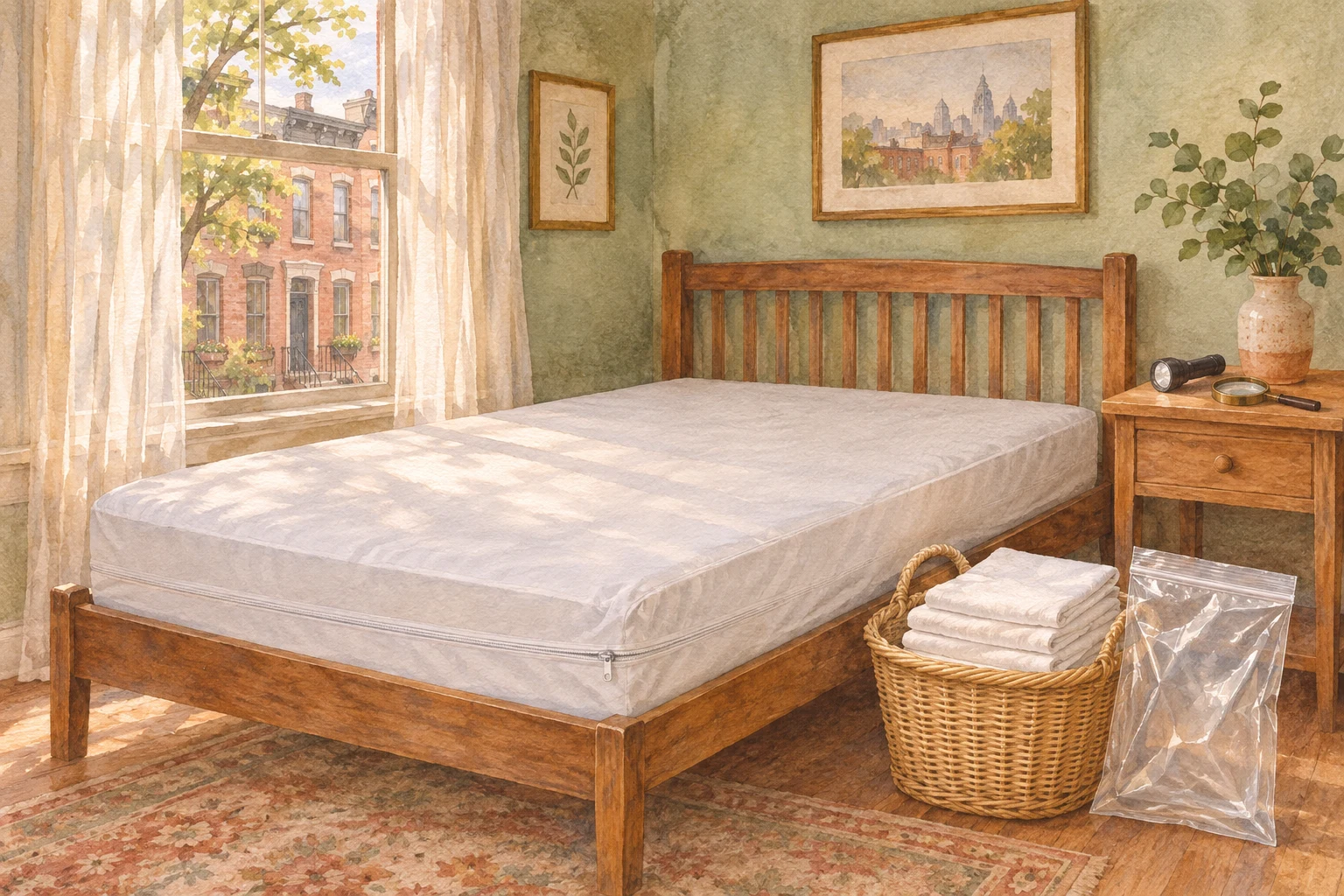
If you find or suspect bed bugs before a Philadelphia clean, contact Hometress before the visit and arrange professional assessment. Hometress does not clean homes with a bed-bug infestation or provide bed-bug treatment. Use a pest-control provider for treatment. Ordinary cleaning can take place only after treatment, once the infestation is resolved.
The short answer
- Treatment first: a routine house clean is not bed-bug treatment. A conversation with a pest professional or a booking note does not make an infested home ready for a Hometress visit.
- If you rent: notify your landlord in writing within five business days of finding or suspecting bed bugs. Follow the pest professional's preparation instructions.
- Before changing rooms: the City's warning is about relocating yourself, including sleeping elsewhere in the house, because bed bugs can follow their host.
Why the infestation needs treatment before a clean
The City's bed-bug safety guide (PDF page 1) explains that bed bugs can hitchhike on belongings such as jackets and bags. It advises keeping belongings off floors and furniture in suspected areas and using sealed bags or bins. A cleaner's belongings can therefore create a route between homes. Avoiding an infested-home visit helps protect the cleaner and the next household.
Hometress's ordinary cleaning checklist is not an infestation-control plan. Vacuuming furniture, changing sheets or doing laundry during a routine visit does not turn it into pest treatment. Arrange treatment with a pest-control provider; contact Hometress about ordinary cleaning afterward.
If you rent: notify your landlord and follow the prep plan
The City’s current reporting guidance says to give written notice within five business days of finding or suspecting bed bugs. Keep a copy. The landlord must obtain professional investigation and remediation services within ten business days of notification. If the landlord does not respond or address the infestation, that page explains how to report a violation.
Philadelphia Code §9-4802 also requires tenants to cooperate with reasonable professional recommendations. Preparation may include cleaning or moving furniture before treatment, as the pest management professional recommends. That preparation is separate from an ordinary Hometress cleaning.
The Code distinguishes responsibility for arranging treatment from sharing its cost:
- Landlord-paid investigation and remediation: when the tenant gives written notice within 365 days after lease commencement, or within 180 days of discovery of an infestation in an adjoining unit in the building.
- Later notice: the provision for notice more than 365 days after lease commencement requires sharing reasonable costs; the landlord remains responsible for investigating and remediating. The adjoining-unit condition above still matters.
- Exception: tenants in Philadelphia Housing Authority-managed properties, or properties where rent is paid through government housing subsidies or vouchers, do not share those costs.
The Code does not specify a universal 50/50 split. Use the current City sources for the rules that apply to your rental rather than treating the older brochure as the only legal source.
What the City means by not relocating
The City says, Do not relocate to another area of the house.
Its explanation concerns bed bugs following their host (PDF page 10); page 7 specifically connects that risk with wherever a person sleeps. The warning concerns moving yourself to another room, including changing where you sleep.
Follow the pest professional's directions about moving items for treatment. The City also warns against total-release foggers, which can spread the infestation (PDF page 10).
Household preparation belongs to the treatment plan
Ask the pest professional for a written inspection report and preparation plan, as the Penn State / Pennsylvania IPM guide (PDF page 8) recommends. The household steps in these guides support that work; they do not describe services Hometress will perform in an infested home.
- Laundry: the City describes a hot wash, then the hottest dryer setting for at least 20 minutes after items appear fully dry, followed by airtight storage (PDF page 8). Check care labels and follow the pest professional's instructions for fabrics that cannot tolerate heat.
- Vacuuming: both guides recommend a crevice tool. Their difference concerns the brush: the City warns against a bristle attachment transferring eggs between rooms (PDF page 7), while Penn State includes a brush (PDF page 12). Use the preparation method directed by your pest professional.
- Disposal: vacuuming does not kill the bugs or eggs. The City specifies a sealed trash bag for emptied contents. Penn State says to empty the vacuum, or seal and dispose of its bag outside the home after each use (PDF page 12).
What to tell Hometress before the visit
Contact Hometress if you have found or suspect bed bugs. Explain what you observed, where, and whether a pest professional has assessed or treated the home. Do this before the visit rather than relying on an arrival note.
Once treatment is complete and the infestation is resolved, contact us about ordinary cleaning. Treatment preparation and pest removal remain outside Hometress's service.
For ordinary visits after treatment, see what house cleaners will not do and how to prepare for house cleaners. For a different situation, read mouse droppings found before a Philadelphia clean.
Frequently asked questions
Will Hometress clean a home with bed bugs?
No. Hometress does not clean homes with a bed-bug infestation or provide bed-bug treatment. Use a pest-control provider for treatment, then contact us about ordinary cleaning after treatment and once the infestation is resolved. If you only suspect bed bugs, contact us before the visit and seek professional assessment.
Does a bed-bug problem mean my home is dirty?
No. Penn State explains that dirty living conditions do not cause bed bugs (PDF page 16). Getting help promptly and following the treatment plan is more useful than blaming yourself or trying to solve the infestation with a routine cleaning visit.
Updated November 12, 2026. Sources checked November 12, 2026. The City's A Guide to Bed Bug Safety is dated December 25, 2020, despite the 2021 filename. Page references for both guides are PDF page positions; Penn State's printed page numbers are two lower. Current renter rules are linked to the City reporting page and Philadelphia Code above.