
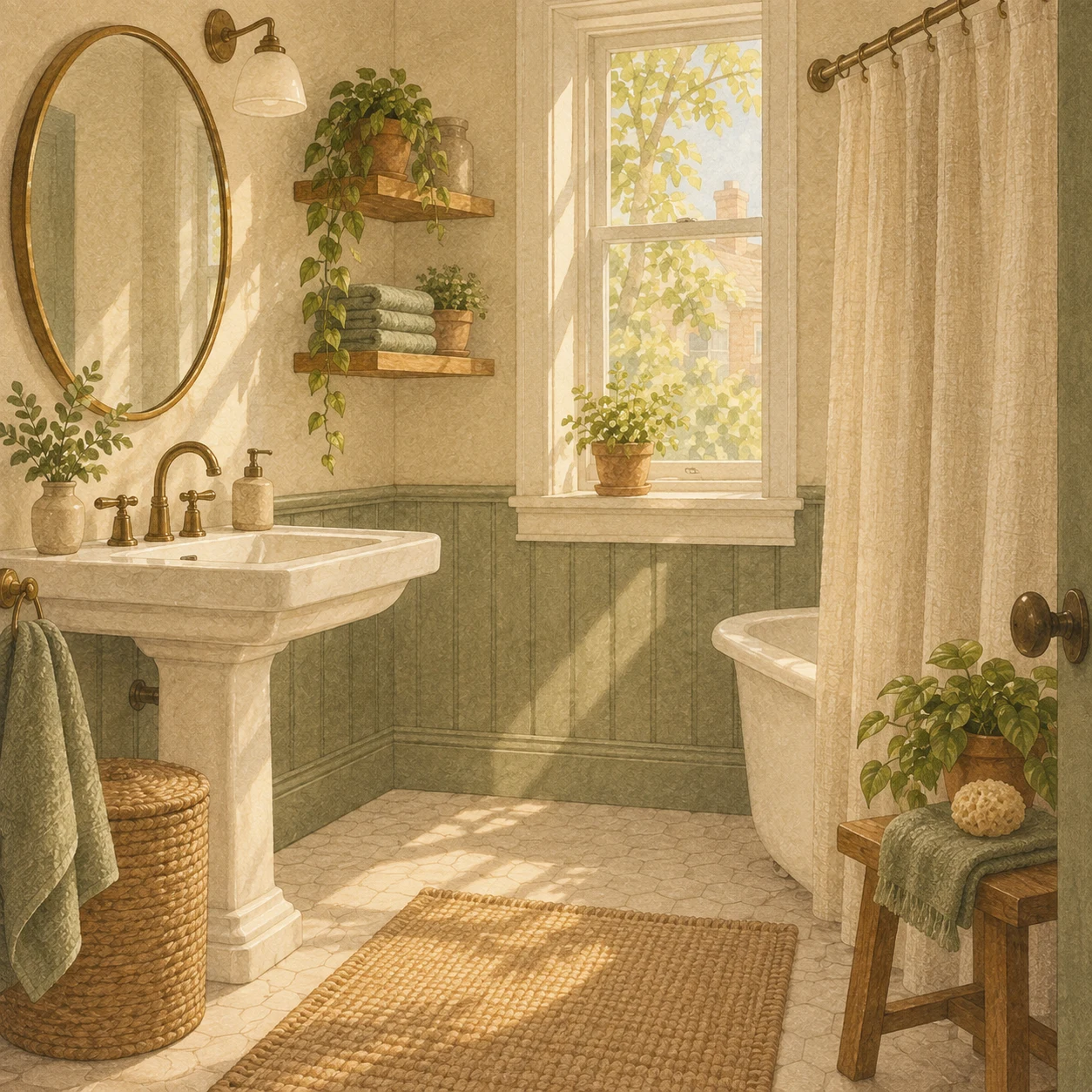
A bathroom can look tidy while the tub still has a rough ring, the vanity feels sticky and dust gathers behind the toilet. A deeper clean starts with naming those jobs, rather than buying a stronger spray. For a Philadelphia rowhome, apartment or condo, this checklist helps you decide what to tackle yourself and what to discuss before booking.
The room-by-room sequence below is our suggested household routine, not a promise that every task is included in a cleaning visit. Hometress's service checklists are explained separately so you can match the work to the booking.
Before you start: clear the room and identify the surfaces
Move toiletries, bath toys, toothbrushes and medicines to a dry place outside the work area. Empty the shower ledge and vanity rather than making someone clean around each bottle. Remove loose rugs and laundry; keep a clear route through the doorway.
Check what you are cleaning: a stone vanity, refinished tub and coated shower door may need different products. Find the manufacturer's care instructions, or ask the owner if you rent. If you cannot identify a finish, pause before treating it with a scale remover or abrasive pad.
Read product labels for suitable surfaces, protective equipment, ventilation and any rinsing instructions. The CDC's household-cleaning guidance says not to mix cleaning products or chemicals. If using a disinfectant, clean first and follow its labeled contact time, keeping the surface wet for that period. There is no single contact time for every bottle.
A bathroom deep-cleaning checklist, in a useful order
Work through one zone at a time. Keep a separate cloth and tools for the toilet, and leave the floor until the other work is finished. These are suggested habits for organizing the job. The full published bathroom list is on the bathroom checklist page.
- Dry dust first. Collect loose hair and dust from accessible ledges, shelves and the floor. Wipe reachable vent-cover surfaces as their care instructions allow; do not dismantle the fan or work on electrical parts.
- Clean the tub and shower. Use a product approved for the surface. Work around the tub rim, faucet bases and accessible shower fittings with a suitable soft tool. Rinse as directed. Do not assume every brown mark is removable dirt.
- Handle the shower screen or curtain. Follow the screen's coating instructions. Check a curtain or liner's care label before laundering; wiping it and laundering it are different jobs. Leave fixed hardware in place.
- Clean the sink and vanity. Address the basin, faucet, handles and cleared counter, including the area around the soap dispenser. Clean accessible cabinet fronts if appropriate for their finish. Leave cabinet contents and plumbing alone.
- Finish the toilet. Follow the bowl-cleaner's directions and use separate tools on the exterior, seat, lid, handle and accessible base. Avoid transferring the toilet cloth to the vanity. Do not loosen fittings to reach a hidden edge.
- Finish mirrors and floors. Follow mirror-care instructions, then collect remaining debris and clean the floor with a compatible product. Keep people out while it is wet. Return belongings only when their resting surfaces are ready.
Soap film, mineral marks and damaged finishes need different decisions
Describe the problem before choosing the treatment: a slippery film, chalky deposits, discolored grout or a dull patch in stone are different observations. A photograph and the surface name are useful when asking for help. They do not establish that a mark will come off.
The Natural Stone Institute's care guide recommends neutral cleaners for stone and warns that acidic products, including vinegar, can dull or etch calcareous stone. Abrasive cleaners may scratch some stones. A method suitable for one shower can be unsuitable for the vanity beside it.
Check compatibility with nearby surfaces as well as the target area. Keep a toilet-bowl product away from stone flooring or counters. Cleaning cannot promise to reverse etching, worn coatings or damaged grout; ask about restoration or repair when ordinary cleaning is not the answer.
What Hometress Standard and Deep actually list
Use the Hometress cleaning checklist to compare the complete visit, rather than treating the word “deep” as unlimited work. Standard includes these bathroom tasks, among others:
- Clean Showerhead, Faucets, and Handles
- Clean Sink Bowl, Faucet And Drains
- Clean Entire Toilet / Behind Toilet / Toilet Handle
- Wipe Down Shower Curtain, Rod and Rings
Deep builds on Standard and explicitly adds:
- Deeply Scrub Interior / Exterior of Toilets
- Deeply Scrub & Disinfect Bathtub / Showerhead
- Deeply Scrub Countertop Surfaces
- Deeply Scrub & Disinfect Inside / Outside Sink
Those task names describe the listed scope; they do not guarantee removal of every stain. Cabinet interiors are not part of the Standard or Deep core checklist. “Clean Inside Cabinets” is a listed add-on, while Move includes “Clean Inside Cabinets (must be clear).” Confirm the selection and clear the contents before that work.
This guide does not establish a bathroom-only package or a reduced whole-home price. Compare the options shown at booking, describe any unusual buildup and confirm the requested work. Our quote-comparison guide helps you compare the same scope across services.
Keep the reset manageable between visits
Choose a few small habits that fit your household: put toiletries back in a tray, collect loose hair when you notice it and leave the counter clear enough to wipe. A crowded vanity needs sorting before it needs more scrubbing. Keep the products you use in their labeled containers, stored as directed and away from children and pets.
Use what you observe to plan the next clean. If the sink stays easy to maintain but the tub develops persistent buildup, make the tub the next priority. There is no universal bathroom-cleaning schedule for every household. The number of people sharing the room, how it is used and the surfaces involved are better starting points than an arbitrary deadline. In a home with one bathroom, agree on access before starting a longer cleaning session.
When a bathroom needs repair or specialist help
A dripping pipe, failed seal or loose tile needs attention beyond a cleaning checklist. If dark patches keep returning, tell the property owner or an appropriate specialist about the moisture problem rather than asking for repeated cosmetic wiping.
The EPA's mold-cleanup guidance emphasizes fixing leaks and other water problems and choosing experienced help when hiring for mold cleanup. This article is not a mold-remediation plan. Hometress's service-limits guide explains why specialist work needs a separate conversation.
Send a clear bathroom-cleaning request
For a Philadelphia booking, list the number of bathrooms, surfaces needing care and specific priorities. In a shared home, arrange which bathroom stays accessible while another is cleaned; discuss the order without assuming an exact finish time. A useful request could read:
Our main bathroom needs attention around the tub, toilet base and sink. The vanity is natural stone; please confirm suitable products. We will clear the counter and shower ledge. Please confirm whether the chosen service covers these priorities and whether cabinet interiors need an add-on.
A priority note alone does not add work to the booking. Use the preparation checklist to make the room accessible, then review cleaning options and book. Clear surfaces and a specific request give the visit a practical starting point.