
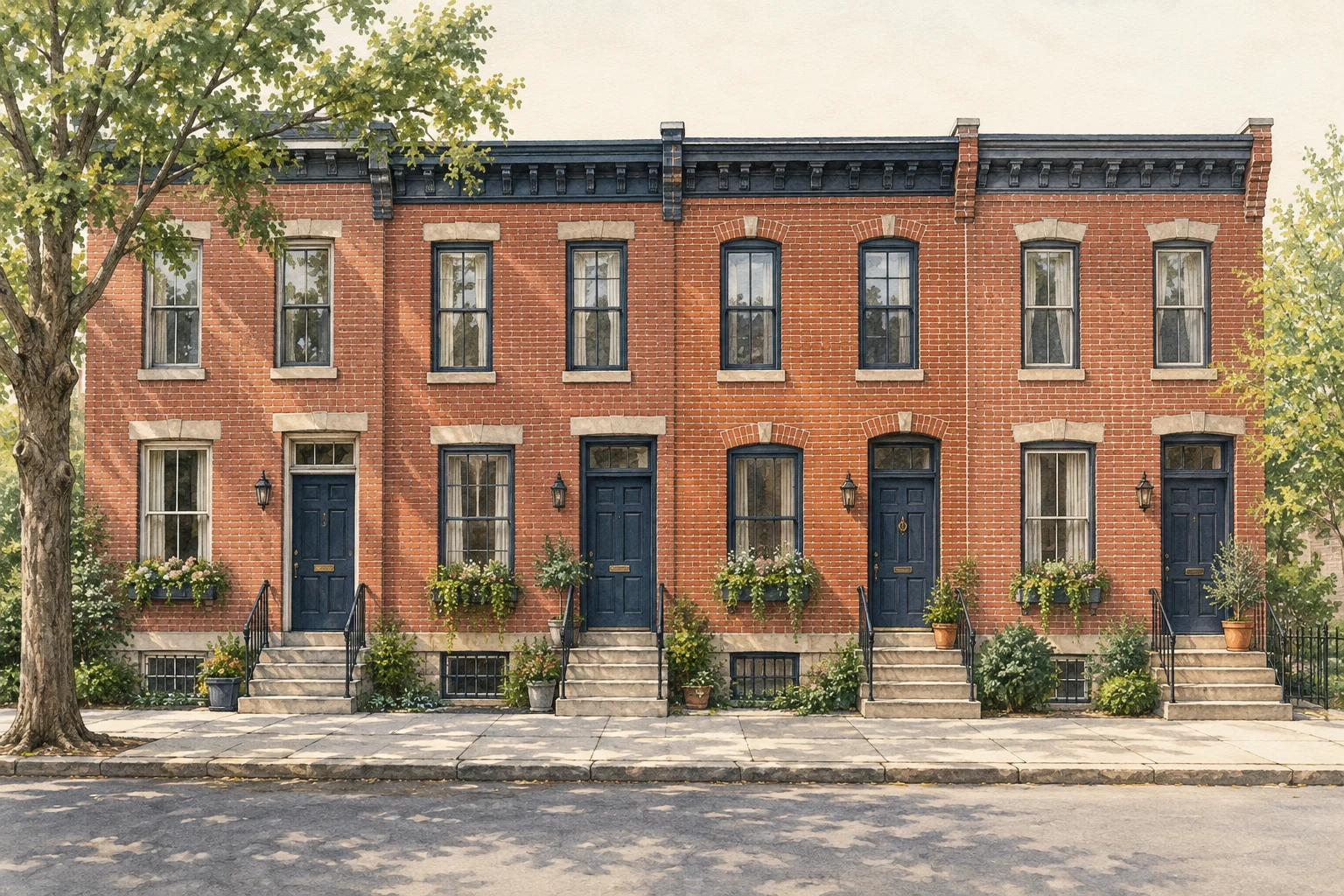
A little orientation
The Philadelphia row-home field guide
Identify first
Find the material and finish before choosing a cleaning method, and keep uncertain surfaces on your list of questions.
Notice changes
Record new stains, dampness or loose finishes with their location and date so an appropriate person can investigate the change.
Keep a record
Save care instructions, repair details and useful photographs together so the next decision starts with the home's own available history.
Inside the house
Get to know the layers.
Use this house as a conversation starter. Yours may have a different roof, layout, structure, or mix of materials.
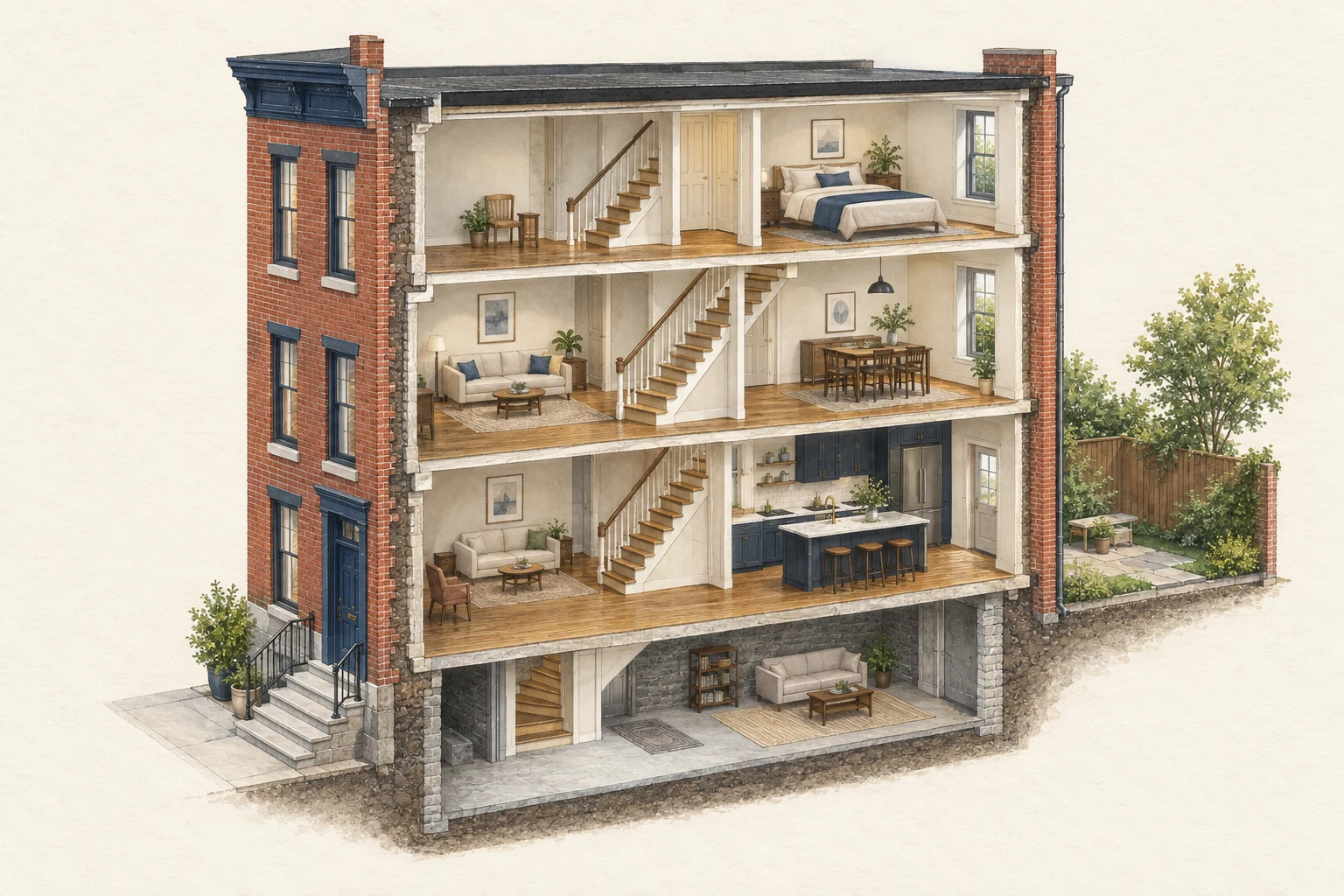
Roof & drainage
Many row homes have low-slope roofs. Their drainage deserves attention; the roof visible from the street may not tell the whole story.
Your next questionWhen was the roof last inspected, and who has the repair record?
Read the source guidance ↗Brick & mortar
Historic masonry can be damaged by aggressive cleaning. Identify the surface and the soiling before choosing a method; a small test matters.
Your next questionIs this dirt, a coating, a moisture symptom, or deteriorating material?
Read the source guidance ↗Windows & trim
A cleaning routine is not a plan for deteriorating paint. If paint is flaking or lead dust is suspected, pause work that could disturb it and consult lead-safe guidance.
Your next questionDo you know the paint’s condition and whether lead has been assessed?
Read the source guidance ↗Floors & stairs
Wood is not one cleaning category. Find the finish or product instructions before choosing a floor cleaner.
Your next questionIs there an installer’s care sheet or a record of the last refinishing?
Read the source guidance ↗Basement
Keep a dated note of new staining, dampness, or changes after rain. Cleaning a visible mark does not establish why it appeared.
Your next questionIs this a new condition, and who can investigate its cause?
Read the source guidance ↗Rear downspout
Drainage is a maintenance concern, not just a housekeeping detail. Observe accessible areas from the ground; have a qualified professional assess leaks or unsafe access.
Your next questionDoes water take its intended route, or is something newly overflowing?
Read the source guidance ↗Care by material
Keep the character.
Change the routine.
The same spray does not belong on every surface. Follow the care instructions for the actual material and finish in your home.
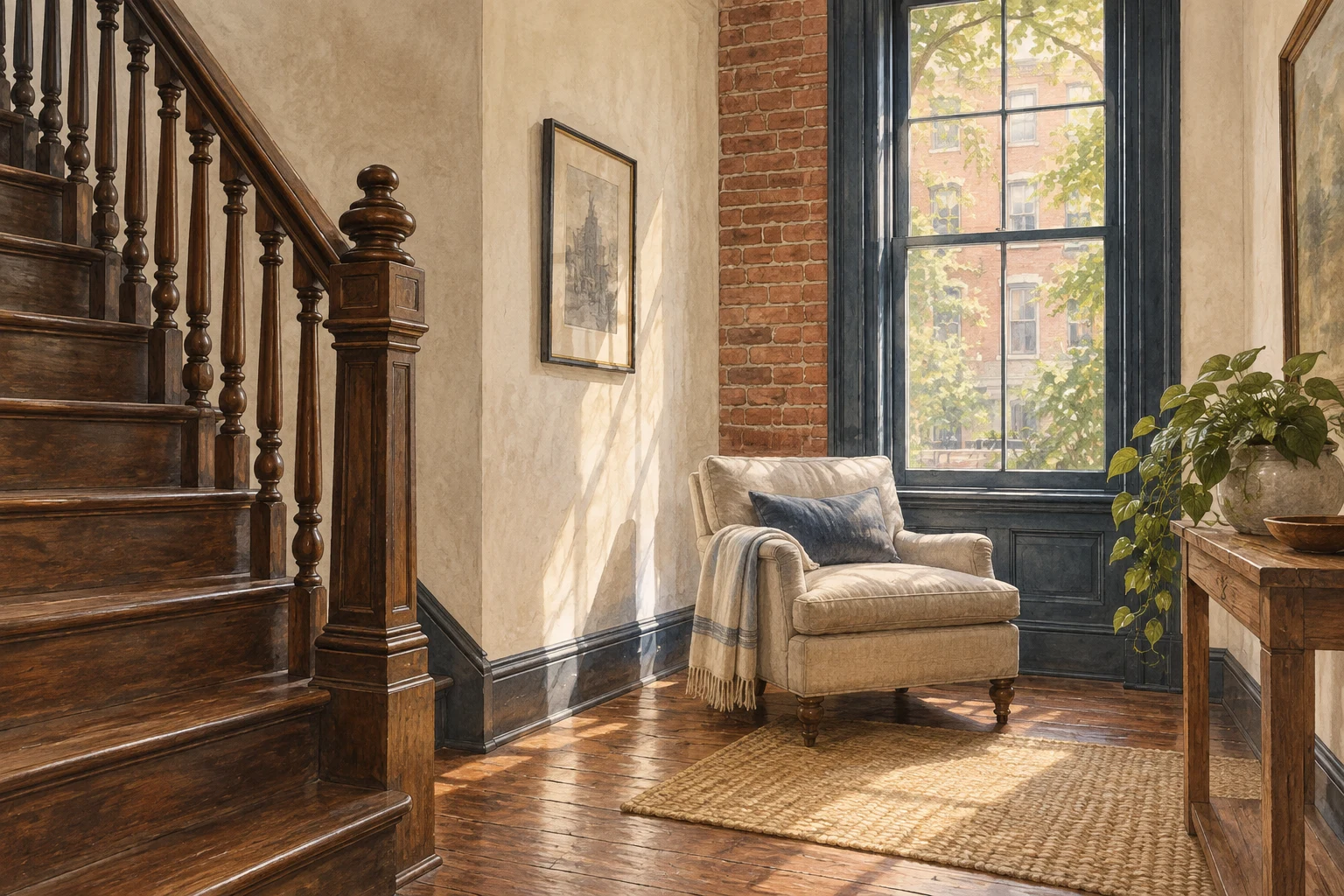
Finished wood
Dust or vacuum with a bare-floor setting. Wipe spills promptly with a dry or slightly damp cloth. Use a cleaner recommended for the floor’s finish. Avoid wet mopping and steam mops.
National Wood Flooring Association ↗Historic brick
Identify the masonry and what you are trying to remove. Ask a preservation professional about testing the gentlest appropriate method. Avoid abrasive blasting and an automatic ‘seal everything’ approach; coatings can create problems.
National Park Service ↗Painted trim
Check for peeling or flaking. Homes built before 1978 may contain lead-based paint. Consult EPA guidance before work that could disturb suspected lead paint or dust. This guide is not a lead-remediation procedure.
Environmental Protection Agency ↗Natural stone
Identify the stone and follow its care instructions. Use an appropriate neutral cleaner and blot spills promptly. Avoid acidic cleaners on acid-sensitive stone, such as marble or limestone, and abrasives that can scratch. Not every stone needs sealing.
Natural Stone Institute ↗A closer look
Get to know the layers
Start with a question about the actual house; a familiar rowhome outline cannot establish what lies behind its finishes.
Ask for the building's history
Use the Rowhouse Manual to get familiar with the parts of a rowhome, then request the actual roof and drainage records for yours. Observe accessible areas from the ground. A street view or conceptual cutaway cannot establish the condition of those systems.
A useful questionWhen were the roof and drainage last assessed, and who has the record?
Source & next step ↗Identify the problem before the method
Historic masonry needs an approach suited to its material and condition. The National Park Service explains evaluating cleaning and water-repellent treatments. Begin by identifying what you are seeing and asking for appropriate assessment rather than choosing a strong cleaner to change the appearance.
A useful questionIs the visible mark dirt, a coating, a moisture symptom or deteriorating material?
Source & next step ↗Check the finish before disturbing it
A routine cleaning plan does not resolve deteriorating paint. If paint is flaking or lead dust is suspected, pause work that could disturb it and consult EPA guidance. Ask about the home's assessment and repair records before choosing the next step.
A useful questionDo you know the paint's condition and whether lead has been assessed?
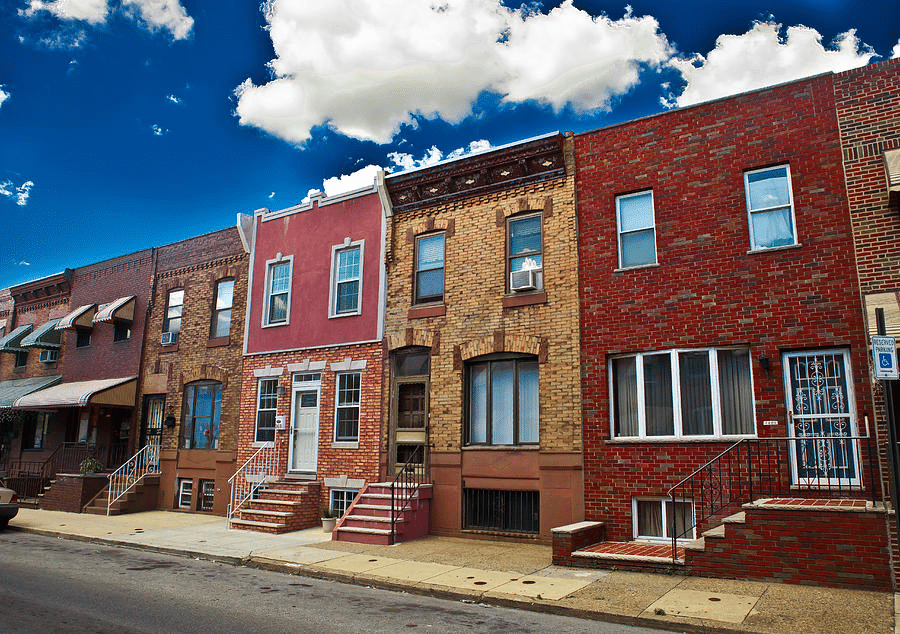
Source & next step ↗Philadelphia's row homes are more than just buildings; they are a reflection of the city's deep history and cultural changes. As you walk through areas like Society Hill, Fishtown, and Fairmount, you'll see these famous homes that have been part of the city's look for hundreds of years. Knowing what makes them special, how to take care of them, and the communities they help create is important for anyone who owns one or is interested in them.
A Look at Philadelphia's Building History
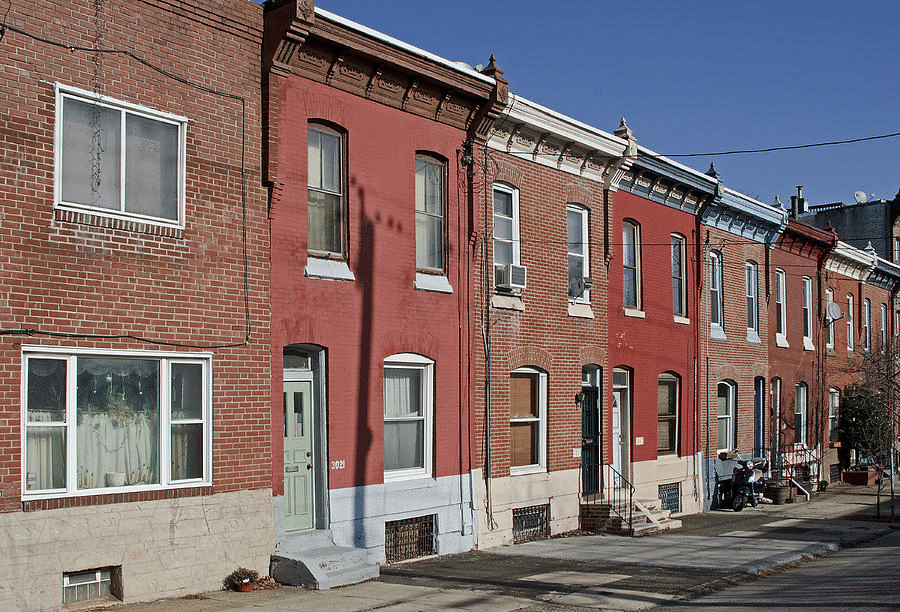
The popularity of row houses in Philadelphia goes back to the 1800s and early 1900s, showing how the city dealt with growing urban areas and the need for housing. These homes were built to make the best use of space, providing affordable places to live for more and more people. Usually, row houses are homes with several floors that are attached to the houses next to them on one or both sides, creating a line of similar-looking homes. You can often find them in cities like Philadelphia, Brooklyn, and Chicago. (Architectural Digest)
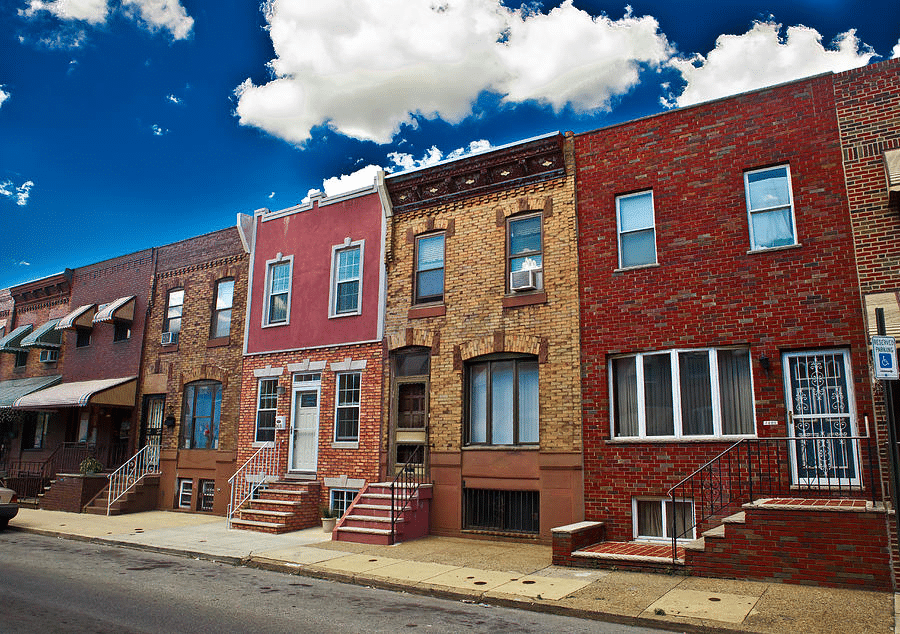
Unique Characteristics of Philadelphia Row Houses
Philadelphia’s row houses showcase different architectural styles, each with its own special traits:
- Gothic Revival (1830-1860): This style is known for its pointed arches on roofs, windows, or doors, steeply slanted roofs, and front gables decorated with intricate wooden trim called vergeboards or bargeboards. You can see examples of this style in West and North Philadelphia.
- Flat or Gently Sloped Roofs: Many row house roofs look flat but actually have a slight slope to help water drain toward the downspout. Common materials used for these roofs include asphalt shingles, rubber membrane, and silicone or granular coatings.
- Masonry and Timber Construction: Row houses are usually built using a mix of brick and wooden framing. Brick is the most common material, but in some areas, like Rittenhouse, decorative brownstone is also used.
Taking Care of Your Historic Row Home
Owning a historic row home means you need to take care of its structure and keep it looking good. Here are some important tips to help you maintain it:
- Regular Inspections: Inspect your home carefully to spot problems like cracks, water damage, or signs of wear. Finding issues early can save you from expensive repairs later.
- Roof and Gutter Maintenance: Make sure your roof doesn’t leak and that gutters and downspouts are free of leaves and dirt to avoid water damage. Since row homes often have unique roofs, it’s important to check them often.
- Facade Care: Identify the masonry, its condition and the source of the soiling before choosing a cleaning method. Ask a preservation professional about an inconspicuous test using the gentlest suitable approach. Follow National Park Service masonry guidance rather than applying a general hose-and-soap routine to every historic wall.
- Window Upkeep: Keep wooden window frames in good shape by repainting them every few years to protect them from moisture and rot. If your windows are old, think about replacing them with energy-efficient ones that still match the style of your home.
- Foundation Vigilance: Keep an eye on the foundation for any signs of sinking or cracks. Fixing these problems quickly can stop bigger structural issues.
Neighborhood Highlights: The Charm of Row Homes
Philadelphia’s row homes are a key part of the city’s unique neighborhoods:
- Society Hill: Famous for its beautifully maintained row houses from the 1700s and early 1800s, this area gives a peek into Philadelphia’s colonial history.
- Fishtown: A neighborhood that has been transformed in recent years, Fishtown combines old row homes with new buildings, showing how the city’s architecture is changing.
- Fairmount: Known for the famous Eastern State Penitentiary, Fairmount has quiet, tree-filled streets lined with classic row homes near Eastern State Penitentiary and the Art Museum.
Expert Insights
The Encyclopedia of Greater Philadelphia explains that row houses were inexpensive to build on narrow lots and affordable to buy, helping Philadelphia earn the "City of Homes" name by the late nineteenth century.
Keeping the History Alive
Taking care of a row home means paying close attention to details and being dedicated to protecting its historical value. Regular upkeep not only helps the building last longer but also adds to the charm and character of Philadelphia’s neighborhoods.
Hometress Cleaning Services: Helping You Care for Your Home
Keeping your row home in great shape goes beyond just fixing the structure. A clean and well-kept inside shows how much you care about your home. At Hometress Cleaning Services, we focus on providing excellent cleaning services designed for the special needs of Philadelphia’s row homes. Our team knows the unique features of these historic homes and offers services to make sure your home stays as beautiful inside as it is outside.
See your total and book online at Hometress Cleaning Services.
Philadelphia's row homes are not just houses; they represent the city's history, culture, and sense of community. By learning about their unique design and keeping up with regular care, you can protect these special buildings for future generations to enjoy. With help from local experts and services like Hometress Cleaning Services, taking care of your row home and keeping it beautiful has never been easier.
Make it yours
A walkthrough for the home you have
A short list to turn what you read into your own next steps.
Saved checks stay on this device when browser storage is available. This is a personal planning list, not a property inspection or professional assessment.
Sources & next steps
Useful advice should
show its working.
These resources support the reader tools above and help you check details for your own address, date, or plans.
- Philadelphia Rowhouse Manual
City-hosted manual for understanding rowhome materials, systems and upkeep; not current permit rules.
- National Park Service masonry guidance
Preservation Brief 1 addresses evaluating historic masonry cleaning and water-repellent treatments.
- EPA lead guidance
Guidance for suspected lead exposure and work that could disturb older painted surfaces.
The images are editorial illustrations, not photographs of actual properties or completed work. The cutaway is conceptual, not a construction drawing or property inspection.